Vincent van Gogh
1853-1890
A tortured soul with a brush, Vincent van Gogh left an indelible mark on the art world with his bold, expressive works.
Origins
Born on March 30, 1853, in Groot-Zundert, Netherlands, Vincent van Gogh came from a respectable family. His father, Theodorus van Gogh, was a minister of the Dutch Reformed Church, and his mother, Anna Cornelia Carbentus, was from a prosperous family in The Hague. Van Gogh was a serious and thoughtful child, encouraged to draw by his mother. He was sent to various schools, but his unhappiness and struggles led him to return home. In 1869, he began working at an art dealership in The Hague, which marked the beginning of his connection to the art world.
Life and turning points
Van Gogh's journey was marked by struggles and turning points. He worked as an art dealer, then became a Protestant missionary in Belgium. After failing as a missionary, he turned to art in 1881, supported financially and emotionally by his younger brother Theo. Van Gogh studied at the Académie Royale des Beaux-Arts in Brussels and later moved to Paris, where he met influential artists like Émile Bernard and Paul Gauguin. His time in Arles in 1888 was particularly significant, as he developed his unique style and produced some of his most famous works. However, his struggles with mental illness and poverty ultimately led to his tragic death on July 29, 1890.
Style and technique
Van Gogh's style is characterized by bold colors, dramatic brushwork, and expressive compositions. He developed a new approach to still lifes and landscapes, using vibrant colors and thick, heavy brushstrokes. His works, such as 'The Starry Night' and 'Sunflowers,' showcase his innovative style, which contributed to the foundations of modern art. Van Gogh's technique evolved over time, becoming more expressive and emotive, reflecting his inner turmoil and struggles.
Stories and anecdotes
Van Gogh's life was marked by intense relationships and dramatic events. His friendship with Paul Gauguin ended abruptly when, in a fit of rage, Van Gogh severed part of his own left ear. He spent time in psychiatric hospitals, including a period at Saint-Rémy, and was under the care of the homoeopathic doctor Paul Gachet. Van Gogh's letters to Theo provide valuable insights into his thoughts, feelings, and artistic theories. There are over 600 letters from Vincent to Theo, offering a glimpse into the mind of this troubled genius.
Legacy
Van Gogh's legacy is immense, with his works becoming famous after his death. He is remembered as a tortured artist, whose troubled personality typifies the romantic ideal of the artist. His influence can be seen in the work of many artists, including the Fauves and German Expressionists. Today, Van Gogh's paintings are considered some of the most iconic and influential in the history of Western art, with works like 'The Starry Night' and 'Café Terrace at Night' continuing to inspire and captivate audiences worldwide.
Có thể bạn chưa biết
- Van Gogh created about 2,100 artworks in just over a decade, including around 860 oil paintings.
- He was a prolific letter writer, exchanging hundreds of letters with his brother Theo.
- Van Gogh's early works were mostly still lifes and depictions of peasant laborers, but his style evolved to include bold colors and expressive brushwork.
- He struggled with mental illness and poverty throughout his life, ultimately leading to his tragic death at the age of 37.
hậu ấn tượng · chủ nghĩa hiện thực · tân ấn tượng
Họa sĩ liên quan
Tranh của Vincent van Gogh
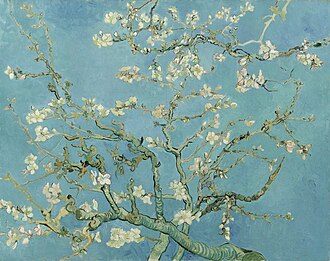 Hoa hạnh nhân - Vincent van Gogh (1890)
.jpg) Hiên quán cà phê về đêm - Vincent van Gogh (1888)
Hiên quán cà phê về đêm - Vincent van Gogh (1888)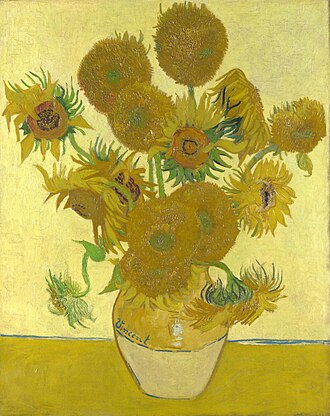 Hoa hướng dương - Vincent van Gogh (1888)
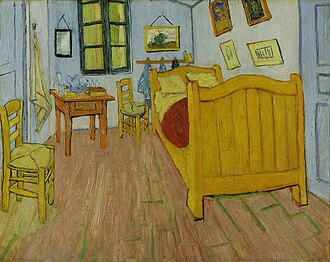 Phòng ngủ ở Arles - Vincent van Gogh (1888)
 Đêm đầy sao - Vincent van Gogh (1889)
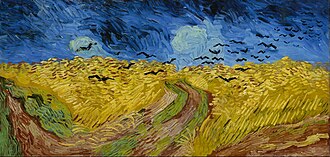 Cánh đồng lúa mì có bầy quạ - Vincent van Gogh (1890)
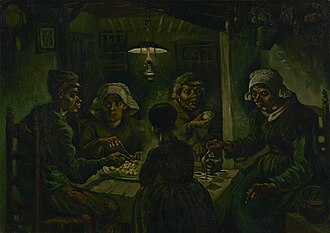 Những người ăn khoai - Vincent van Gogh (1885)
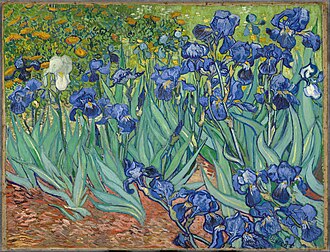 Hoa diên vĩ - Vincent van Gogh (1889)
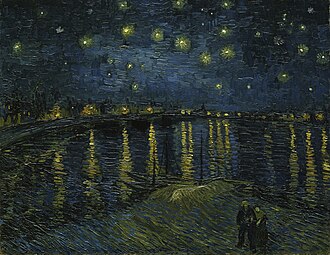 Đêm đầy sao trên sông Rhone - Vincent van Gogh (1888)
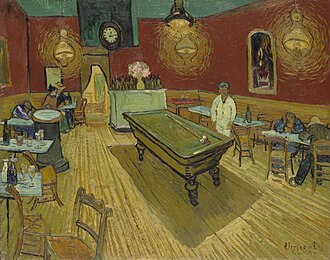 Quán Café đêm - Vincent van Gogh (1888)
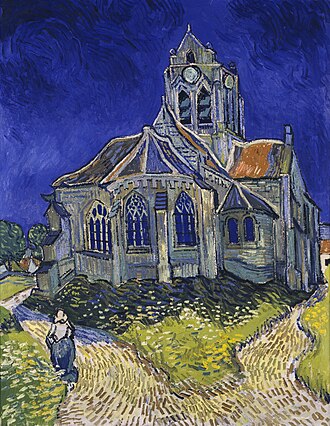 Nhà thờ Auvers - Vincent van Gogh (1890)
.jpg) Vườn nho đỏ - Vincent van Gogh (1888)
Vườn nho đỏ - Vincent van Gogh (1888).jpg) Ngôi nhà màu vàng - Vincent van Gogh (1888)
Ngôi nhà màu vàng - Vincent van Gogh (1888)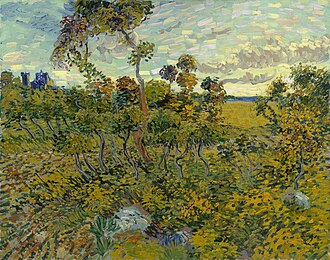 Hoàng hôn ở Montmajour - Vincent van Gogh (1888)
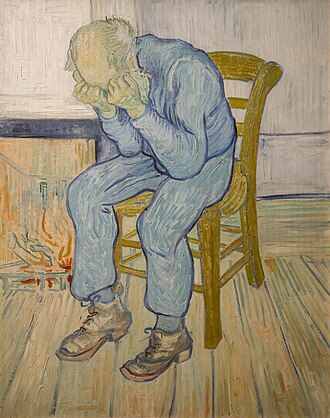 Tại ngưỡng cửa Vĩnh hằng - Vincent van Gogh (1890)
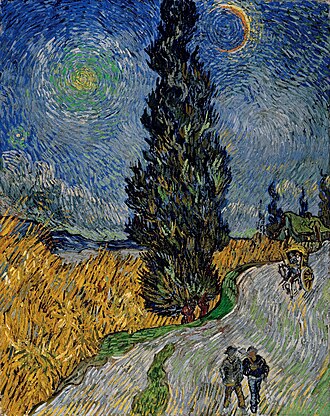 Con đường cùng cây bách và sao - Vincent van Gogh (1890)
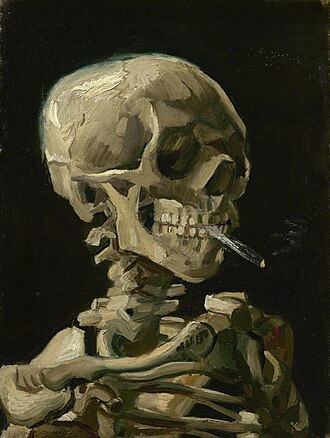 Sọ người và điếu thuốc, sơn dầu trên vải bạt - Vincent van Gogh (1884)
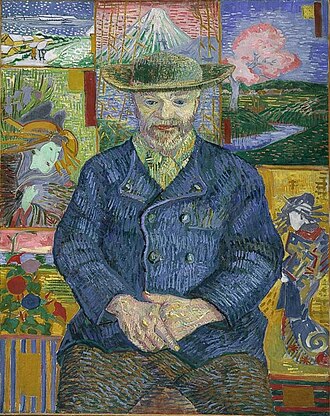 Chân dung Père Tanguy - Vincent van Gogh (1887)
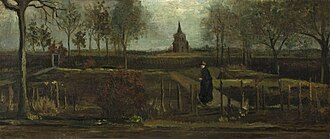 Lentetuin - Vincent van Gogh (1884)
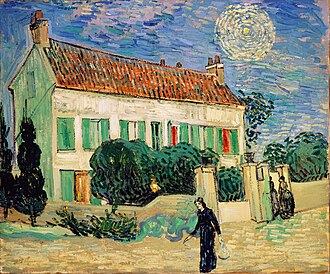 Ngôi nhà trắng trong đêm - Vincent van Gogh (1890)
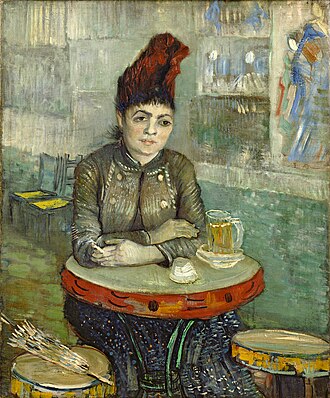 Agostina Segatori ngồi trong quán Café du Tambourin - Vincent van Gogh (1887)
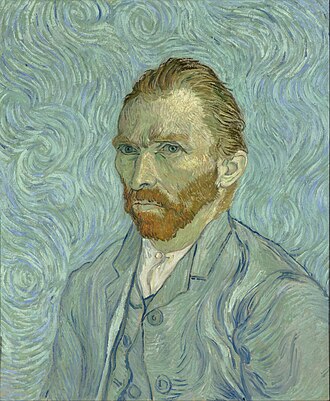 Van Gogh: Chân dung tự họa - Vincent van Gogh (1889)
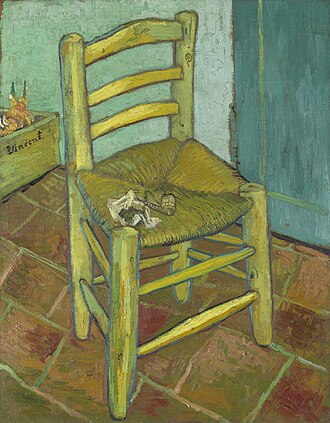 Ghế của Van Gogh với ống điếu - Vincent van Gogh (1889)
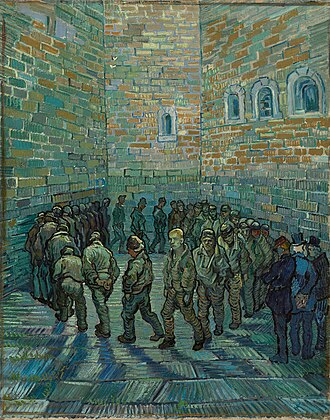 Tù nhân tập thể dục - Vincent van Gogh (1890)
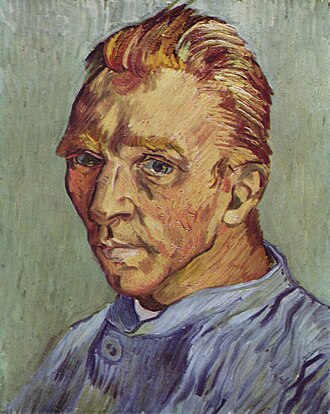 Chân dung tự họa không râu - Vincent van Gogh (1889)
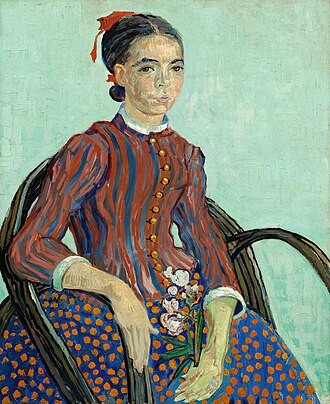 La Mousmé - Vincent van Gogh (1888)
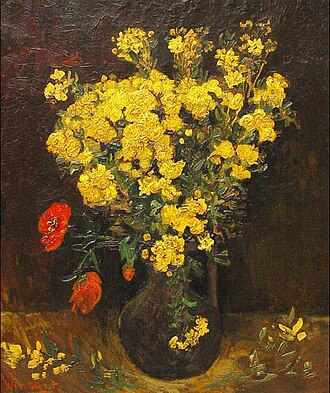 Hoa anh túc - Vincent van Gogh (1887)
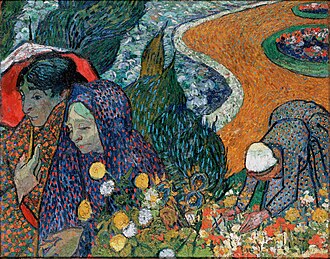 Hồi ức về vườn Etten - Vincent van Gogh (1888)
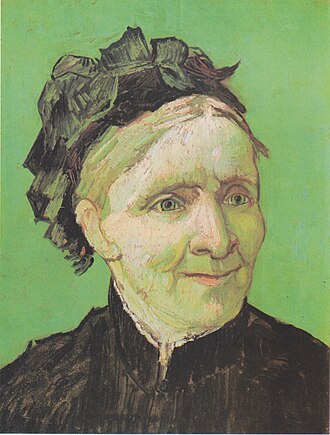 Đại diện của mẹ nghệ sĩ - Vincent van Gogh (1888)
.jpg) Rễ cây - Vincent van Gogh (1890)
Rễ cây - Vincent van Gogh (1890)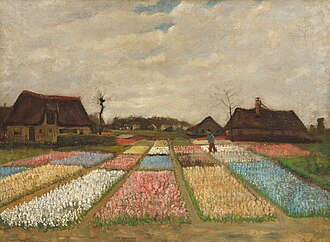 Cánh đồng bóng - Vincent van Gogh (1883)
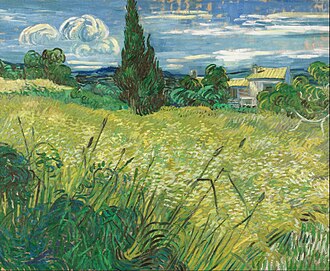 Cánh đồng lúa mì xanh với cây bách - Vincent van Gogh (1889)
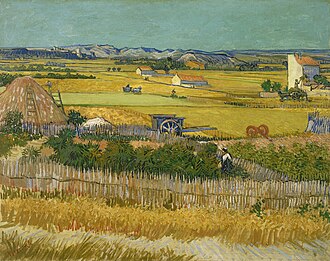 Mùa thu hoạch tại La Crau, với Montmajour ở hậu cảnh - Vincent van Gogh (1888)
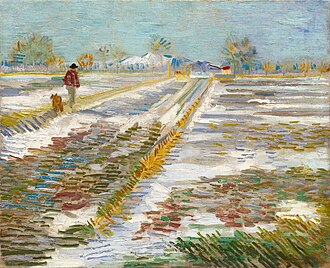 Cảnh quan với tuyết - Vincent van Gogh (1888)
.jpg) Cua nằm ngửa - Vincent van Gogh (1887)
Cua nằm ngửa - Vincent van Gogh (1887)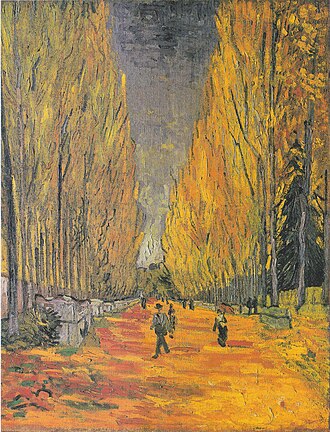 Les Alyscamps - Vincent van Gogh (1888)
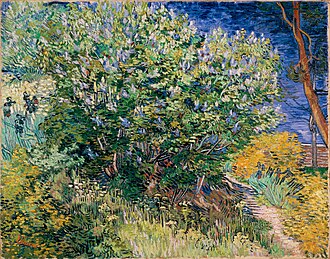 Bụi lilac - Vincent van Gogh (1889)
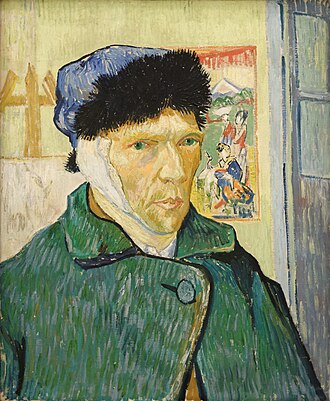 Chân dung tự họa với tai bị băng bó - Vincent van Gogh (1889)
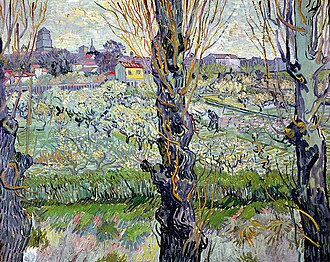 View của Arles, vườn hoa - Vincent van Gogh (1889)
.jpg) View của biển tại Scheveningen - Vincent van Gogh (1882)
View của biển tại Scheveningen - Vincent van Gogh (1882)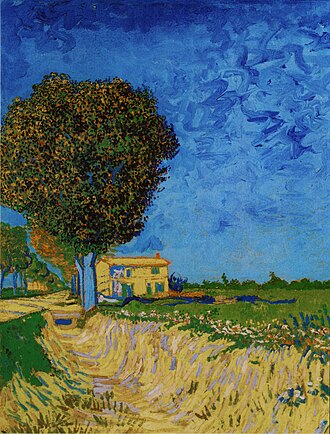 Một làn đường gần Arles - Vincent van Gogh (1888)
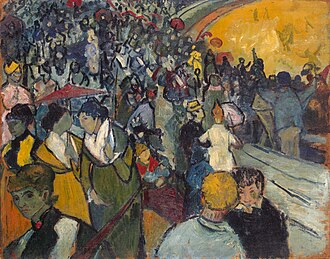 Sân vận động Arles - Vincent van Gogh (1888)
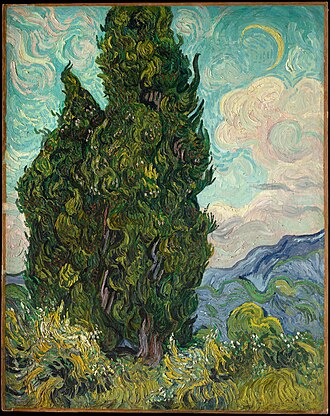 Cây bách - Vincent van Gogh (1889)
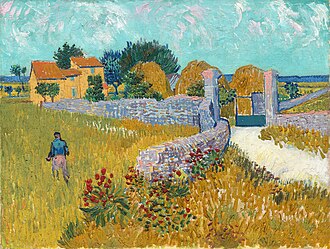 Trang trại ở Provence - Vincent van Gogh (1888)
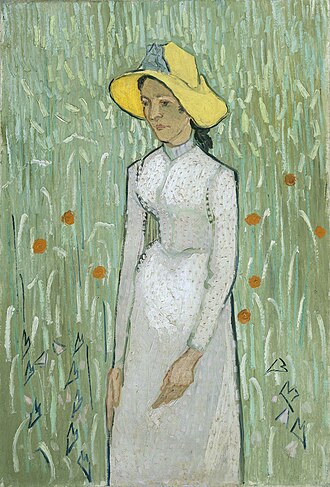 Cô gái mặc trắng - Vincent van Gogh (1890)
.jpg) Đại diện bác sĩ Félix Rey - Vincent van Gogh (1889)
Đại diện bác sĩ Félix Rey - Vincent van Gogh (1889).jpg) Hai con cua - Vincent van Gogh (1889)
Hai con cua - Vincent van Gogh (1889)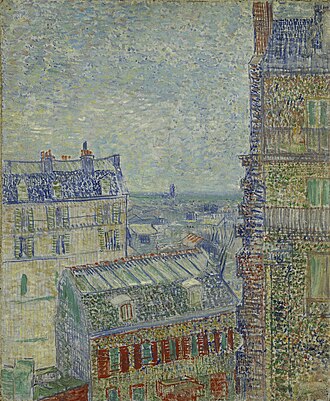 View từ căn hộ của Theo - Vincent van Gogh (1887)