Claude Monet
1840-1926
Claude Monet was a pioneering French painter and founder of Impressionism, renowned for capturing the fleeting effects of light and color in his works.
Origins
Claude Monet was born on November 14, 1840, in Paris, France. His family moved to Le Havre in Normandy when he was five years old. Monet's mother, Louise-Justine Aubrée Monet, supported his early interest in art, while his father, Claude-Adolphe, initially disapproved. Monet began drawing at a young age and received lessons from Jacques-François Ochard. In 1858, he met Eugène Boudin, who introduced him to plein air painting and became a significant mentor.
Life and turning points
Monet's life was marked by both artistic struggles and personal challenges. He served in the army during the Franco-Prussian War, and his family moved to London and the Netherlands to avoid conscription. Monet married Camille Doncieux in 1870, and they had two children together. He struggled financially and faced rejection from the Salon, but eventually found success with the help of art collector Louis-Joachim Gaudibert and dealer Paul Durand-Ruel. Monet's garden at Giverny, which he cultivated for his art, became a defining feature of his later work.
Style and technique
Monet's style evolved significantly over his career. He began with realistic landscapes and portraits but soon developed a more expressive and spontaneous approach. Monet's use of short, broken brushstrokes and vivid colors became a hallmark of Impressionism. He often painted the same scene multiple times to capture the changing effects of light and color. His series of haystacks, Rouen Cathedral, and water lilies are iconic examples of this approach.
Stories and anecdotes
Monet's life was filled with interesting anecdotes. He was known for his strong relationships with his family, particularly his son Jean, whom he often painted. Monet's friendship with fellow artist Pierre-Auguste Renoir was also significant. He was impressed by the works of John Constable and J.M.W. Turner during his time in London, which influenced his treatment of light. Monet's garden at Giverny, which he cultivated for over 20 years, became a source of inspiration for many of his most famous works.
Legacy
Monet's legacy as a pioneering Impressionist painter has endured. He is celebrated for his innovative approach to capturing light and color, which paved the way for modernism. Monet's works are now held in high esteem, and he is considered one of the most famous painters in history. His influence can be seen in the work of numerous artists who followed in his footsteps.
Có thể bạn chưa biết
- Claude Monet was baptized Catholic but later became an atheist.
- Monet's painting 'Impression, Sunrise' gave rise to the term 'Impressionism'.
- Monet's garden at Giverny occupied him for the last 20 years of his life.
- Monet's fame and popularity soared in the second half of the 20th century.
trường phái ấn tượng · Chủ nghĩa Nhật Bản
Họa sĩ liên quan
Édouard Manet · Pierre-Auguste Renoir · Vincent van Gogh
Tranh của Claude Monet
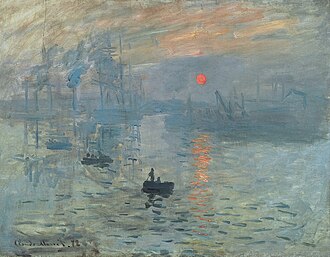 Ấn tượng, mặt trời mọc - Claude Monet (1872)
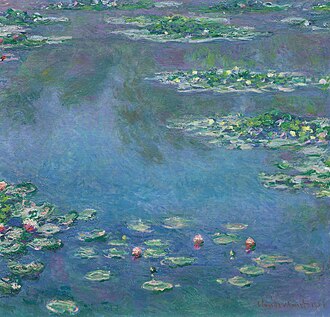 Hoa súng - Claude Monet (1906)
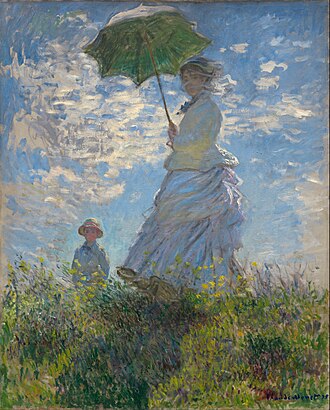 Người phụ nữ cầm dù - Claude Monet (1875)
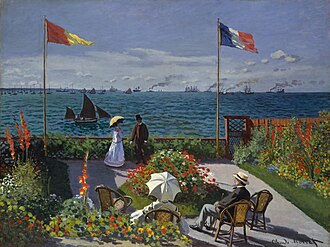 Vườn tại Sainte-Adresse - Claude Monet (1867)
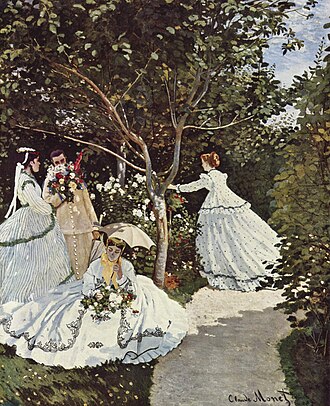 Phụ nữ trong vườn - Claude Monet (1866)
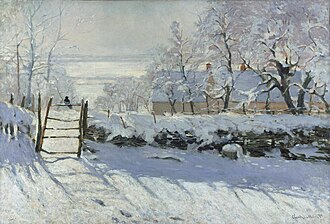 The Magpie - Claude Monet (1868)
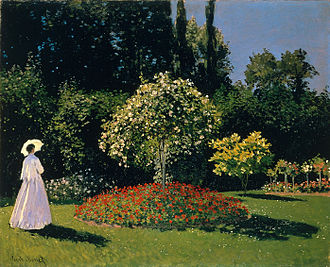 Woman in the Garden - Claude Monet (1867)
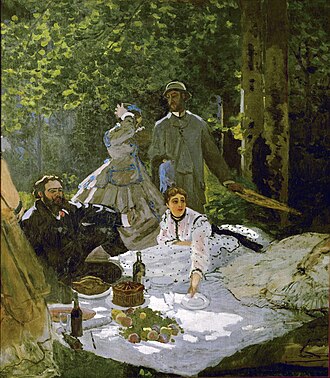 Luncheon on the Grass - Claude Monet (1866)
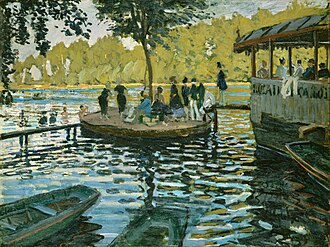 La Grenouillère - Claude Monet (1869)
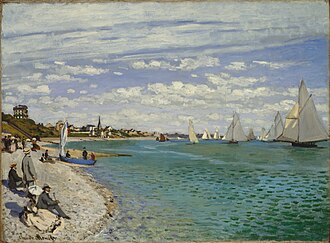 Regatta at Sainte-Adresse - Claude Monet (1867)
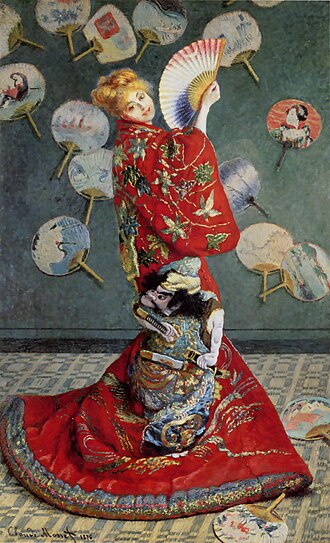 Madame Monet wearing a kimono - Claude Monet (1876)
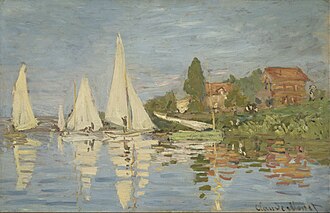 Régates à Argenteuil - Claude Monet (1872)
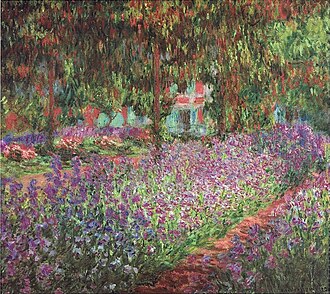 The artist's garden at Giverny - Claude Monet (1900)
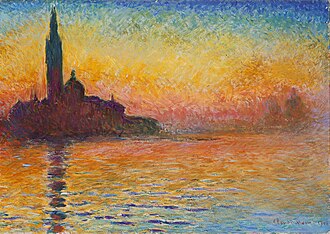 San Giorgio Maggiore at Dusk - Claude Monet (1908)