Caravaggio
1571-1610
A rebellious and innovative Italian painter, Caravaggio revolutionized the art world with his bold and emotionally charged works that continue to captivate audiences today.
Origins
Born in Milan in 1571, Michelangelo Merisi da Caravaggio, known simply as Caravaggio, grew up in a family that struggled with poverty after his father's death. His early life was marked by hardship, but he found solace in art, beginning his apprenticeship with Simone Peterzano in Milan in 1584. This training laid the groundwork for his future success, but it was his move to Rome that would truly launch his career.
Life and turning points
Caravaggio's journey was marked by both artistic triumph and personal turmoil. After fleeing Milan, he established himself in Rome, where he gained fame for his innovative style and powerful works. However, his life was also marred by violence and controversy, including a fatal duel that forced him to flee to Naples. Despite these challenges, he continued to produce remarkable art, traveling to Malta and Sicily in search of new opportunities and a papal pardon. His life was cut short in 1610, under uncertain circumstances, but his art would go on to inspire generations.
Style and technique
Caravaggio's style was characterized by his dramatic use of lighting, known as tenebrism, and his commitment to realism. He rejected traditional idealism, instead focusing on the natural world and the human experience. His innovative approach, which emphasized emotion and psychological depth, had a profound impact on the development of Baroque painting. Works like 'The Calling of Saint Matthew' and 'Supper at Emmaus' showcase his mastery of light and shadow, as well as his ability to capture the complexity of human emotion.
Stories and anecdotes
Caravaggio's life was filled with stories of controversy and drama. He was known for his fiery temper and his involvement in violent altercations, including the fatal duel that forced him to flee Rome. Despite these challenges, he remained a prolific artist, producing works that continue to inspire and fascinate art lovers today. His relationships with patrons and fellow artists, including Mario Minniti and Prospero Orsi, played a significant role in his career, as did his ongoing quest for a papal pardon and a chance to redeem himself.
Legacy
Caravaggio's legacy is immense, with a profound impact on the development of Western art. His innovative style and techniques influenced countless artists, including Peter Paul Rubens, Jusepe de Ribera, and Rembrandt. Today, his works can be found in museums and galleries around the world, a testament to his enduring power and influence. Despite facing periods of neglect and criticism, Caravaggio's art has experienced a resurgence of interest in recent centuries, with many art historians and enthusiasts recognizing him as one of the greatest painters of all time.
Lo sapevi?
- Caravaggio's father, Fermo Merixio, was a household administrator and architect-decorator to the Marquess of Caravaggio.
- The artist's family moved to Caravaggio in 1576 to escape a plague that ravaged Milan.
- Caravaggio began his apprenticeship with Simone Peterzano in Milan in 1584.
- He was known for his intense realism, which involved painting subjects as the eye sees them, with all their natural flaws and defects.
Italian Baroque painting · Baroque · Mannerism
Artisti collegati
Diego Velázquez · Rembrandt van Rijn · Johannes Vermeer
Dipinti di Caravaggio
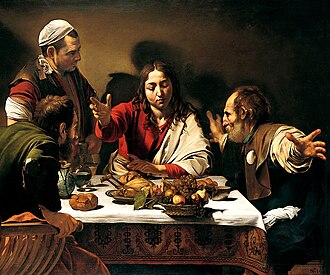 Supper at Emmaus - Caravaggio (1601)
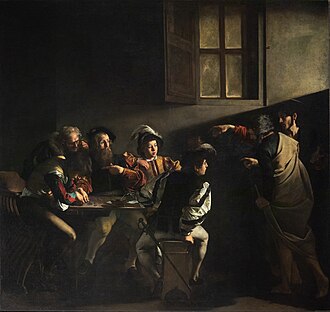 La vocazione di San Matteo - Caravaggio (1609)
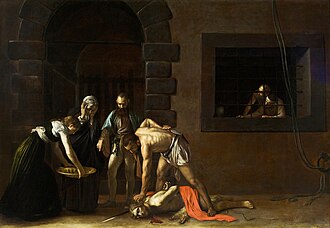 Decapitazione di San Giovanni Battista - Caravaggio (1608)
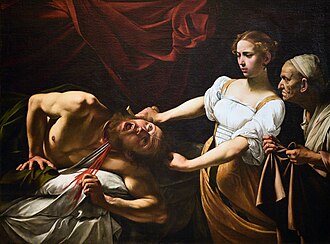 Giuditta che decapita Oloferne - Caravaggio (1598)
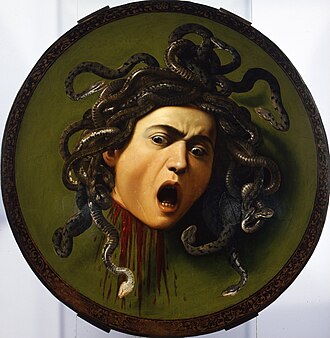 Testa di Medusa - Caravaggio (1597)
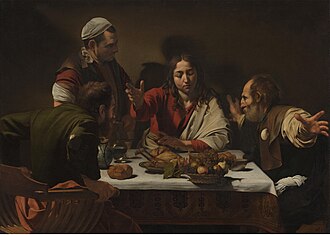 Supper at Emmaus - Caravaggio (1601)
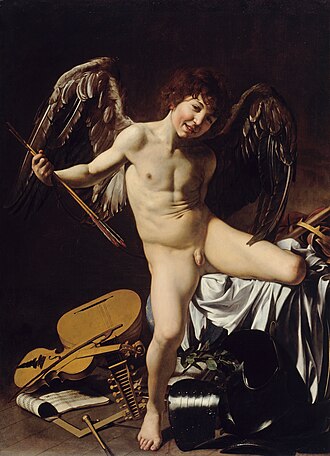 Amor Vincit Omnia - Caravaggio (1600s)
%2C%201595%20circa%2C%20534.jpg) Self-Portrait as Bacchus - Caravaggio (1595)
Self-Portrait as Bacchus - Caravaggio (1595).jpg) Death of the Virgin - Caravaggio (1600s)
Death of the Virgin - Caravaggio (1600s)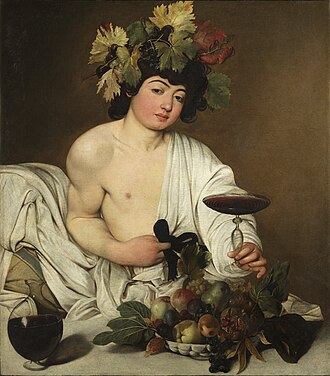 Bacchus - Caravaggio (1593)
.jpg) La buona ventura - Caravaggio (1594)
La buona ventura - Caravaggio (1594).jpg) Davide con la testa di Golia - Caravaggio (1605)
Davide con la testa di Golia - Caravaggio (1605).jpg) Boy with a Basket of Fruit - Caravaggio (1590s)
Boy with a Basket of Fruit - Caravaggio (1590s).jpg) Crucifixion of Saint Peter - Caravaggio (1600)
Crucifixion of Saint Peter - Caravaggio (1600)%20Kimbell%20Art%20Museum.jpg) The Cardsharps - Caravaggio (1590s)
The Cardsharps - Caravaggio (1590s)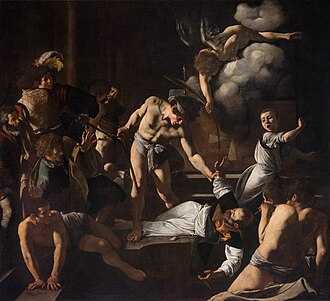 The Martyrdom of Saint Matthew - Caravaggio (1600)
.jpg) The Inspiration of Saint Matthew - Caravaggio (1602)
The Inspiration of Saint Matthew - Caravaggio (1602)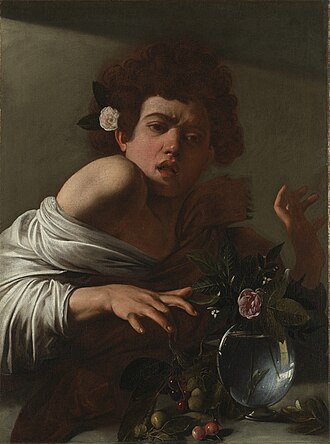 Boy Bitten by a Lizard - Caravaggio (1590s)
.jpg) Rest on the Flight into Egypt - Caravaggio (1597)
Rest on the Flight into Egypt - Caravaggio (1597)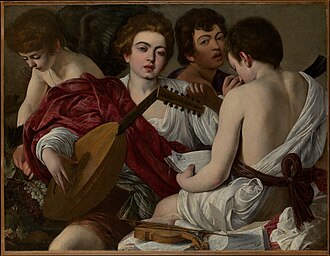 The Musicians - Caravaggio (1595)
.jpg) Conversion on the Way to Damascus - Caravaggio (1600s)
Conversion on the Way to Damascus - Caravaggio (1600s).jpg) The Entombment of Christ - Caravaggio (1602)
The Entombment of Christ - Caravaggio (1602)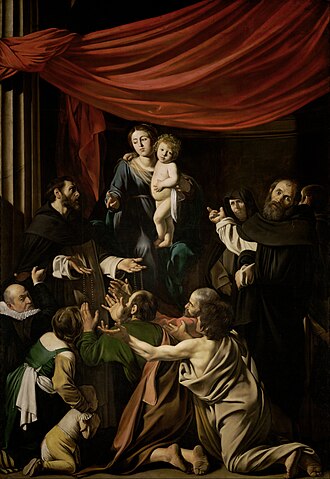 Madonna of the Rosary - Caravaggio (1607)
.jpg) Saint Catherine of Alexandria - Caravaggio (1598)
Saint Catherine of Alexandria - Caravaggio (1598)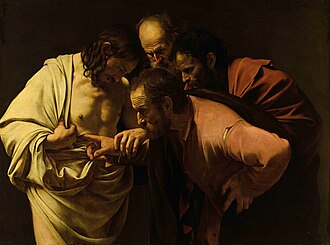 The Incredulity of Saint Thomas - Caravaggio (1600s)
.jpg) Saint Jerome - Caravaggio (1606)
Saint Jerome - Caravaggio (1606)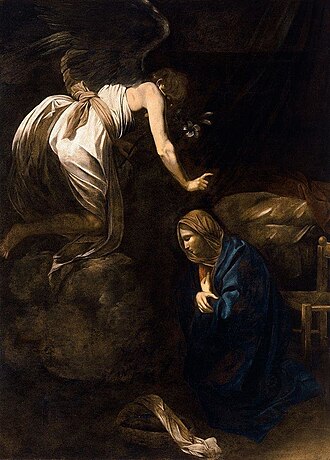 Annunciation - Caravaggio
.jpg) Saint Francis of Assisi in Ecstasy - Caravaggio (1590s)
Saint Francis of Assisi in Ecstasy - Caravaggio (1590s).jpg) Sleeping Cupid - Caravaggio (1608)
Sleeping Cupid - Caravaggio (1608).jpg) Basket of Fruit - Caravaggio
Basket of Fruit - Caravaggio%20-%20Boy%20Peeling%20Fruit%20-%20RCIN%20402612%20-%20Royal%20Collection.jpg) Boy Peeling Fruit - Caravaggio (1590s)
Boy Peeling Fruit - Caravaggio (1590s).jpg) Madonna and Child with Saint Anne - Caravaggio (1605)
Madonna and Child with Saint Anne - Caravaggio (1605)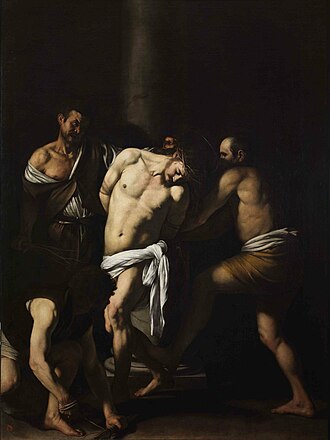 The Flagellation of Christ - Caravaggio (1607)
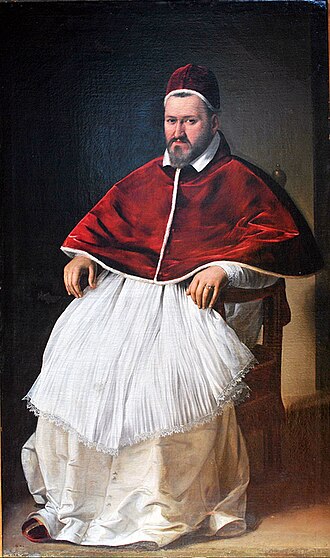 Portrait of Pope Paul V - Caravaggio (1600s)