Rembrandt van Rijn
1606-1669
Rembrandt van Rijn, a master of light and shadow, left an indelible mark on the art world with his expressive and emotionally charged works that continue to captivate audiences to this day.
Origins
Born on July 15, 1606, in Leiden, Netherlands, Rembrandt Harmenszoon van Rijn was the ninth child of Harmen Gerritszoon van Rijn, a miller, and Neeltgen Willemsdochter van Zuijtbrouck, a baker's daughter. His family was well-to-do, and his mother was Catholic while his father belonged to the Dutch Reformed Church. Rembrandt attended a Latin school and was apprenticed to Jacob van Swanenburg and later to Pieter Lastman, a history painter in Amsterdam. In 1625, he opened his own studio in Leiden and began to accept students.
Life and turning points
Rembrandt's career was marked by both brilliant successes and personal tragedies. He moved to Amsterdam in 1631 and became a professional portraitist, marrying Saskia van Uylenburgh in 1634. The couple suffered several personal setbacks, including the death of three children, and Saskia's death from tuberculosis in 1642. Rembrandt's later years were marked by financial hardships, and he declared insolvency in 1656. Despite these challenges, he continued to receive significant portrait commissions and completed notable works, such as 'The Jewish Bride' and his final self-portraits.
Style and technique
Rembrandt's works are characterized by their expressive and emotionally charged depictions of everyday life, landscapes, and biblical scenes. He was a master of light and shadow, using chiaroscuro to create a sense of depth and drama in his paintings. His style evolved over the years, becoming more introspective and nuanced, as seen in his self-portraits and portraits of his contemporaries. Rembrandt's contributions to art came during the Dutch Golden Age, and his works continue to be celebrated for their beauty and emotional power.
Stories and anecdotes
Rembrandt's life was marked by numerous stories and anecdotes that reflect his artistic genius and personal struggles. He was known for his numerous self-portraits, which form an intimate autobiography of his life. Rembrandt was also a prolific etcher and printmaker, producing over 400 etchings and 2,000 drawings. His relationships with his patrons, including the Amsterdam statesman Andries de Graeff, and his lovers, including Geertje Dircx and Hendrickje Stoffels, are well-documented and reflect the complexities of his personal life.
Legacy
Rembrandt's legacy is immense, and he is widely regarded as one of the greatest visual artists in the history of Western art. His influence on other artists, including the Old Masters and modern artists, is undeniable. Today, his works can be seen in museums and galleries around the world, including the Rijksmuseum in Amsterdam and the National Gallery in London. Despite his personal struggles and financial hardships, Rembrandt left behind a body of work that continues to inspire and captivate audiences to this day.
Lo sapevi?
- Rembrandt produced over 300 paintings, 300 etchings, and several hundred drawings.
- He was a prolific self-portraitist, producing approximately 100 self-portraits, over 40 of which are paintings.
- Rembrandt's works depict a wide range of styles and subject matter, from portraits and self-portraits to landscapes, genre scenes, allegorical and historical scenes, biblical and mythological subjects, and animal studies.
- He was a master of light and shadow, using chiaroscuro to create a sense of depth and drama in his paintings.
Dutch Golden Age painting · Baroque · Baroque painting
Artisti collegati
Johannes Vermeer · Caravaggio · Diego Velázquez
Dipinti di Rembrandt van Rijn
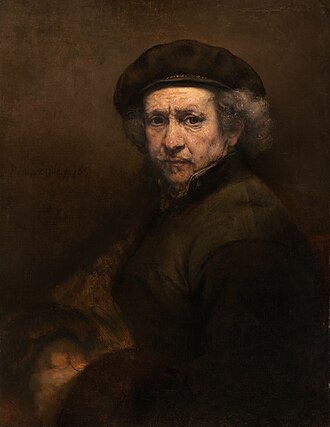 Self-Portrait - Rembrandt van Rijn (1659)
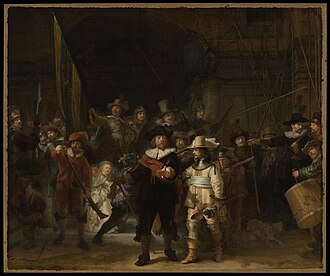 The Night Watch - Rembrandt van Rijn (1642)
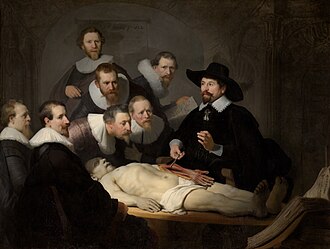 La lezione di anatomia del dottor Nicolaes Tulp - Rembrandt van Rijn (1632)
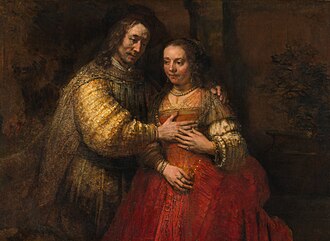 La sposa ebrea - Rembrandt van Rijn (1660s)
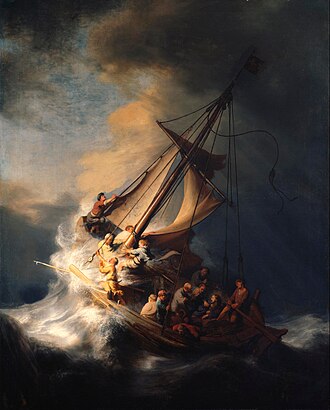 The Storm on the Sea of Galilee - Rembrandt van Rijn (1633)
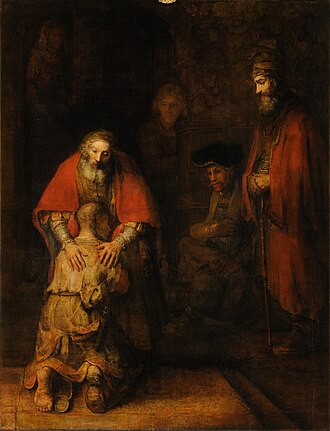 Il ritorno del figliol prodigo - Rembrandt van Rijn (1668)
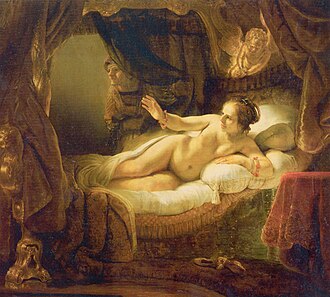 Danae - Rembrandt van Rijn (1636)
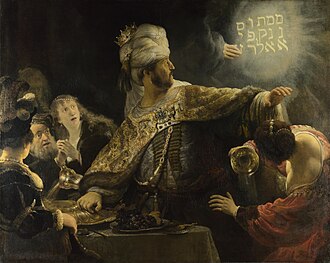 Banchetto di Baldassarre - Rembrandt van Rijn (1636)
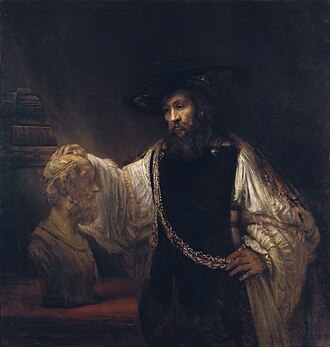 Aristotele con il busto di Omero - Rembrandt van Rijn (1653)
%20van%20het%20Amsterdamse%20lakenbereidersgilde%20-%20Google%20Art%20Project.jpg) Syndics of the Drapers' Guild - Rembrandt van Rijn (1662)
Syndics of the Drapers' Guild - Rembrandt van Rijn (1662)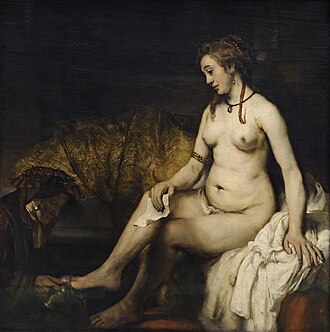 Betsabea con la lettera di David - Rembrandt van Rijn (1654)
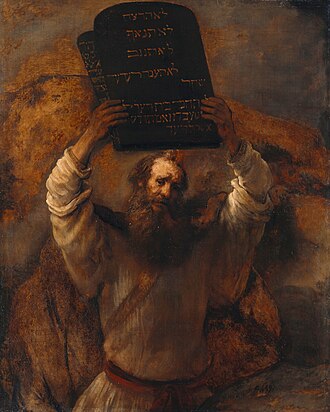 Moses Smashing the Tablets of the Law - Rembrandt van Rijn (1659)
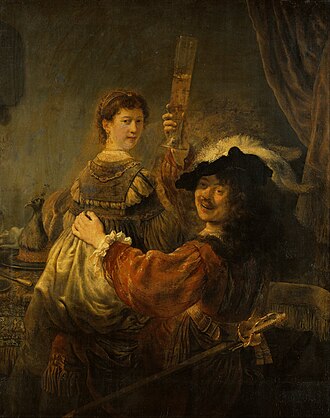 Rembrandt e Saskia nella parabola del figliol prodigo - Rembrandt van Rijn (1635)
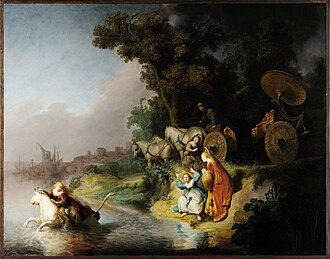 Il ratto di Europa - Rembrandt van Rijn (1632)
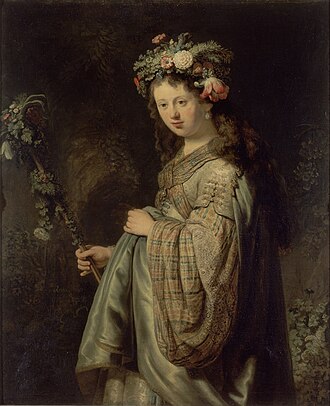 Flora - Rembrandt van Rijn (1634)
%2C%20by%20Rembrandt%2C%20from%20Prado%20in%20Google%20Earth.jpg) Giuditta al banchetto di Oloferne - Rembrandt van Rijn (1634)
Giuditta al banchetto di Oloferne - Rembrandt van Rijn (1634)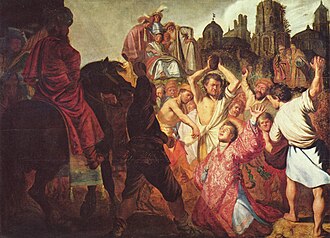 La lapidazione di santo Stefano - Rembrandt van Rijn (1624)
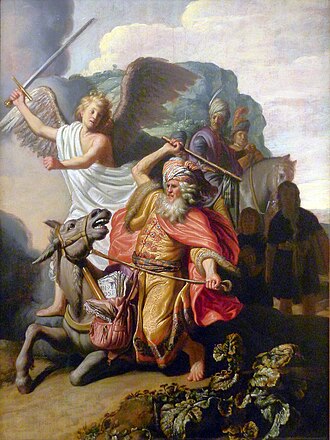 Balaam e l'asina - Rembrandt van Rijn (1626)
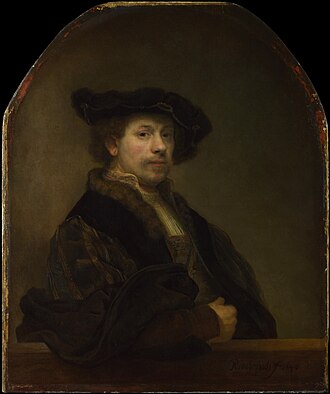 Autoritratto all'età di 34 anni - Rembrandt van Rijn (1640)
.jpg) Jacob Blessing the Sons of Joseph - Rembrandt van Rijn (1656)
Jacob Blessing the Sons of Joseph - Rembrandt van Rijn (1656)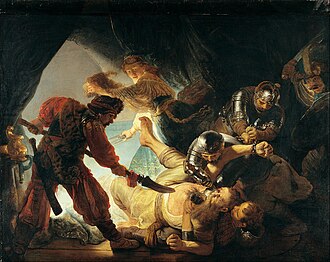 The Blinding of Samson - Rembrandt van Rijn (1636)