The Flagellation of Christ
Caravaggio · 1607
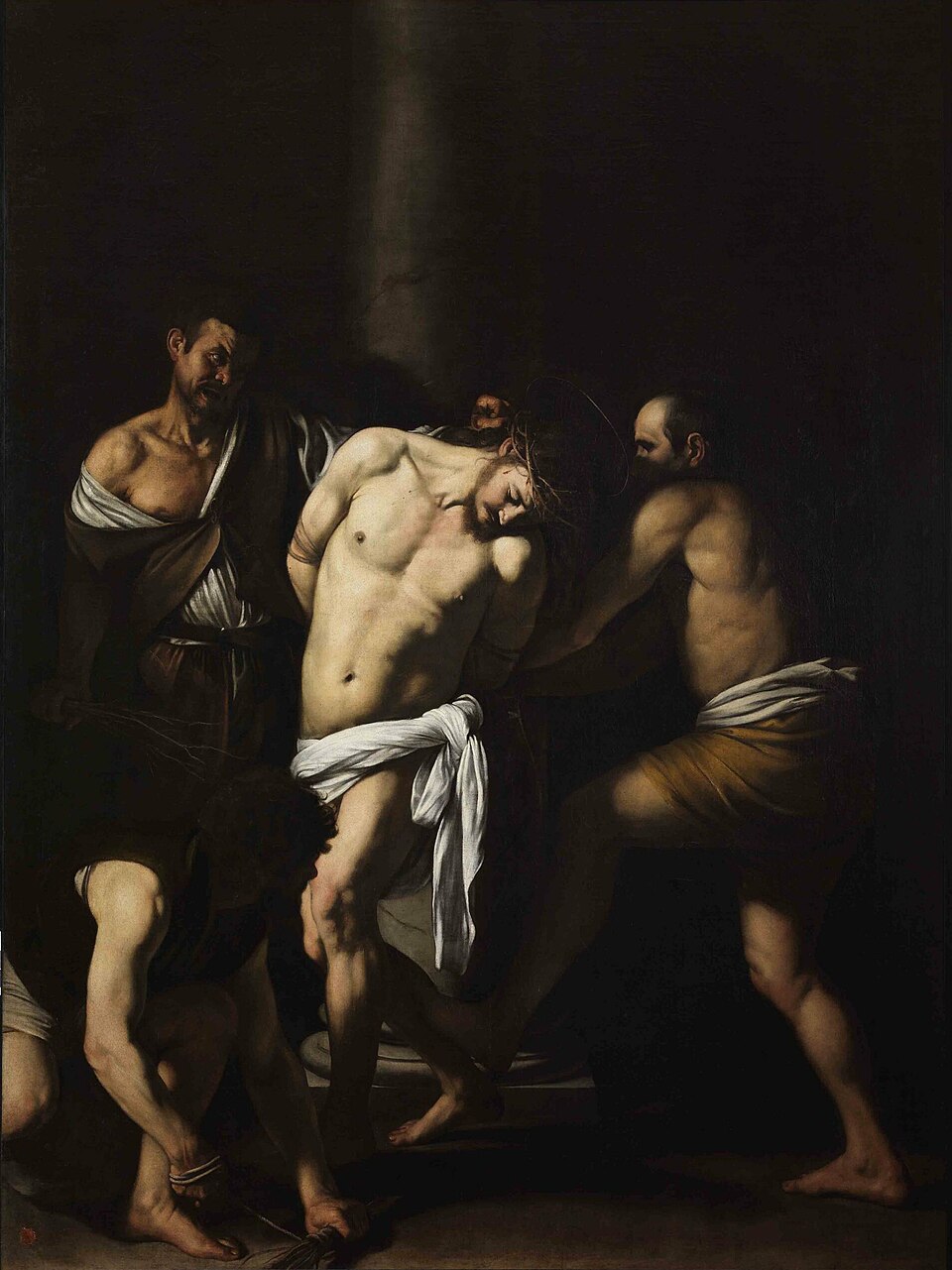
Christ's body sags at the column, not in a graceful pose but because one tormentor kicks the back of his knee and another holds his hair in a fist. In Naples, Caravaggio refused to make suffering pretty.
The story behind the painting
The Flagellation of Christ is dated to 1607 and may have been reworked by Caravaggio in 1610. According to the biographer Gian Pietro Bellori, writing in 1672, it was commissioned by the di Franco, or de Franchis, family for a chapel in the church of San Domenico Maggiore in Naples. The family had ties to the Confraternity of the Pio Monte della Misericordia, for whose church Caravaggio had already painted The Seven Works of Mercy. The picture stayed in San Domenico Maggiore for centuries and was moved to the museum at Capodimonte in 1972, where it is today. It should not be confused with Christ at the Column, another Flagellation Caravaggio painted in the same period.
What to look for
Caravaggio had in mind a famous fresco by Sebastiano del Piombo in San Pietro in Montorio in Rome, but he squeezed that composition into a far shallower space, so that the sculptural figures seem to stand on a narrow stage. He kept del Piombo's rhythmic arrangement of bodies across the canvas, which the source calls a kind of sadistic ballet. What he added was acutely observed reality. Christ's drooping body is explained by force, not elegance: on the right a torturer kicks the back of his knee, while on the left another grips his hair tightly. The large canvas, 390 by 260 centimetres, brings these figures close to life size.
Meaning and intent
The Flagellation was a long-loved subject in religious art and in devotional practice of the time, when the church encouraged self-flagellation as a way for the faithful to share in Christ's suffering. Seen in that light, the painting asks its viewers not to admire the scene from a distance but to stand near it and feel its weight. By grounding every movement in physical cause, Caravaggio makes the violence legible and real rather than decorative, and lets the quiet, yielding figure of Christ carry the emotional centre of the picture.
Legacy
This Flagellation belongs to a group of dramatic Neapolitan altarpieces, with The Seven Works of Mercy and Christ at the Column, all made within a few months of Caravaggio's arrival in the city. Together they made him the most talked-about artist in Naples. The church of Sant'Anna dei Lombardi became a centre for the Caravaggisti, painters working in his manner. They included Neapolitans such as Carlo Sellitto and Battistello Caracciolo, and Flemish artists such as Louis Finson, Abraham Vinck and Hendrick de Somer, who would later help carry this style to northern Europe.
Lo sapevi?
- Dated to 1607, possibly reworked in 1610.
- Commissioned for a chapel in San Domenico Maggiore, Naples (Bellori, 1672).
- Moved to the Museo di Capodimonte in 1972.
- Canvas size 390 x 260 cm (Wikidata).
L'artista
Caravaggio (1571-1610)
religious art · man · Italian Baroque painting · Jesus Christ · Museo di Capodimonte
Altre opere di Caravaggio
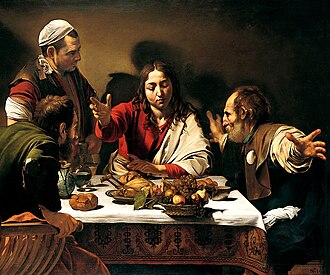 Supper at Emmaus - Caravaggio (1601)
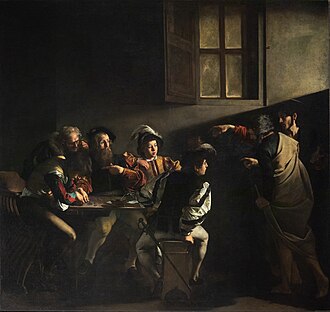 La vocazione di San Matteo - Caravaggio (1609)
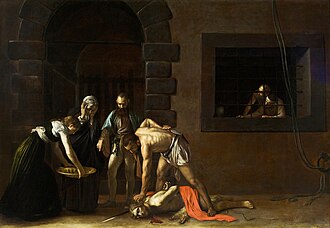 Decapitazione di San Giovanni Battista - Caravaggio (1608)
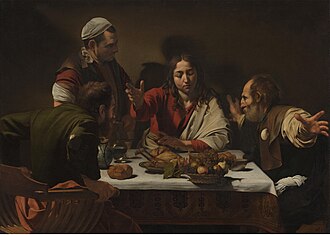 Supper at Emmaus - Caravaggio (1601)
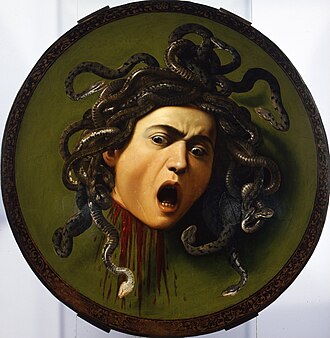 Testa di Medusa - Caravaggio (1597)
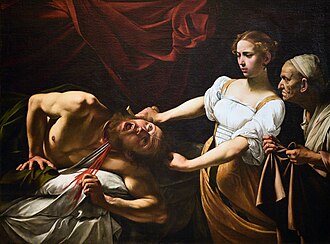 Giuditta che decapita Oloferne - Caravaggio (1598)
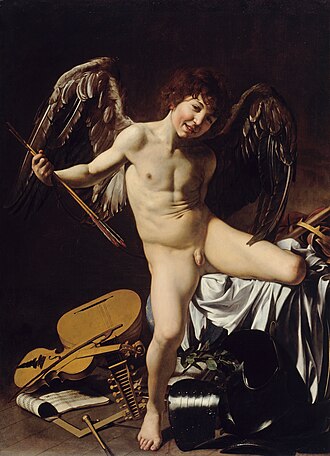 Amor Vincit Omnia - Caravaggio (1600s)
%2C%201595%20circa%2C%20534.jpg) Self-Portrait as Bacchus - Caravaggio (1595)
Self-Portrait as Bacchus - Caravaggio (1595)
Dipinti di artisti collegati
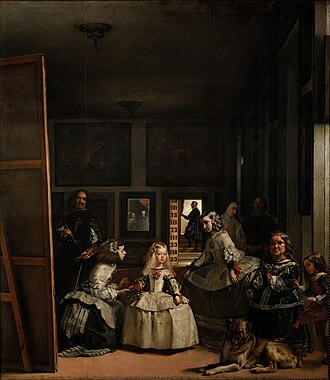 Las Meninas - Diego Velázquez (1656)
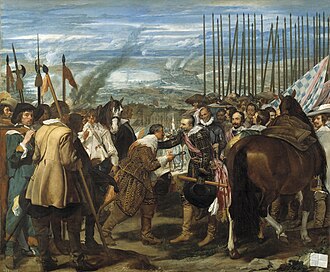 The Surrender of Brea - Diego Velázquez (1635)
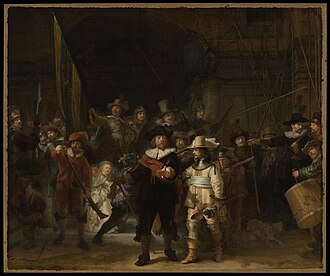 The Night Watch - Rembrandt van Rijn (1642)
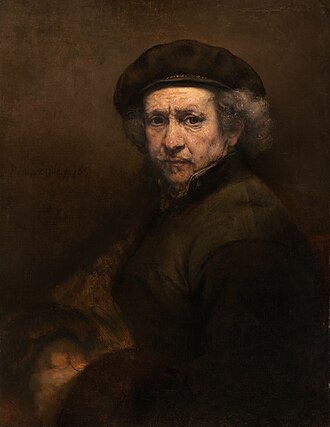 Self-Portrait - Rembrandt van Rijn (1659)
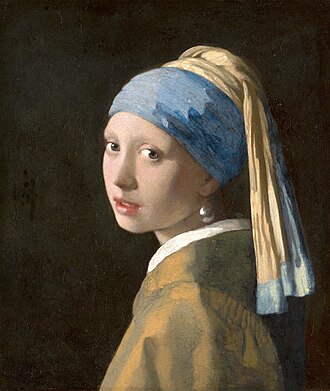 Girl with a Pearl Earring - Johannes Vermeer (1665)
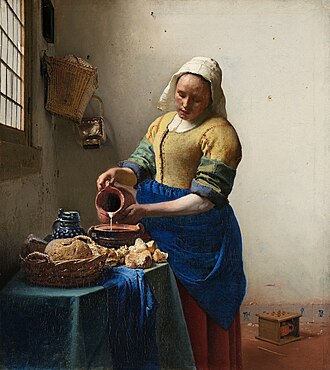 The Milkmaid - Johannes Vermeer (c. 1658)