Conversion on the Way to Damascus
Caravaggio · 1600s
.jpg)
A young soldier lies flat on his back, arms open to a light only he can see, while a huge horse lifts a hoof above him. Caravaggio turned a thunderclap of faith into a silent moment in a dark stable.
The story behind the painting
This is the Conversion of Saint Paul that Caravaggio painted in 1601 for the Cerasi Chapel in Santa Maria del Popolo, Rome, where it still hangs. Monsignor Tiberio Cerasi, Treasurer-General to Pope Clement VIII, bought the chapel in July 1600 and in September signed a contract for two large paintings, the conversion of Saint Paul and the martyrdom of Saint Peter, leaving the painter free to choose the figures as he saw fit. Cerasi died in May 1601 while Caravaggio was still at work. According to the biographer Giovanni Baglione, the first versions of both pictures did not please and were taken by Cardinal Sannesio; Caravaggio replaced them with the oil paintings seen today. A brighter, more Mannerist first Conversion survives in the Odescalchi Balbi Collection.
What to look for
Start at the bottom of the picture, where Saul lies on the ground, head toward us, eyes shut, legs apart and arms raised as if to embrace his vision. He is a muscular young man in a Renaissance idea of Roman armour, an orange and green cuirass, tunic and boots. His plumed helmet has fallen, his sword lies at his side, and his red cape spreads under him like a blanket. Above him fills the frame a great skewbald horse, brown and cream, still foaming at the mouth, one hoof hanging in the air. An old groom holds it, pointing at the ground to keep it from treading on Saul. Notice the darkness all around, and the faint rays at the right.
Meaning and intent
The Acts of the Apostles tells how Saul, a persecutor of Christians, saw a light from heaven on the road to Damascus and heard a voice ask why he persecuted Jesus. The Bible never mentions a horse; this painting even helped spread the idea that Paul fell from one. Caravaggio rejects the usual crowded scene with soldiers and Christ in the sky. Here the faint rays are not the true source of the light, and the groom seems unaware of anything divine. The miracle happens inside Saul alone. Because the horse is unsaddled, some suggest the scene is a stable rather than an open road, which makes the encounter even more intimate and still.
Legacy
The painting draws on a long tradition. Walter Friedlaender saw Saul as a turned version of Raphael's Saint Paul, passed on through Taddeo Zuccari, and the horse as inspired by Dürer's print The Large Horse. A woodcut attributed to Ugo da Carpi shows exactly the same moment of Saul on the ground and a groom calming the horse. X-rays have revealed another, nearly complete version of the scene beneath the paint, with the saint fallen on the right, eyes open, hand raised. Across the chapel hangs its companion, the Crucifixion of Saint Peter, and between them on the altar is Annibale Carracci's Assumption. Denis Mahon found no historical evidence of serious rivalry between the two painters.
Lo sapevi?
- This is the second, Cerasi Chapel version, painted in 1601 and still in Santa Maria del Popolo.
- A brighter first version is in the Odescalchi Balbi Collection.
- The Bible does not mention a horse in Paul's conversion story.
- X-rays show an almost complete earlier composition under the present painting.
L'artista
Caravaggio (1571-1610)
Altre opere di Caravaggio
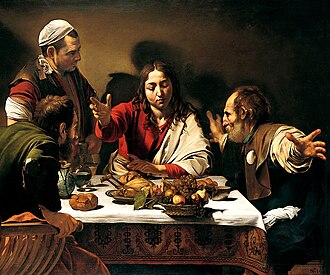 Supper at Emmaus - Caravaggio (1601)
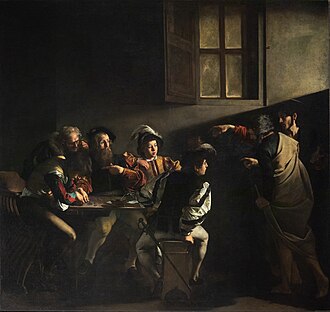 La vocazione di San Matteo - Caravaggio (1609)
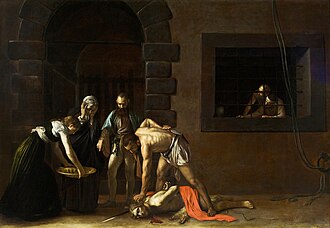 Decapitazione di San Giovanni Battista - Caravaggio (1608)
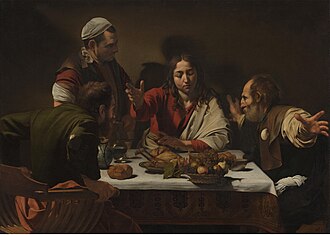 Supper at Emmaus - Caravaggio (1601)
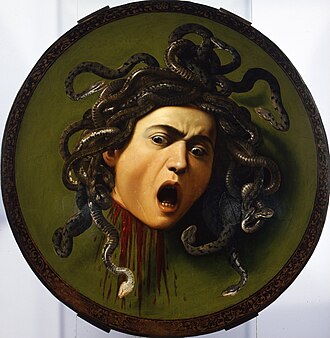 Testa di Medusa - Caravaggio (1597)
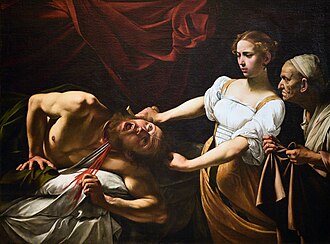 Giuditta che decapita Oloferne - Caravaggio (1598)
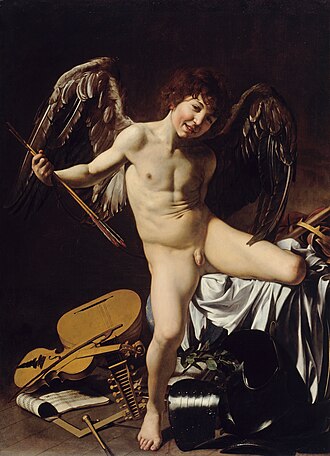 Amor Vincit Omnia - Caravaggio (1600s)
%2C%201595%20circa%2C%20534.jpg) Self-Portrait as Bacchus - Caravaggio (1595)
Self-Portrait as Bacchus - Caravaggio (1595)
Dipinti di artisti collegati
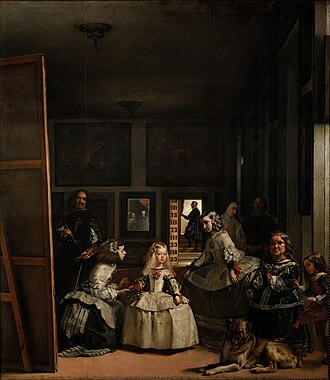 Las Meninas - Diego Velázquez (1656)
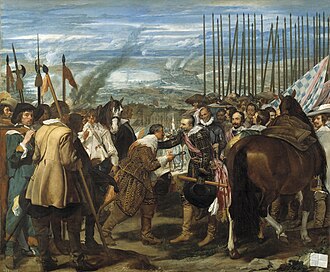 The Surrender of Brea - Diego Velázquez (1635)
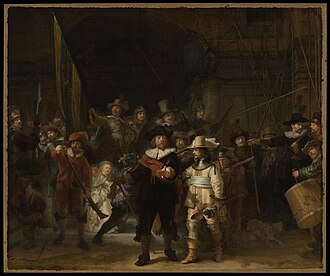 The Night Watch - Rembrandt van Rijn (1642)
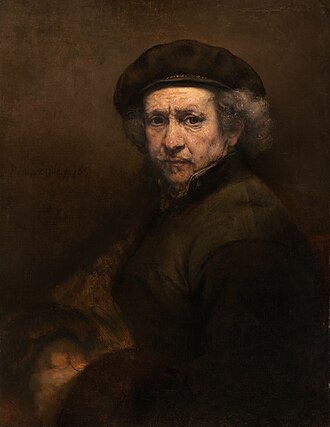 Self-Portrait - Rembrandt van Rijn (1659)
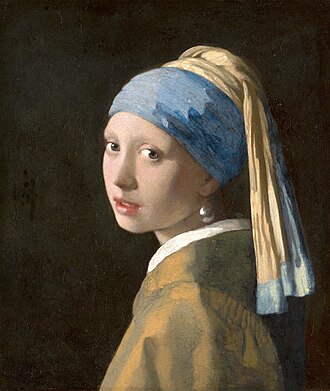 Girl with a Pearl Earring - Johannes Vermeer (1665)
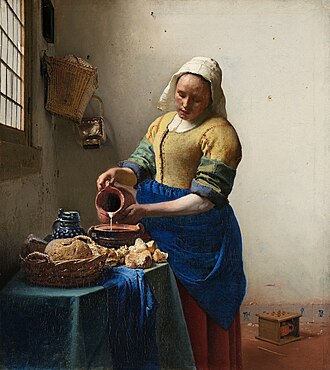 The Milkmaid - Johannes Vermeer (c. 1658)