Death of the Virgin
Caravaggio · 1600s
.jpg)
No angels, no golden clouds: only a woman in a red dress, lying still, and the people who loved her hiding their faces. The church that ordered it refused to hang it.
The story behind the painting
Caravaggio painted Death of the Virgin when he had been working in Rome for some fifteen years. It was commissioned by Laerzio Cherubini, a papal lawyer, for his chapel in the Carmelite church of Santa Maria della Scala in Trastevere. The source gives its date as about 1601-06 or 1604-06, and notes it could not have been finished before 1605-06. The picture caused a stir and the parish rejected it as unfit. Giulio Mancini thought Caravaggio had used a prostitute, possibly his mistress, as the model for the Virgin, and Giovanni Baglione and Gian Pietro Bellori also blamed the Virgin's appearance. The fathers replaced it with a painting by Carlo Saraceni, a close follower of Caravaggio.
What to look for
The canvas is immense, about 369 by 245 centimetres, and the figures are nearly life-sized. Mary lies reclined in a simple red dress. Her head lolls, an arm hangs down, her feet are swollen and spread. Only a thread-like halo marks her holiness. Around her are the overcome Mary Magdalene and the apostles, with others shuffling in behind; the compact mass of bodies guides your eye to her. Notice how the deepest grief is shown by hidden faces. Follow the light from the back of the Magdalene's neck to Mary's face, then on to the apostles' hands and heads. Above, a blood-red drape looms across the top of the scene.
Meaning and intent
Caravaggio abandons the traditional signs of the Virgin's sanctity and shows a real, mortal body. Here is silent grief, with no wailing, and monumentality drawn from the figures and the intensity of their feeling alone. The subject itself was delicate. In the seventeenth century most Catholics believed Mary was assumed alive, and most paintings showed that. The source calls this the last major Catholic work of art in which Mary is clearly dead. The question was never settled by dogma: in 1950 Pope Pius XII left it open, though alluding to her death, and in 1997 Pope John Paul II affirmed that she did experience natural death before her Assumption.
Legacy
Rejected in Rome, the painting found a champion in Peter Paul Rubens, who praised it as one of Caravaggio's best works and recommended its purchase by Vincenzo Gonzaga, Duke of Mantua. It was shown briefly in Rome in April 1607, by which time Caravaggio had fled the city after killing Ranuccio Tomassoni in a sword fight. The Mantua collection was sold to Charles I of England in 1627; after his execution it was dispersed, and Everhard Jabach bought the painting and sold it in 1671 to Louis XIV. It became state property after the French Revolution and hangs today in the Louvre, a landmark of Caravaggio's frank, robust break with Mannerism.
Lo sapevi?
- Commissioned by papal lawyer Laerzio Cherubini for Santa Maria della Scala, Rome (Wikipedia)
- Rejected by the parish; replaced with a work by Carlo Saraceni (Wikipedia)
- About 369 × 245 cm, with nearly life-sized figures (Wikidata; Wikipedia)
- Source gives the date as both c. 1601-06 and c. 1604-06 (Wikipedia)
L'artista
Caravaggio (1571-1610)
woman · religious art · Mary · Italian Baroque painting · Department of Paintings of the Louvre · drapery · Mary Magdalene
Altre opere di Caravaggio
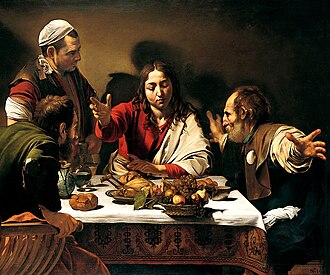 Supper at Emmaus - Caravaggio (1601)
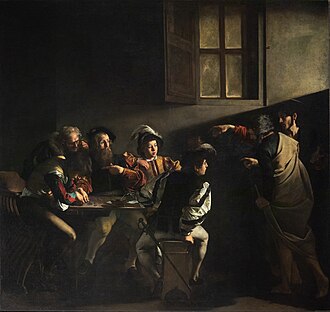 La vocazione di San Matteo - Caravaggio (1609)
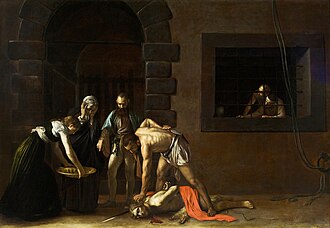 Decapitazione di San Giovanni Battista - Caravaggio (1608)
 Supper at Emmaus - Caravaggio (1601)
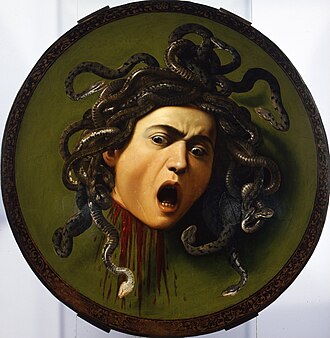 Testa di Medusa - Caravaggio (1597)
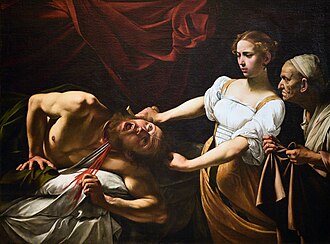 Giuditta che decapita Oloferne - Caravaggio (1598)
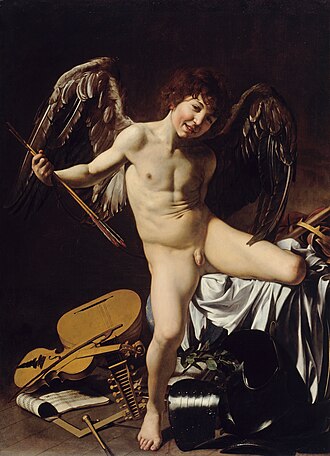 Amor Vincit Omnia - Caravaggio (1600s)
%2C%201595%20circa%2C%20534.jpg) Self-Portrait as Bacchus - Caravaggio (1595)
Self-Portrait as Bacchus - Caravaggio (1595)
Dipinti di artisti collegati
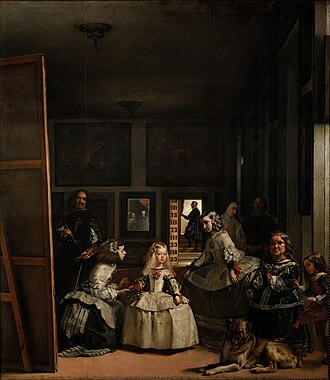 Las Meninas - Diego Velázquez (1656)
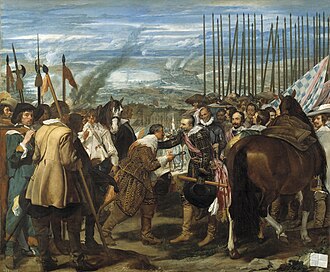 The Surrender of Brea - Diego Velázquez (1635)
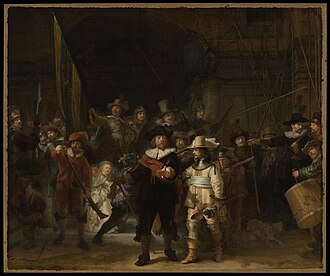 The Night Watch - Rembrandt van Rijn (1642)
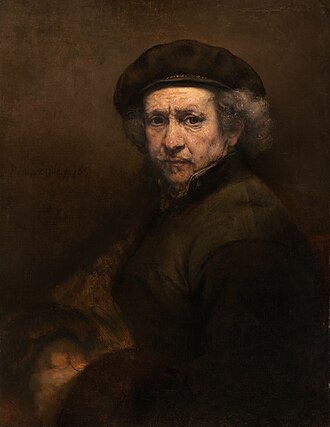 Self-Portrait - Rembrandt van Rijn (1659)
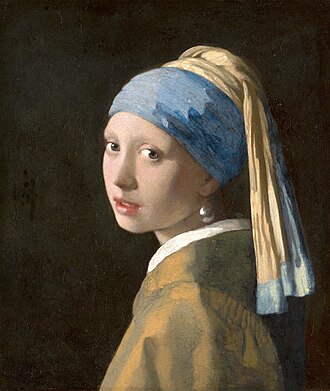 Girl with a Pearl Earring - Johannes Vermeer (1665)
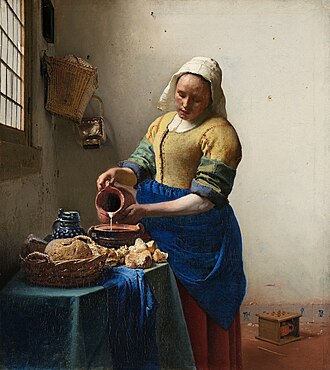 The Milkmaid - Johannes Vermeer (c. 1658)