オランダ黄金時代の絵画
In the 17th century the young Dutch Republic became the richest nation in Europe, and it filled its homes with paintings.
Rembrandt van Rijn · Johannes Vermeer
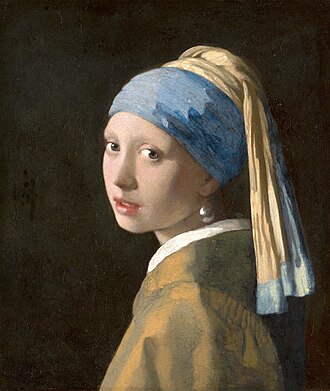 真珠の耳飾りの少女 - Johannes Vermeer (1665)
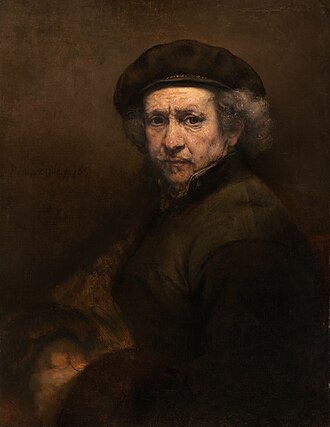 自画像 - Rembrandt van Rijn (1659)
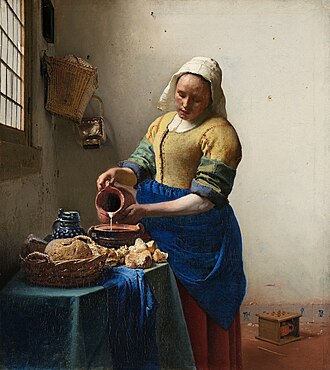 牛乳を注ぐ女 - Johannes Vermeer (c. 1658)
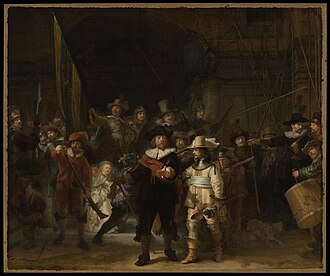 夜警 - Rembrandt van Rijn (1642)
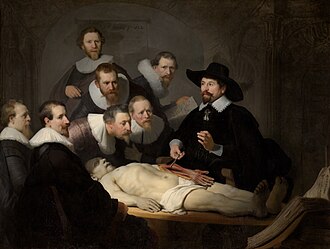 テュルプ博士の解剖学講義 - Rembrandt van Rijn (1632)
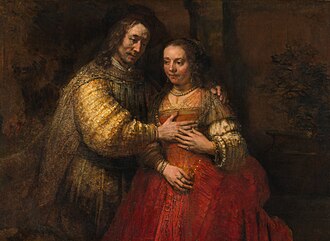 ユダヤの花嫁 - Rembrandt van Rijn (1660s)
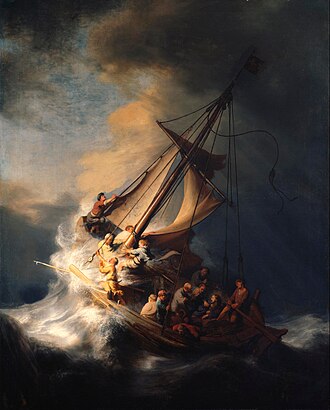 ガラリアの海の嵐 - Rembrandt van Rijn (1633)
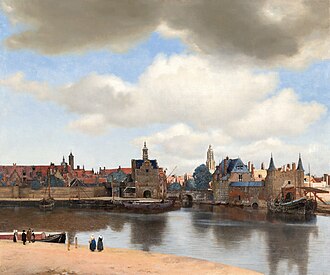 デルフト眺望 - Johannes Vermeer (1660s)
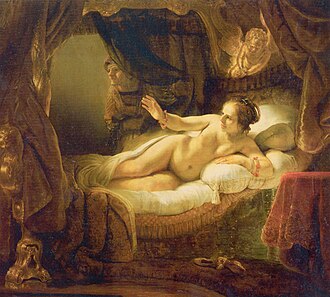 ダナエ - Rembrandt van Rijn (1636)
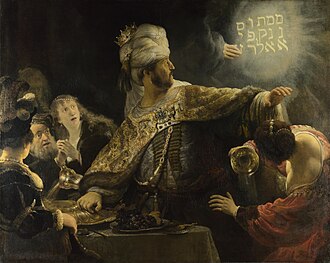 ベルシャザルの酒宴 - Rembrandt van Rijn (1636)
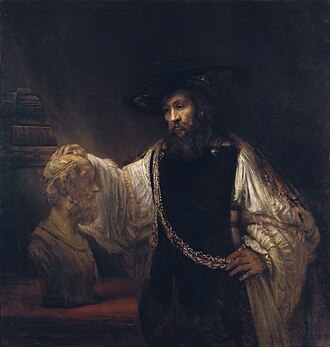 ホメロスの胸像を見つめるアリストテレス - Rembrandt van Rijn (1653)
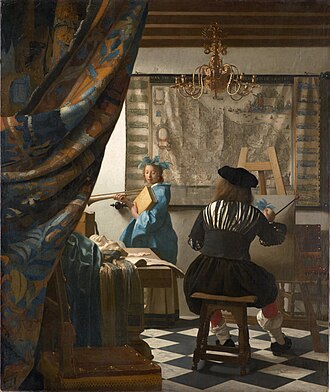 絵画芸術 - Johannes Vermeer (1660s)
%20van%20het%20Amsterdamse%20lakenbereidersgilde%20-%20Google%20Art%20Project.jpg) 布地商組合の見本調査官たち - Rembrandt van Rijn (1662)
布地商組合の見本調査官たち - Rembrandt van Rijn (1662)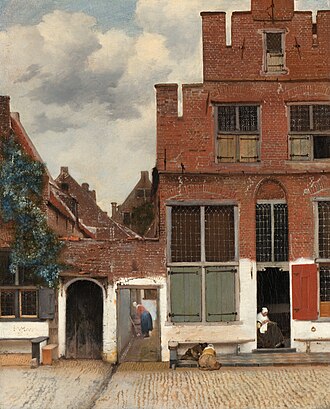 小路 - Johannes Vermeer (1658)
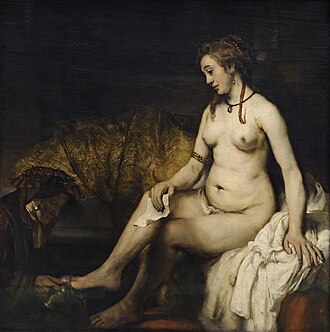 ダビデ王の手紙を手にしたバテシバの水浴 - Rembrandt van Rijn (1654)
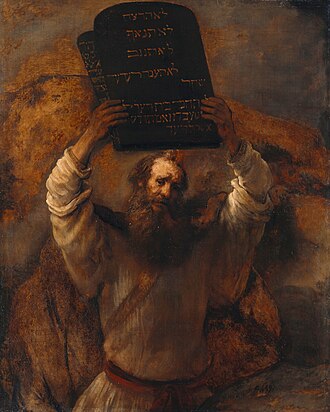 十戒の石板を破壊するモーセ - Rembrandt van Rijn (1659)
.jpg) 窓辺で手紙を読む女 - Johannes Vermeer (1650s)
窓辺で手紙を読む女 - Johannes Vermeer (1650s)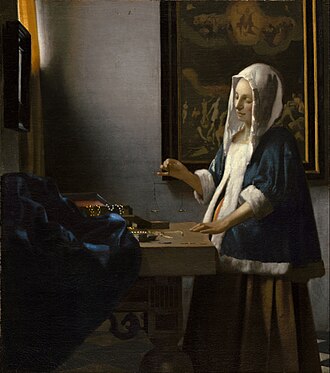 天秤を持つ女 - Johannes Vermeer (1665)
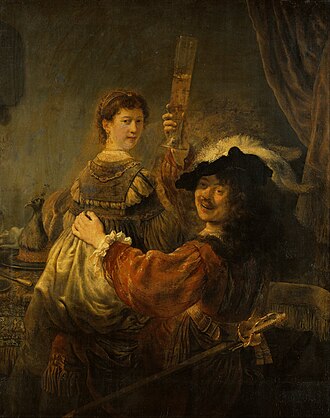 売春宿の放蕩息子 - Rembrandt van Rijn (1635)
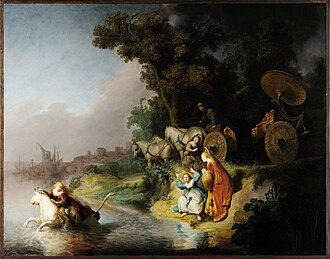 エウロペの誘拐 - Rembrandt van Rijn (1632)
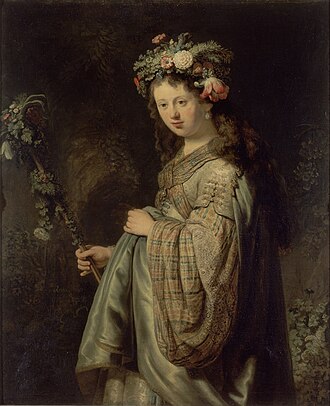 フローラ - Rembrandt van Rijn (1634)
%2C%20by%20Rembrandt%2C%20from%20Prado%20in%20Google%20Earth.jpg) ホロフェルネスの饗宴におけるユディト - Rembrandt van Rijn (1634)
ホロフェルネスの饗宴におけるユディト - Rembrandt van Rijn (1634)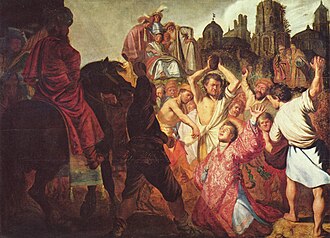 聖ステファノの石打ち - Rembrandt van Rijn (1624)
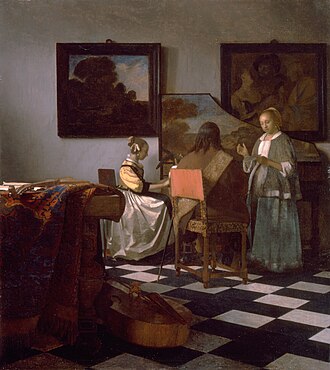 合奏 - Johannes Vermeer (1663)
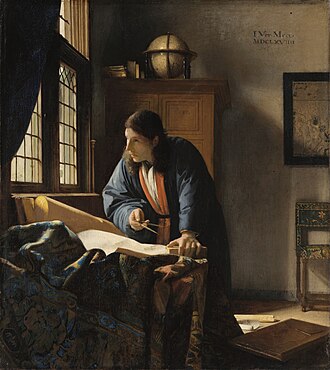 地理学者 - Johannes Vermeer (1668)
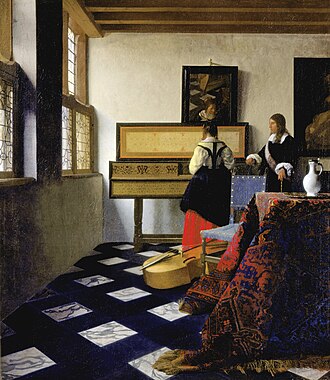 音楽の稽古 - Johannes Vermeer (1662)
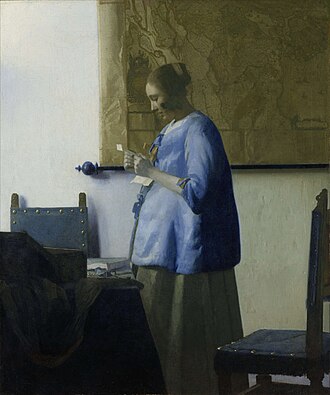 青衣の女 - Johannes Vermeer (1664)
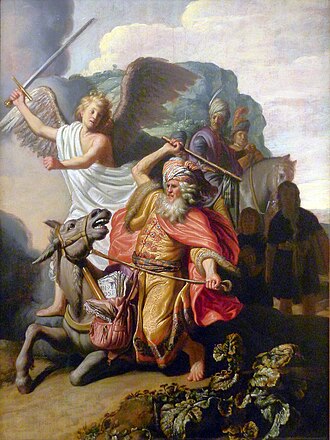 バラムとロバ - Rembrandt van Rijn (1626)
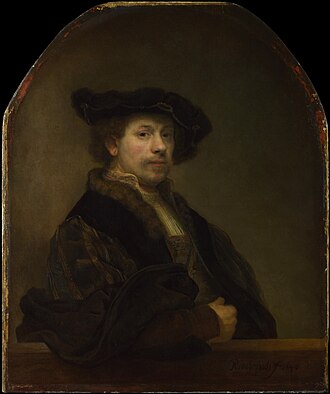 34歳の自画像 - Rembrandt van Rijn (1640)
.jpg) ヨセフの息子たちを祝福するヤコブ - Rembrandt van Rijn (1656)
ヨセフの息子たちを祝福するヤコブ - Rembrandt van Rijn (1656)
オランダ黄金時代の絵画とは? よくある質問
In the 17th century the young Dutch Republic became the richest nation in Europe, and it filled its homes with paintings. Rembrandt, Vermeer and Frans Hals worked alongside hundreds of specialists in portraits, landscapes, sea views and still lifes, creating a world of quiet rooms, wide skies and astonishing detail.
What is Dutch Golden Age painting, in simple words?
It is the painting made in the Dutch Republic during the 17th century, when the country was Europe's most prosperous nation and a leader in trade and science. Artists painted for ordinary buyers as well as the rich, and the output was enormous: about 1.3 million pictures were painted in just the twenty years after 1640. Most works were fairly small and showed portraits, daily life, landscapes, the sea and still lifes.
Why is it called the Golden Age?
The name reflects how extraordinary this century was for the Netherlands. The Dutch Republic, which emerged from the Eighty Years' War (1568-1648), became Europe's richest country, and its wealth fed a huge demand for art. A visiting English traveller in 1640 was struck that even blacksmiths and cobblers kept some picture or other by their forge. Painting reached a level and a volume rarely seen before.
When and where did it happen?
It covers roughly the whole 17th century, with the core period running from the late 1620s until the French invasion of 1672. The main centres were Dutch cities: Amsterdam was the largest, while Haarlem and Utrecht mattered most in the first half of the century, and Leiden, Delft, Rotterdam and The Hague were also important. Before this period, these northern provinces had been less important for art than Flanders in the south.
Who were the main painters?
The best-known today are Rembrandt, Johannes Vermeer and Frans Hals. Around them were many specialists: Jan Steen and Pieter de Hooch for daily life, Jacob van Ruisdael, Jan van Goyen and Meindert Hobbema for landscape, Willem van de Velde the Elder and Younger for the sea, and Willem Claeszoon Heda, Pieter Claesz and Willem Kalf for still life. Judith Leyster and Rachel Ruysch were notable women painters.
How can I recognise a Dutch Golden Age painting?
Look for detailed realism rather than grand idealisation, often on a fairly small panel or canvas. Portrait sitters usually wear dark, sober clothes with crisp lace collars. Landscapes have low horizons and big, cloudy skies. Still lifes show gleaming silver, food and flowers with remarkable textures and light, often with hints like a skull or half-peeled lemon reminding us that life is short. Interiors are quiet and intimate.
How is it different from Flemish and Baroque painting?
Dutch painting belongs to the Baroque period in time and shares some of its features, but it mostly lacks the idealisation and love of splendour seen in much Baroque work, including in neighbouring Flanders. Instead it follows the tradition of detailed realism from Early Netherlandish painting. Because Calvinism did not allow religious images in churches, church commissions largely disappeared, and secular subjects took over.
What did people think of it at the time?
Paintings were everywhere and bought by all sorts of people, but so many were produced that prices were relatively low, except for fashionable names. Many artists had other jobs; Jan Steen, for example, also worked as an innkeeper. Even painters now ranked among the greatest, such as Vermeer, Frans Hals and Rembrandt in his later years, often struggled for money. The French invasion of 1672, the year of disaster, plunged the art market into depression.
What were the painters trying to do?
Most aimed to satisfy a lively market, often painting speculatively rather than on commission, and each artist tended to specialise in one genre. They tried to capture reality with great skill, from the shine of metal to the feel of a face. Many scenes also carried a moral, illustrating Dutch proverbs or reminding viewers through vanitas symbols that worldly things fade. Dutch artists cared less about art theory than painters elsewhere.
Which famous works should I see first?
Start with Rembrandt's The Anatomy Lesson of Dr. Nicolaes Tulp (1632), a dramatic group portrait of physicians gathered around a body. Then look at Vermeer's The Milkmaid (1658-1661), a perfect example of calm everyday life, and Meindert Hobbema's The Avenue at Middelharnis (1689), a famous landscape. After that, explore the lively portraits of Frans Hals and the gleaming still lifes of Willem Claeszoon Heda.
Where can I see these paintings today?
Rembrandt's The Anatomy Lesson of Dr. Nicolaes Tulp is in the Mauritshuis in The Hague, and Hobbema's The Avenue at Middelharnis is in London. Because Dutch paintings were produced in vast numbers and widely exported in their own time, they are spread across many collections. Be aware that some did not survive: during the 18th and 19th centuries many Golden Age paintings were painted over with new works.
Why does it still matter?
This period shaped the future of landscape, still life, genre and marine painting across Europe. Dutch painters working abroad, such as the van de Veldes who moved to London in 1672, helped start English landscape painting, and Dutch-born artists like Peter Lely and Godfrey Kneller shaped the English portrait style. It also shows how art can flourish for ordinary people, not only for churches and courts.