ヤーコブ・デ・ヘイン3世の肖像
Rembrandt van Rijn · 1632
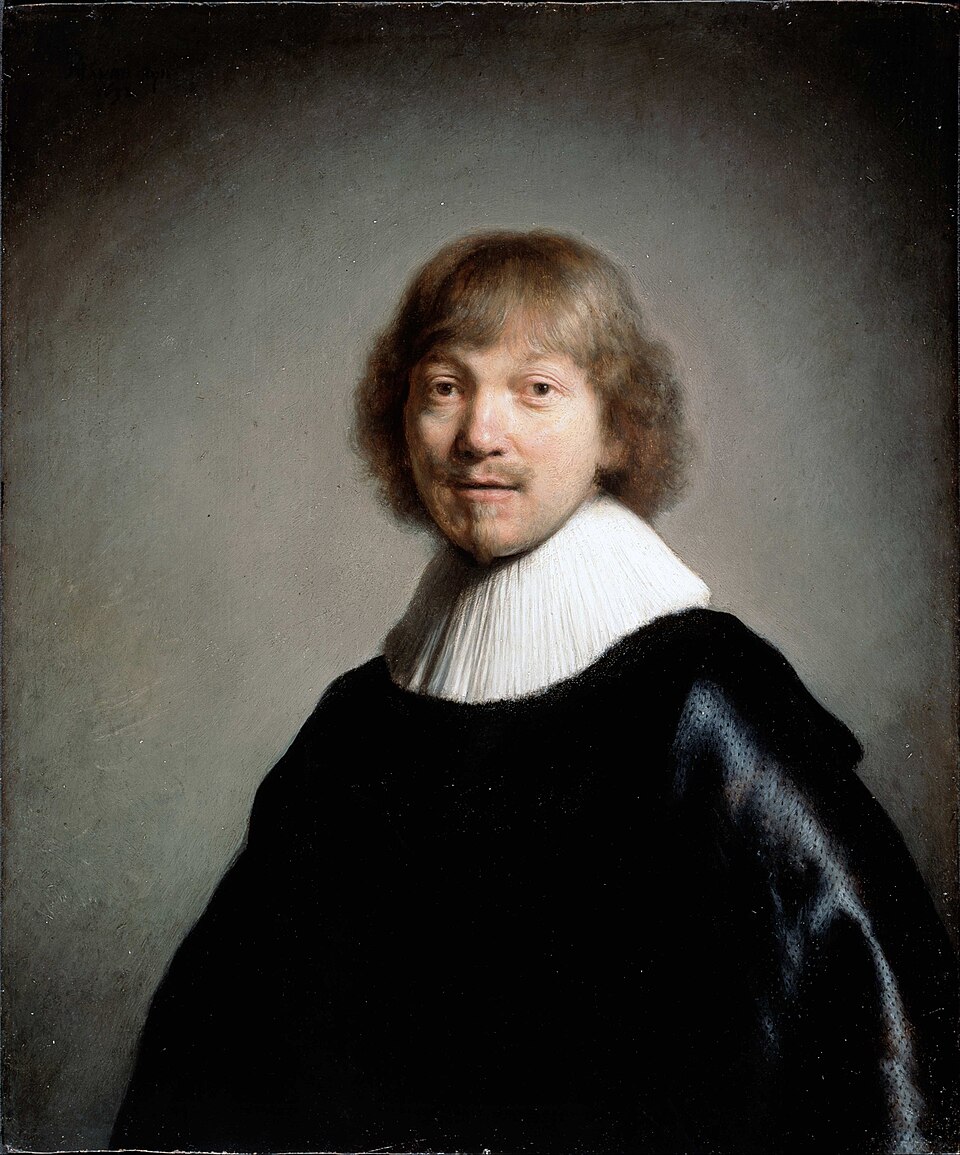
A small Rembrandt panel of a friend, painted as a pledge between two men, has been stolen more times than any other painting on record. They call it the takeaway Rembrandt, and each time it has found its way home.
The story behind the painting
The engraver Jacob de Gheyn III and his friend Maurits Huygens asked Rembrandt in 1632 to paint them both in identical formats, on oak panel. The two friends agreed that whoever died first would leave his portrait to the other, as inscriptions on the backs record. When de Gheyn died, the two portraits were reunited. Maurits Huygens survived him by less than a year, and his brother Constantijn Huygens was so heartbroken that he stopped writing for a long time. Tree-ring study shows Rembrandt painted a self-portrait that year on wood from the same tree.
What to look for
The panel is tiny for Rembrandt, only 29.9 by 24.9 cm, about the size of a sheet of paper. It is oil on oak, and it shows the engraver as one half of a matched pair, meant to sit beside his friend's portrait of the same size. Look at it knowing it was made to be held and kept close, a portrait of someone dear rather than a show piece. Its small size is also exactly what has made it so easy to carry away, again and again.
Meaning and intent
Behind this modest picture lies a promise. Two men commissioned matching likenesses so that the survivor would keep the other's face, a quiet way of planning for grief. The story does not end with de Gheyn: within a year Maurits too was dead, and the loss silenced his brother Constantijn, one of the great writers of the time. The painting is a record of friendship more than of rank, and it carries that private feeling into a public gallery.
Legacy
Now in Dulwich Picture Gallery in London, it has been stolen four times since 1966. In 1981 it was recovered when police stopped four men in a taxi. Less than two years later a burglar came through a skylight and pried it off the wall with a crowbar; police arrived within three minutes but too late. It was missing three years until it turned up on 8 October 1986 in a luggage rack at a station of a British army garrison in Münster. Once it was found under a graveyard bench in Streatham, once on the back of a bicycle.
豆知識
- Painted in 1632 on oak, only 29.9 by 24.9 cm.
- Made as a pair with a portrait of Maurits Huygens.
- Stolen four times since 1966, a recorded maximum.
- Held at Dulwich Picture Gallery, London.
画家について
Rembrandt van Rijn (1606-1669)
肖像 · 男性 · オランダ黄金時代の絵画
同じ画家の作品: Rembrandt van Rijn
 夜警 - Rembrandt van Rijn (1642)
 自画像 - Rembrandt van Rijn (1659)
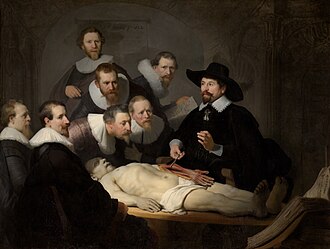 テュルプ博士の解剖学講義 - Rembrandt van Rijn (1632)
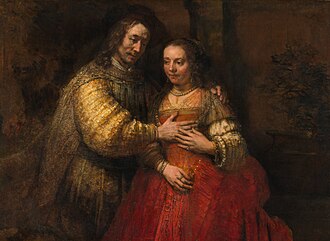 ユダヤの花嫁 - Rembrandt van Rijn (1660s)
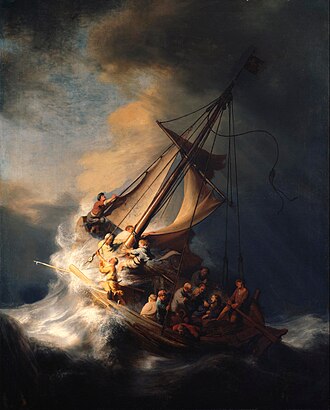 ガラリアの海の嵐 - Rembrandt van Rijn (1633)
 放蕩息子の帰還 - Rembrandt van Rijn (1668)
 ダナエ - Rembrandt van Rijn (1636)
 ベルシャザルの酒宴 - Rembrandt van Rijn (1636)
関連する画家の作品
 真珠の耳飾りの少女 - Johannes Vermeer (1665)
 牛乳を注ぐ女 - Johannes Vermeer (c. 1658)
 聖ニコラウスのお祭り - Jan Steen (1660s)
 牡蠣を食べる少女 - Jan Steen (1658)
 陽気な酒飲み - Frans Hals (1620s)
 微笑む騎士 - Frans Hals (1624)
 ウェイク・ベイ・ドゥールステーデの風車 - Jacob van Ruisdael (1670)
 The Jewish Cemetery - Jacob van Ruisdael (1650s)
 デルフトの家の中庭 - Pieter de Hooch (1658)
 リンゴの皮を剥く女性 - Pieter de Hooch (1663)