十戒の石板を破壊するモーセ
Rembrandt van Rijn · 1659
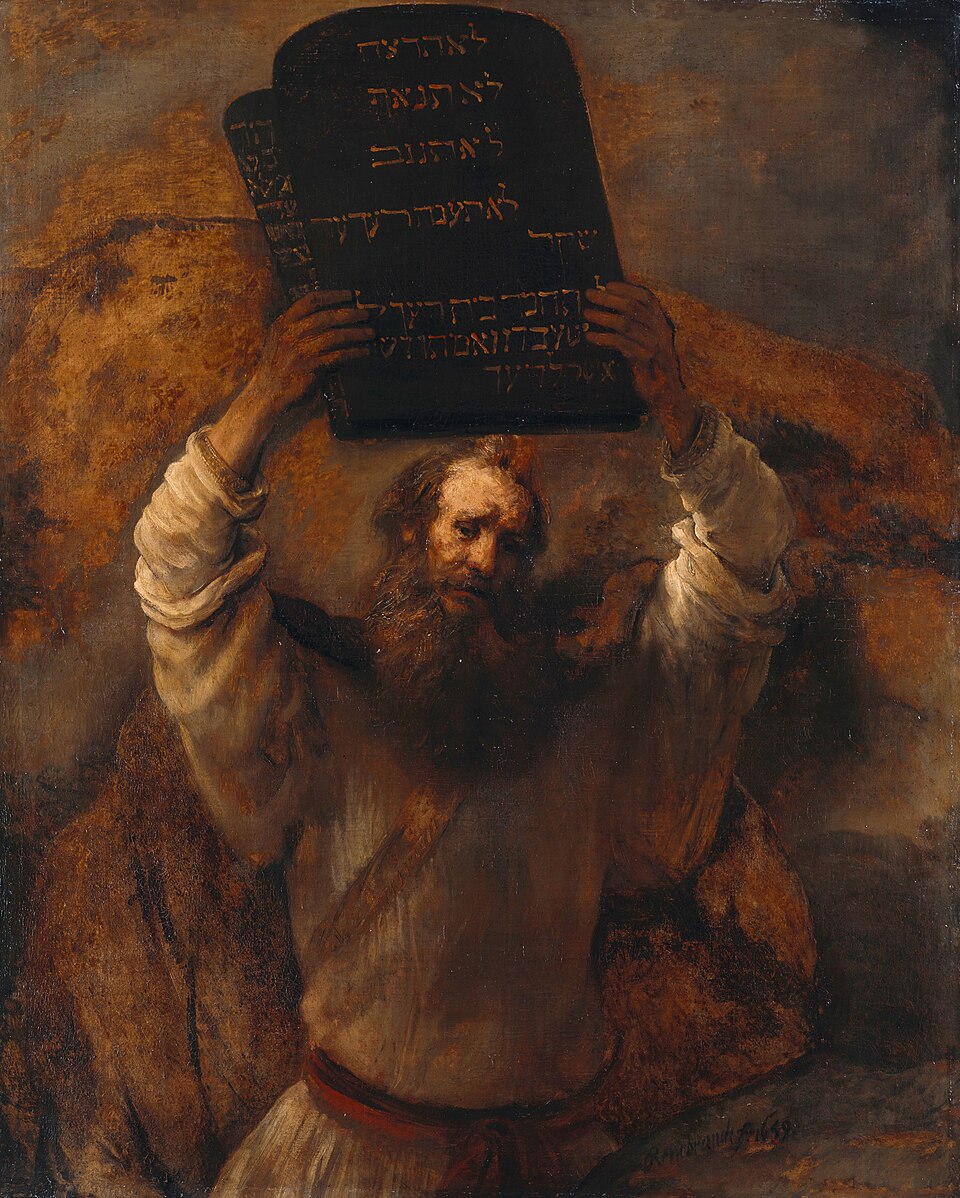
Rembrandt chose not the moment of destruction but the breath before it: Moses holding the stone tablets of the Ten Commandments, about to let them fall.
The story behind the painting
Rembrandt painted this canvas in 1659, in the hardest years of his life. In July 1656 he had declared insolvency; in November 1657 his paintings, etching plates, drawings and collection were auctioned, with disappointing results; and by February 1658 his house had been sold and the family had moved to more modest lodgings on the Rozengracht. With him were his companion Hendrickje Stoffels and his son Titus, who in 1660 set up a business as art dealers so that he could keep working. The written sources say very little about how this particular painting came to be made, and it would be wrong to guess. What we know is that it was created as his world was being stripped away.
What to look for
The canvas is large, 168.5 by 136.5 centimetres, so the prophet confronts us nearly at life scale. The sources describe the subject simply: Moses about to break the original two stone tablets inscribed with the Ten Commandments. Look at how Rembrandt concentrates the drama in a single figure and the weight of the stone he holds. There is no crowd to distract, no busy setting, only the man and the tablets. Detailed descriptions of the colours and brushwork are not given in the sources used here, so take your time with the surface yourself: notice where the light falls, where the paint thickens, and how the tablets, with their inscriptions, become the true focus of the scene.
Meaning and intent
In the biblical story Moses descends from the mountain with the tablets of the Law and, seeing the people worshipping an idol, breaks them. Rembrandt's choice is telling: rather than showing stone shattering, he paints the instant before, when the decision is still suspended in Moses's hands. That pause gives the picture its tension. It is a moment of anger, but also of grief and responsibility, the instant a covenant is broken. The sources do not record what Rembrandt himself intended, so any further reading is interpretation. Still, it is hard not to feel the weight of loss in an image painted by a man who had himself recently watched everything he owned sold.
Legacy
The painting now hangs in the Gemäldegalerie in Berlin, where it belongs to the Dutch Golden Age collection. Its title appears in different forms, Moses Smashing or Moses Breaking the Tablets of the Law, but the subject is the same. It belongs to Rembrandt's late period, when, despite financial ruin, he went on receiving commissions and producing major works such as the Sampling Officials of 1662. For visitors, its power lies in its directness: one figure, one decision, held in suspense. It is a reminder that some of the most searching religious images of the seventeenth century were made by an artist working through private catastrophe, and that he chose to show not the crash but the moment of choice.
豆知識
- It was painted in 1659 and measures 168.5 × 136.5 cm.
- It shows Moses about to break the original two tablets of the Ten Commandments.
- It is in the Gemäldegalerie, Berlin.
- It was made soon after Rembrandt's 1656 insolvency and the sale of his house.
Wikipedia · Wikipedia · Wikidata
画家について
Rembrandt van Rijn (1606-1669)
宗教美術 · オランダ黄金時代の絵画 · 絵画館
同じ画家の作品: Rembrandt van Rijn
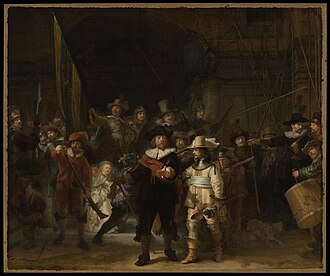 夜警 - Rembrandt van Rijn (1642)
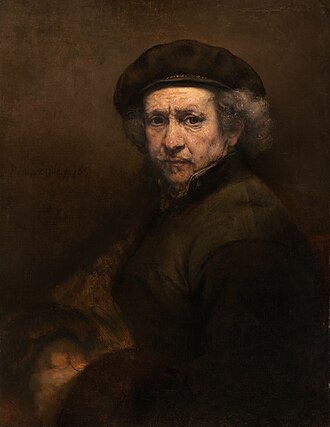 自画像 - Rembrandt van Rijn (1659)
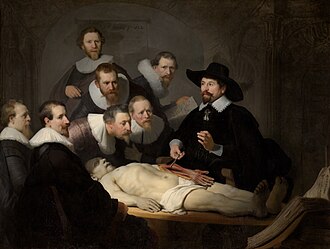 テュルプ博士の解剖学講義 - Rembrandt van Rijn (1632)
 ユダヤの花嫁 - Rembrandt van Rijn (1660s)
 ガラリアの海の嵐 - Rembrandt van Rijn (1633)
 放蕩息子の帰還 - Rembrandt van Rijn (1668)
 ダナエ - Rembrandt van Rijn (1636)
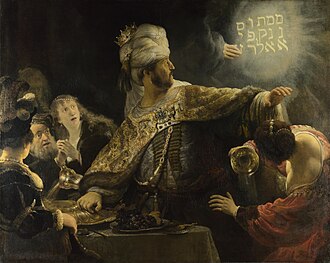 ベルシャザルの酒宴 - Rembrandt van Rijn (1636)
 真珠の耳飾りの少女
 牛乳を注ぐ女
 エマオの晩餐
 聖マタイの召命
 ラス・メニーナス
 ブレダの開城