兵士と笑う女
Johannes Vermeer · 1658
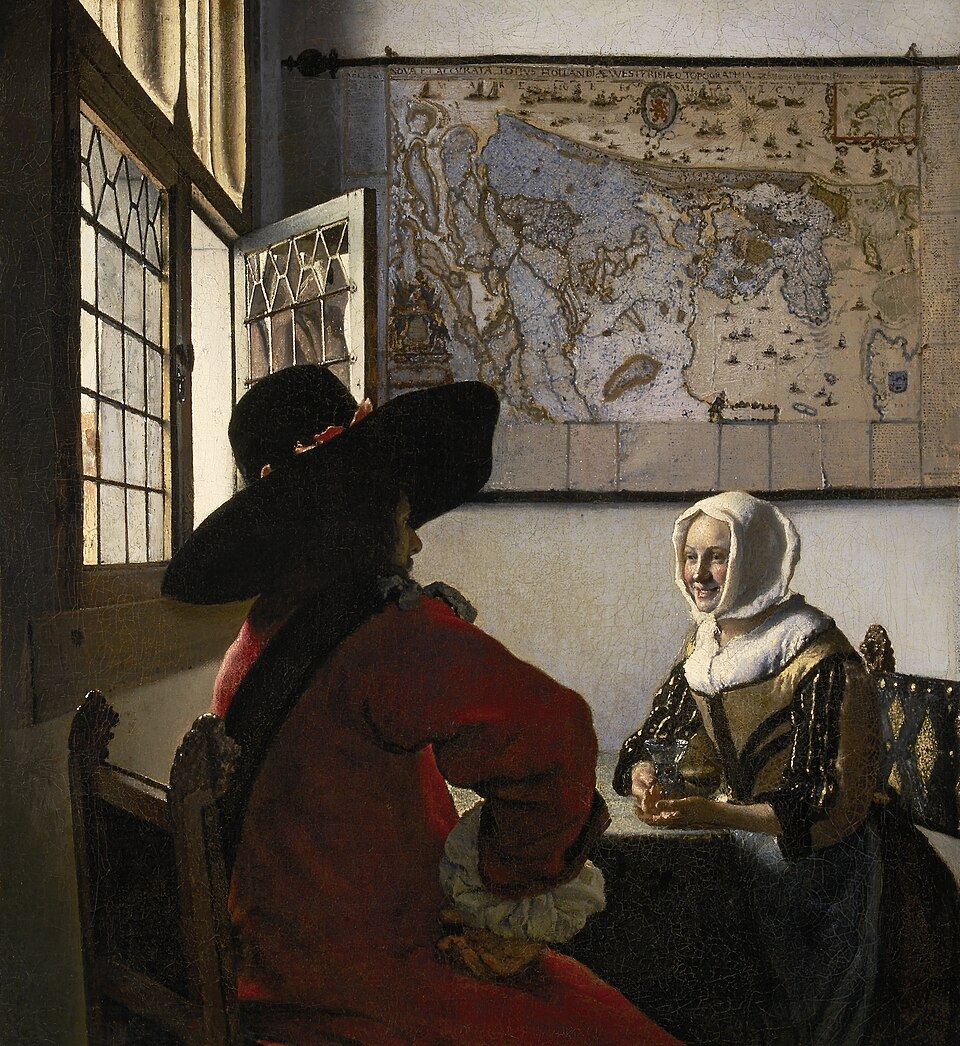
A young woman smiles across a table at an officer in a red coat and a wide black hat, a glass of wine in her hand, sunlight pouring in from an open window. What exactly is happening between them, nobody can say for sure.
The story behind the painting
Vermeer painted Officer and Laughing Girl around 1657; Wikipedia gives c. 1657, while Wikidata gives 1658. Art historians believe a painting by Gerard van Honthorst inspired the composition. The woman resembles Vermeer's wife, Catharina Bolnes, who is believed to have posed for many of his pictures. X-rays show that Vermeer first planned a large white collar that would have hidden much of her yellow dress, and that he later extended her cap to cover all of her hair, drawing more attention to her face and expression.
What to look for
Light from the open window at left falls softly on the woman's face. She wears a yellow bodice with braiding, an everyday dress, and a blue apron mostly hidden in the shadow of the table, which suggests the officer surprised her during morning chores. Her glass is the kind used for white wine. The officer in the foreground, in red with a black sash and a beaver-fur hat, looms large and dark, a device called repoussoir that deepens the space. Behind them hangs a map of Holland and West Friesland by Balthasar van Berckenrode, rendered so faithfully that it can be identified.
Meaning and intent
The nature of the meeting can only be guessed. Many art historians see an innocent, honourable courtship; others suggest her open hand and smile hint at a discreet willingness for more. The officer's red adds power and passion, and his closeness to us adds drama. It has also been suggested that Vermeer used a camera obscura for the perspective, since the painting seems to show optical effects of lenses, although there is no historical evidence that he used one. The window panes, with their shifting reflections and translucency, are painted with remarkable grace.
Legacy
The painting belongs to the Frick Collection in New York, together with Vermeer's Mistress and Maid and Girl Interrupted at Her Music; Wikidata also lists the Demidov collection among its past homes. The map on the wall appears in three of Vermeer's paintings, so he must have owned it, and the cartographic historian Peter van der Krogt praised how he captured all of its design and geography. Analyses of the pigments found materials typical of the period, among them ochres, lead-tin yellow, natural ultramarine and azurite. The side window and gentle sunlight became a signature of his interiors.
豆知識
- Painted around 1657 to 1658.
- The model resembles Vermeer's wife, Catharina Bolnes.
- X-rays show a large white collar was planned and abandoned.
- In the Frick Collection, New York.
画家について
Johannes Vermeer (1632-1675)
女性 · 男性 · 風俗美術 · オランダ黄金時代の絵画 · 窓 · フリック・コレクション · map of Holland and West Friesland
同じ画家の作品: Johannes Vermeer
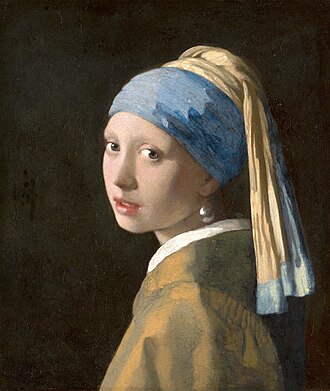 真珠の耳飾りの少女 - Johannes Vermeer (1665)
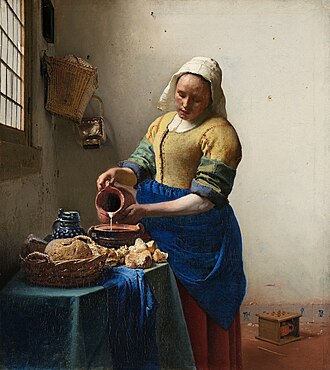 牛乳を注ぐ女 - Johannes Vermeer (c. 1658)
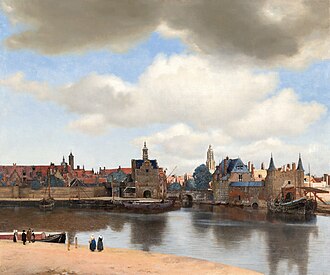 デルフト眺望 - Johannes Vermeer (1660s)
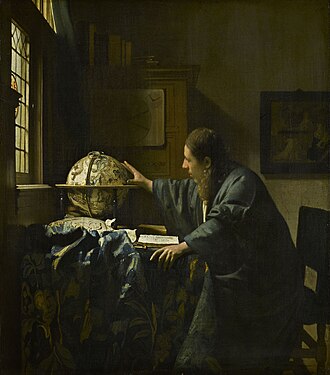 天文学者 - Johannes Vermeer (1664)
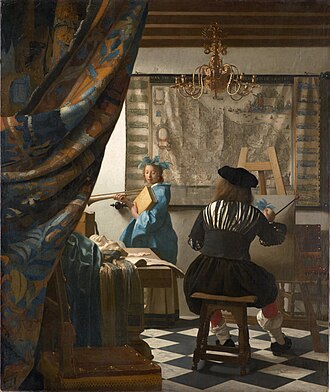 絵画芸術 - Johannes Vermeer (1660s)
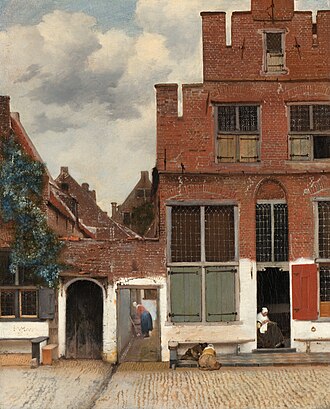 小路 - Johannes Vermeer (1658)
.jpg) 窓辺で手紙を読む女 - Johannes Vermeer (1650s)
窓辺で手紙を読む女 - Johannes Vermeer (1650s)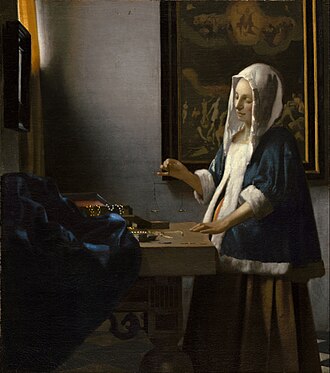 天秤を持つ女 - Johannes Vermeer (1665)
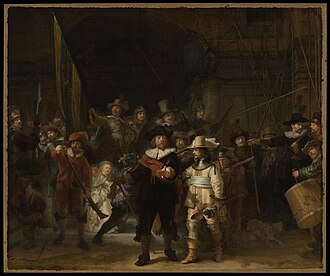 夜警
夜警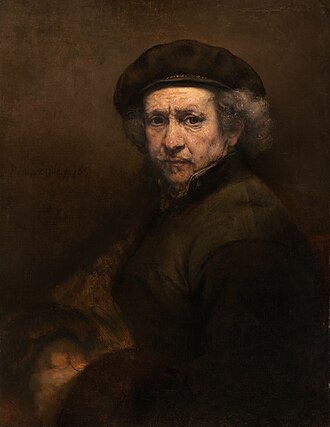 自画像
自画像