アンドロメダ
Rembrandt van Rijn · 1630
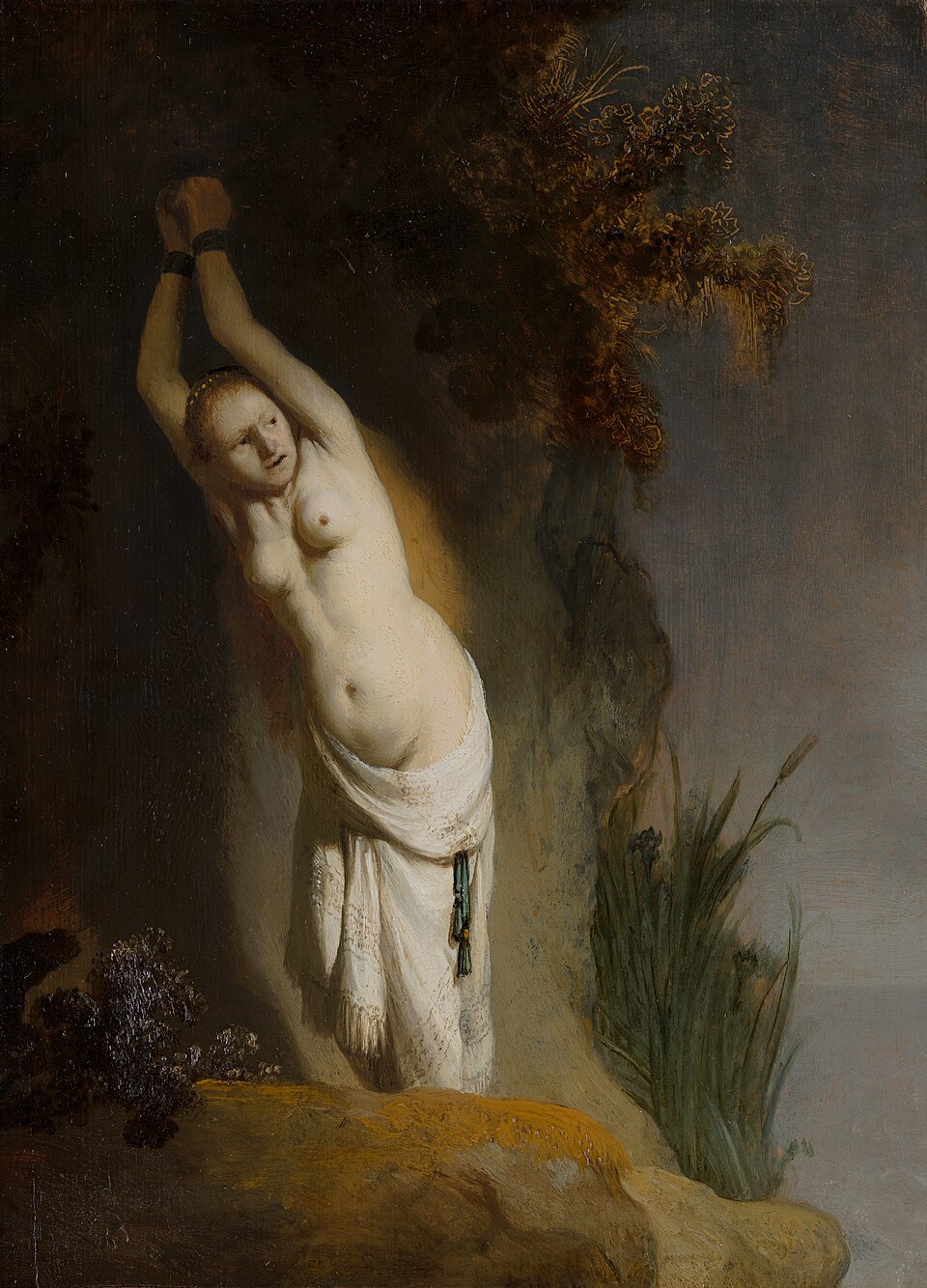
A young woman chained to a dark rock turns her frightened eyes toward something we cannot see. Rembrandt left out both the monster and the hero, and painted only her fear.
The story behind the painting
Andromeda Chained to the Rocks is a small oil on panel painted by Rembrandt in 1630, when he was still working in Leiden. It is his first full-length mythological female nude. The story comes from Ovid's Metamorphoses. Queen Cassiopeia of Ethiopia boasted that she was more beautiful than Juno and the Nereids. Insulted, Neptune sent a sea monster to the coast, and he could only be appeased by the sacrifice of the king's daughter, Andromeda, who was chained to the rocks to await it.
What to look for
The panel measures just 34 by 24.5 cm. Andromeda stands alone against the rock, completely shackled and unable to move, her body lit against the darkness. Her face is full of distress, and she looks out of the picture to the right, toward the danger approaching from outside the frame. There is no Perseus in a heroic pose and no monster rising from the waves. Everything we know about the threat comes from her expression and the direction of her gaze.
Meaning and intent
Artists such as Titian showed Andromeda, Perseus and the monster together, with Andromeda as a glamorous beauty. Rembrandt broke with that convention and painted her as a frightened, naturalistic girl. Her alarmed look beyond the edge of the picture creates the narrative tension on its own. The painting is an example of his rejection of idealised beauty: he painted women as he saw them, naturally imperfect, rather than as a classical ideal.
Legacy
The work belongs to a classic theme, the damsel in distress, rescued in the myth by Perseus, who wins her hand in marriage. Rembrandt's later mythological nudes of the period, Diana Bathing and Danae, show how his way of painting the nude kept developing from this early picture. By leaving the rescue outside the frame, the young painter turned a familiar myth into a study of a single human emotion. Andromeda Chained to the Rocks is now in the Mauritshuis in The Hague.
豆知識
- Painted by Rembrandt in 1630.
- His first full-length mythological female nude.
- Only 34 by 24.5 cm.
- In the Mauritshuis, The Hague.
画家について
Rembrandt van Rijn (1606-1669)
女性 · オランダ黄金時代の絵画 · 神話画 · ヌード · 岩石 · マウリッツハイス美術館 · へそ
同じ画家の作品: Rembrandt van Rijn
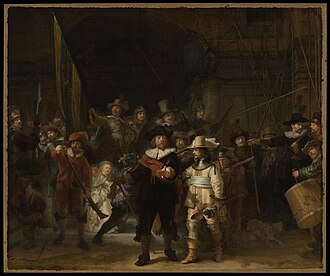 夜警 - Rembrandt van Rijn (1642)
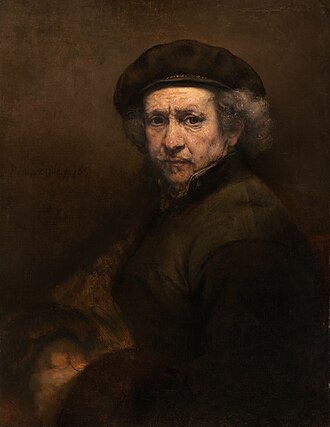 自画像 - Rembrandt van Rijn (1659)
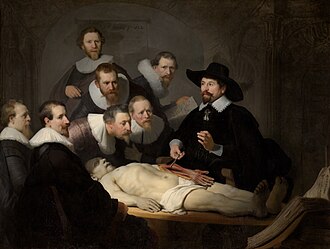 テュルプ博士の解剖学講義 - Rembrandt van Rijn (1632)
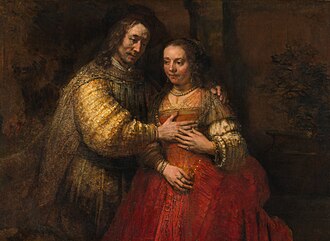 ユダヤの花嫁 - Rembrandt van Rijn (1660s)
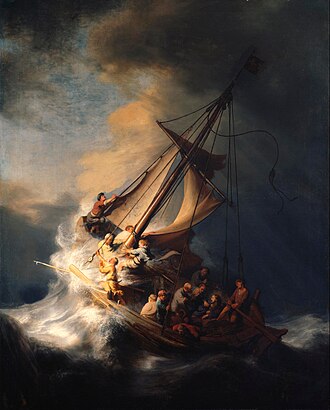 ガラリアの海の嵐 - Rembrandt van Rijn (1633)
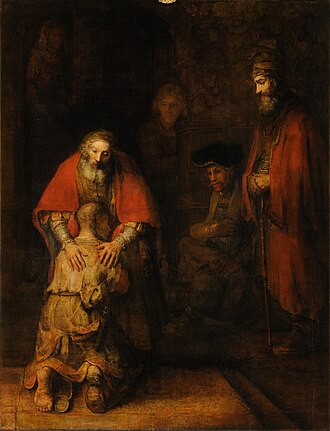 放蕩息子の帰還 - Rembrandt van Rijn (1668)
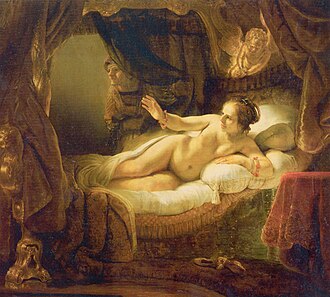 ダナエ - Rembrandt van Rijn (1636)
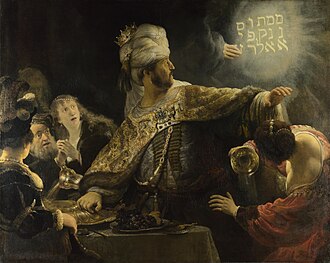 ベルシャザルの酒宴 - Rembrandt van Rijn (1636)
 真珠の耳飾りの少女
 牛乳を注ぐ女