Vincent van Gogh
1853-1890
A tortured soul with a brush, Vincent van Gogh left an indelible mark on the art world with his bold, expressive works.
Origins
Born on March 30, 1853, in Groot-Zundert, Netherlands, Vincent van Gogh came from a respectable family. His father, Theodorus van Gogh, was a minister of the Dutch Reformed Church, and his mother, Anna Cornelia Carbentus, was from a prosperous family in The Hague. Van Gogh was a serious and thoughtful child, encouraged to draw by his mother. He was sent to various schools, but his unhappiness and struggles led him to return home. In 1869, he began working at an art dealership in The Hague, which marked the beginning of his connection to the art world.
Life and turning points
Van Gogh's journey was marked by struggles and turning points. He worked as an art dealer, then became a Protestant missionary in Belgium. After failing as a missionary, he turned to art in 1881, supported financially and emotionally by his younger brother Theo. Van Gogh studied at the Académie Royale des Beaux-Arts in Brussels and later moved to Paris, where he met influential artists like Émile Bernard and Paul Gauguin. His time in Arles in 1888 was particularly significant, as he developed his unique style and produced some of his most famous works. However, his struggles with mental illness and poverty ultimately led to his tragic death on July 29, 1890.
Style and technique
Van Gogh's style is characterized by bold colors, dramatic brushwork, and expressive compositions. He developed a new approach to still lifes and landscapes, using vibrant colors and thick, heavy brushstrokes. His works, such as 'The Starry Night' and 'Sunflowers,' showcase his innovative style, which contributed to the foundations of modern art. Van Gogh's technique evolved over time, becoming more expressive and emotive, reflecting his inner turmoil and struggles.
Stories and anecdotes
Van Gogh's life was marked by intense relationships and dramatic events. His friendship with Paul Gauguin ended abruptly when, in a fit of rage, Van Gogh severed part of his own left ear. He spent time in psychiatric hospitals, including a period at Saint-Rémy, and was under the care of the homoeopathic doctor Paul Gachet. Van Gogh's letters to Theo provide valuable insights into his thoughts, feelings, and artistic theories. There are over 600 letters from Vincent to Theo, offering a glimpse into the mind of this troubled genius.
Legacy
Van Gogh's legacy is immense, with his works becoming famous after his death. He is remembered as a tortured artist, whose troubled personality typifies the romantic ideal of the artist. His influence can be seen in the work of many artists, including the Fauves and German Expressionists. Today, Van Gogh's paintings are considered some of the most iconic and influential in the history of Western art, with works like 'The Starry Night' and 'Café Terrace at Night' continuing to inspire and captivate audiences worldwide.
Did you know?
- Van Gogh created about 2,100 artworks in just over a decade, including around 860 oil paintings.
- He was a prolific letter writer, exchanging hundreds of letters with his brother Theo.
- Van Gogh's early works were mostly still lifes and depictions of peasant laborers, but his style evolved to include bold colors and expressive brushwork.
- He struggled with mental illness and poverty throughout his life, ultimately leading to his tragic death at the age of 37.
Post-impressionism · realism · Neo-impressionism
Related artists
Paintings by Vincent van Gogh
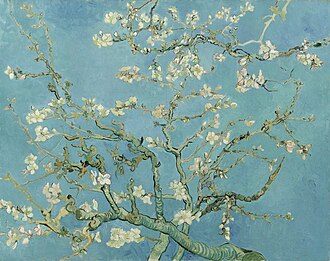 Almond Blossoms - Vincent van Gogh (1890)
.jpg) Café Terrace at Night - Vincent van Gogh (1888)
Café Terrace at Night - Vincent van Gogh (1888)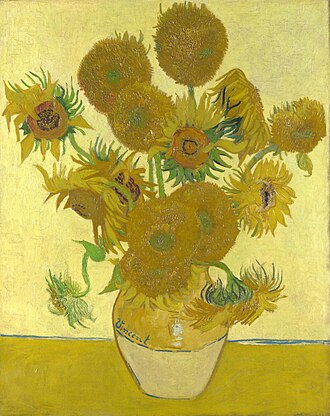 Sunflowers - Vincent van Gogh (1888)
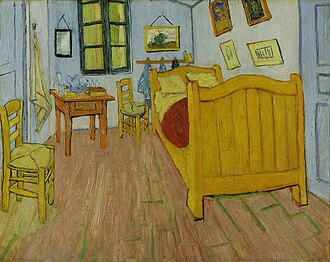 The Bedroom - Vincent van Gogh (1888)
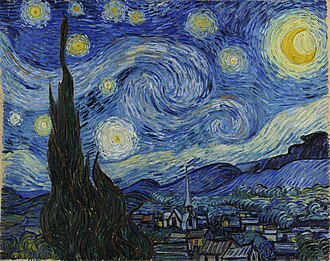 The Starry Night - Vincent van Gogh (1889)
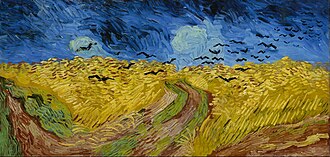 Wheatfield with Crows - Vincent van Gogh (1890)
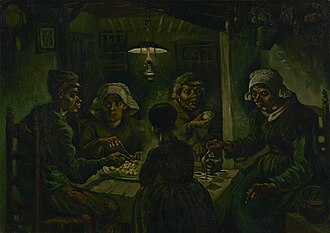 The Potato Eaters - Vincent van Gogh (1885)
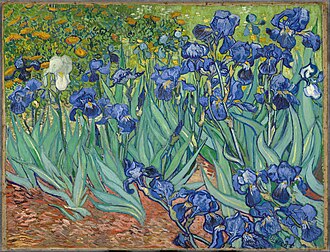 Irises - Vincent van Gogh (1889)
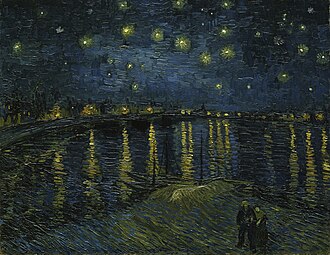 Starry Night Over the Rhone - Vincent van Gogh (1888)
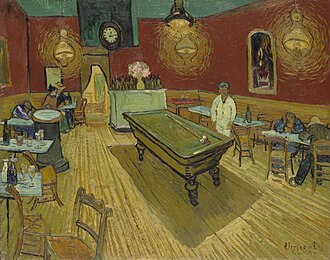 The Night Café - Vincent van Gogh (1888)
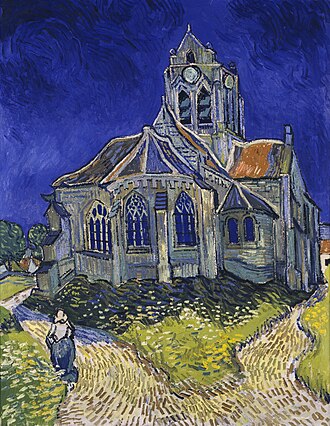 The Church at Auvers - Vincent van Gogh (1890)
.jpg) The Red Vineyard - Vincent van Gogh (1888)
The Red Vineyard - Vincent van Gogh (1888).jpg) The Yellow House - Vincent van Gogh (1888)
The Yellow House - Vincent van Gogh (1888)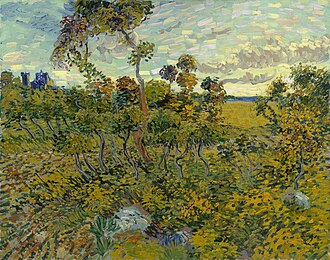 Sunset at Montmajour - Vincent van Gogh (1888)
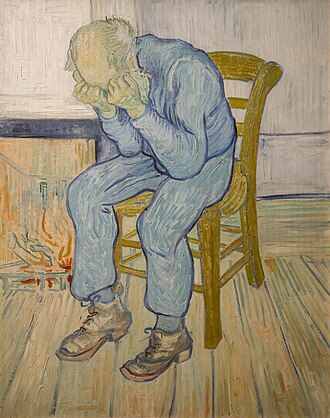 At Eternity's Gate - Vincent van Gogh (1890)
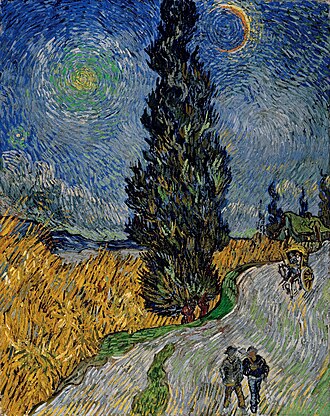 Road with Cypress and Star - Vincent van Gogh (1890)
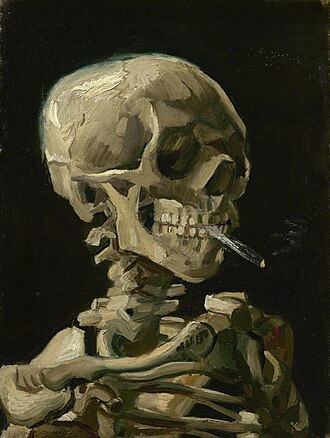 Skull of a Skeleton with Burning Cigarette - Vincent van Gogh (1884)
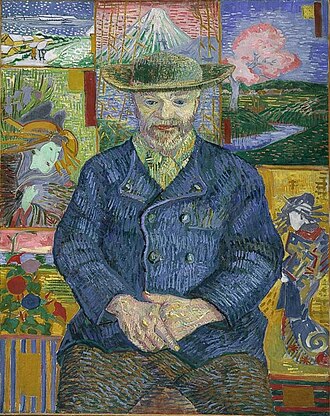 Portrait of Père Tanguy - Vincent van Gogh (1887)
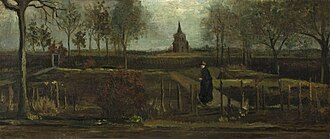 The Parsonage Garden at Nuenen - Vincent van Gogh (1884)
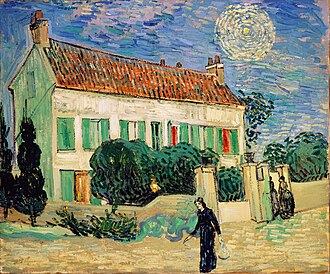 White House at Night - Vincent van Gogh (1890)
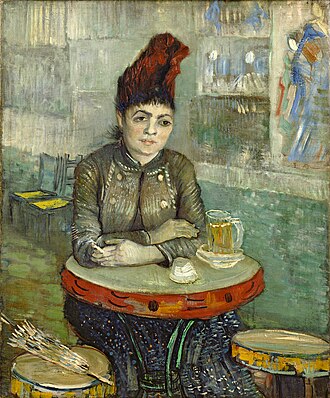 Agostina Segatori Sitting in the Café du Tambourin - Vincent van Gogh (1887)
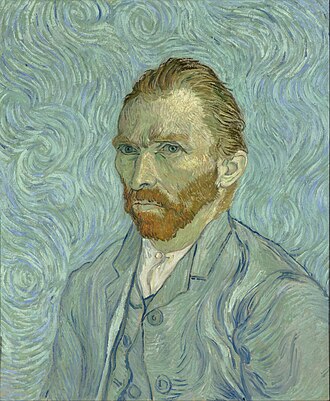 Self-portrait - Vincent van Gogh (1889)
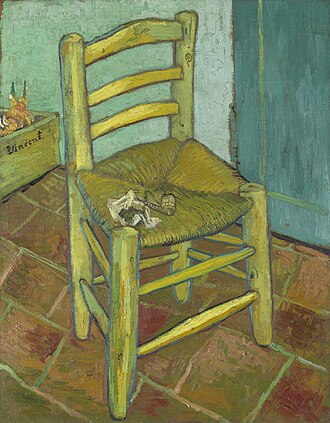 Van Gogh's Chair - Vincent van Gogh (1889)
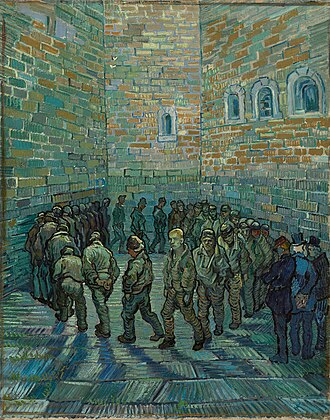 Prisoners Exercising - Vincent van Gogh (1890)
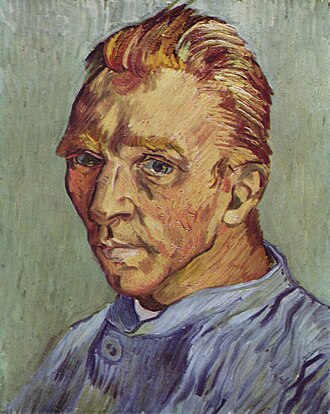 Self-portrait without beard - Vincent van Gogh (1889)
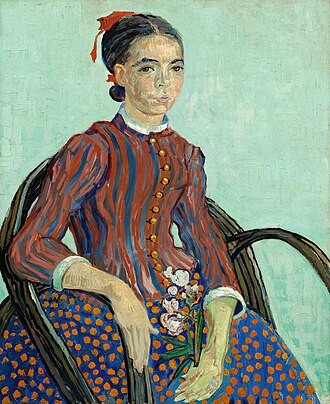 La Mousmé - Vincent van Gogh (1888)
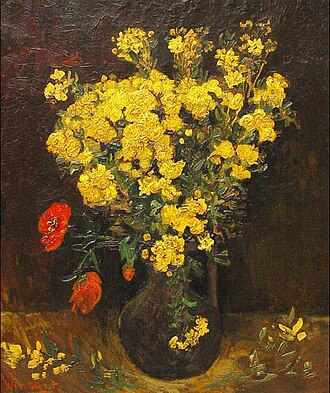 Poppy Flowers - Vincent van Gogh (1887)
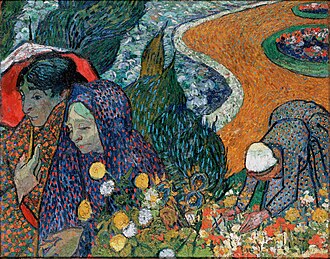 Memory of the Garden at Etten - Vincent van Gogh (1888)
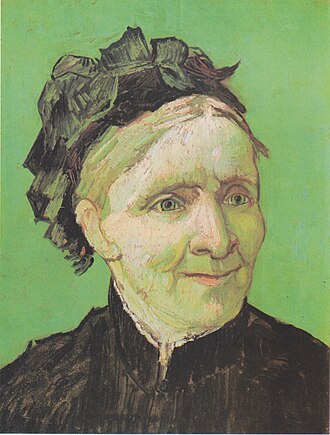 Portrait of the Artist's Mother - Vincent van Gogh (1888)
.jpg) Tree Roots - Vincent van Gogh (1890)
Tree Roots - Vincent van Gogh (1890)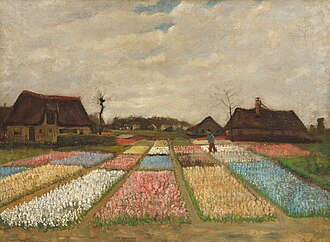 Bulb Fields - Vincent van Gogh (1883)
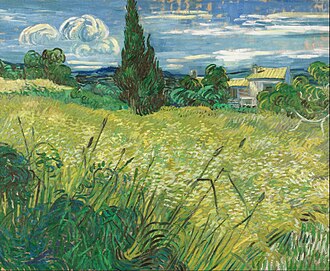 Green Wheat Field with Cypress - Vincent van Gogh (1889)
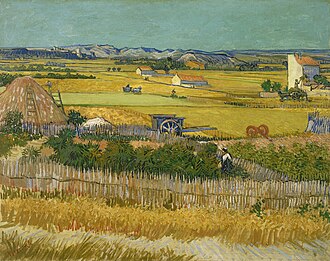 Harvest at La Crau, with Montmajour in the Background - Vincent van Gogh (1888)
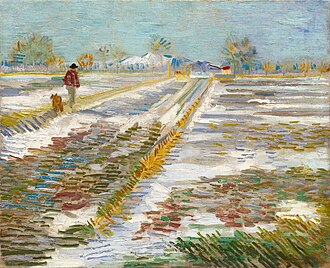 Landscape with Snow - Vincent van Gogh (1888)
.jpg) Crab on its Back - Vincent van Gogh (1887)
Crab on its Back - Vincent van Gogh (1887)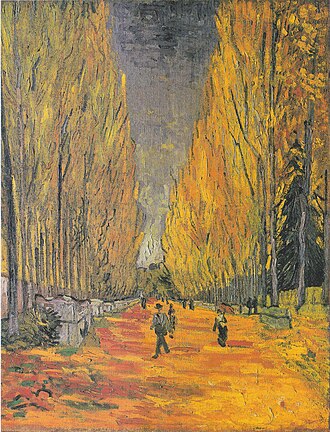 Les Alyscamps - Vincent van Gogh (1888)
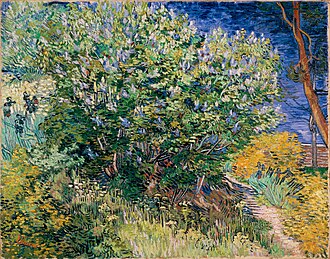 Lilac Bush - Vincent van Gogh (1889)
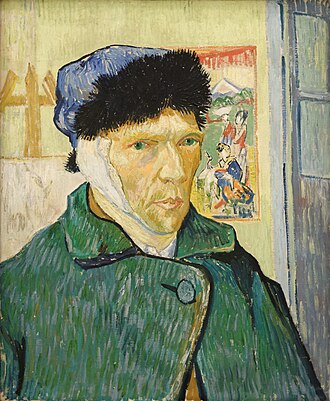 Self-Portrait with Bandaged Ear - Vincent van Gogh (1889)
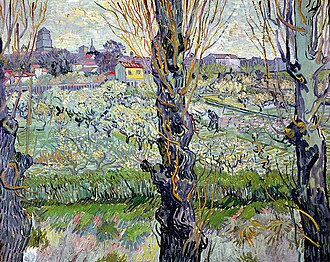 View of Arles, Flowering Orchards - Vincent van Gogh (1889)
.jpg) View of the Sea at Scheveningen - Vincent van Gogh (1882)
View of the Sea at Scheveningen - Vincent van Gogh (1882)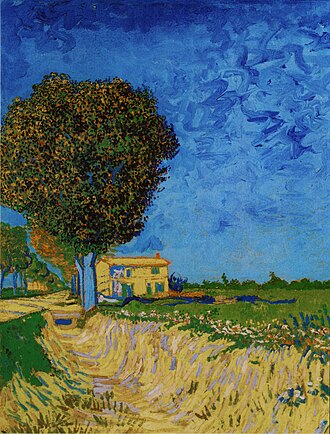 A Lane near Arles - Vincent van Gogh (1888)
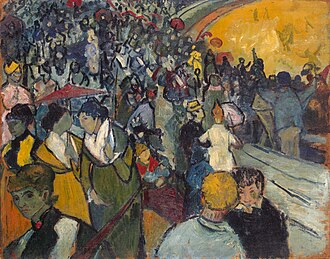 Arena in Arles - Vincent van Gogh (1888)
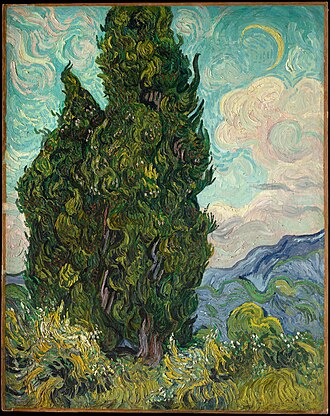 Cypresses - Vincent van Gogh (1889)
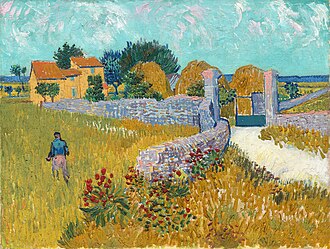 Farmhouse in Provence - Vincent van Gogh (1888)
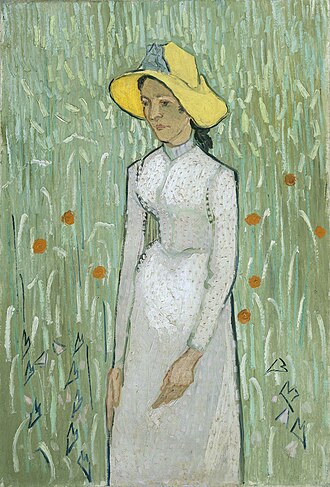 Girl in White - Vincent van Gogh (1890)
.jpg) Portrait of Doctor Felix Rey - Vincent van Gogh (1889)
Portrait of Doctor Felix Rey - Vincent van Gogh (1889).jpg) Two Crabs - Vincent van Gogh (1889)
Two Crabs - Vincent van Gogh (1889)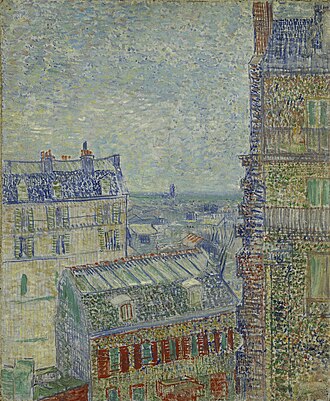 View from Theo’s apartment - Vincent van Gogh (1887)