Lilac Bush
Vincent van Gogh · 1889
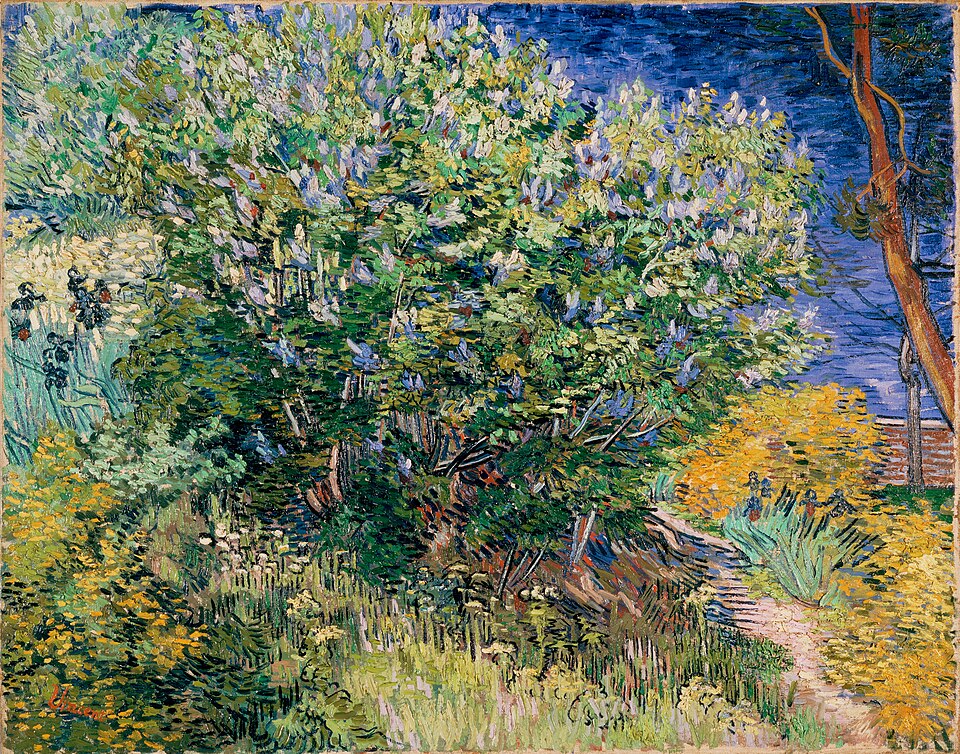
In May 1889, days after entering an asylum, Vincent van Gogh walked into its garden and found a lilac bush in bloom. He painted it almost at once.
The story behind the painting
In May 1889 Vincent van Gogh entered the psychiatric hospital of Saint-Paul de Mausole at Saint-Rémy, in the south of France, where he would remain for about a year. He did not wait long to work. Almost as soon as he arrived, he set up his easel in the hospital garden, and among his very first subjects were the irises and this lilac bush. A few days after his arrival he wrote to his brother Theo and Theo's wife Johanna that he had two more paintings to send, purple irises and a lilac bush, two subjects taken from the garden. Theo remained his steadfast support throughout the stay, and letters like this one were a lifeline to the world beyond the walls.
What to look for
The canvas is wide rather than tall, 73 by 92 centimetres, giving the bush room to spread across the picture like a living thing filling its corner of the garden. It is catalogued as a landscape and its subject is flowers: the clustered blossoms of a lilac in late spring. The written sources about this particular painting are brief and do not describe its brushwork or colours in detail, so the best guide is your own eye. Look at how the mass of the shrub is built up, how blossom and leaf are separated, and how the ground and surroundings frame it. Remember too that this was painted outdoors, directly from the motif, in the first days of a new and uncertain life.
Meaning and intent
Van Gogh himself framed the meaning simply: these were subjects taken from the garden. For a man who had just entered an asylum after a period of crisis, the garden was the world he could reach, and he turned to it at once. Painting a flowering bush in May is an act of attention to what is alive and growing right in front of you. The sources do not record any symbolic programme for the picture, and it would be a mistake to invent one. What they do show is a painter reaching for work as soon as he could, and choosing, among his first subjects, a shrub in full bloom.
Legacy
The Lilac Bush, catalogued as F 579 and JH 1692, now belongs to the Hermitage Museum in Saint Petersburg. It sits at the very start of one of the most productive stretches of Van Gogh's career: according to the sources, most of his roughly 2,100 artworks were made in the last two years of his life, and the Saint-Rémy year falls squarely within them. Seen alongside the irises painted in the same garden, it marks the moment he began again. That is perhaps why it matters: not as a grand statement, but as the first quiet proof that in this new place, painting would go on.
Did you know?
- It was painted in May 1889, during Van Gogh's first days at the Saint-Paul de Mausole hospital in Saint-Rémy.
- Van Gogh mentioned it in a letter to Theo and Johanna as one of 'two subjects taken from the garden', alongside purple irises.
- Its catalogue numbers are F 579 and JH 1692.
- It is now in the Hermitage Museum.
Wikipedia · Wikipedia · Wikidata
About the artist
Vincent van Gogh (1853-1890)
landscape painting · flower · Hermitage Museum
More by Vincent van Gogh
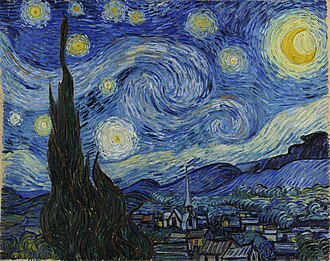 The Starry Night - Vincent van Gogh (1889)
.jpg) Café Terrace at Night - Vincent van Gogh (1888)
Café Terrace at Night - Vincent van Gogh (1888)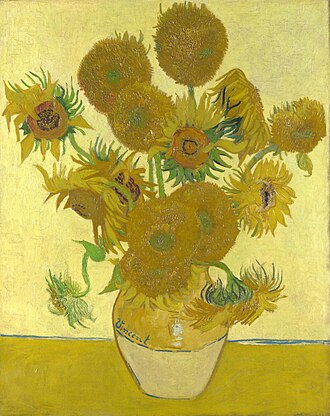 Sunflowers - Vincent van Gogh (1888)
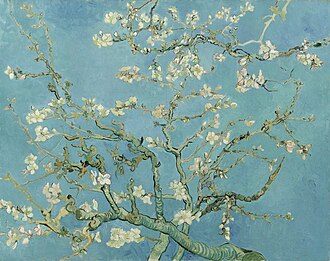 Almond Blossoms - Vincent van Gogh (1890)
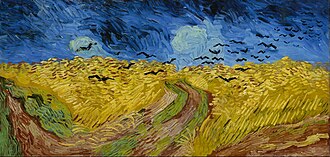 Wheatfield with Crows - Vincent van Gogh (1890)
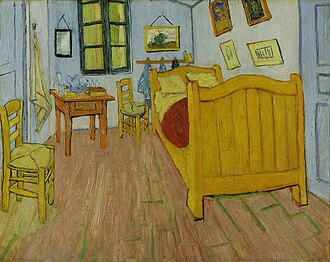 The Bedroom - Vincent van Gogh (1888)
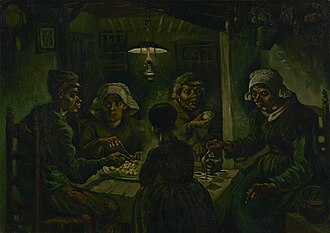 The Potato Eaters - Vincent van Gogh (1885)
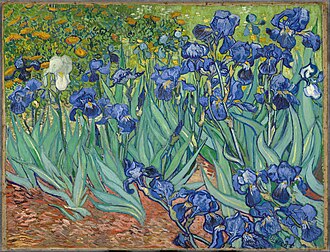 Irises - Vincent van Gogh (1889)
Paintings by related artists
 Where Do We Come From? What Are We? Where Are We Going? - Paul Gauguin (1897-1898)
%201889.jpg) The Yellow Christ - Paul Gauguin (1889)
The Yellow Christ - Paul Gauguin (1889) Luncheon on the Grass - Édouard Manet (1863)
 Olympia - Édouard Manet (1863)