Pierre-Auguste Renoir
1841-1919
A tailor's son who painted porcelain as a boy, Pierre-Auguste Renoir became one of the leading Impressionists, a painter of sunlight, crowds and warm human closeness. Even when arthritis twisted his hands, he kept painting, saying the pain passes but the beauty remains.
Origins
Pierre-Auguste Renoir was born in Limoges, France, on 25 February 1841. His father, Leonard Renoir, was a tailor of modest means, and in 1844 the family moved to Paris, to a home on the rue d'Argenteuil close to the Louvre. Though he drew naturally, the boy showed even more talent for singing, encouraged by Charles Gounod, then choirmaster at the church of Saint Roch. Money was short, so at thirteen he left school to apprentice at a porcelain factory. Tired of the subjects, he often escaped to the Louvre, and the factory owner told his family about his talent. When the factory turned to mechanical reproduction in 1858, he painted hangings for missionaries and decorations on fans to support his studies.
Life and turning points
In 1862 he began studying under Charles Gleyre in Paris, where he met Alfred Sisley, Frederic Bazille and Claude Monet. In the 1860s he sometimes could not afford paint. His first Salon success came in 1868 with Lise with a Parasol. After repeated Salon rejections, he joined Monet, Sisley, Pissarro and others in the first Impressionist exhibition of April 1874, showing six paintings that were comparatively well received. By the end of the 1870s, especially after Mme Charpentier and her Children at the Salon of 1879, he was a fashionable painter. In 1890 he married Aline Charigot, a dressmaker, and they had three sons: Pierre, an actor, Jean, a filmmaker, and Claude, a ceramic artist. Arthritis began around 1892; in 1907 he moved to Cagnes-sur-Mer, where he died on 3 December 1919, aged 78.
Style and technique
Renoir's paintings are known for vibrant light and saturated colour, most often showing people in intimate, candid scenes. He suggested detail through freely brushed touches of colour, so his figures softly fuse with each other and their surroundings. Early on he drew on Delacroix's colour, Corot's light, and the realism of Courbet and Manet. Painting outdoors in the late 1860s, he and Monet found that shadows take on the reflected colour of nearby objects, and they sometimes painted the same scenes side by side, as at La Grenouillere in 1869. After an 1881 trip to Italy, where he saw Raphael, Leonardo and Titian, he felt he had gone as far as he could with Impressionism and turned to firmer drawing in his so-called Ingres period. After 1890 he returned to thin, softly brushed colour.
Stories and anecdotes
During the Paris Commune in 1871, some Communards took him for a spy as he painted by the Seine and were about to throw him in the river, until the Commune leader Raoul Rigault recognised him as the man who had once protected him. In Palermo on 15 January 1882 he painted the composer Richard Wagner in just thirty-five minutes. In the summer of 1883 he made fifteen paintings in little over a month on Guernsey, most of them of the bay of Moulin Huet. His model Suzanne Valadon studied the techniques of the painters she posed for and became a leading painter herself. It is often said that in old age a brush was strapped to his fingers, but that is wrong: he could still grasp a brush, though an assistant had to place it in his hand.
Legacy
Renoir has been described as the final representative of a tradition running from Rubens to Watteau in the depiction of feminine beauty. A prolific artist, he made several thousand paintings, and the warm sensuality of his style made them among the best-known and most reproduced works in art history. The largest single collection, 181 paintings, is at the Barnes Foundation in Philadelphia. Dance at Le Moulin de la Galette of 1876, a crowded open-air dance garden on Montmartre, is one of the best-known Impressionist works. In 1919 he visited the Louvre to see his own paintings hanging beside the old masters. His joyful light still invites viewers into a world of shared, ordinary happiness.
Did you know?
- Aline Charigot is the woman playing with the dog on the left in Luncheon of the Boating Party.
- In his last years he made sculptures with a young artist, Richard Guino, who worked the clay.
- He used a moving canvas roll to paint large works when his joints were stiff.
- In 1876 a Le Figaro critic mocked the purplish green tones he used on skin.
Impressionism · Romantic painting · Post-impressionism
Related artists
Claude Monet · Édouard Manet · Berthe Morisot · Edgar Degas · Alfred Sisley · Gustave Caillebotte · Camille Pissarro · Joaquín Sorolla
Paintings by Pierre-Auguste Renoir
 Dance at Le Moulin de la Galette - Pierre-Auguste Renoir (1876)
 Luncheon of the Boating Party - Pierre-Auguste Renoir (1881)
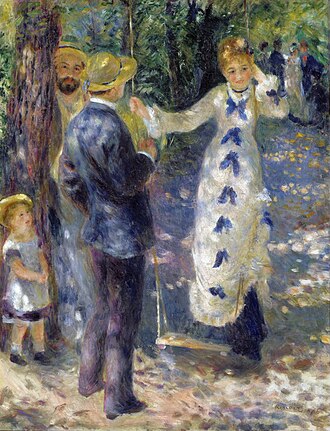 La Balançoire - Pierre-Auguste Renoir (1876)
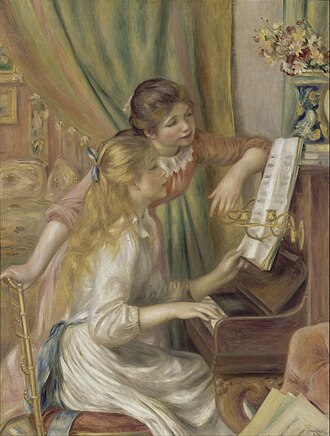 Girls at the Piano - Pierre-Auguste Renoir (1892)
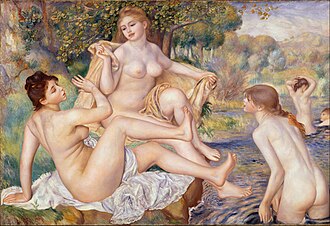 The Great Bathers - Pierre-Auguste Renoir (1884)
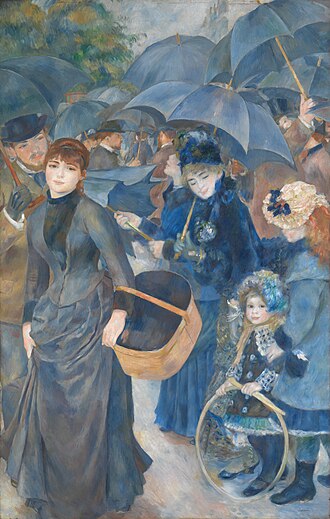 The Umbrellas - Pierre-Auguste Renoir (1880s)
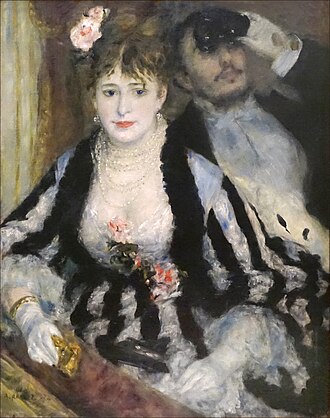 La loge - Pierre-Auguste Renoir (1874)
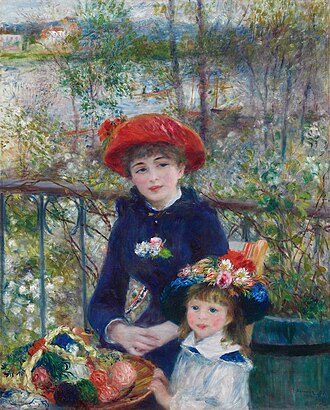 Two Sisters - Pierre-Auguste Renoir (1881)
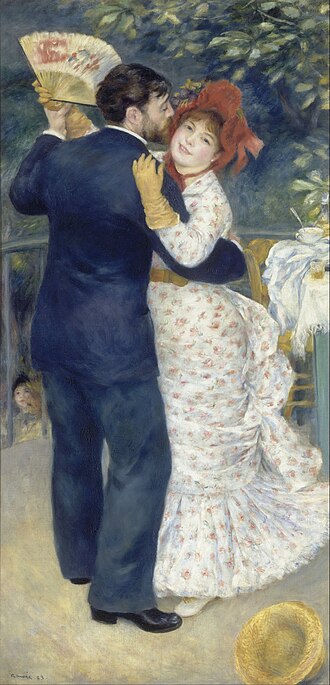 Dance in the Country - Pierre-Auguste Renoir (1883)
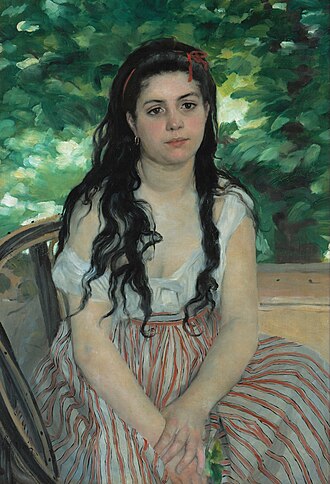 In the Summer - Pierre-Auguste Renoir (1868)
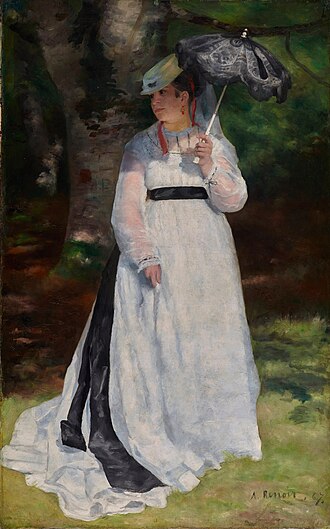 Lise with a Parasol - Pierre-Auguste Renoir (1867)
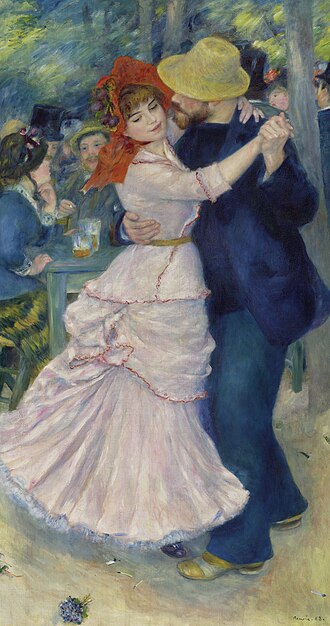 Dance at Bougival - Pierre-Auguste Renoir (1883)
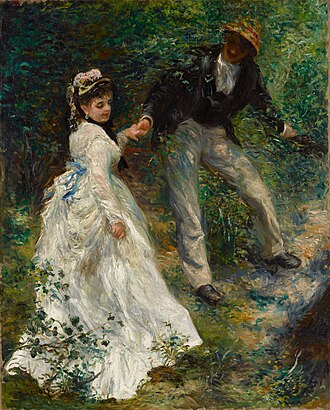 La Promenade - Pierre-Auguste Renoir (1870)
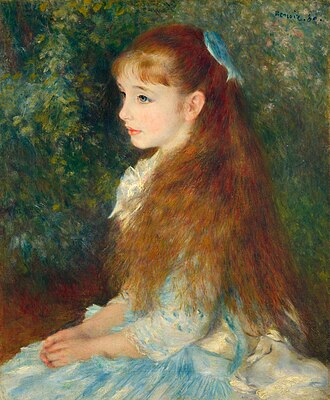 Mlle Irene Cahen d'Anvers - Pierre-Auguste Renoir (1880)
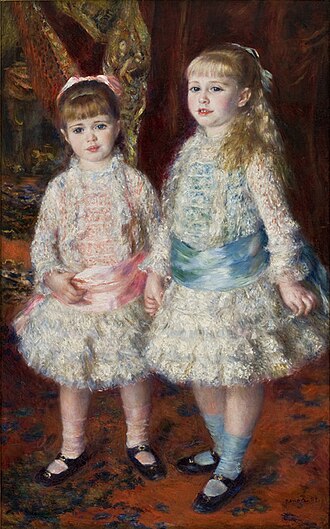 Pink and Blue - Pierre-Auguste Renoir (1881)
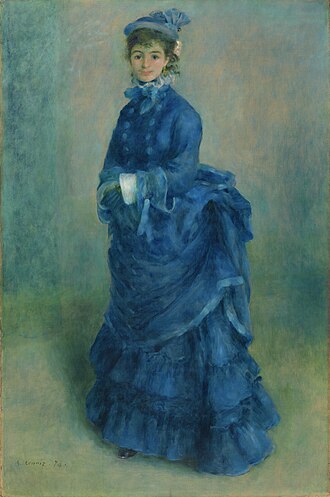 La Parisienne - Pierre-Auguste Renoir (1874)
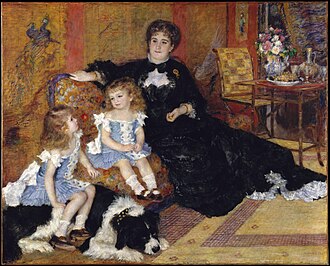 Madame Georges Charpentier and her Children - Pierre-Auguste Renoir (1878)
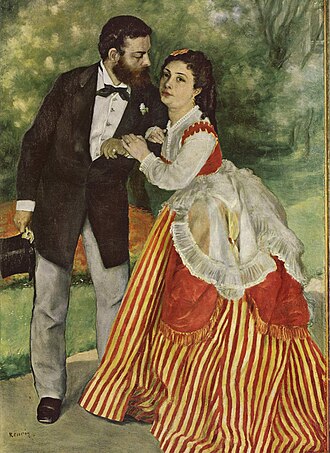 Marriage of Sisley - Pierre-Auguste Renoir (1860s)
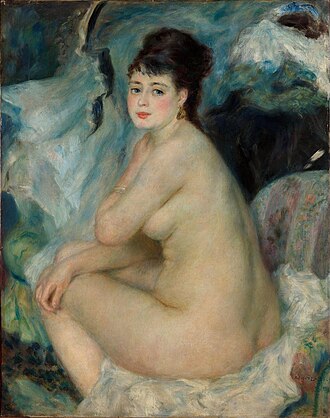 Nude woman, Anna - Pierre-Auguste Renoir (1876)
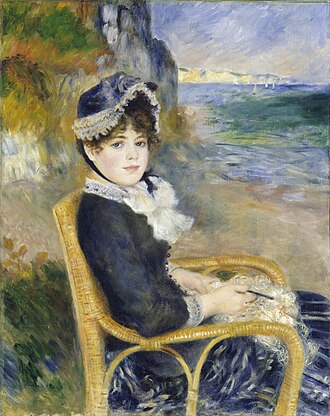 By the Seashore - Pierre-Auguste Renoir (1883)
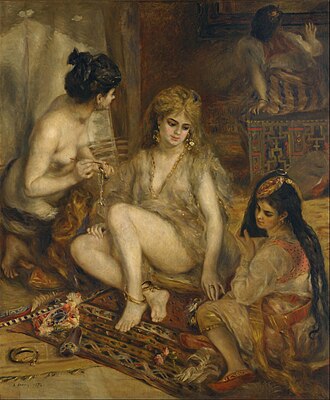 Parisian Women in Algerian Costume - Pierre-Auguste Renoir (1872)
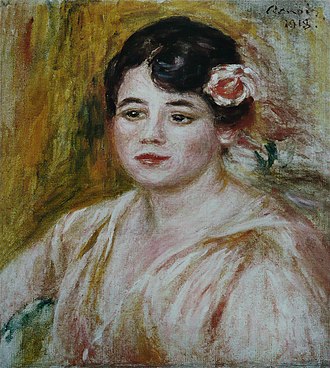 Portrait of Adèle Besson - Pierre-Auguste Renoir (1918)
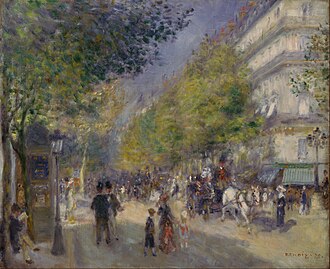 The Grands Boulevards - Pierre-Auguste Renoir (1875)
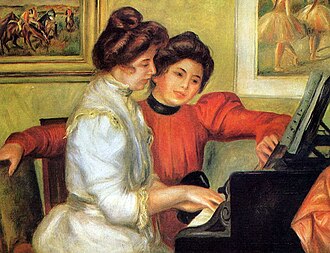 Yvonne and Christine Lerolle at the Piano - Pierre-Auguste Renoir (1897)
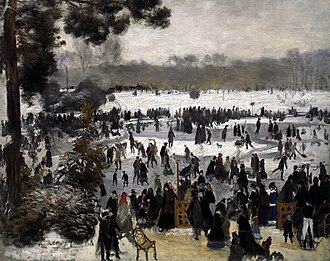 Skaters in the Bois de Boulogne - Pierre-Auguste Renoir (1868)
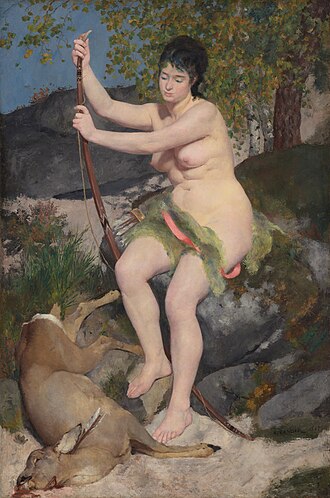 Diana - Pierre-Auguste Renoir (1867)
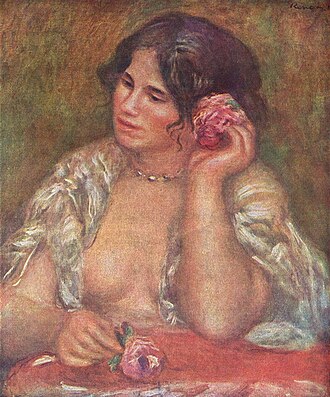 Gabrielle à la rose - Pierre-Auguste Renoir (1911)
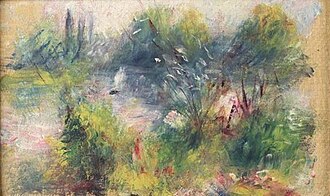 On the Shore of the Seine - Pierre-Auguste Renoir (1879)
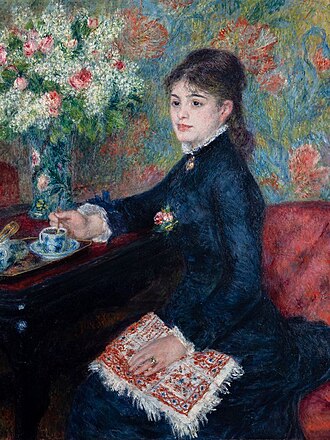 The Cup of Chocolate - Pierre-Auguste Renoir (1877)
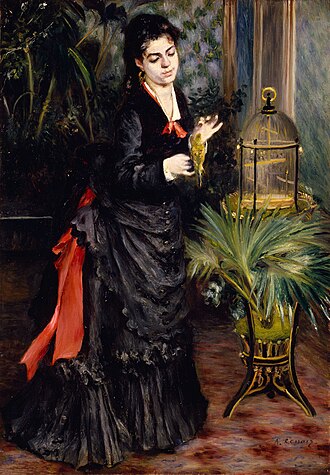 Woman with Parrot - Pierre-Auguste Renoir (1871)
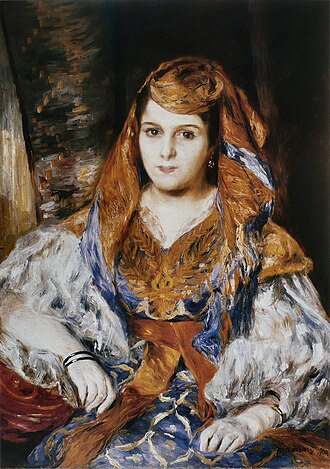 Madame Clémentine Valensi Stora - Pierre-Auguste Renoir (1870)
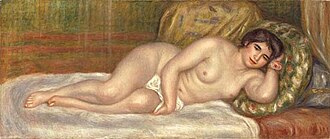 Naked woman, lying - Pierre-Auguste Renoir (1907)
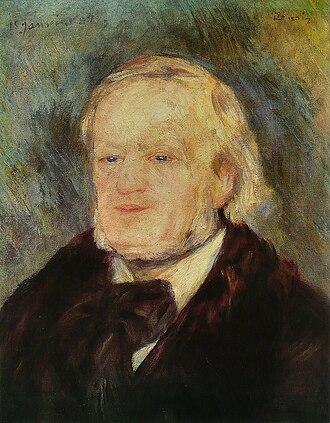 Richard Wagner - Pierre-Auguste Renoir (1882)
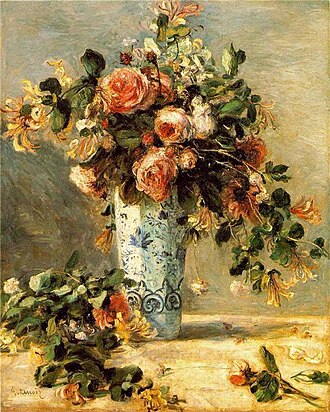 Roses and Jasmine in a Delft Vase - Pierre-Auguste Renoir (1880s)
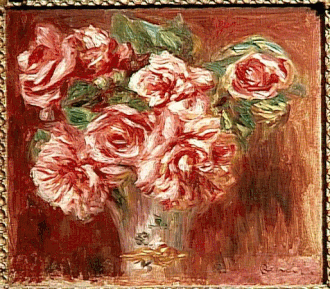 Roses in a vase - Pierre-Auguste Renoir (1890)
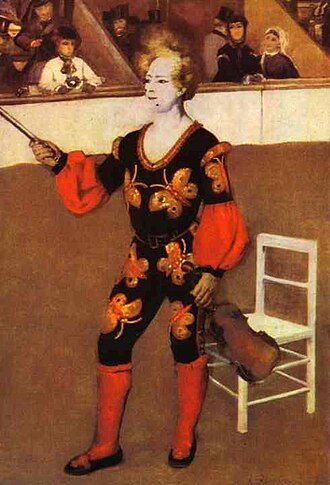 The Clown - Pierre-Auguste Renoir (1868)
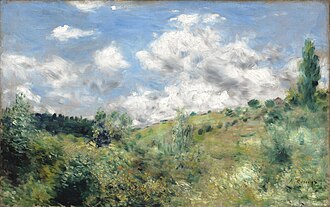 The Gust of Wind - Pierre-Auguste Renoir (1872)
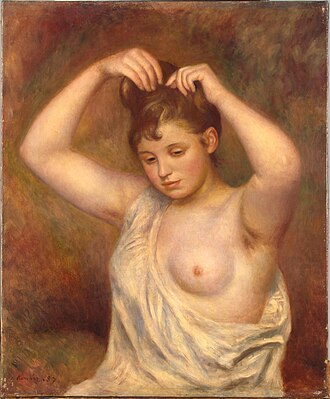 Woman Arranging her Hair - Pierre-Auguste Renoir (1887)
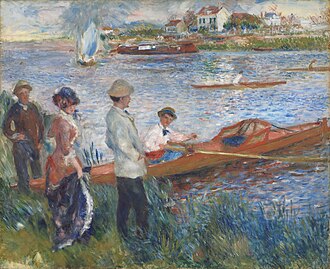 Oarsmen at Chatou - Pierre-Auguste Renoir (1879)
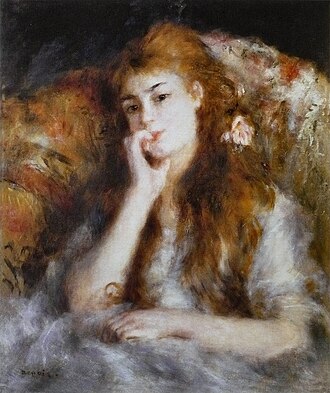 Young Woman Seated - Pierre-Auguste Renoir (1876)