Sunflowers
Vincent van Gogh · 1888
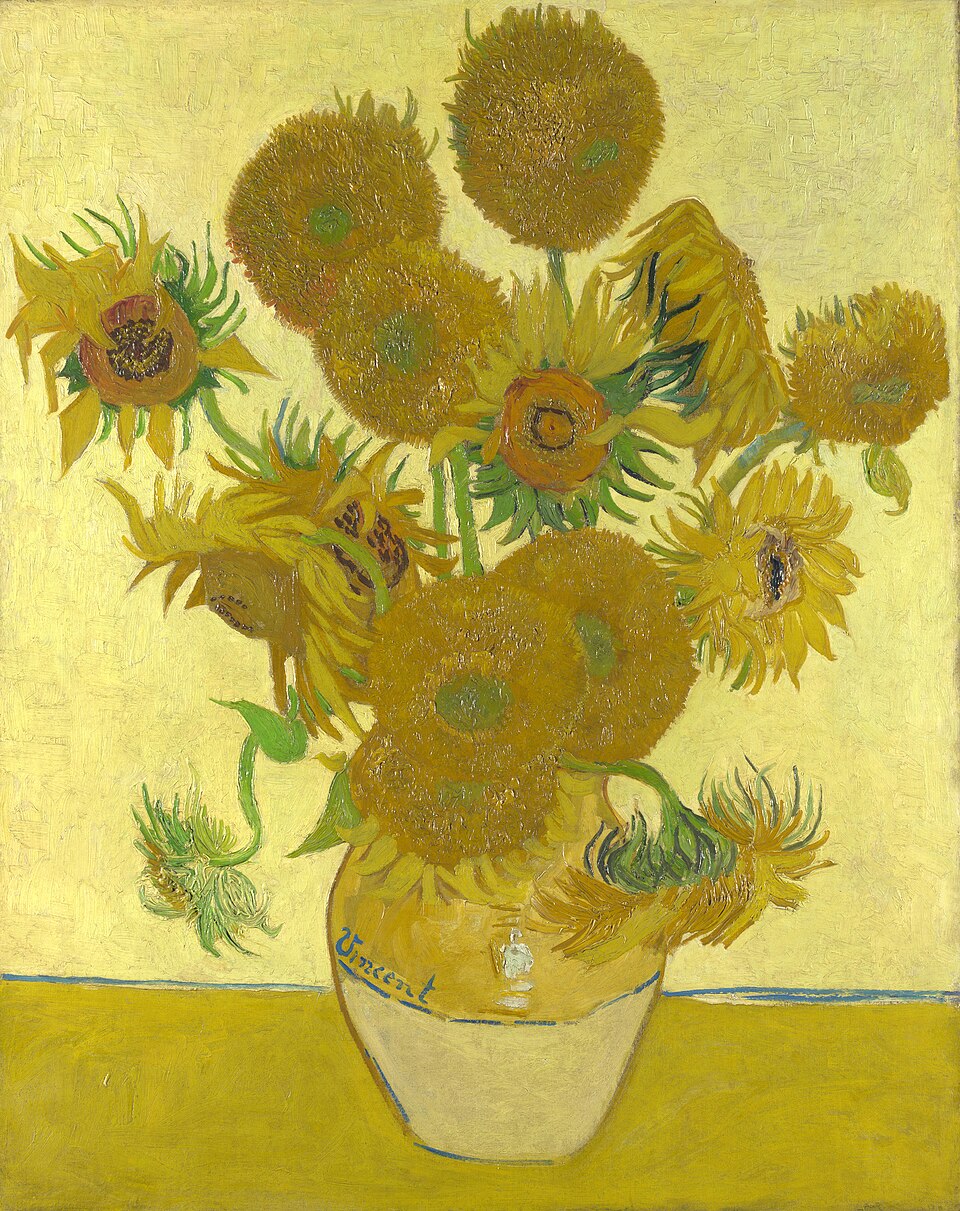
A vibrant and expressive masterpiece, Van Gogh's Sunflowers is a painting that radiates warmth and energy, inviting the viewer to step into its bright and sunny world.
The story behind the painting
In 1888, Vincent van Gogh was living in Arles, in the south of France, where he had moved to establish an artists' colony. He was eager to decorate his new home, the Yellow House, with paintings that would welcome his friend Paul Gauguin, who was planning to join him. Van Gogh wrote to his brother Theo, 'I'm painting with the gusto of a Marseillais eating bouillabaisse, which won't surprise you when it's a question of painting large sunflowers.' He envisioned a series of sunflower paintings to adorn the guest room, and Sunflowers is one of the four versions he created in August and January 1889.
What to look for
In this painting, Van Gogh depicts a bouquet of sunflowers in a vase, set against a bright yellow background. The flowers are shown in various stages of life, from full bloom to withering, and are painted in thick, heavy brushstrokes of vibrant yellow, orange, and green. The vase is simple and unadorned, allowing the flowers to take center stage. The brushwork is bold and expressive, with visible texture and impasto adding depth and dimension to the painting. Look closely to see the subtle variations in color and texture that give the painting its sense of energy and movement.
Meaning and intent
For Van Gogh, sunflowers represented friendship and gratitude. He wrote to Theo, 'It's a type of painting that changes its aspect a little, which grows in richness the more you look at it.' He also saw sunflowers as a symbol of loyalty and devotion, and the paintings were intended as a welcoming gesture for Gauguin. The use of yellow, a color often associated with warmth and happiness, adds to the sense of optimism and joy that pervades the painting.
Legacy
Sunflowers is one of Van Gogh's most famous and widely reproduced paintings, and it has become an iconic symbol of the artist's style and vision. The painting has been widely influential, inspiring countless artists and art movements, from Expressionism to Abstract Expressionism. Today, it is considered a masterpiece of Western art, and it continues to delight and inspire audiences around the world. The painting is part of the permanent collection at the National Gallery in London, where it remains one of the museum's most popular attractions.
Did you know?
- Van Gogh created four versions of Sunflowers in 1888-1889.
- The painting was intended to decorate the guest room of Van Gogh's home in Arles.
- Sunflowers was one of the first paintings Van Gogh created after moving to Arles.
- The painting has been attacked by environmental activists, including a notable incident in 2022.
Wikipedia · Wikipedia - Vincent van Gogh · Wikidata
About the artist
Vincent van Gogh (1853-1890)
More by Vincent van Gogh
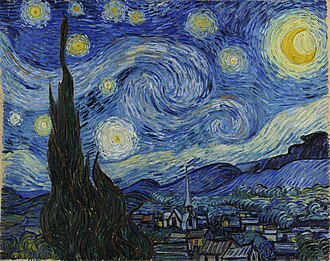 The Starry Night - Vincent van Gogh (1889)
.jpg) Café Terrace at Night - Vincent van Gogh (1888)
Café Terrace at Night - Vincent van Gogh (1888)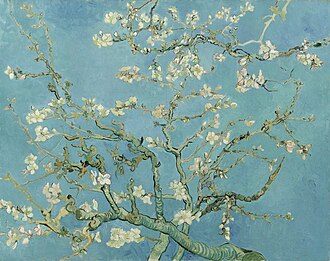 Almond Blossoms - Vincent van Gogh (1890)
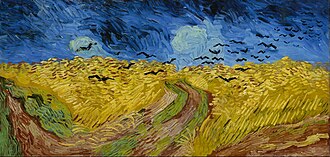 Wheatfield with Crows - Vincent van Gogh (1890)
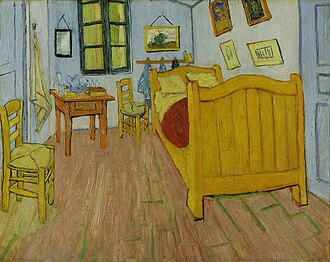 The Bedroom - Vincent van Gogh (1888)
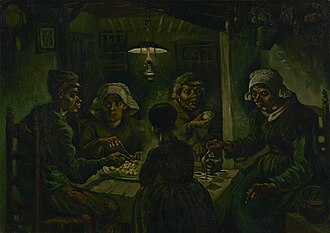 The Potato Eaters - Vincent van Gogh (1885)
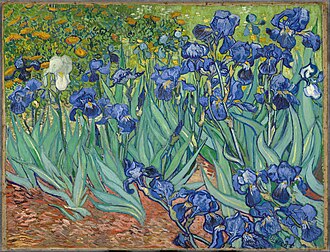 Irises - Vincent van Gogh (1889)
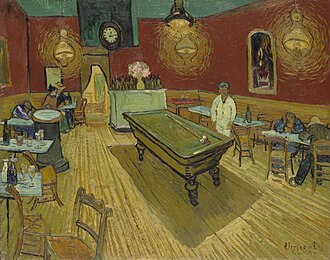 The Night Café - Vincent van Gogh (1888)
Paintings by related artists
 Where Do We Come From? What Are We? Where Are We Going? - Paul Gauguin (1897-1898)
%201889.jpg) The Yellow Christ - Paul Gauguin (1889)
The Yellow Christ - Paul Gauguin (1889) Luncheon on the Grass - Édouard Manet (1863)
 Olympia - Édouard Manet (1863)