The Bedroom
Vincent van Gogh · 1888
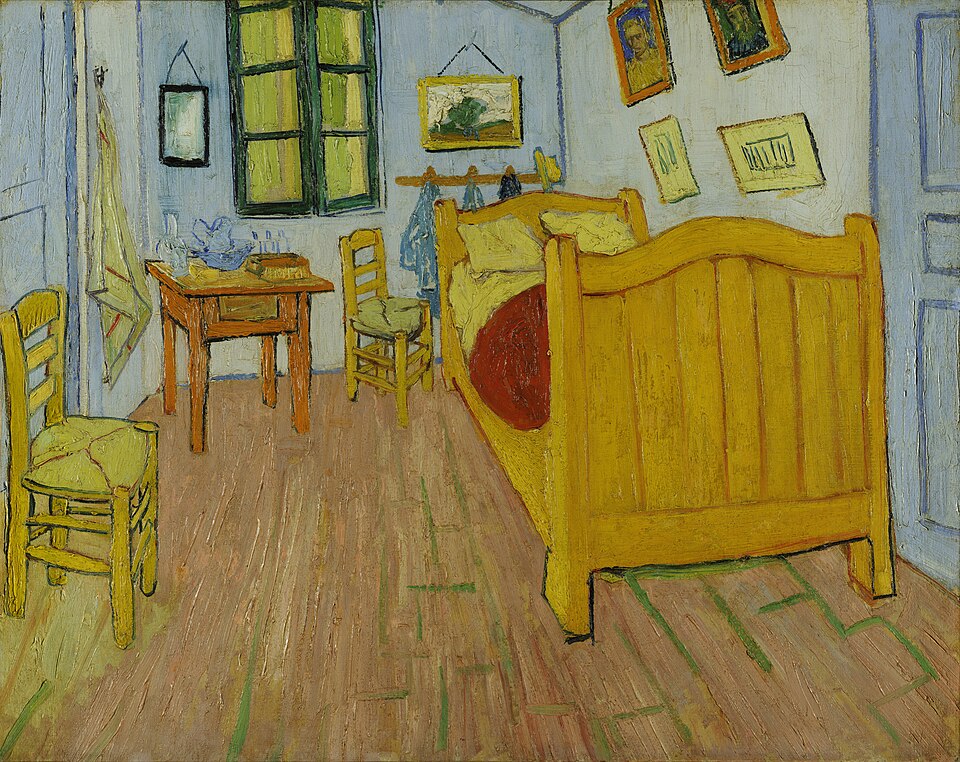
A serene and intimate space, Vincent van Gogh's bedroom is a testament to the artist's unique style and his ability to evoke emotions through color and composition.
The story behind the painting
In October 1888, Vincent van Gogh painted his bedroom at 2, Place Lamartine in Arles, France, known as the Yellow House. The room was not rectangular but trapezoid, with an obtuse angle in the left-hand corner of the front wall and an acute angle at the right. Van Gogh started the first version of 'The Bedroom' while recovering from an illness that left him bedridden for days. He aimed to create a sense of rest and calm through the use of simplified forms and bold colors. The painting depicts the room with a bed, dresser, and chairs, as well as a few personal items, such as portraits on the wall.
What to look for
In this painting, notice the bold and vibrant colors used by Van Gogh, including pale violet walls, red tiles, yellow furniture, and green window shutters. The room is depicted in a simplified and stylized manner, with flat, plain tints reminiscent of Japanese prints. Look for the small details, such as the portraits on the wall, a mirror, a hand-towel, and some clothes. The brushwork is expressive and impulsive, characteristic of Van Gogh's post-impressionist style.
Meaning and intent
Van Gogh intended for 'The Bedroom' to evoke a sense of rest and calm. He wrote to his brother Theo, 'This time it’s simply my bedroom, but the color has to do the job here, and through its being simplified by giving a grander style to things, to be suggestive here of rest or of sleep in general.' The painting is not just a representation of his physical space but also an expression of his emotional state and his desire for tranquility.
Legacy
'The Bedroom' is one of Van Gogh's most famous works, and it has had a significant impact on modern art. The painting has been widely reproduced and has influenced many artists, including Roy Lichtenstein, who created a parody of the work in 1992. There are three authentic versions of 'The Bedroom,' each with slight variations, and they are now held in the collections of the Van Gogh Museum, the Art Institute of Chicago, and the Musée d'Orsay.
Did you know?
- The painting depicts Van Gogh's bedroom at 2, Place Lamartine in Arles, France, known as the Yellow House.
- Van Gogh started the first version of 'The Bedroom' in October 1888 while recovering from an illness.
- There are three authentic versions of 'The Bedroom,' each with slight variations.
- The painting has been widely reproduced and has influenced many artists, including Roy Lichtenstein.
Wikipedia · Wikipedia - Vincent van Gogh · Wikidata
About the artist
Vincent van Gogh (1853-1890)
More by Vincent van Gogh
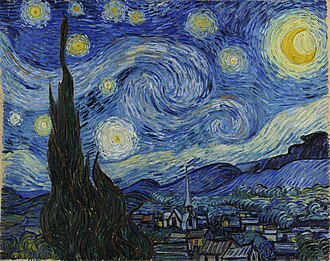 The Starry Night - Vincent van Gogh (1889)
.jpg) Café Terrace at Night - Vincent van Gogh (1888)
Café Terrace at Night - Vincent van Gogh (1888)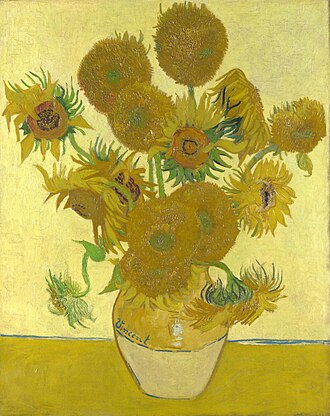 Sunflowers - Vincent van Gogh (1888)
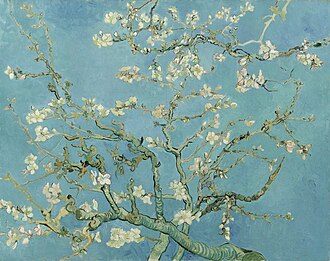 Almond Blossoms - Vincent van Gogh (1890)
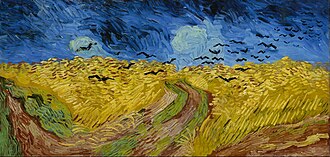 Wheatfield with Crows - Vincent van Gogh (1890)
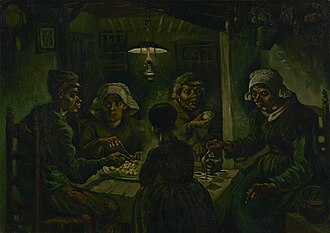 The Potato Eaters - Vincent van Gogh (1885)
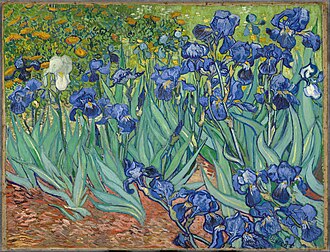 Irises - Vincent van Gogh (1889)
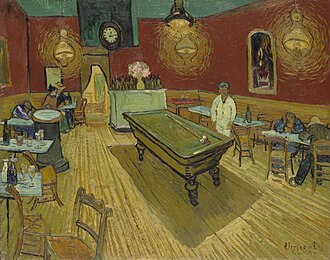 The Night Café - Vincent van Gogh (1888)
Paintings by related artists
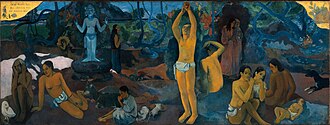 Where Do We Come From? What Are We? Where Are We Going? - Paul Gauguin (1897-1898)
%201889.jpg) The Yellow Christ - Paul Gauguin (1889)
The Yellow Christ - Paul Gauguin (1889)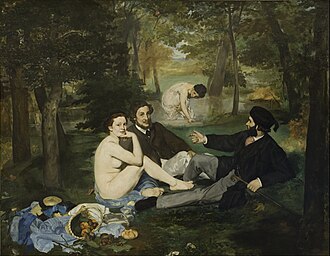 Luncheon on the Grass - Édouard Manet (1863)
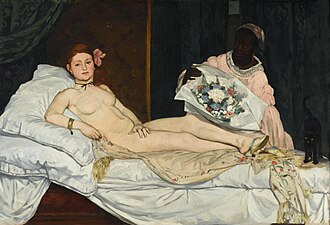 Olympia - Édouard Manet (1863)