The Yellow House
Vincent van Gogh · 1888
.jpg)
A vibrant and expressive depiction of everyday life, Vincent van Gogh's 'The Yellow House' is a captivating cityscape that invites viewers to step into the artist's Arlesian world.
The story behind the painting
In September 1888, Vincent van Gogh created 'The Yellow House', also known as 'The Street', while living in Arles, France. The painting showcases the right wing of 2 Place Lamartine, where Van Gogh rented four rooms. He occupied two large ones on the ground floor as his atelier and kitchen, and two smaller ones on the first floor, one of which was his guest room where Paul Gauguin would later stay. The house, with its bright yellow façade and green shutters, stood out against the blue sky. Van Gogh was inspired by the scene and saw it as a challenge to capture its beauty on canvas.
What to look for
In 'The Yellow House', observe the bold, expressive brushstrokes and vivid colors that define Van Gogh's post-Impressionist style. The yellow house, with its green shutters, takes center stage, while a pink restaurant and a tree add touches of color to the scene. The cobblestone street and railway bridges in the background provide a sense of depth and context. Note the contrast between the warm, sunny buildings and the cool, blue sky above. The painting's textured surface and dynamic brushwork draw the viewer's eye through the scene.
Meaning and intent
Van Gogh titled 'The Yellow House' 'The Street' initially, paying homage to Jean-François Raffaëlli's suite of street sketches. He saw his work as a celebration of everyday life and the beauty in ordinary scenes. The painting also served as a representation of his living situation and his hopes for a new life in Arles. By capturing this moment, Van Gogh aimed to convey the sense of possibility and renewal he felt in his new surroundings.
Legacy
'The Yellow House' has become an iconic representation of Van Gogh's artistic vision and his time in Arles. The painting has been part of the Van Gogh Museum's collection since 1962, allowing the public to appreciate its beauty and significance. Unfortunately, the house itself was severely damaged in a bombing raid during World War II and later demolished. Today, 'The Yellow House' remains a beloved and enduring work of art, continuing to inspire art lovers with its vibrant colors and captivating depiction of everyday life.
Did you know?
- The Yellow House was painted in September 1888.
- The house depicted was located at 2 Place Lamartine, Arles, France.
- The painting measures 72 × 91.5 cm.
- It has been part of the Van Gogh Museum's collection since 1962.
Wikipedia · Wikipedia - Vincent van Gogh · Wikidata
About the artist
Vincent van Gogh (1853-1890)
landscape painting · tree · Van Gogh Museum · sky · house · cityscape
More by Vincent van Gogh
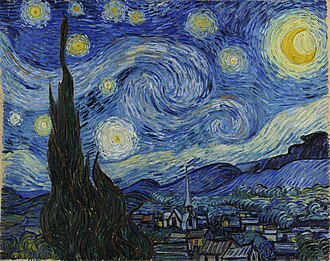 The Starry Night - Vincent van Gogh (1889)
.jpg) Café Terrace at Night - Vincent van Gogh (1888)
Café Terrace at Night - Vincent van Gogh (1888)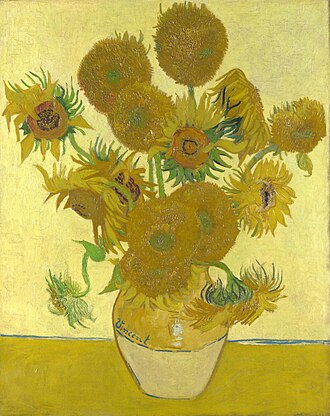 Sunflowers - Vincent van Gogh (1888)
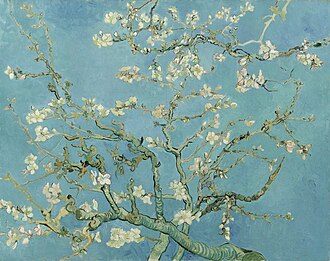 Almond Blossoms - Vincent van Gogh (1890)
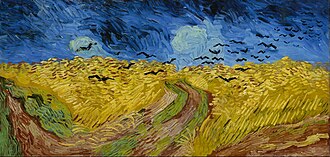 Wheatfield with Crows - Vincent van Gogh (1890)
 The Bedroom - Vincent van Gogh (1888)
 The Potato Eaters - Vincent van Gogh (1885)
 Irises - Vincent van Gogh (1889)
Paintings by related artists
 Where Do We Come From? What Are We? Where Are We Going? - Paul Gauguin (1897-1898)
%201889.jpg) The Yellow Christ - Paul Gauguin (1889)
The Yellow Christ - Paul Gauguin (1889) Luncheon on the Grass - Édouard Manet (1863)
 Olympia - Édouard Manet (1863)