Self-portrait as Zeuxis Laughing
Rembrandt van Rijn · 1663
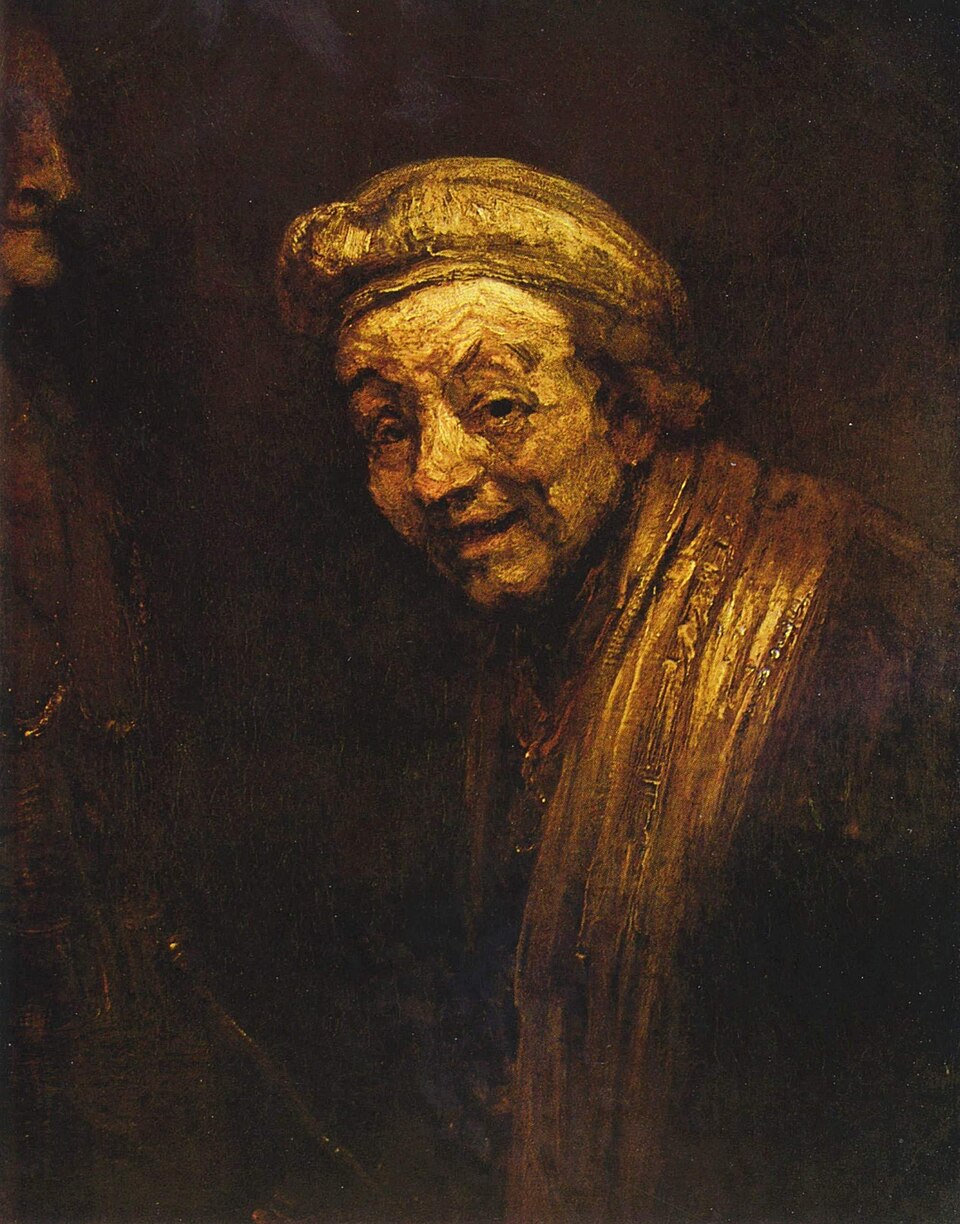
Near the end of his life, Rembrandt painted himself laughing, eyes sparkling, mouth half open. He is playing Zeuxis, the Greek painter said to have laughed himself to death while painting an old woman.
The story behind the painting
The self-portrait was completed around 1662 and is one of the last of Rembrandt's more than forty painted self-portraits; Wikidata dates it 1663. It is on a lined canvas of 82.5 by 65 cm in the Wallraf-Richartz Museum in Cologne. The story of Zeuxis was first told in a Latin dictionary by Marcus Verrius Flaccus, and Rembrandt may have read it in Karel van Mander's Schilder-Boeck: Zeuxis suffocated with laughter while portraying a wrinkled old woman who posed as the goddess of love. An X-radiograph shows Rembrandt first painted himself at work, brush raised to a canvas.
What to look for
A single light falls on his laughing face against a dark background. The wrinkles and texture of the skin are sharply defined, the eyebrows raised high and unevenly so the folds of the eyes stretch tight. At the far left, look for a barely visible figure with a large nose, sharp chin and two dark ribbons with a gold chain: the old woman of the story. He wears a white cap and holds a maulstick, tools of a painter. The paint is unusually rough, with palette-knife highlights on the collar, finger-blurred brow and thick impasto on the face.
Meaning and intent
For years the picture was an iconographic mystery. Jan Bialostocki proposed that Rembrandt laughs before a bust of Terminus, a symbol of death, a reading no longer widely accepted. Albert Blankert, who first identified Zeuxis, saw a pointed rejection of the classicism rising in the French Academy: an unidealised, ageing face instead of polished perfection. Another view links it to emotion itself. Rembrandt's pupil Samuel van Hoogstraten and Van Mander both praised Zeuxis as a master of expression, praise Rembrandt also earned. The comparison with a painting by his pupil Arent de Gelder helped confirm the subject.
Legacy
The work shows how Rembrandt kept experimenting late in life, mixing heavily loaded strokes with light dabs, more interested in texture and expression than precision. Its surface was flattened during lining and varnish makes it look smoother than intended, yet impasto still survives on the face, cap and collar. Arent de Gelder later painted his own Self-Portrait as Zeuxis Portraying an Ugly Old Woman, with the painter grinning over his shoulder at a woman holding a fruit. Rembrandt's laugh remains one of the most direct and human images of an artist facing old age.
Lo sapevi?
- Completed around 1662; Wikidata gives 1663.
- Rembrandt plays Zeuxis, who died laughing while painting an old woman.
- X-rays show he first painted himself at work.
- Held in the Wallraf-Richartz Museum, Cologne.
L'artista
Rembrandt van Rijn (1606-1669)
Dutch Golden Age painting · self-portrait · Rembrandt · historiated portrait · Wallraf-Richartz Museum
Altre opere di Rembrandt van Rijn
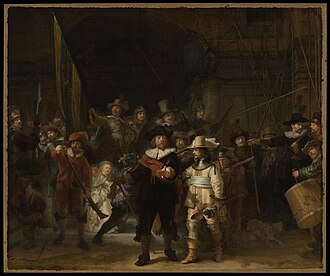 The Night Watch - Rembrandt van Rijn (1642)
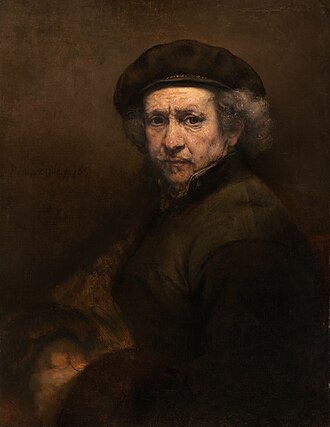 Self-Portrait - Rembrandt van Rijn (1659)
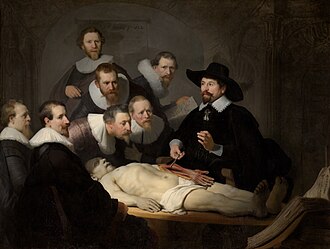 La lezione di anatomia del dottor Nicolaes Tulp - Rembrandt van Rijn (1632)
 La sposa ebrea - Rembrandt van Rijn (1660s)
 The Storm on the Sea of Galilee - Rembrandt van Rijn (1633)
 Il ritorno del figliol prodigo - Rembrandt van Rijn (1668)
 Danae - Rembrandt van Rijn (1636)
 Banchetto di Baldassarre - Rembrandt van Rijn (1636)
Dipinti di artisti collegati
 Girl with a Pearl Earring - Johannes Vermeer (1665)
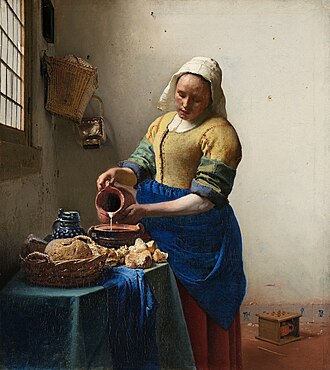 The Milkmaid - Johannes Vermeer (c. 1658)