Separation of David and Jonathan
Rembrandt van Rijn · 1642
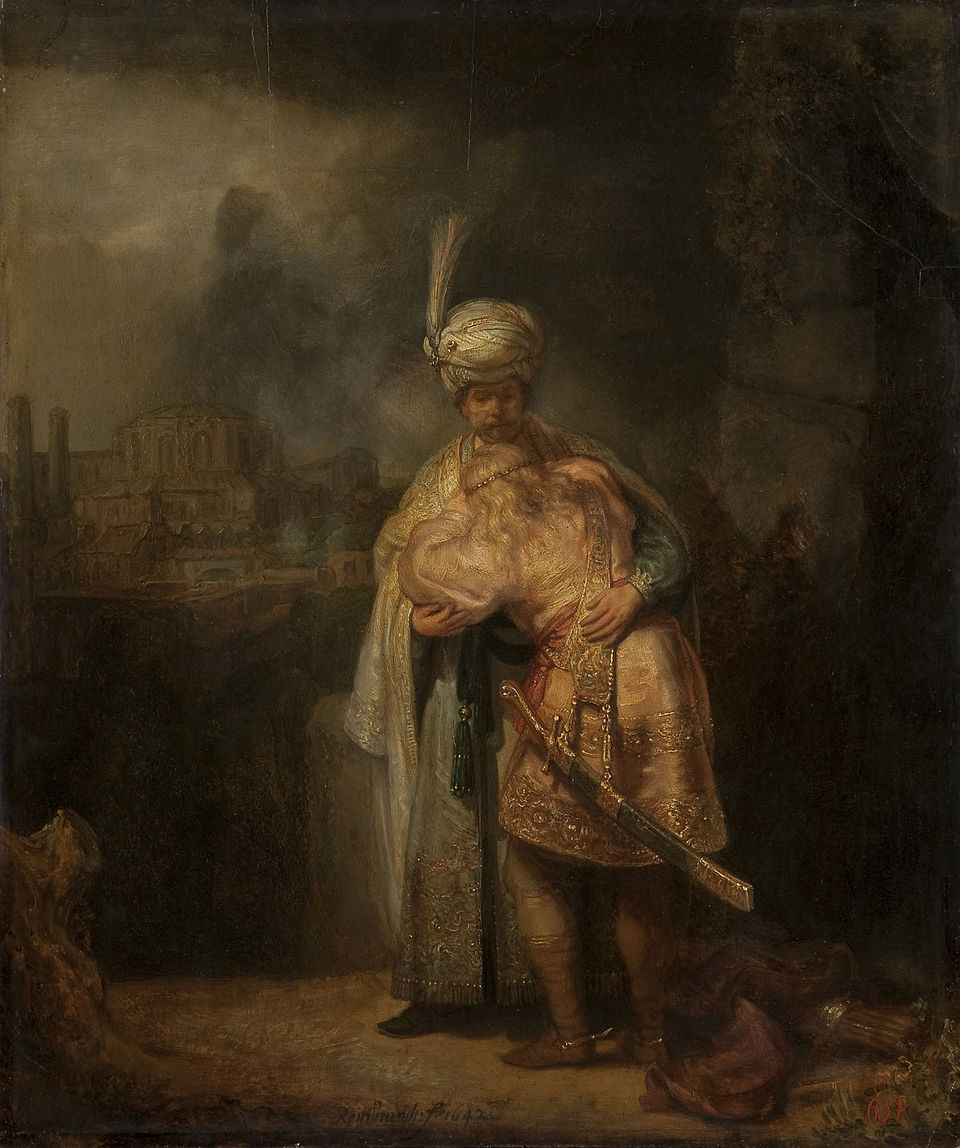
Two friends hold each other for the last time by a stone in the field. Rembrandt painted David weeping on Jonathan's chest in 1642, soon after the death of his beloved wife Saskia.
The story behind the painting
The subject comes from the First Book of Samuel. David was a close friend of Jonathan, son of King Saul. Saul suspected David of wanting the throne of Israel and planned to kill him. When Jonathan learned of his father's intention, he warned David and advised him to flee. David hid by the stone Ezel, and it was there that the two friends met for the last time. Rembrandt painted this farewell in 1642, on an oak panel, choosing the moment just before they part for good.
What to look for
Jonathan holds David to his chest while the younger man weeps uncontrollably. Look at the difference between the two faces: young David cannot contain his grief, while Jonathan, older, holds back his tears, though his face shows deep sorrow. In the left background Jerusalem gleams in the distance. At David's feet lies a quiver of arrows, interpreted as the weapons Jonathan gave David after the victory over Goliath, a gift of friendship now lying at the place of parting. The figures fill the foreground, close and heavy with feeling.
Meaning and intent
The Bible says Jonathan loved David as he loved his own soul, and made him swear again by that love. Love and suffering lie at the heart of the story, and Rembrandt places them at the heart of his picture: an embrace that is also a goodbye. He painted it soon after the death of his beloved wife Saskia, and the source suggests the subject may be linked to his own feelings. A farewell between two people who love each other may have carried a very personal weight for him that year.
Legacy
The painting is in the Hermitage Museum in Saint Petersburg. The source states that it was one of the works, together with the Hellenistic sculpture known as the Venus de Taurida, acquired in 1850, with which the Hermitage began its collection in 1882, dates given as they appear there. In the museum it hangs among other Rembrandts, including Flora of 1634, The Descent from the Cross of 1634, The Sacrifice of Isaac of 1635, The Holy Family with Angels of 1645 and The Return of the Prodigal Son, another painting about an embrace, from 1668 to 1669.
Lo sapevi?
- Painted on oak in 1642.
- The subject is from 1 Samuel 20, the last meeting by the stone Ezel.
- Painted soon after the death of Rembrandt's wife Saskia.
- Held by the Hermitage Museum, Saint Petersburg.
L'artista
Rembrandt van Rijn (1606-1669)
religious art · man · Dutch Golden Age painting · standing · Hermitage Museum · blond hair · David
Altre opere di Rembrandt van Rijn
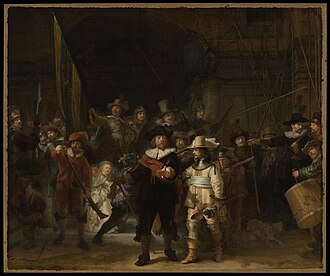 The Night Watch - Rembrandt van Rijn (1642)
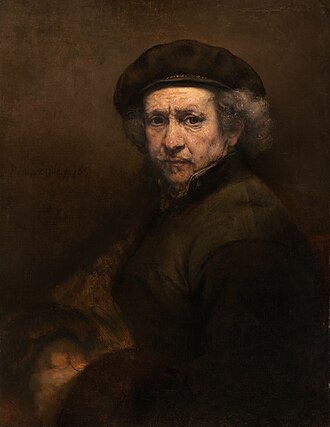 Self-Portrait - Rembrandt van Rijn (1659)
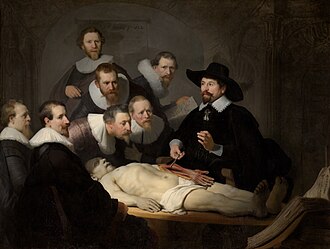 La lezione di anatomia del dottor Nicolaes Tulp - Rembrandt van Rijn (1632)
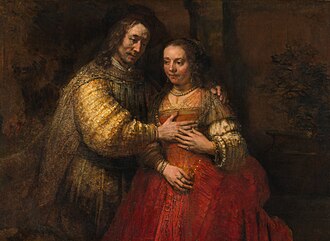 La sposa ebrea - Rembrandt van Rijn (1660s)
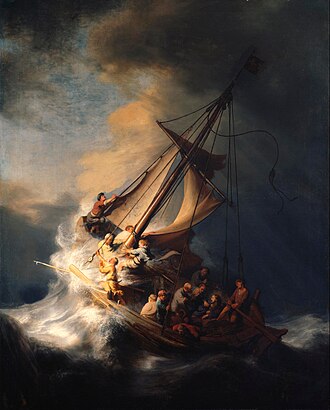 The Storm on the Sea of Galilee - Rembrandt van Rijn (1633)
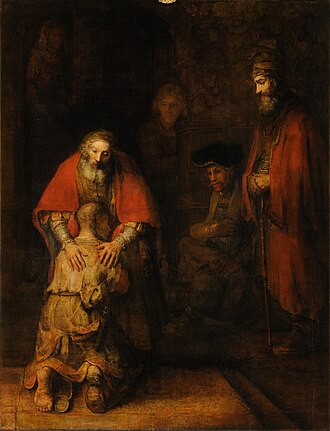 Il ritorno del figliol prodigo - Rembrandt van Rijn (1668)
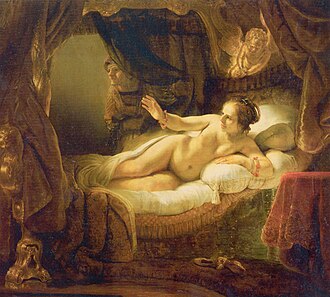 Danae - Rembrandt van Rijn (1636)
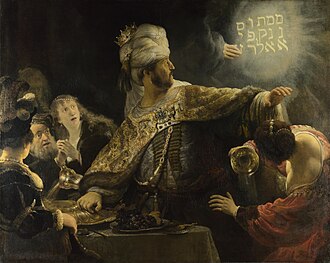 Banchetto di Baldassarre - Rembrandt van Rijn (1636)
Dipinti di artisti collegati
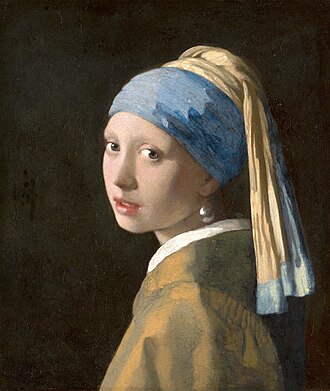 Girl with a Pearl Earring - Johannes Vermeer (1665)
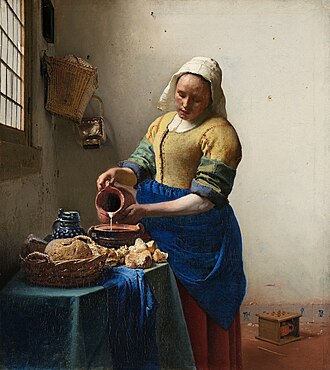 The Milkmaid - Johannes Vermeer (c. 1658)