Autoritratto all'età di 34 anni
Rembrandt van Rijn · 1640
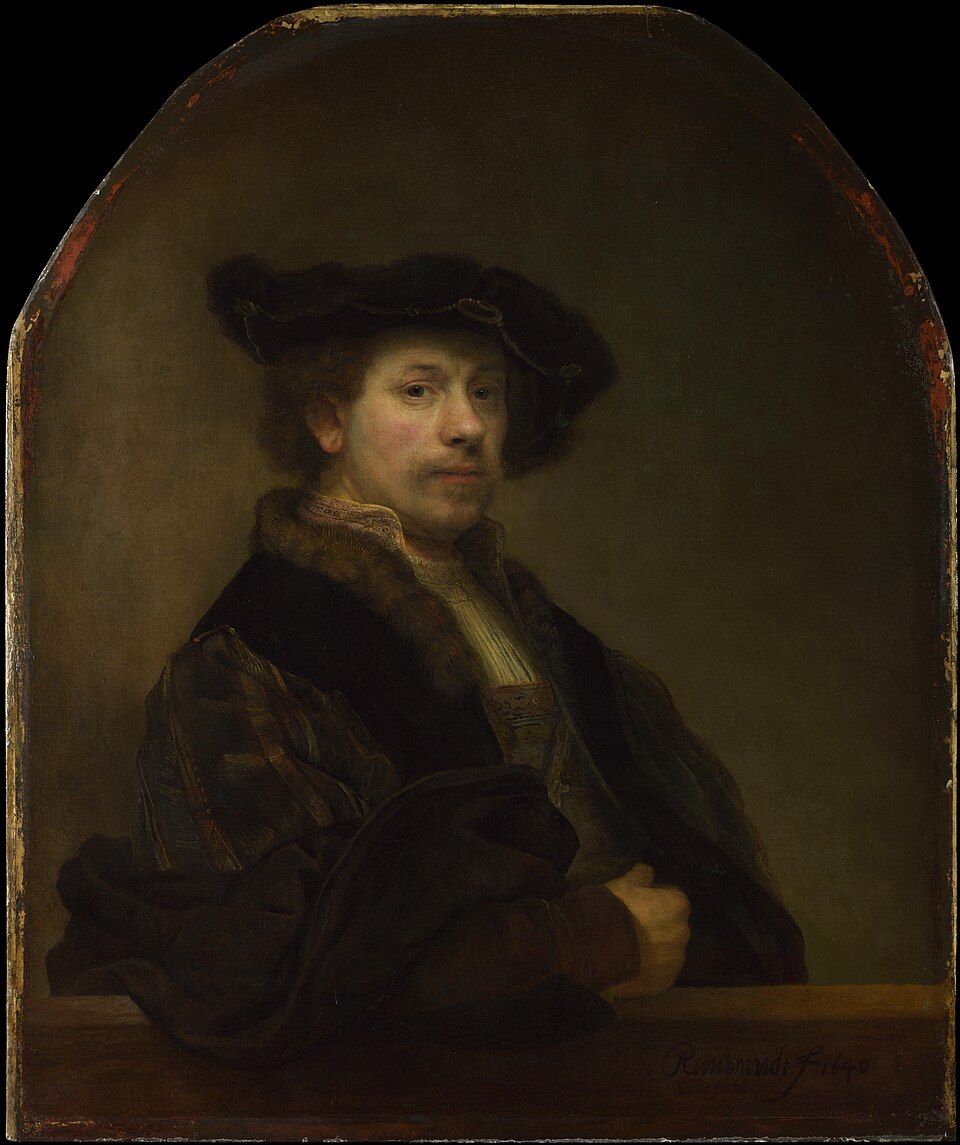
At thirty-four, at the height of his career, Rembrandt leaned on a ledge in a costume from the previous century and painted himself as the equal of Raphael and Titian.
The story behind the painting
Rembrandt painted this self-portrait in 1640, when he was thirty-four. Amsterdam was then the centre of Europe's art trade, and there he saw two famous Italian portraits: Raphael's Portrait of Baldassare Castiglione and Titian's A Man with a Quilted Sleeve. He made a sketch of the Raphael and noted its price. Those works became the starting point for this picture. A year earlier, in 1639, he had already tried a similar pose in an etching, Self Portrait, Leaning on a Stone Wall, where he looks rather more rakish. In the painted version he refined that idea into something calmer and grander.
What to look for
The canvas measures 102 by 80 centimetres. Rembrandt shows himself leaning in the pose he borrowed from Raphael and Titian, dressed in a fancy costume from the century before his own. The effect is richly dressed and self-assured. Look at the restrained palette, which scientists at the National Gallery have analysed. It contains lead white, bone black, charcoal black, ochres and vermilion. From just these few warm earths, blacks and one bright red, he builds fabrics, flesh and shadow. Let your eye move from the confident face to the sleeve and back, and notice how much he achieves with so little.
Meaning and intent
This is a painter in conversation with the masters. By adopting the poses of Raphael's Castiglione and Titian's sitter, Rembrandt placed himself in their line, almost as an argument that a Dutch artist could stand beside the great Italians. The old-fashioned costume is not disguise but ambition, a way of joining himself to a grand tradition. The sources describe him here at the height of his career, richly dressed and self-secure. The comparison with his rakish 1639 etching shows how deliberately he shaped this image of dignity.
Legacy
The painting now hangs in the National Gallery in London, the same museum that holds Titian's A Man with a Quilted Sleeve, one of its models. Visitors can compare the two in one building. It is one of more than forty painted self-portraits by Rembrandt, a series unmatched in its range. He also made many self-portraits in etching, and this work belongs to a group in which he appears in fancy costume from the previous century. The National Gallery's scientific study of its pigments continues to deepen understanding of how this confident self-image was made.
Lo sapevi?
- Oil painting, 1640, 102 × 80 cm (Wikidata).
- Pose influenced by Raphael's Castiglione and Titian's A Man with a Quilted Sleeve (Wikipedia).
- One of over forty painted self-portraits by Rembrandt (Wikipedia).
- National Gallery, London.
L'artista
Rembrandt van Rijn (1606-1669)
man · Dutch Golden Age painting · National Gallery · self-portrait · Rembrandt
Altre opere di Rembrandt van Rijn
 The Night Watch - Rembrandt van Rijn (1642)
 Self-Portrait - Rembrandt van Rijn (1659)
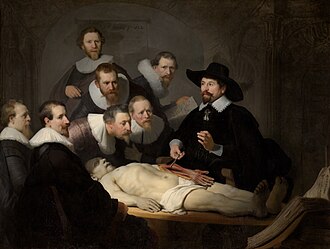 La lezione di anatomia del dottor Nicolaes Tulp - Rembrandt van Rijn (1632)
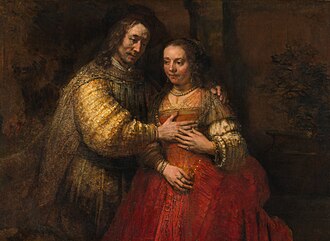 La sposa ebrea - Rembrandt van Rijn (1660s)
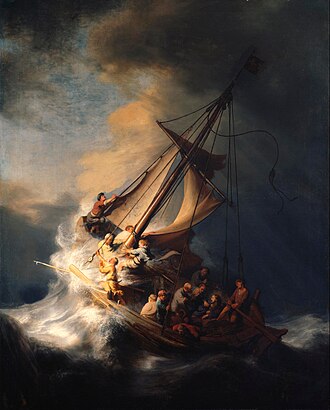 The Storm on the Sea of Galilee - Rembrandt van Rijn (1633)
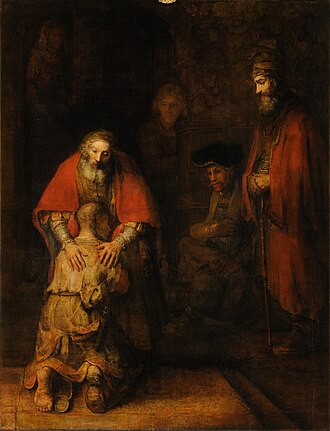 Il ritorno del figliol prodigo - Rembrandt van Rijn (1668)
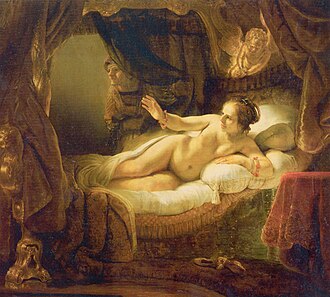 Danae - Rembrandt van Rijn (1636)
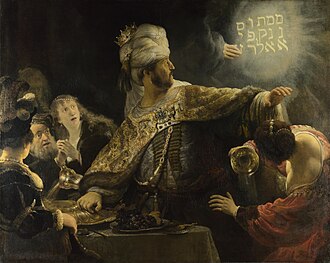 Banchetto di Baldassarre - Rembrandt van Rijn (1636)
Dipinti di artisti collegati
 Girl with a Pearl Earring - Johannes Vermeer (1665)
 The Milkmaid - Johannes Vermeer (c. 1658)
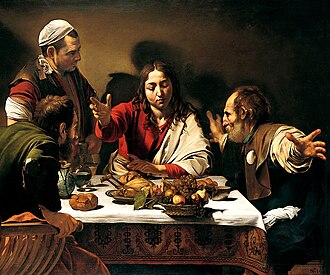 Supper at Emmaus - Caravaggio (1601)
 La vocazione di San Matteo - Caravaggio (1609)
 Las Meninas - Diego Velázquez (1656)
 The Surrender of Brea - Diego Velázquez (1635)