Self-Portrait at the Age of 63
Rembrandt van Rijn · 1669
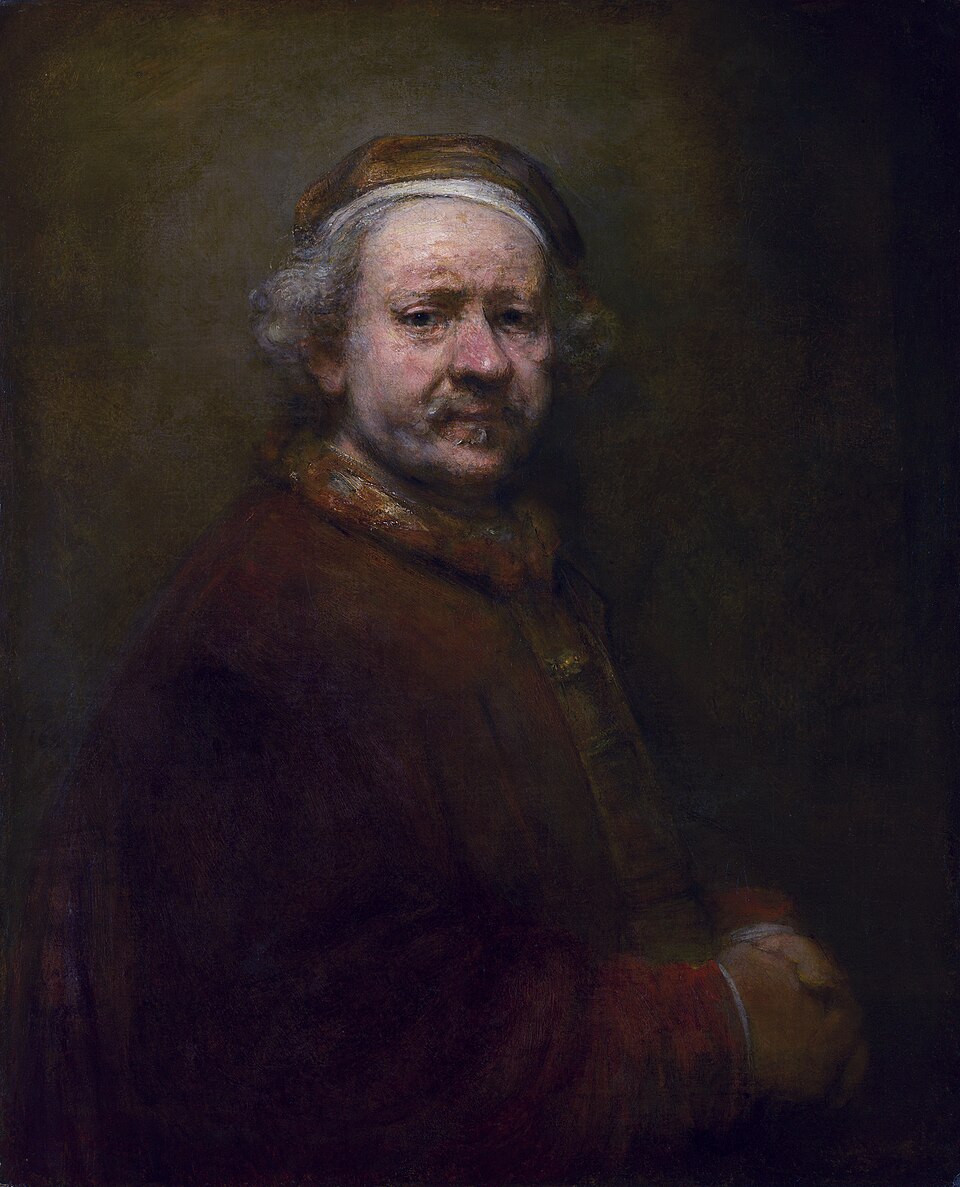
An old man in a red coat looks straight at us, hands clasped, his ageing face built from layer on layer of translucent paint. Rembrandt painted it in the last months of his life, and still he looks sure of himself.
The story behind the painting
Rembrandt painted this self-portrait in 1669, in the months before his death in October of that year. It is one of three self-portraits dating from 1669 and one of the last in a series of around 80 that he made across his life. That makes it part of one of the longest painted records any artist has left of his own face. Despite the closeness of death, and the close attention to his ageing features, the source notes that Rembrandt gives the impression of a self-assured and confident artist. The canvas measures 86 by 70.5 cm.
What to look for
Rembrandt shows himself in a deep red coat with a fur collar and a beret, looking out at the viewer with his hands clasped. Look closely at the face: sagging and blemished, it is carefully built up from many layers of translucent paint. By contrast, the robe and the background stay shadowy and the hands are indistinct, so the light and attention gather on the head. Scientists at the National Gallery found that he used his usual rather limited palette of lead white, ochres and red lakes, which makes the warmth of the coat and the flesh all the more striking.
Meaning and intent
X-rays reveal that Rembrandt changed his mind as he worked. The beret was originally larger and white. The hands were first placed differently, holding a paintbrush and a maulstick, the tools of his trade. In the finished picture those tools are gone, and the painter simply sits with clasped hands. The source does not explain why he made these changes, but the result presents him less as a man at work and more as a man facing us, calm and direct, with the record of his years written on his face.
Legacy
When the painting was cleaned in 1967, a damaged signature and date were revealed, and it is believed the canvas has been cut down on all four sides. It belonged to William van Huls until it was sold at auction in London in 1722 to Thomas Brodrick. It was inherited by his nephew Alan Brodrick, 2nd Viscount Midleton, and stayed at Peper Harow until George Brodrick, 5th Viscount Midleton, sent it to auction in 1851. That year it was bought by the National Gallery in London, where it remains, one of the last looks Rembrandt gave himself.
Lo sapevi?
- Painted in 1669, the year of Rembrandt's death.
- One of about 80 self-portraits by Rembrandt.
- X-rays show he first held a brush and maulstick.
- In the National Gallery, London, since 1851.
L'artista
Rembrandt van Rijn (1606-1669)
man · National Gallery · Dutch Golden Age painting · self-portrait · Rembrandt
Altre opere di Rembrandt van Rijn
 The Night Watch - Rembrandt van Rijn (1642)
 Self-Portrait - Rembrandt van Rijn (1659)
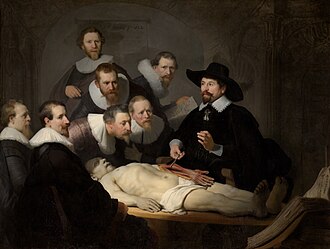 La lezione di anatomia del dottor Nicolaes Tulp - Rembrandt van Rijn (1632)
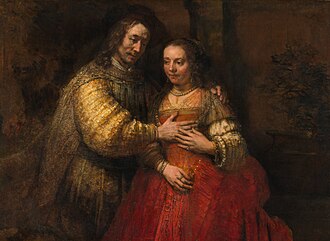 La sposa ebrea - Rembrandt van Rijn (1660s)
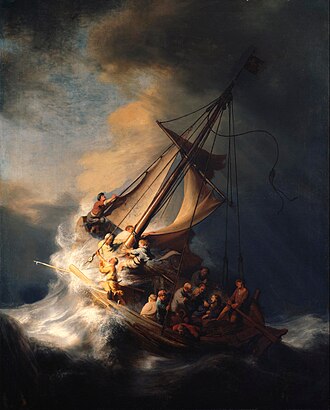 The Storm on the Sea of Galilee - Rembrandt van Rijn (1633)
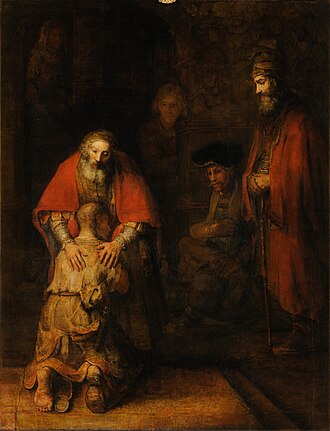 Il ritorno del figliol prodigo - Rembrandt van Rijn (1668)
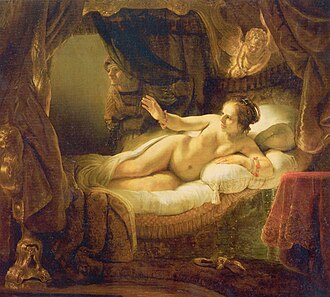 Danae - Rembrandt van Rijn (1636)
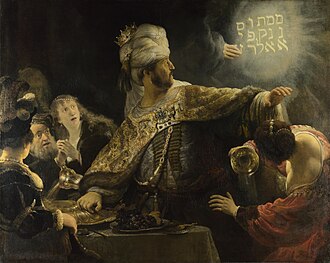 Banchetto di Baldassarre - Rembrandt van Rijn (1636)
Dipinti di artisti collegati
 Girl with a Pearl Earring - Johannes Vermeer (1665)
 The Milkmaid - Johannes Vermeer (c. 1658)
 The Feast of Saint Nicholas - Jan Steen (1660s)
 Girl eating oysters - Jan Steen (1658)
 A Militiaman Holding a Berkemeyer, Known as the ‘Merry Drinker’ - Frans Hals (1620s)
 Laughing Cavalier - Frans Hals (1624)
 The Windmill at Wijk bij Duurstede - Jacob van Ruisdael (1670)
 The Jewish Cemetery - Jacob van Ruisdael (1650s)
 The Courtyard of a House in Delft - Pieter de Hooch (1658)
 A Woman Peeling Apples - Pieter de Hooch (1663)