盛期ルネサンス
The High Renaissance is the short, dazzling stretch when Leonardo da Vinci, Michelangelo and Raphael were all at work in Italy.
Raphael · Titian · Michelangelo · Leonardo da Vinci · Albrecht Dürer · Sandro Botticelli · Hieronymus Bosch
 白貂を抱く貴婦人 - Leonardo da Vinci (1490)
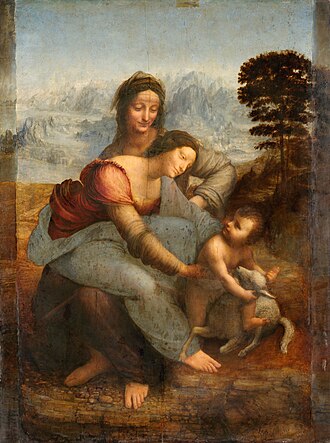 聖アンナと聖母子 - Leonardo da Vinci
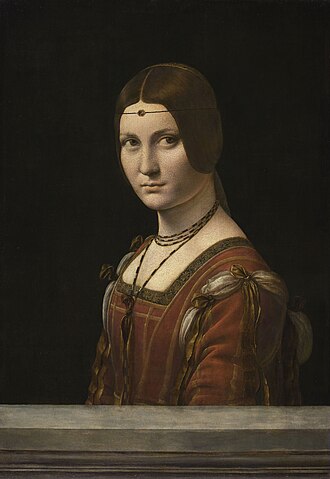 ミラノの貴婦人の肖像 - Leonardo da Vinci (1495)
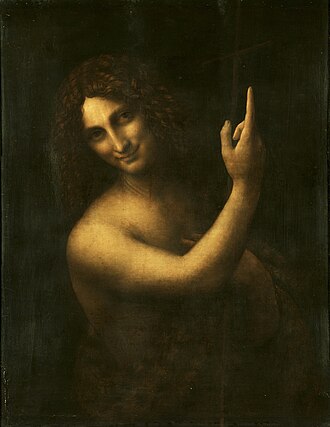 洗礼者ヨハネ - Leonardo da Vinci (1510s)
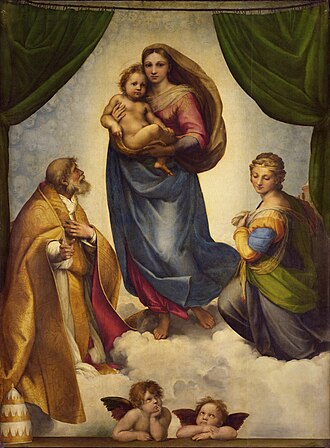 システィーナの聖母 - Raphael (1510s)
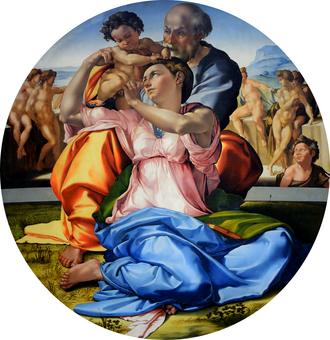 聖家族 - Michelangelo (1500s)
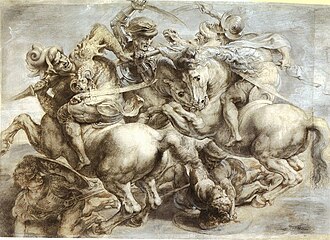 アンギアーリの戦い - Leonardo da Vinci (1503)
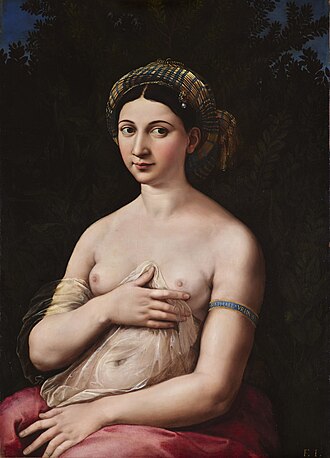 ラ・フォルナリーナ - Raphael
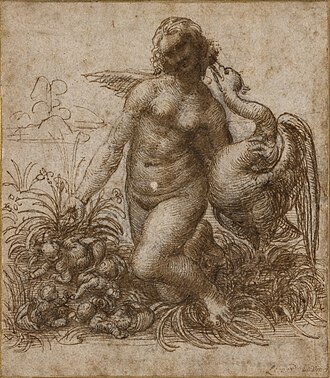 レダと白鳥 - Leonardo da Vinci (1510)
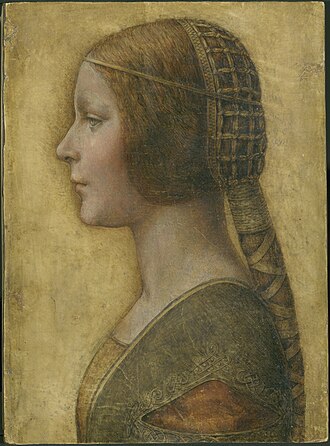 美しき姫君 - Leonardo da Vinci (1495)
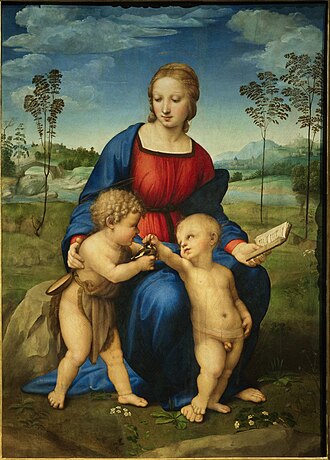 ヒワの聖母 - Raphael (1500s)
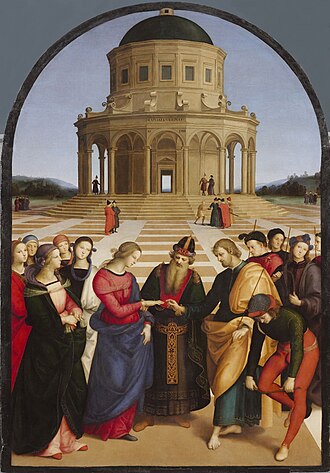 聖母の結婚 - Raphael (1504)
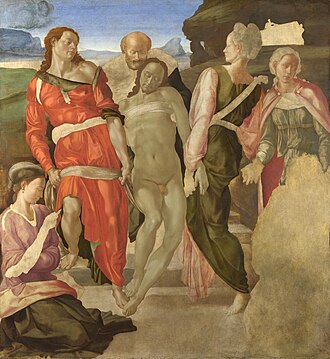 キリストの埋葬 - Michelangelo (1500s)
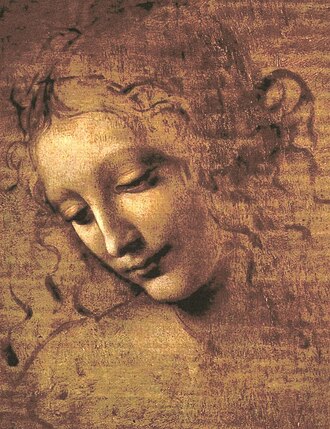 ほつれ髪の女性 - Leonardo da Vinci (1500s)
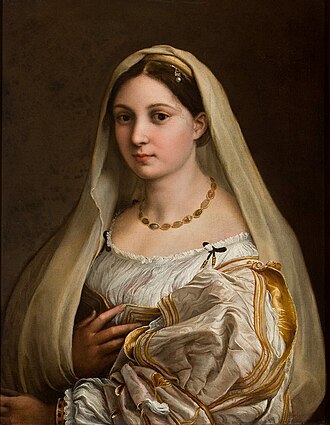 ヴェールを被る婦人の肖像 - Raphael (1510s)
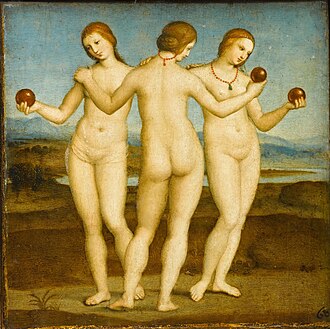 三美神 - Raphael (1504)
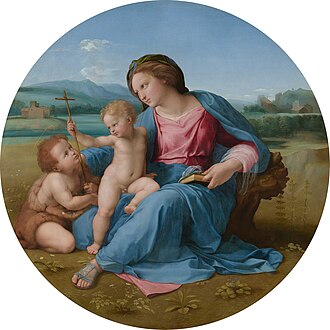 アルバの聖母 - Raphael (1510)
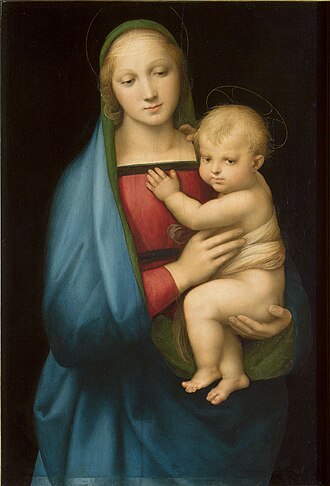 大公の聖母 - Raphael (1500s)
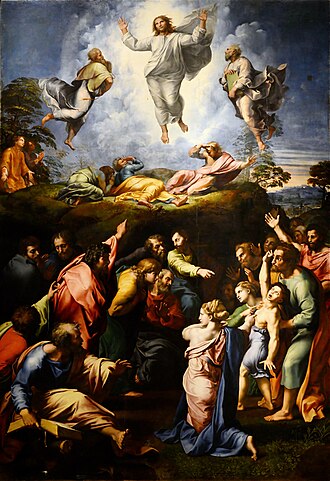 キリストの変容 - Raphael
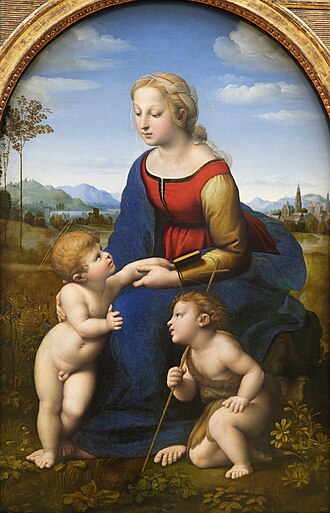 美しき女庭師 - Raphael (1500s)
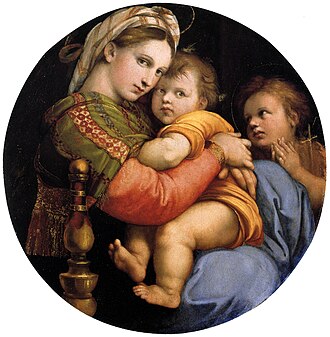 小椅子の聖母 - Raphael (1510s)
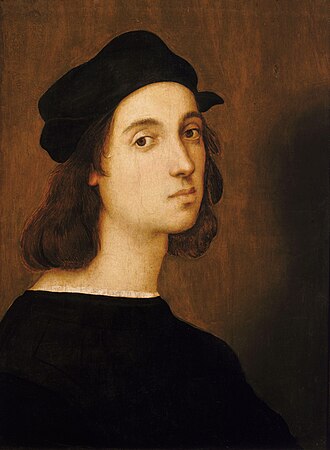 自画像 - Raphael (1500s)
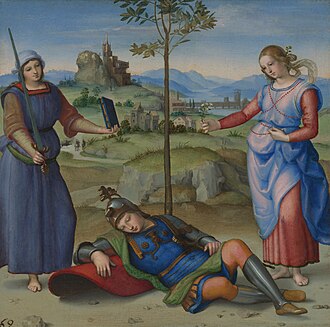 騎士の夢 - Raphael (1504)
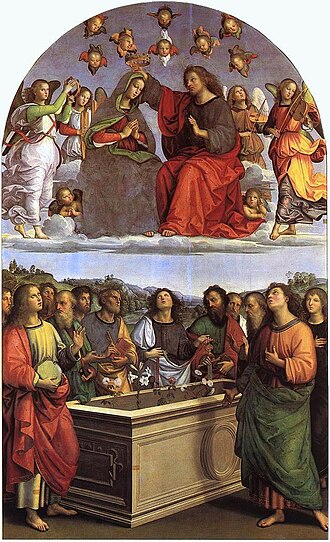 聖母戴冠 - Raphael (1502)
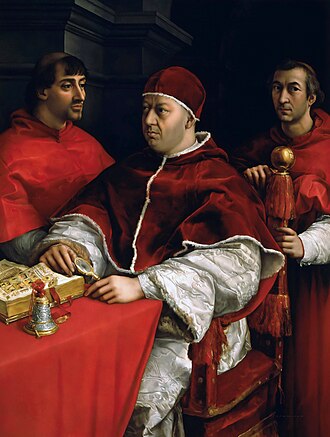 レオ10世と二人の枢機卿 - Raphael (1518)
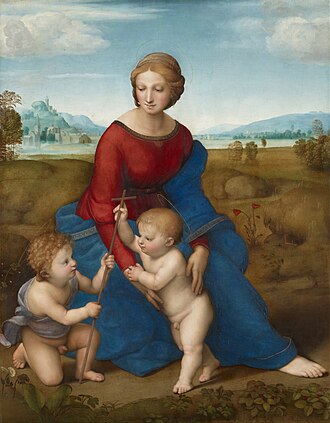 ベルヴェデーレの聖母 - Raphael (1500s)
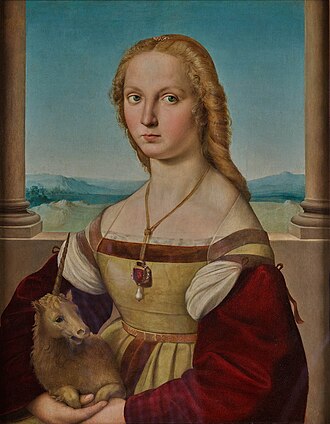 ユニコーンと若い女性 - Raphael (1500s)
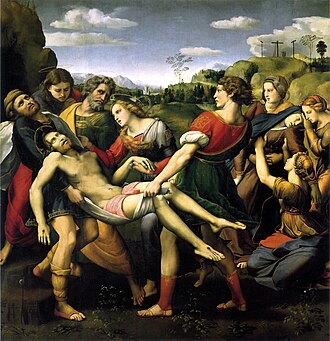 キリストの遺骸の運搬 - Raphael (1507)
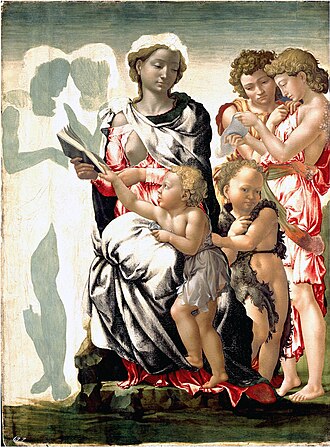 マンチェスターの聖母 - Michelangelo (1494)
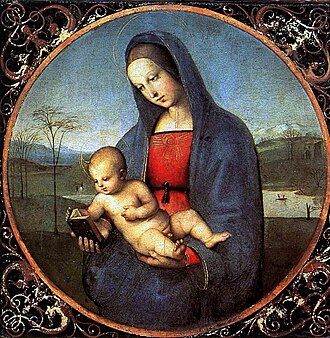 コネスタビレの聖母 - Raphael (1504)
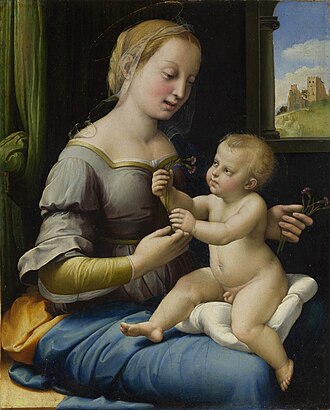 カーネーションの聖母 - Raphael (1500s)
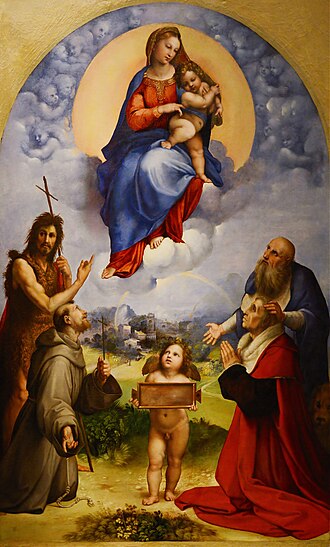 フォリーニョの聖母 - Raphael (1510s)
 聖母被昇天 - Titian (1510s)
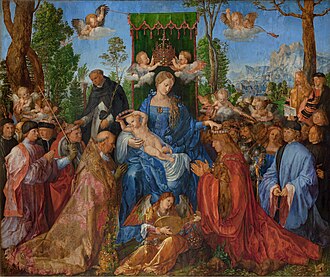 薔薇冠の祝祭 - Albrecht Dürer (1506)
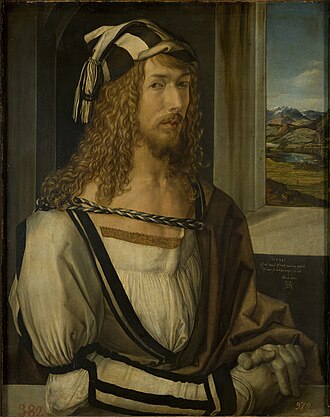 自画像 - Albrecht Dürer (1498)
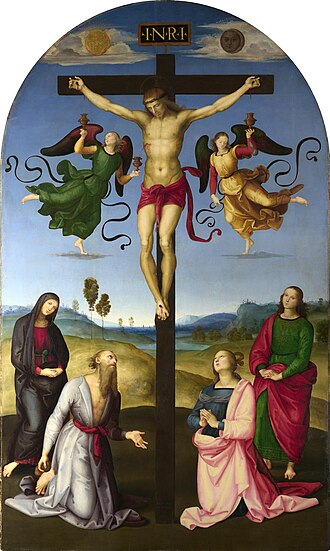 モンドの磔刑 - Raphael (1500s)
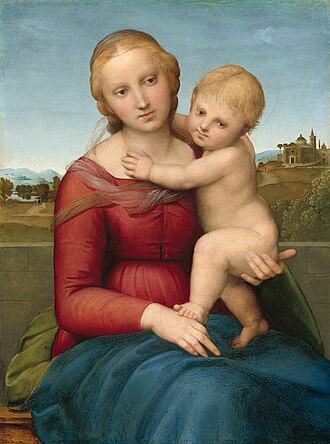 カウパーの小聖母 - Raphael (1505)
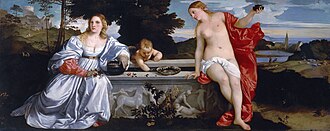 聖愛と俗愛 - Titian (1510s)
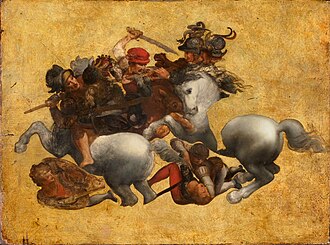 アンギアーリの戦い - Leonardo da Vinci (1503)
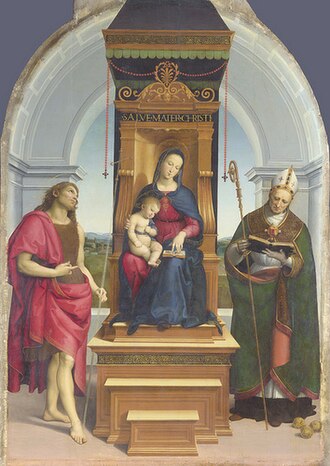 アンシデイの聖母 - Raphael (1505)
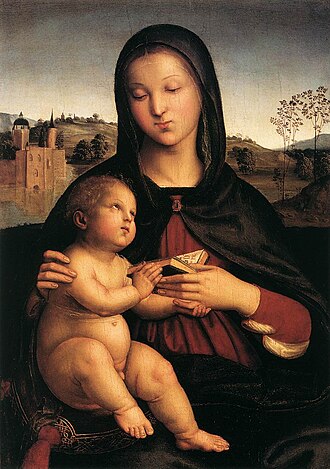 聖母子と聖書 - Raphael (1503)
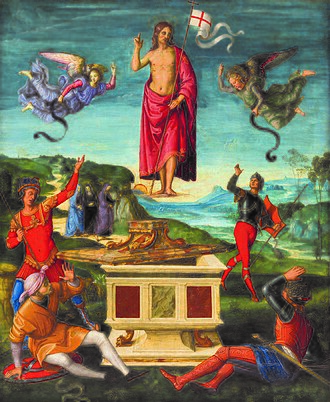 キリストの復活 - Raphael
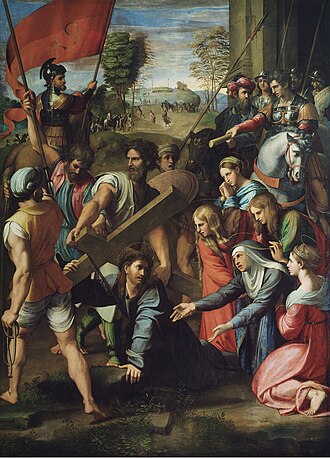 カルヴァリオへの道で倒れるキリスト - Raphael (1510s)
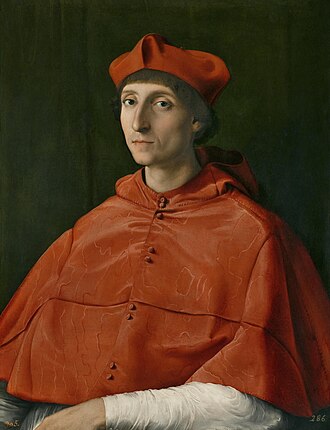 枢機卿の肖像 - Raphael (1510s)
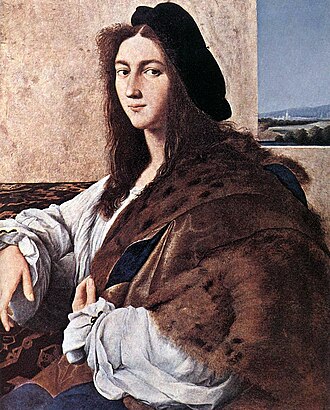 Portrait of a Young Man - Raphael (1513)
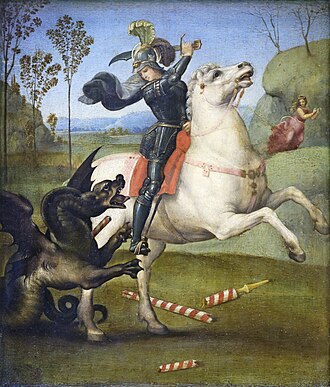 聖ゲオルギウスと竜 - Raphael (1500s)
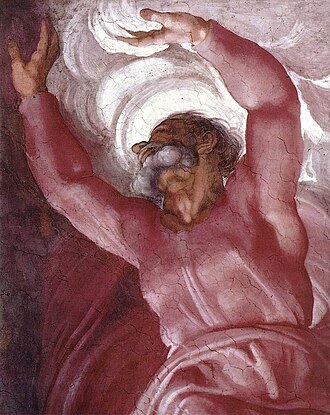 Separation of Light from Darkness - Michelangelo (1512)
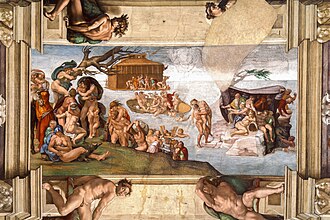 大洪水 - Michelangelo (1508)
盛期ルネサンスとは? よくある質問
The High Renaissance is the short, dazzling stretch when Leonardo da Vinci, Michelangelo and Raphael were all at work in Italy. It is often called the peak of Western painting, and it gave us some of the most famous images in the world, from the Mona Lisa to the Sistine Chapel ceiling.
What is the High Renaissance, in simple words?
It was a short period of truly exceptional art in Italy, especially in Rome and Florence. Painters pulled together all the advances of earlier generations, such as linear perspective, realistic bodies and feelings, and clever use of light and shadow, into one unified style. The goal was a picture where every part fits the whole in perfect order, balance and harmony. It is often described as the high point of Western painting.
Why is it called the High Renaissance?
The term was first coined in German, as Hochrenaissance, by the historian Jacob Burckhardt in 1855. It grew out of the idea of a "High Style" in painting and sculpture of the early 16th century, described by Johann Joachim Winckelmann in 1764. The word "High" signals that this was seen as the summit of the Renaissance, building on the earlier experiments of the Early Renaissance.
When and where did it happen?
Most art historians say it began between 1490 and 1500 and ended in 1520 with the death of Raphael. Others put the end around 1525, in 1527 with the Sack of Rome by the army of Charles V, or about 1530. The main centres were Rome, capital of the Papal States, and Florence, with Venice developing its own version. Some scholars place its peak between 1505 and 1513.
Who were the main artists?
The three giants were Leonardo da Vinci, Michelangelo and Raphael, with the architect Bramante also central. In Venice the leaders were Giovanni Bellini in his later works, Giorgione and the young Titian. Correggio and Andrea del Sarto were other important painters, and even lesser-known artists such as Fra Bartolomeo and Mariotto Albertinelli are still praised for the harmony of their designs.
How can I recognise a High Renaissance painting?
Look for a calm, balanced composition where everything feels in its right place. Figures are closely observed and lifelike, perspective is masterful, and light is handled with techniques like sfumato, the soft blending between colours, and chiaroscuro, the contrast of light and dark. These paintings reconcile opposites: real and ideal, movement and rest, space and flat surface. Venetian works add a serene mood and glowing colour.
How is it different from the Early Renaissance and from Mannerism?
The Early Renaissance experimented with perspective, light and anatomy; the High Renaissance perfected them and fused them into one harmonious style. Leonardo's The Last Supper is often said to make a complete break with the Early Renaissance. After about 1520, the elongated bodies and exaggerated poses seen in late works by Michelangelo, Andrea del Sarto and Correggio pointed toward Mannerism, which replaced High Renaissance balance with tension.
Who paid for this art?
Patrons were wealthy and powerful. Cardinals, rulers, bankers and very rich families commissioned works, and Pope Julius II supported many artists, including Michelangelo, whom he commissioned to paint the Sistine Chapel ceiling. Sculpture was often commissioned by the public and the state, partly because it was so expensive. Subjects were mostly religious, but classical figures from the ancient world also appeared often.
Which famous works should I see first?
Start with Leonardo's The Last Supper, painted 1495-1498, and his Mona Lisa. Then Michelangelo's Sistine Chapel ceiling and his sculptures the Pietà and David. From Raphael, see The School of Athens, a masterpiece of perspective and composition, and the Sistine Madonna. For Venice, look at Giorgione's mysterious The Tempest and Titian's Assumption of the Virgin.
Where can I see these works today?
The Sistine Chapel ceiling and Raphael's frescoes, including The School of Athens, are in the Vatican. Michelangelo's Pietà is in St. Peter's Basilica in Vatican City. Bramante's Tempietto, the building that starts High Renaissance architecture, stands at San Pietro in Montorio in Rome. Titian's Assumption of the Virgin is on the altar of the Frari church in Venice, and Raphael's La Belle Jardinière is in the Louvre.
Why does it still matter?
The High Renaissance has long been seen as a great explosion of creative genius, a view that goes back to the Florentine writer Giorgio Vasari. Michelangelo's Sistine ceiling affected every later generation of European artists, and Leonardo's Last Supper set the benchmark for religious painting. Recently some historians have criticised the term for focusing on only a few iconic works, which is a good reminder to look beyond the famous names too.