ヒワの聖母
ラファエロ・サンティ · 1500s
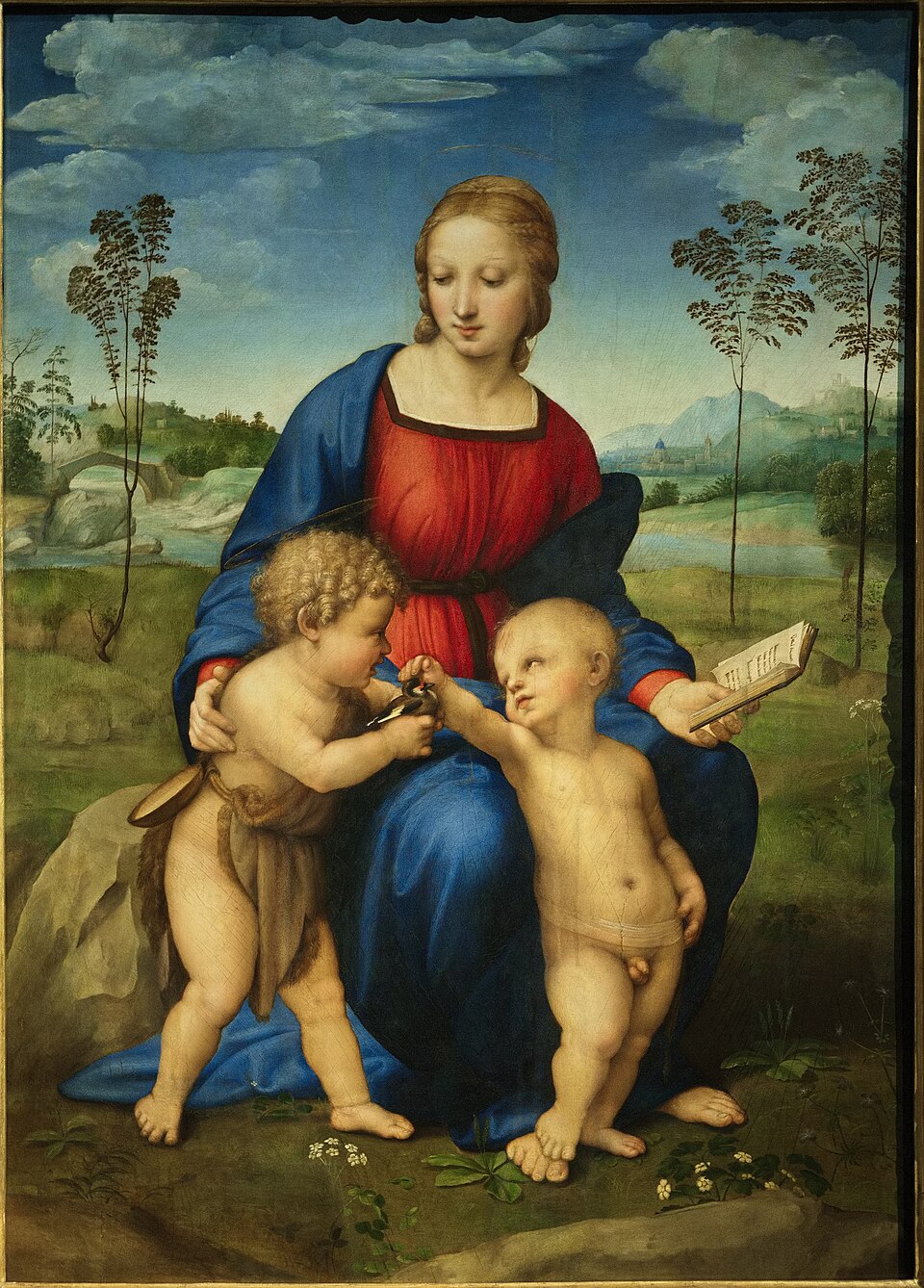
A wedding gift that was shattered into seventeen pieces by a landslide, then pieced back together. Raphael's goldfinch has survived more than most paintings ever face.
The story behind the painting
Raphael painted the Madonna of the Goldfinch, in Italian Madonna del Cardellino, in oil on wood around 1505-1506, during the years of his career known as his Florentine Period. Wikidata records only the 1500s. It was a wedding gift from Raphael to his friend Lorenzo Nasi. On 17 November 1548, Nasi's house was destroyed by a landslide and the painting broke into seventeen pieces. It was rescued and hastily reassembled, but the seams remained visible. In 2002 George Bonsanti gave the restoration to Patrizia Riitano, and her team spent six years on it, studying the panel with X-rays, CAT scans, infrared photography and lasers before removing grime and later overpainting. In 2008 the painting returned to the Uffizi; during the work an antique copy had taken its place.
What to look for
Three figures sit in a calm landscape: Mary, the Christ Child and the young John the Baptist. Their poses look natural, yet together they form an almost regular triangle, a geometric design Raphael used in most of his Florentine Madonnas. Mary is young and beautiful, dressed in red and blue. Both boys are still babies. John holds a small goldfinch in his hand, and Christ reaches out to touch it. Mary holds a book. Behind them the background is varied but calm, framing the central scene without competing with it. After the restoration, the colors that grime had dulled can be seen far more clearly.
Meaning and intent
Every detail carries a quiet message. Red, according to the Wikipedia account, signifies the Passion of Christ, and blue the Church. The goldfinch represents the Crucifixion: legend says its red spot appeared when it flew down to pull a thorn from Christ's crown and was splashed with his blood. So the innocent game between two children hides a foreshadowing. Mary's book reads Sedes Sapientiae, Seat of Wisdom, a title usually given to images of Mary enthroned with Jesus on her lap. Here the inscription suggests that the rock she sits on is her natural throne.
Legacy
The painting belongs to a family of Florentine Madonnas, alongside the Madonna of the Meadow and La belle jardiniere, which share the red and blue robes, the three figures, the pyramidal composition and the natural setting. Its survival story is part of its fame. Broken in 1548, mended with visible seams, then studied and cleaned with modern science, it shows how much care a single panel can inspire across centuries. Today it hangs again in the Uffizi in Florence, 107 by 77 cm, and the goldfinch still waits between two small hands.
豆知識
- Painted in oil on wood, c. 1505-1506 (Wikipedia)
- Broken into seventeen pieces by a landslide on 17 November 1548 (Wikipedia)
- Restoration from 2002 to 2008, then returned to the Uffizi (Wikipedia)
画家について
ラファエロ・サンティ (1483-1520)
宗教美術 · 聖母マリア · 盛期ルネサンス · イエスの幼少時代 · ウフィツィ美術館 · Child Saint John
同じ画家の作品: ラファエロ・サンティ
 システィーナの聖母 - Raphael (1510s)
.jpg) ラ・フォルナリーナ - Raphael
ラ・フォルナリーナ - Raphael 聖母の結婚 - Raphael (1504)
 ヴェールを被る婦人の肖像 - Raphael (1510s)
 三美神 - Raphael (1504)
 アルバの聖母 - Raphael (1510)
%20-%20La%20Madonna%20del%20Granduca%20-%20178%20-%20Galleria%20Palatina.jpg) 大公の聖母 - Raphael (1500s)
大公の聖母 - Raphael (1500s)%20September%202015-1a.jpg) キリストの変容 - Raphael
キリストの変容 - Raphael
関連する画家の作品
.jpg) ウルビーノのヴィーナス - Titian (1538)
ウルビーノのヴィーナス - Titian (1538) 聖母被昇天 - Titian (1510s)
 モナ・リザ - Leonardo da Vinci (1503-1519)
 白貂を抱く貴婦人 - Leonardo da Vinci (1490)
 聖家族 - Michelangelo (1500s)
 聖アンソニーの苦悩 - Michelangelo (1487)
 自画像 - Albrecht Dürer (1500)
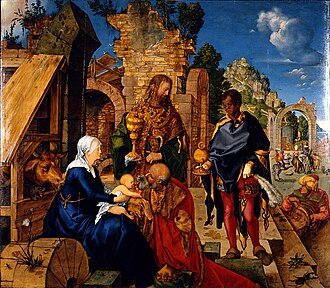 東方三博士の礼拝 - Albrecht Dürer (1504)
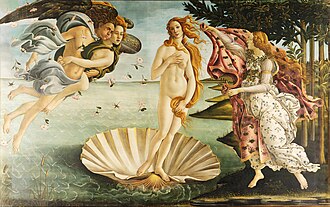 ヴィーナスの誕生 - Sandro Botticelli (c. 1485)
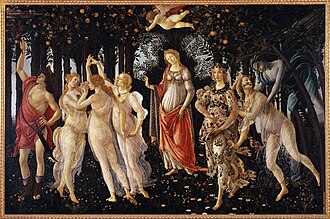 プリマヴェーラ - Sandro Botticelli (1480s)
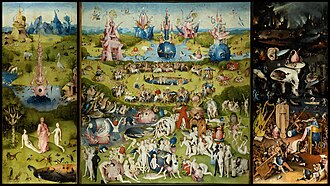 快楽の園 - Hieronymus Bosch
 愚者の船 - Hieronymus Bosch (1500s)