レオ10世と二人の枢機卿
ラファエロ・サンティ · 1518
.jpg)
A pope frowns over an illuminated Bible, a magnifying glass in his hand, while a golden knob on his chair reflects the window of the room. Raphael painted Leo X not as an idealised saint but as a worried, real man.
The story behind the painting
Pope Leo X, born Giovanni de' Medici in Florence, son of Lorenzo the Magnificent, led the Church from 1513 to 1521. He paid for work on St. Peter's Basilica partly by selling indulgences, which Martin Luther attacked in 1517, around the time Raphael began this portrait. The large painting arrived in Florence in 1518 to stand in for the pope at the wedding of his nephew Lorenzo de' Medici, Duke of Urbino, to Madeleine de La Tour d'Auvergne, a relative of King Francis I. Wikipedia dates it about 1518 to 1520; Wikidata gives 1518.
What to look for
Leo X sits in a camauro cap and an ermine-edged mozzetta, holding a gold-rimmed lens he needed for his short sight. Before him, on an orange-red cloth, lie a richly decorated silver bell and an illuminated Bible opened at the start of the Gospel of John; that real manuscript, the Hamilton Bible, made in Naples in the mid-fourteenth century, survives in Dresden. Look for the gold ball on his chair, reflecting the window and the room. Behind him stand two cardinals, Cardinal Giulio de' Medici, the future Clement VII, at left, and Cardinal Luigi de' Rossi, his hand on the chair, a maternal cousin of the other two.
Meaning and intent
Vasari wrote that the figures seem not painted but in full relief: the velvet's pile, the rustling damask, the soft fur, gold and silk that look real, a parchment book more real than reality, and a silver bell more beautiful than words. For centuries popes had been shown in profile with idealised faces, kneeling to bless. Raphael, continuing what he began with Julius II in 1511, painted real people with distinct features. Leo appears as a middle-aged man with a worried, frowning look. The reflecting knob recalls Early Netherlandish masters such as Jan van Eyck's Arnolfini Portrait.
Legacy
Many copies were made, one by Vasari in 1536. The original was listed at the Uffizi in 1589; from 1799 to 1816 it was in France, taken there under Napoleon. In 2020 the Uffizi held an exhibition marking the end of its restoration, and the technical study done for it disproved the belief of several scholars that the two cardinals had been added later by another painter. The panel, about 155.5 by 119.5 cm, is in the Uffizi in Florence; Wikidata also lists the Galleria Palatina.
豆知識
- Painted about 1518-1520 for a Medici wedding in Florence.
- Shows Leo X with Cardinals Giulio de' Medici and Luigi de' Rossi.
- Taken to France from 1799 to 1816.
- A 2020 restoration showed the cardinals were not added later.
画家について
ラファエロ・サンティ (1483-1520)
肖像 · 盛期ルネサンス · ウフィツィ美術館 · テーブル · パラティーナ美術館 · テーブルクロス
同じ画家の作品: ラファエロ・サンティ
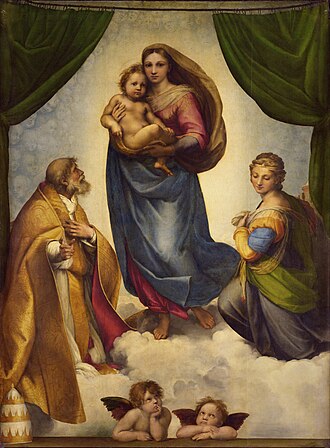 システィーナの聖母 - Raphael (1510s)
.jpg) ラ・フォルナリーナ - Raphael
ラ・フォルナリーナ - Raphael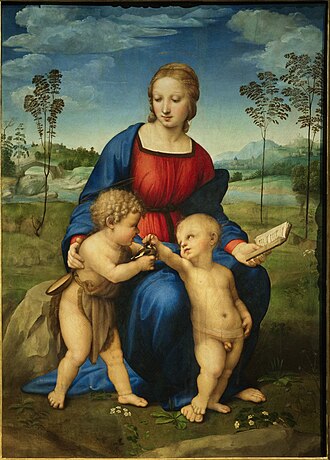 ヒワの聖母 - Raphael (1500s)
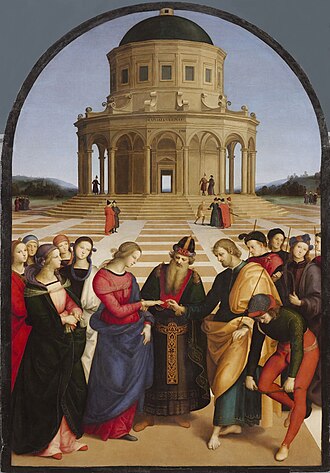 聖母の結婚 - Raphael (1504)
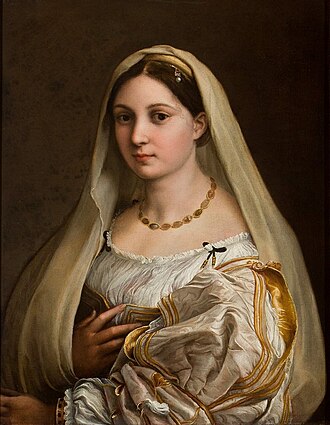 ヴェールを被る婦人の肖像 - Raphael (1510s)
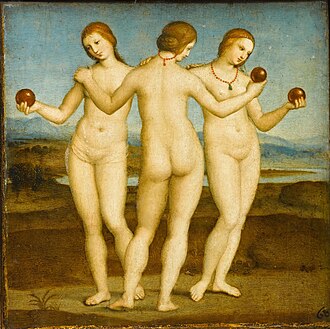 三美神 - Raphael (1504)
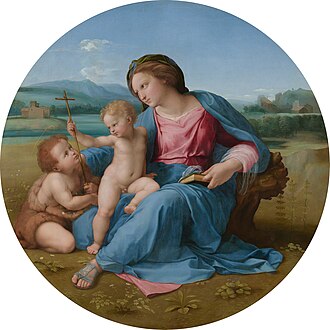 アルバの聖母 - Raphael (1510)
%20-%20La%20Madonna%20del%20Granduca%20-%20178%20-%20Galleria%20Palatina.jpg) 大公の聖母 - Raphael (1500s)
大公の聖母 - Raphael (1500s)
関連する画家の作品
.jpg) ウルビーノのヴィーナス - Titian (1538)
ウルビーノのヴィーナス - Titian (1538)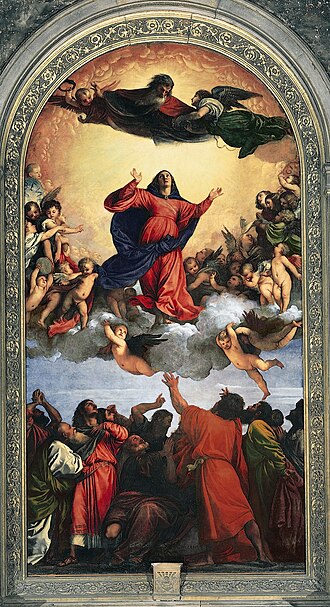 聖母被昇天 - Titian (1510s)
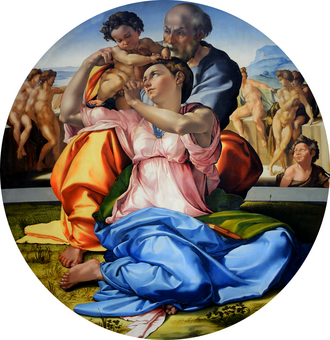 聖家族 - Michelangelo (1500s)
 聖アンソニーの苦悩 - Michelangelo (1487)
 モナ・リザ - Leonardo da Vinci (1503-1519)
 白貂を抱く貴婦人 - Leonardo da Vinci (1490)
 自画像 - Albrecht Dürer (1500)
 東方三博士の礼拝 - Albrecht Dürer (1504)
 ヴィーナスの誕生 - Sandro Botticelli (c. 1485)
 プリマヴェーラ - Sandro Botticelli (1480s)
 快楽の園 - Hieronymus Bosch
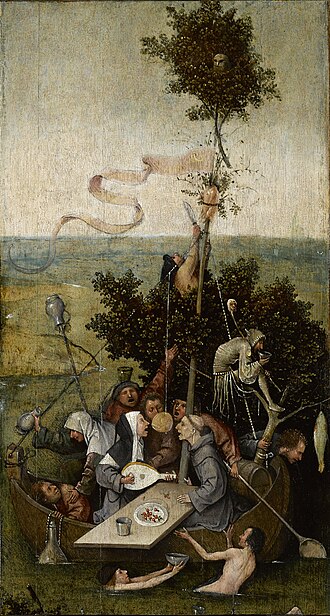 愚者の船 - Hieronymus Bosch (1500s)