システィーナの聖母
ラファエロ・サンティ · 1510s
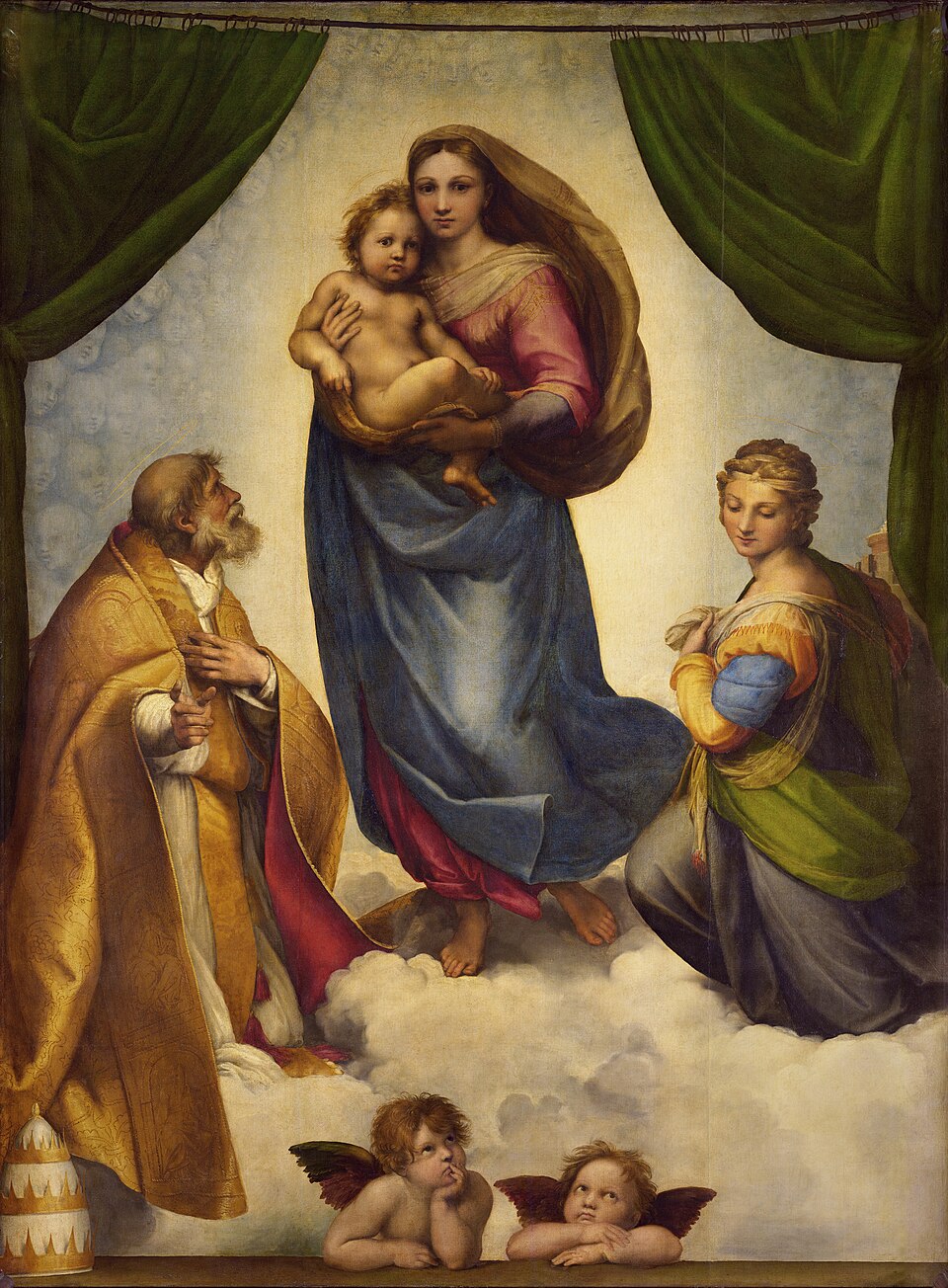
A curtain parts, and a young mother steps toward us on the clouds, holding her child. Below, two little winged angels lean on their elbows and gaze upward, as if they too cannot quite believe what they see.
The story behind the painting
The Sistine Madonna was commissioned in 1512 by Pope Julius II in honour of his late uncle, Pope Sixtus IV, as an altarpiece for the church of the Benedictine monastery of San Sisto in Piacenza, a house long tied to the Rovere family. The commission required both Saint Sixtus and Saint Barbara to appear. Raphael probably painted it around 1513-1514, and it was one of the last Madonnas he made. Giorgio Vasari called it a truly rare and extraordinary work. In 1754 Augustus III of Poland bought the painting and brought it to Dresden, where, the story goes, he moved his own throne to display it better. It remains in Dresden today.
What to look for
Mary stands on clouds, holding the Christ Child, with Saint Sixtus on one side and Saint Barbara on the other. Behind them, look closely: the bright sky is crowded with dozens of faint, half-hidden putti. At the bottom edge, two winged putti rest on a ledge, chins on their hands. Notice the colours, which scientific analysis has traced to Renaissance pigments: natural ultramarine mixed with lead white in Mary's blue robe, malachite with orpiment in the green curtain at the top, and lead-tin-yellow, vermilion and lead white in Saint Barbara's yellow sleeve. Note that the sources give slightly different sizes: Wikipedia states 265 by 196 centimetres, while Wikidata records 269.5 by 201.
Meaning and intent
In Germany the painting came to mean far more than an altarpiece. Writers debated whether Raphael was a devout Christian or a divine pagan, and a legend called Raphael's Dream imagined that he had received the image in a heavenly vision. Some viewers were said to fall into a kind of religious ecstasy before it. The art historian Hans Belting wrote that no other work had so fired the German imagination. Johann Joachim Winckelmann praised it in 1764, and it influenced Goethe, Wagner and Nietzsche. Dostoyevsky called it the greatest revelation of the human spirit. A legend even claims that in 1849 Mikhail Bakunin urged hanging it on Dresden's barricades.
Legacy
The painting survived the bombing of Dresden in World War II, stored in a tunnel in Saxon Switzerland. The Red Army took it to Moscow, where it was briefly shown at the Pushkin Museum in 1946, and in 1955 it was returned to Germany. Dramatic stories about its rescue from flooded caves later circulated, but the Soviet art historian Andrei Chegodaev and a brigade commander both called them lies; the sources record this conflict. Back in the Gemäldegalerie Alte Meister, it is described as the collection's highlight, and its 500th anniversary was celebrated in 2012. Its two small angels have become famous on their own, reproduced on stamps, postcards and much else.
豆知識
- Commissioned in 1512 by Pope Julius II for San Sisto, Piacenza.
- Moved to Dresden in 1754; taken to Moscow after World War II and returned in 1955.
- Size given as 265 × 196 cm by Wikipedia and 269.5 × 201 cm by Wikidata.
画家について
ラファエロ・サンティ (1483-1520)
宗教美術 · 聖母マリア · 盛期ルネサンス · イエスの幼少時代 · 少年 · 天使 · 母 · ドレスデン美術館
同じ画家の作品: ラファエロ・サンティ
.jpg) ラ・フォルナリーナ - Raphael
ラ・フォルナリーナ - Raphael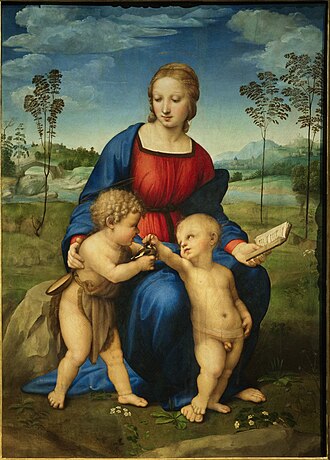 ヒワの聖母 - Raphael (1500s)
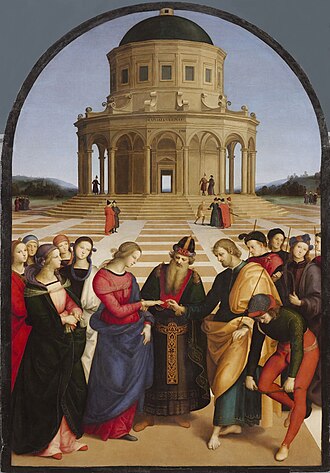 聖母の結婚 - Raphael (1504)
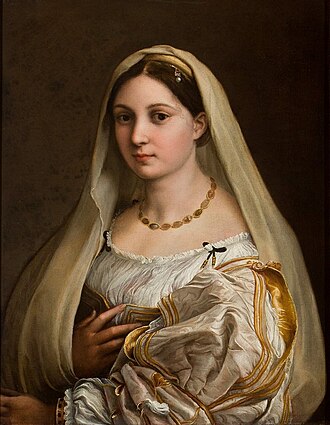 ヴェールを被る婦人の肖像 - Raphael (1510s)
 三美神 - Raphael (1504)
 アルバの聖母 - Raphael (1510)
%20-%20La%20Madonna%20del%20Granduca%20-%20178%20-%20Galleria%20Palatina.jpg) 大公の聖母 - Raphael (1500s)
大公の聖母 - Raphael (1500s)%20September%202015-1a.jpg) キリストの変容 - Raphael
キリストの変容 - Raphael
関連する画家の作品
.jpg) ウルビーノのヴィーナス - Titian (1538)
ウルビーノのヴィーナス - Titian (1538) 聖母被昇天 - Titian (1510s)
 モナ・リザ - Leonardo da Vinci (1503-1519)
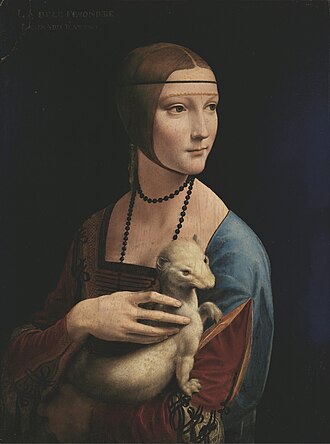 白貂を抱く貴婦人 - Leonardo da Vinci (1490)
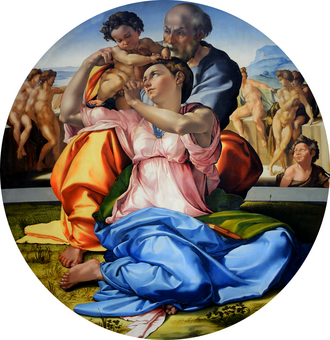 聖家族 - Michelangelo (1500s)
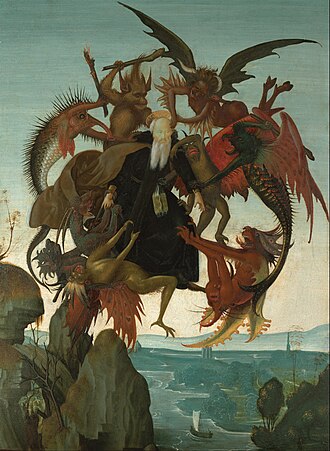 聖アンソニーの苦悩 - Michelangelo (1487)
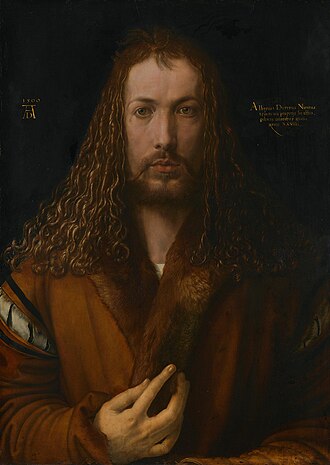 自画像 - Albrecht Dürer (1500)
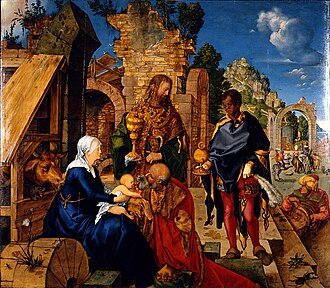 東方三博士の礼拝 - Albrecht Dürer (1504)
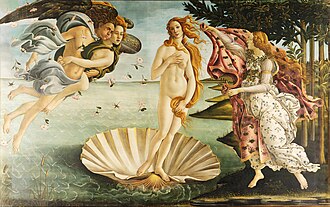 ヴィーナスの誕生 - Sandro Botticelli (c. 1485)
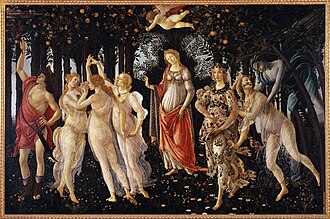 プリマヴェーラ - Sandro Botticelli (1480s)
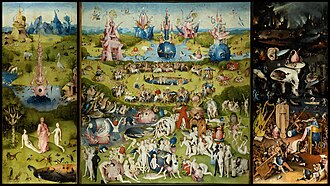 快楽の園 - Hieronymus Bosch
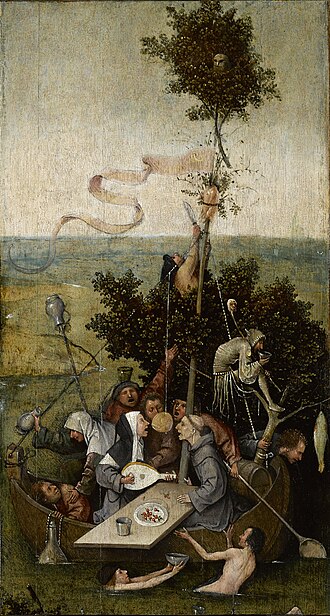 愚者の船 - Hieronymus Bosch (1500s)