聖家族
ミケランジェロ・ブオナローティ · 1500s
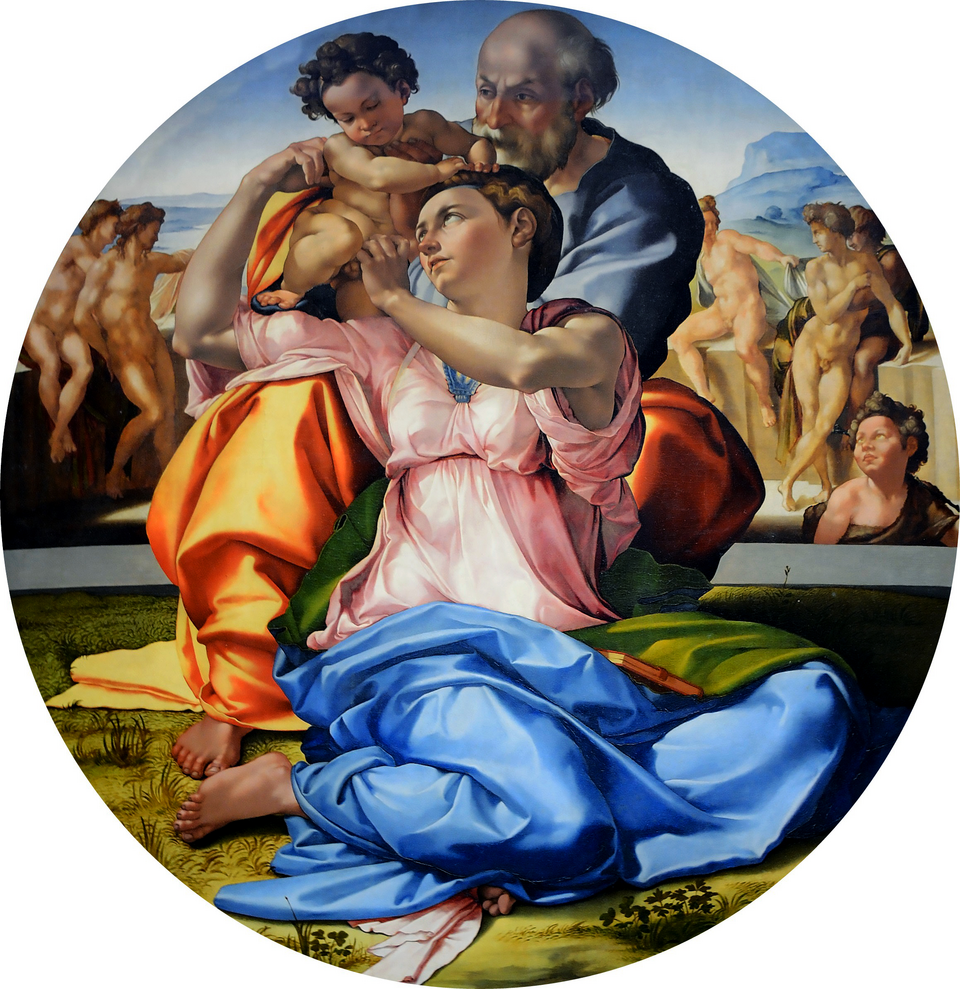
Michelangelo is remembered as a sculptor, yet in this round panel his painted figures seem carved from marble. It is the only finished panel painting of his maturity to survive.
The story behind the painting
According to Giorgio Vasari, the Doni Tondo was commissioned by the Florentine Agnolo Doni. The occasion is debated. It may celebrate his marriage in January 1504 to Maddalena Strozzi, daughter of a powerful Tuscan family, whose crescent moons are carved into the frame. Alternatively, it may mark the birth of their daughter Maria in 1507, a view supported by echoes of the Laocoon, unearthed in January 1506 in Michelangelo's presence. Either way, he finished it before beginning the Sistine Chapel ceiling in 1508. Wikidata gives only the 1500s. The round format, a tondo, was often associated with domestic ideas in the Renaissance.
What to look for
Mary dominates the centre, seated directly on the grass. Behind her, unusually, Joseph sits higher, his great legs forming a kind of throne around her. Look at the Child passing between them, and ask whether Mary is receiving him or handing him over; scholars still disagree. In the middle ground stands the young John the Baptist, patron saint of Florence. Beyond a low wall lounge five nude male figures, softer in modelling, gazing anywhere but at Christ. Then admire the colour: bright shades set side by side in the cangiante technique, and drapery folds so sharply modelled they look like carved stone.
Meaning and intent
The painting moves from near to far like a story in space. The large, solid Holy Family fills the foreground, while the small background nudes create the illusion of depth. A semicircular ridge behind John echoes the round shape of the panel itself. What the nudes mean has never been settled; the source describes their interpretation as varied and much debated. The original frame, which Michelangelo may have helped design, adds further puzzles: five protruding heads, plus moons, stars, lions and vegetation, perhaps drawn from the Doni and Strozzi coats of arms, with moons and lions bound together by ribbons, possibly a sign of marriage.
Legacy
The Doni Tondo is believed to be the only surviving panel Michelangelo painted without assistants, and its attribution has never been questioned. It looks forward to his later work: the cangiante colour anticipates the Sistine ceiling, and the background nudes seem precursors of its famous ignudi. Mary has been compared with his Sibyls painted there. The panel still sits in its original frame in the Uffizi in Florence, so visitors see it much as the Doni household might have, a family image that also became a rehearsal for one of the great ceilings of the Renaissance.
豆知識
- Commissioned by Agnolo Doni, according to Vasari (Wikipedia).
- Possibly for his 1504 marriage to Maddalena Strozzi, or the 1507 birth of daughter Maria; sources disagree (Wikipedia).
- Still in its original carved frame at the Uffizi (Wikipedia, Wikidata).
- Believed to be the only panel Michelangelo painted without assistants (Wikipedia).
画家について
ミケランジェロ・ブオナローティ (1475-1564)
宗教美術 · 聖母マリア · 盛期ルネサンス · イエスの幼少時代 · ウフィツィ美術館 · ナザレのヨセフ · 聖家族
同じ画家の作品: ミケランジェロ・ブオナローティ
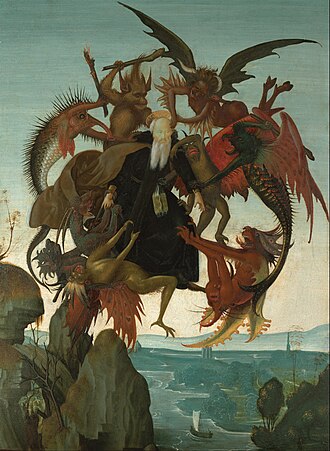 聖アンソニーの苦悩 - Michelangelo (1487)
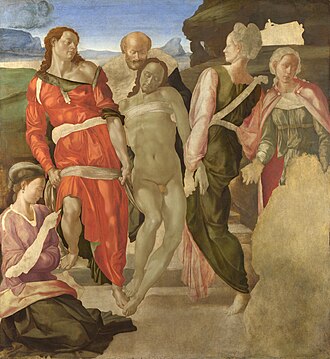 キリストの埋葬 - Michelangelo (1500s)
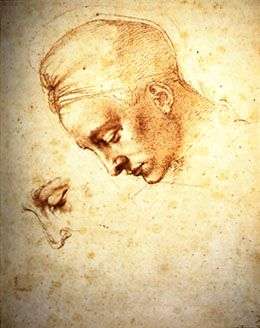 レダと白鳥 - Michelangelo (1530)
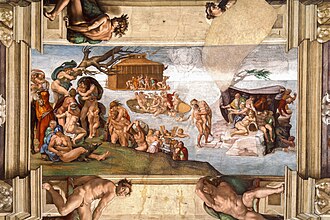 大洪水 - Michelangelo (1508)
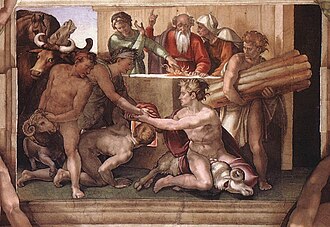 ノアの燔祭 - Michelangelo (1508)
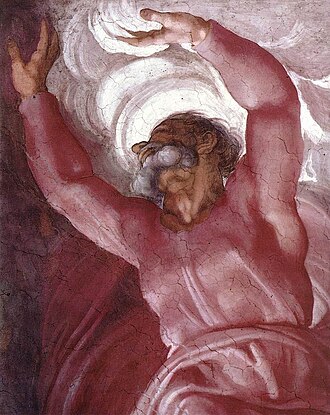 Separation of Light from Darkness - Michelangelo (1512)
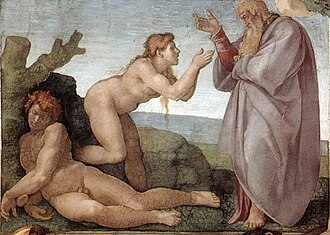 The Creation of Eve - Michelangelo (1511)
 The Separation of the Earth and Waters - Michelangelo (1511)
関連する画家の作品
.jpg) ウルビーノのヴィーナス - Titian (1538)
ウルビーノのヴィーナス - Titian (1538) 聖母被昇天 - Titian (1510s)
 システィーナの聖母 - Raphael (1510s)
.jpg) ラ・フォルナリーナ - Raphael
ラ・フォルナリーナ - Raphael モナ・リザ - Leonardo da Vinci (1503-1519)
 白貂を抱く貴婦人 - Leonardo da Vinci (1490)
 自画像 - Albrecht Dürer (1500)
 東方三博士の礼拝 - Albrecht Dürer (1504)
 ヴィーナスの誕生 - Sandro Botticelli (c. 1485)
 プリマヴェーラ - Sandro Botticelli (1480s)
 快楽の園 - Hieronymus Bosch
 愚者の船 - Hieronymus Bosch (1500s)