Primitifs flamands
Early Netherlandish painting is the jewel-like art of 15th- and 16th-century Flanders, where painters like Jan van Eyck used oil paint to make gold look like g…
Rogier van der Weyden · Jan van Eyck · Hans Memling · Hieronymus Bosch · Pieter Bruegel the Elder
 Le Jardin des délices - Hieronymus Bosch
 Les Époux Arnolfini - Jan van Eyck (1434)
 L'Agneau mystique - Jan van Eyck (1432)
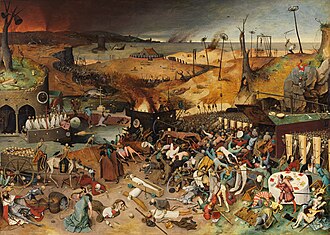 Le Triomphe de la Mort - Pieter Bruegel the Elder (1560s)
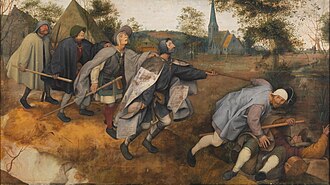 La Parabole des aveugles - Pieter Bruegel the Elder (1568)
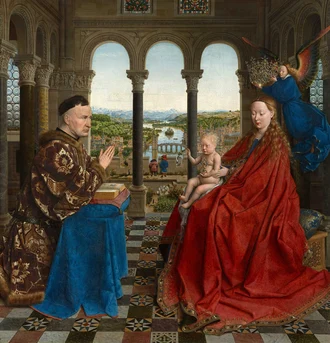 La Vierge du chancelier Rolin - Jan van Eyck
 La Nef des fous - Hieronymus Bosch (1500s)
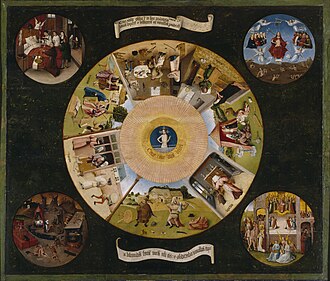 Les Sept Péchés capitaux et les Quatre Dernières Étapes humaines - Hieronymus Bosch (1500)
 La Descente de Croix - Rogier van der Weyden (1440s)
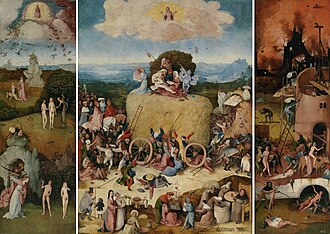 Le Chariot de foin - Hieronymus Bosch (1510s)
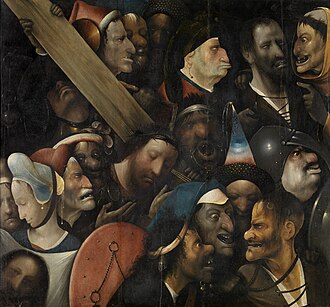 Le Portement de Croix - Hieronymus Bosch (1510s)
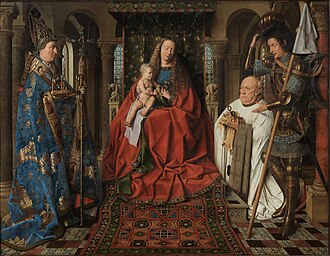 La Vierge au chanoine Van der Paele - Jan van Eyck (1436)
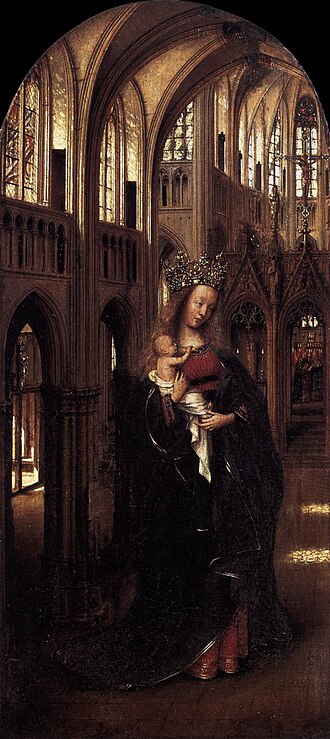 La Vierge dans une église - Jan van Eyck (1440)
 Portrait d'une dame - Rogier van der Weyden (1460)
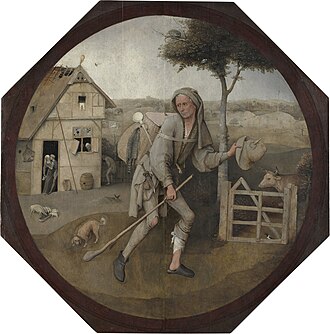 Le Vagabond - Hieronymus Bosch (1500)
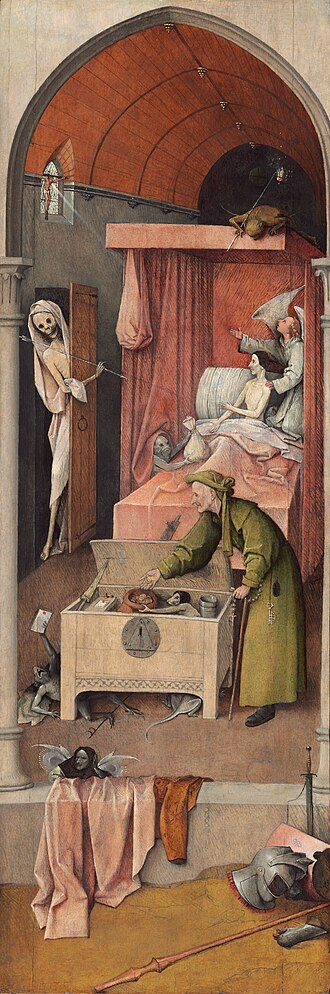 La Mort de l'avare - Hieronymus Bosch (1500s)
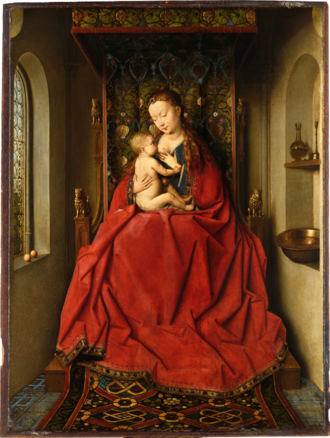 Vierge de Lucques - Jan van Eyck (1437)
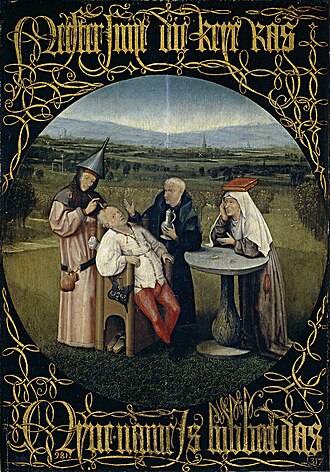 La Lithotomie - Hieronymus Bosch (1500s)
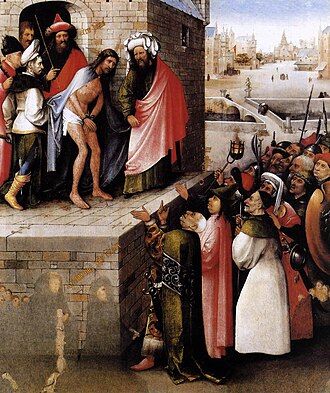 Ecce Homo - Hieronymus Bosch (1490s)
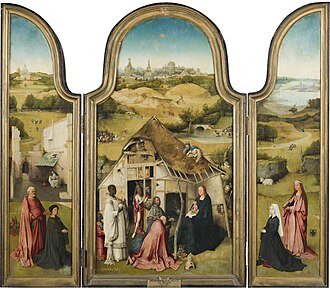 L'Épiphanie - Hieronymus Bosch (1494)
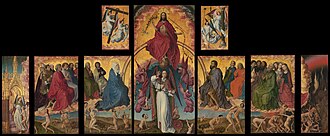 Le Jugement dernier - Rogier van der Weyden (1443)
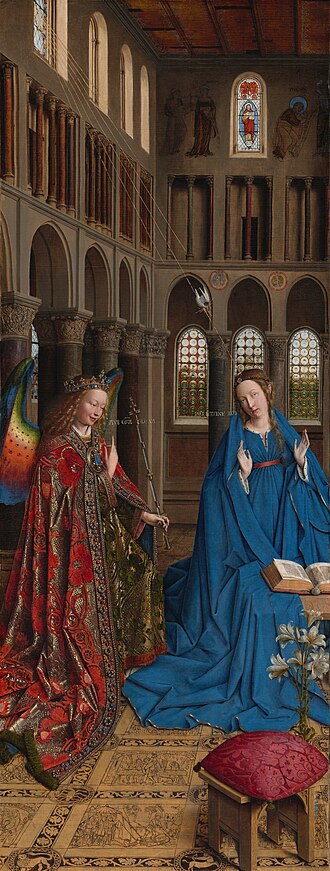 L'Annonciation - Jan van Eyck (1430s)
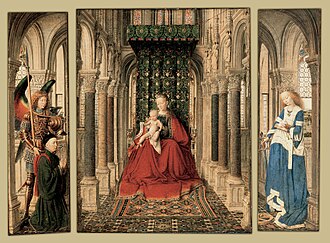 Triptyque de Dresde - Jan van Eyck (1437)
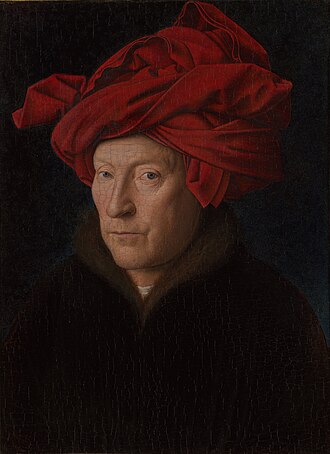 Portrait d'un homme - Jan van Eyck (1433)
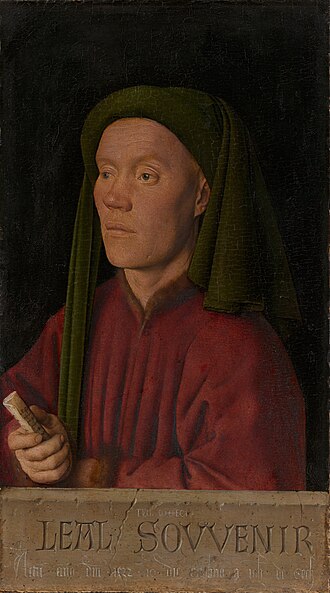 Léal Souvenir - Jan van Eyck (1432)
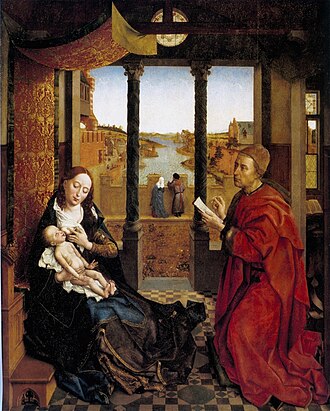 Saint Luc dessinant la Vierge - Rogier van der Weyden (1490)
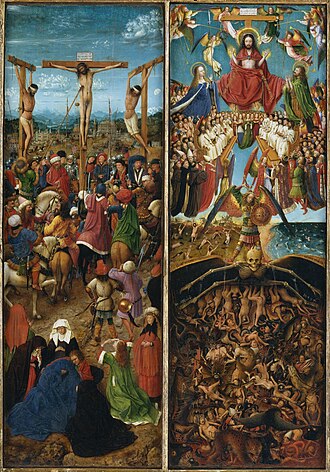 Diptyque de la Crucifixion et du Jugement dernier - Jan van Eyck (1430s)
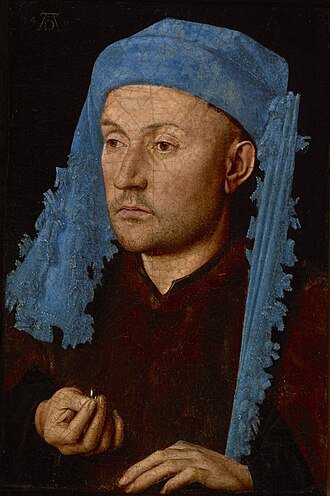 L'Homme au chaperon bleu - Jan van Eyck (1430s)
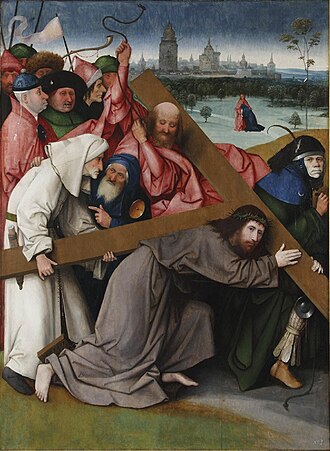 Le Portement de Croix - Hieronymus Bosch (1500s)
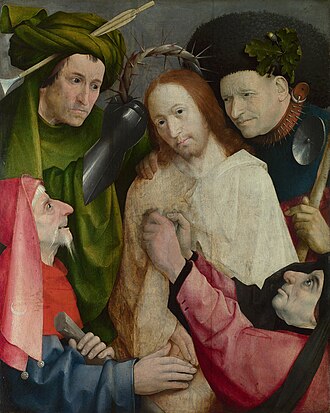 Le Couronnement d'épines - Hieronymus Bosch (1495)
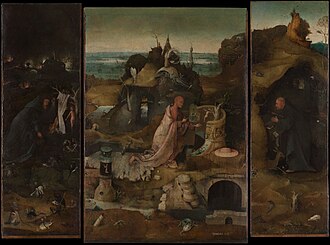 Triptyque des ermites - Hieronymus Bosch (1493)
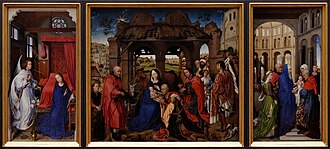 Columba triptyque - Rogier van der Weyden (1450s)
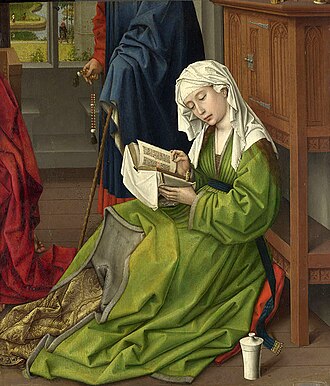 Marie Madeleine lisant - Rogier van der Weyden (1435)
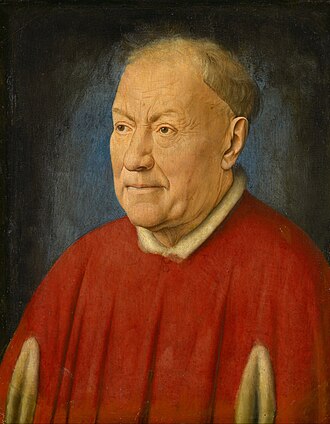 Portrait du cardinal Niccolò Albergati - Jan van Eyck (1431)
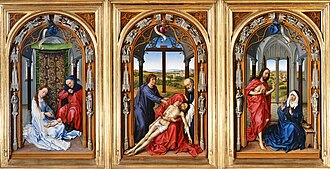 Retable de Miraflores - Rogier van der Weyden (1443)
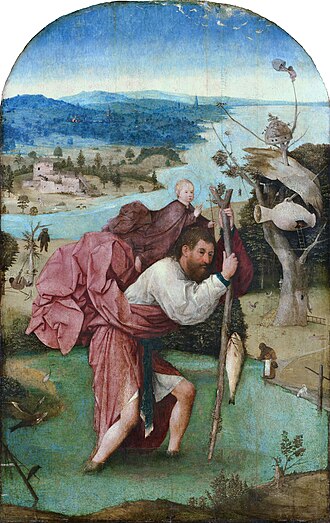 Saint Christophe portant l'Enfant Jésus - Hieronymus Bosch (1500)
 L'Annonciation - Hans Memling (1480s)
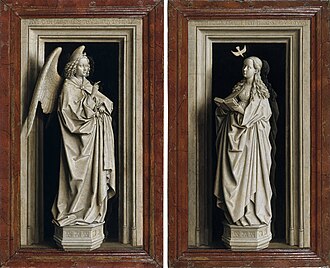 L'Annonciation - Jan van Eyck (1440)
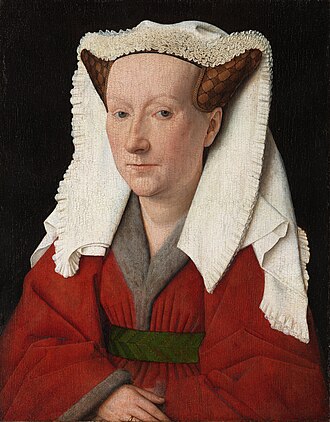 Portrait de Margareta van Eyck - Jan van Eyck (1439)
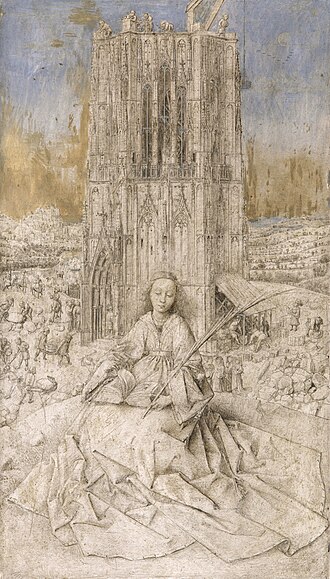 Sainte Barbe - Jan van Eyck (1437)
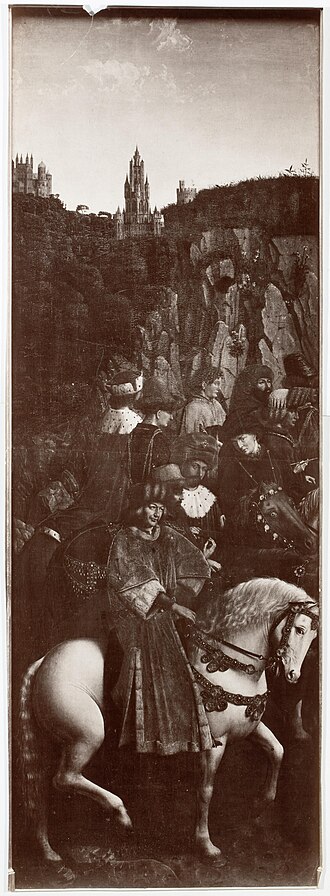 Les Juges intègres - Jan van Eyck (1432)
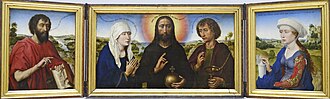 Triptyque de la famille Braque - Rogier van der Weyden (1452)
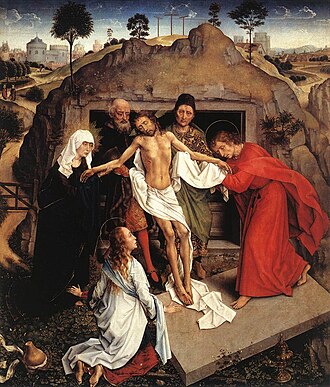 Lamentation sur le Christ mort et Mise au tombeau - Rogier van der Weyden (1450)
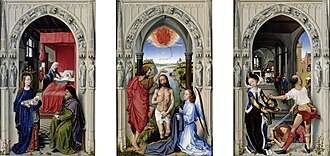 retable de saint Jean-Baptiste - Rogier van der Weyden (1455)
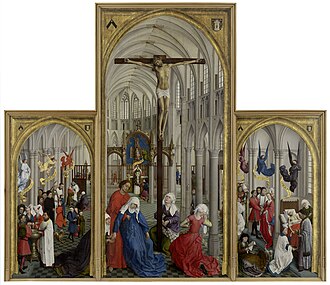 Triptyque des sept sacrements - Rogier van der Weyden (1440s)
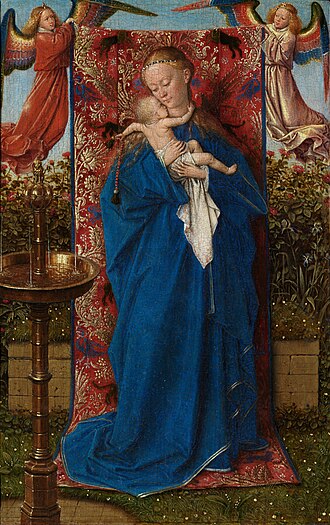 Vierge à la fontaine - Jan van Eyck (1439)
 Scènes de la Passion du Christ - Hans Memling (1470)
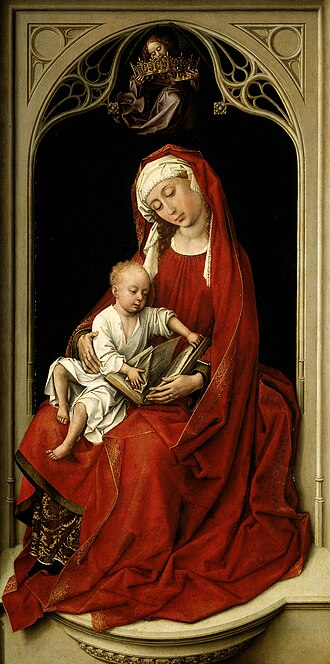 Madone Durán - Rogier van der Weyden (1430s)
Envie d'en savoir plus sur Primitifs flamands ?
Early Netherlandish painting is the jewel-like art of 15th- and 16th-century Flanders, where painters like Jan van Eyck used oil paint to make gold look like gold and light glow on every surface. Small, detailed and full of hidden meaning, these panels reward anyone who leans in close.
What is Early Netherlandish painting, in simple words?
It is the work of artists active in the Burgundian and Habsburg Netherlands during the 15th and 16th centuries. It flourished in cities such as Bruges, Ghent, Mechelen, Leuven, Tournai and Brussels, all in present-day Belgium. Most paintings are religious scenes or small portraits, painted in oil on wooden panels, sometimes as single pictures and sometimes as hinged altarpieces with two, three or more panels.
Why is it called that, and what are the Flemish Primitives?
The artists have had many names: "Late Gothic", the "Ghent-Bruges school" and the "Old Netherlandish school". "Flemish Primitives" became popular after a famous exhibition in Bruges in 1902. Here "primitive" does not mean unsophisticated; it marks these artists as the founders of a new tradition. English-language scholars now almost always say "Early Netherlandish painting", though many think the Flemish term is more correct.
When did it start and end?
The period begins around the 1420s with Robert Campin and Jan van Eyck. In the narrowest sense it ends with the death of Gerard David in 1523, but many scholars stretch it to the start of the Dutch Revolt in 1566 or 1568. It grew out of French courtly art and the tradition of illuminated manuscripts, and it ran alongside the Early and High Italian Renaissance.
Who were the main painters?
The major names are Robert Campin, Jan van Eyck, Rogier van der Weyden, Dieric Bouts, Petrus Christus, Hans Memling, Hugo van der Goes and Hieronymus Bosch. Campin is generally seen as the first master, and van der Weyden trained under him. Van Eyck is often treated as the great innovator. Gerard David closes the period in the narrow sense, while some accounts run through Pieter Bruegel the Elder.
How can I recognise one of these paintings?
Look for astonishing detail and realism: light falling on jewellery, wooden floors, fabrics and household objects, and gold that truly looks like gold. Spaces feel three-dimensional, and the viewer is often placed in the scene; in the Arnolfini Portrait, it is as if you have just walked into the room. Expect religious subjects or small portraits, rich symbolism, and landscapes that, before the early 16th century, mostly stay in the background.
What made oil paint so important?
Oil was known before, but these painters mastered it. Until the 1430s, egg tempera dominated; it dries fast and makes deep shadows and natural textures hard. Oil dries slowly, so painters had time to add fine detail, blend colours smoothly and build up transparent glazes. That let them control light precisely, from deep shadow to bright beams, and paint surfaces with new realism.
How is it different from the Italian Renaissance?
They developed almost at the same time, but the early northern art, up to about 1500, grew independently. It drew more on Gothic tradition and local religious trends than on the classical heritage and humanism prized in Italy. From the 1490s, more northern painters travelled to Italy and brought back Italian ideas. The Italians, in turn, admired the northern masters and borrowed ideas such as setting figures in domestic interiors.
What did people think of it at the time and after?
At first it was greatly admired, even in Italy, and wealthy merchants paid top artists well. But by the mid-16th century, Netherlandish art was seen as crude, and Michelangelo said it appealed only to "monks and friars". It was poorly regarded from the early 17th to the mid-19th century and largely forgotten in the 18th, until scholars and museums rediscovered it in the 19th century.
Which famous works should I see first?
Start with the Ghent Altarpiece, the great polyptych once taken apart panel by panel and hidden in a tower to save it from rioters in 1566. Then look at van Eyck's Arnolfini Portrait and Madonna in the Church, Hugo van der Goes's Portinari Altarpiece, van der Weyden's The Magdalen Reading, and Memling's Virgin and Child with Two Angels, which blends northern and Italian styles.
Why are there so few of these paintings left?
Most were destroyed. From the 1520s, Protestant reformers viewed religious images as possibly idolatrous, and waves of iconoclasm swept Northern Europe, including the violent "Iconoclastic Fury" of 1566 in the Netherlands. Fires and wars destroyed more; van der Weyden's Justice of Trajan and Herkinbald was lost in the bombardment of Brussels in 1695. Only a few thousand works survive, and even Jan van Eyck has just about 26-28 works credited to him today.