Hans Memling
1435-1494
Hans Memling came from the Rhineland to Bruges and became one of its leading painters, with a busy workshop and a place among its richest citizens. His calm portraits set against open landscapes travelled as far as Italy and shaped how a generation painted faces.
Origins
Hans Memling, also spelled Memlinc, was born around 1430 in Seligenstadt, near Frankfurt, in the Middle Main region; the article also places his birth more broadly in the Middle Rhine region and says he probably spent his childhood in Mainz. He served his apprenticeship at Mainz or Cologne, the source cannot say which. He then moved to the Low Countries and worked in the Brussels workshop of Rogier van der Weyden, roughly between 1455 and 1460. The oldest references to pictures linked with Memling point to the Burgundian court in Brussels: a 1524 inventory of Margaret of Austria mentions a triptych by Rogier whose angel wings were painted by a Master Hans.
Life and turning points
In 1465 Memling was made a citizen of Bruges, where he became one of the leading artists and the master of a large workshop. He married Anna de Valkenaere sometime between 1470 and 1480, and they had three children. He painted for the Hospitallers in 1479 and 1480, and in 1477, when he was believed dead, he was in fact under contract for an altarpiece for the booksellers' guild chapel. In 1480 his name appeared on a list of the 875 richest citizens of Bruges who had to subscribe to a loan raised by Maximilian of Austria. The painters' guild registers name two apprentices who trained with him. He died in Bruges on 11 August 1494, leaving several children and considerable property.
Style and technique
Memling worked in the tradition of Early Netherlandish painting, building on the styles he had learned in his youth. His religious works often included donor portraits of the clergymen, aristocrats and burghers who were his patrons. His portraits were especially popular in Italy. According to the scholar Paula Nuttall, his distinctive contribution was the landscape background, a balanced counterpoint in which the head stands against the calm of the sky while the area of the shoulders is enlivened by landscape detail beyond. Four of his works show an oriental carpet with a repeating pattern of hooked motifs, and this type of carpet is now named after him: Memling carpets.
Stories and anecdotes
The Last Judgment has one of the most adventurous histories of any altarpiece. It was commissioned by Angelo Tani, once head of the Bruges branch of the Medici Bank, for a chapel near Fiesole, and when the triptych is closed Tani and his wife are shown kneeling in prayer. In April 1473 the ship carrying it to Italy was captured by the Danzig privateer Paul Beneke, and the painting has been in Gdańsk ever since; it now hangs in the National Museum there. Around 1492 Memling was commissioned to paint the Najera Altarpiece for a Benedictine monastery in Spain, showing God surrounded by angels playing many kinds of musical instruments above clouds on a golden ground.
Legacy
Memling's portrait style influenced many late fifteenth century Italian painters, and it can be seen in works such as Raphael's portraits of Agnolo and Maddalena Doni. Buyers of his pictures included Cardinal Grimani and Cardinal Bembo in Venice and the heads of the Medici family in Florence. Among his later works are the Shrine of Saint Ursula and the Diptych of Maarten van Nieuwenhove, both in the hospital of Bruges, and a large Crucifixion of 1491 made for Lübeck Cathedral. After centuries of quieter fame, his art was rediscovered in the 19th century and became widely popular, and visitors to Bruges can still see several of his works close to where they were made.
Le saviez-vous ?
- His Scenes from the Passion of Christ, made for the booksellers of Bruges, is now in the Galleria Sabauda in Turin.
- His John the Baptist of about 1470 is in the Alte Pinakothek in Munich.
- The Virgin and Child he painted for Sir John Donne is now in the National Gallery, London.
- His name does not appear on later Bruges loan lists of the same kind after 1480.
Artistes liés
Rogier van der Weyden · Jan van Eyck · Jérôme Bosch · Pieter Bruegel the Elder
Œuvres de Hans Memling
 L'Annonciation - Hans Memling (1480s)
 Scènes de la Passion du Christ - Hans Memling (1470)
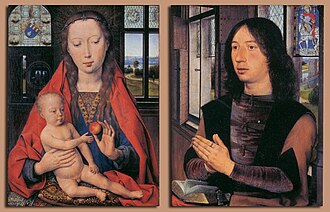 Diptyque de Maarten van Nieuwenhove - Hans Memling (1487)
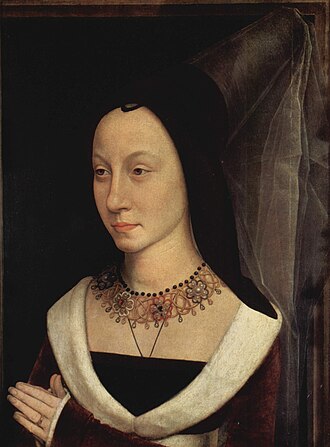 Portrait de Maria Portinari - Hans Memling (1470)
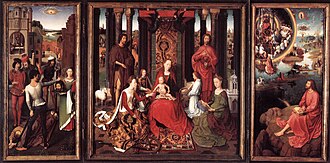 Le Mariage mystique de sainte Catherine - Hans Memling (1479)
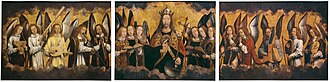 Retable de Santa María la Real de Nájera - Hans Memling (1480s)
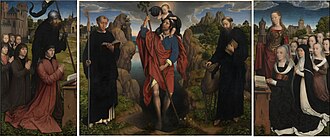 Triptyque Moreel - Hans Memling (1484)
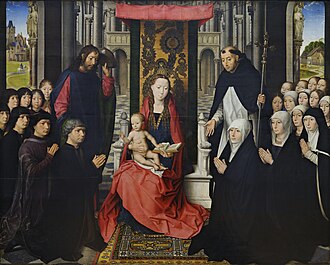 La Vierge à l'Enfant entre saint Jacques et saint Dominique - Hans Memling (1485)
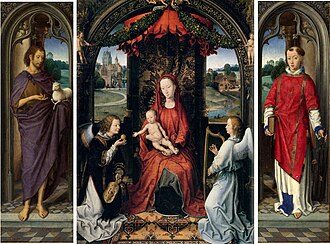 triptyque Pagagnotti - Hans Memling (1480)
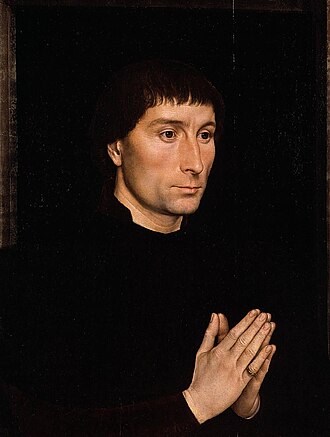 Portrait de Tommaso di Folco Portinari - Hans Memling (1470)
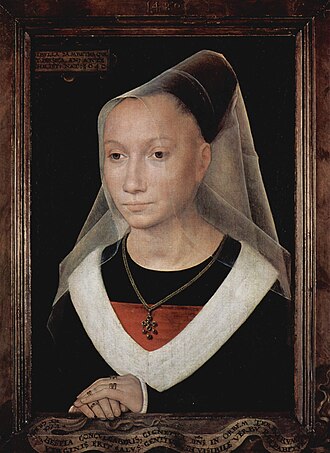 Sibylle Sambetha - Hans Memling (1480)
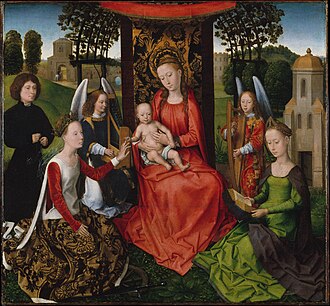 Vierge et enfant avec sainte Catherine d'Alexandrie et Barbara - Hans Memling (1479)
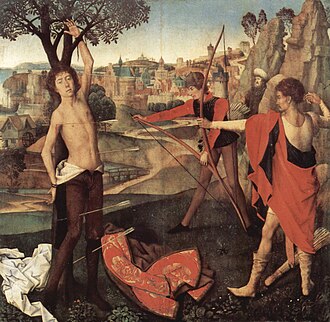 Le Martyre de saint Sébastien - Hans Memling (1475)
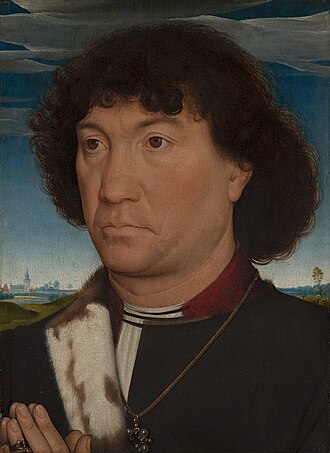 Portrait d'un homme de la famille Lespinette - Hans Memling (1487)
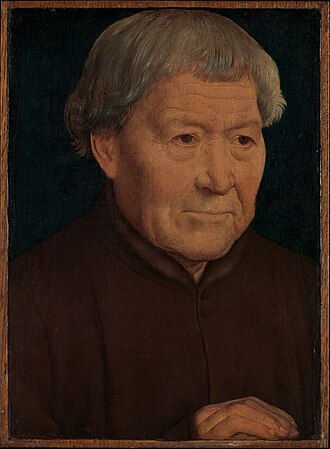 Portrait d'un homme âgé - Hans Memling (1475)
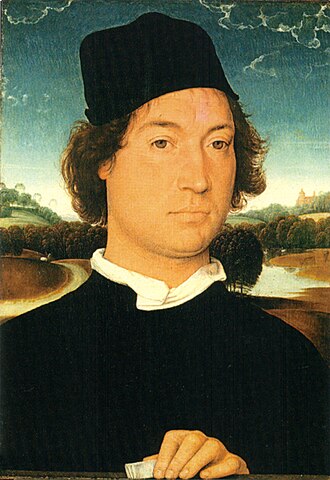 L'Homme à la lettre - Hans Memling (1480)
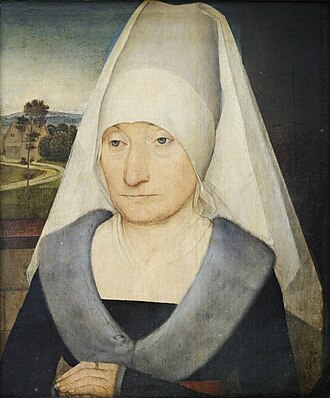 Portrait d'une femme âgée - Hans Memling (1470)
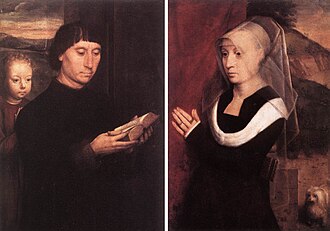 Portraits de deux donateurs - Hans Memling (1470)
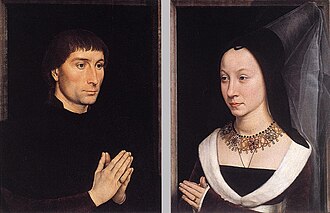 Diptyque de Tommaso Portinari et de sa femme - Hans Memling (1470)
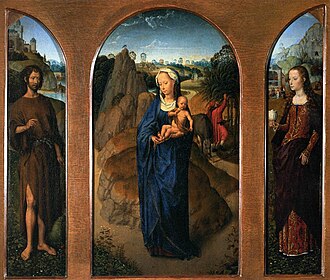 Triptyque avec le repos pendant la fuite en Égypte - Hans Memling (1475)
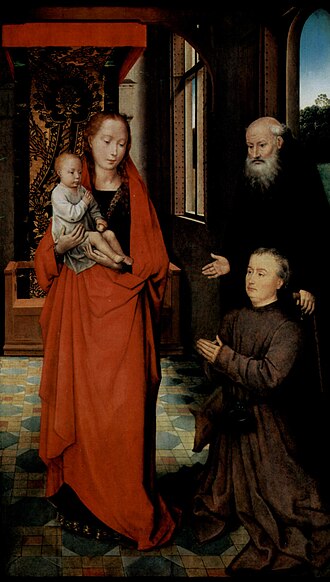 Vierge à l'Enfant avec saint Antoine et un donateur - Hans Memling (1472)
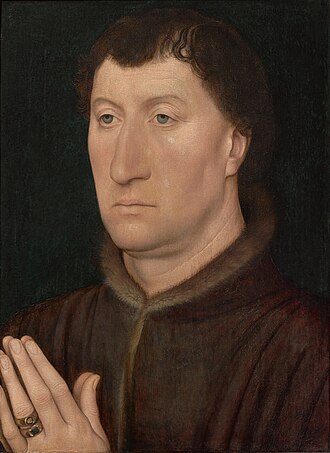 Portrait de Gilles Joye - Hans Memling (1472)