Doña Antonia de Ipeñarrieta y Galdós and Her Son Don Luis
Diego Velázquez · 1632
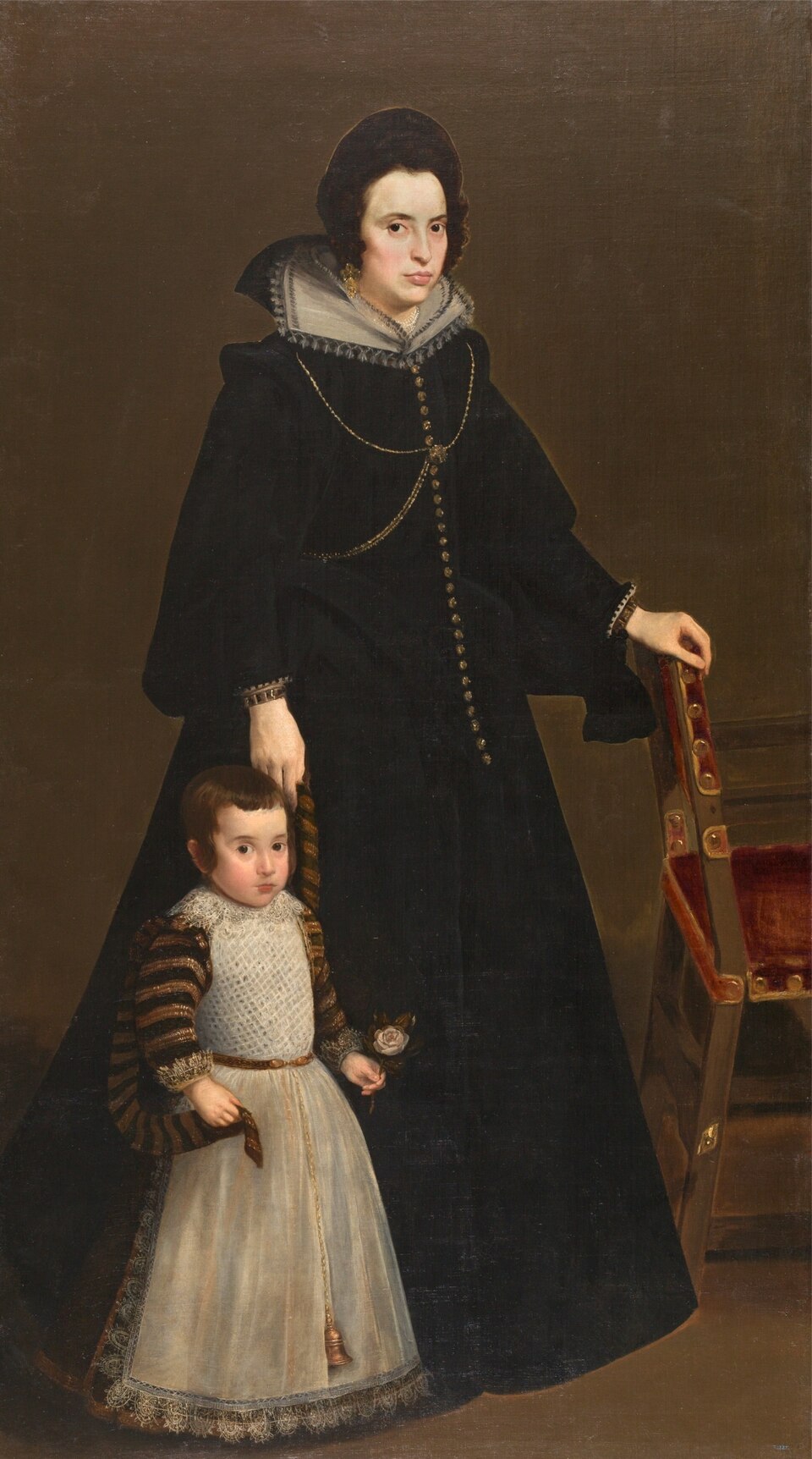
A noblewoman in black rests her hand on a chair, her small son beside her, both wrapped in an elegant melancholy. Velazquez painted Dona Antonia in the year she died.
The story behind the painting
Dona Antonia de Ipenarrieta y Galdos came from a noble Basque family in Villarreal de Urrechu, in Guipuzcoa, where her family owned a large palace on the side of Mount Irimo. She was a lady-in-waiting to Queen Isabel of France and served in the household of Prince Balthasar Charles. Widowed in 1624, she married again in Madrid in 1627, to the jurist Diego del Corral y Arellano, a member of the Council of Castile. She died in Madrid in 1634. Wikipedia dates this portrait to 1634, while Wikidata gives 1632.
What to look for
Mother and son stand in a tall canvas, about 215 by 110 cm according to Wikidata. Dona Antonia rests one hand on a chair, and the boy at her side is Luis, her third child with Don Diego, born in Madrid and baptised Luis Vicente. Look at the long strokes of the painting: here Velazquez begins to reinterpret the manner of the older court painter Juan Pantoja de la Cruz, giving it more expression and delicacy. Notice too the golden light he captures, and the natural, easy bearing of the sitter despite the formality of court dress.
Meaning and intent
The chair is not just a support. At court Dona Antonia had the right to sit, and by placing her hand on it Velazquez emphasises her social rank. The mood of the portrait is one of elegant melancholy rather than display. Studies of the canvas suggest that the figure of the child may have been added afterwards, which makes the picture a record of a family as well as of a woman. Experts generally consider Velazquez's portrait of her husband, Don Diego del Corral, the stronger of the two, but this one has its own quiet grace.
Legacy
Luis did not follow his family's tradition of law and royal service; he lived away from the court, in Madrid and Baeza. The portrait stayed in the family for almost three centuries. In 1905 its owner, Maria del Pilar Azlor de Aragon y Guillamas, Duchess of Villahermosa and a descendant of Dona Antonia, bequeathed it to the Prado Museum in Madrid together with its companion, Velazquez's earlier portrait of Don Diego del Corral. In 1989 the painting travelled to New York for a Velazquez exhibition at the Metropolitan Museum of Art, before returning to the Prado, where it remains.
Did you know?
- Dated 1634 by Wikipedia, 1632 by Wikidata.
- Dona Antonia was a lady-in-waiting to Queen Isabel of France.
- The child may have been added later.
- Bequeathed to the Prado in 1905 with the portrait of her husband.
About the artist
Diego Velázquez (1599-1660)
portrait · Museo del Prado · Baroque
More by Diego Velázquez
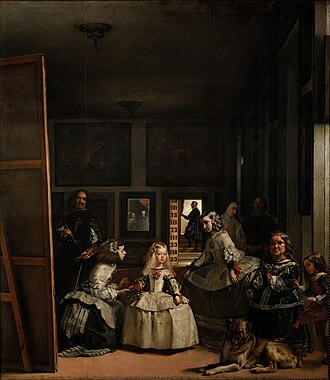 Las Meninas - Diego Velázquez (1656)
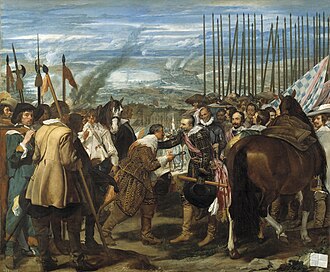 The Surrender of Brea - Diego Velázquez (1635)
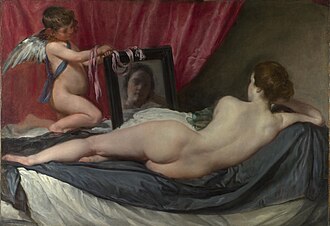 Rokeby Venus - Diego Velázquez (1644)
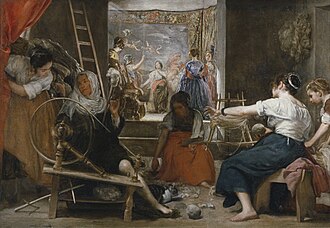 Las Hilanderas - Diego Velázquez
.jpg) Portrait of Innocent X - Diego Velázquez
Portrait of Innocent X - Diego Velázquez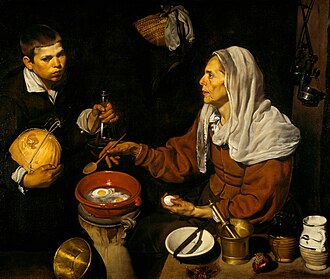 Old Woman Cooking Eggs - Diego Velázquez (1618)
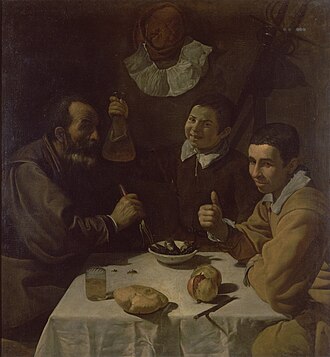 The Lunch - Diego Velázquez (1617)
.jpg) The Triumph of Bacchus - Diego Velázquez (1628)
The Triumph of Bacchus - Diego Velázquez (1628)
Paintings by related artists
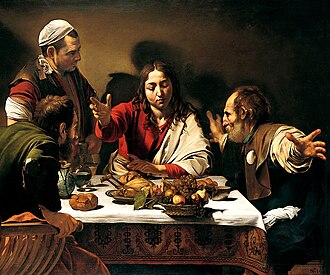 Supper at Emmaus - Caravaggio (1601)
 The Calling of Saint Matthew - Caravaggio (1609)
 The Night Watch - Rembrandt van Rijn (1642)
 Self-Portrait - Rembrandt van Rijn (1659)
 Girl with a Pearl Earring - Johannes Vermeer (1665)
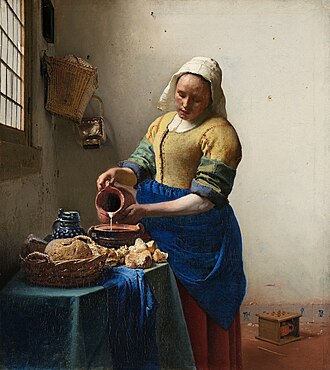 The Milkmaid - Johannes Vermeer (c. 1658)