Charles I (1600-1649) with M. de St Antoine
Anthony van Dyck · 1636
%20with%20M.%20de%20St%20Antoine%20-%20Google%20Art%20Project.jpg)
A king rides a great white horse through a triumphal arch, straight toward us, as if the wall itself had opened. Van Dyck's first equestrian portrait of Charles I was made to astonish.
The story behind the painting
Charles I became King of England, Scotland and Ireland in 1625, and in 1632 Anthony van Dyck became his Principal Painter in Ordinary. This was the first equestrian portrait of the king that van Dyck painted. Wikipedia dates it 1633, while Wikidata gives 1636. Van Dyck drew on his own earlier equestrian portraits of Anton Giulio Brignole-Sale in 1627 and Francisco de Moncada in 1632, and on Rubens's portrait of the Duke of Lerma from 1603. Van Dyck had not seen that work, but Charles had, and it probably inspired the commission.
What to look for
Charles rides a large, muscular white horse, possibly a Lipizzaner, under a neoclassical triumphal arch hung with green silk. He wears parade armour with the blue sash of the Order of the Garter and holds a baton of military command. We see him from below, a view that disguised the king's lack of stature. To the right his riding master, Pierre Antoine Bourdon, Seigneur de St Antoine, looks up at him holding his helmet. At lower left stands the royal Stuart coat of arms with France, England, Scotland and Ireland, under the crown. The canvas is about 3.68 by 2.7 metres.
Meaning and intent
The king is shown almost alone, which may allude to his years of personal rule without Parliament. He appears as a chivalrous knight and sovereign, the arch turning his ride into a triumph. The picture may have been meant as a theatrical trompe l'oeil flourish at the end of the King's Gallery in St James's Palace, so that a visitor walking down the gallery would see the king seemingly riding out of the wall toward them. Everything here, the low viewpoint, the gleaming armour, the heraldry, speaks of authority made visible.
Legacy
After Charles I was executed, the painting was valued and sold in the sale of the Royal Collection, going to a buyer named Pope on 22 December 1652. It later passed to the Flemish painter Remigius van Leemput in London, and was recovered from him through legal proceedings and returned to Charles II at the Restoration in 1660. It remains in the Royal Collection, in the East Gallery at Buckingham Palace. A 1635 copy is at Highclere Castle, and an unfinished version without St Antoine is at Petworth House. Van Dyck went on to paint Charles I at the Hunt and the Equestrian Portrait of Charles I.
Did you know?
- Van Dyck's first equestrian portrait of Charles I.
- Dated 1633 by Wikipedia, 1636 by Wikidata.
- About 3.68 by 2.7 metres.
- Returned to Charles II in 1660; now at Buckingham Palace.
About the artist
Anthony van Dyck (1599-1641)
man · Baroque · horse · equestrianism · equestrian portrait · Royal Collection · Charles I of England
More by Anthony van Dyck
%20-%20Google%20Art%20Project.jpg) Charles I in Three Positions - Anthony van Dyck (1635)
Charles I in Three Positions - Anthony van Dyck (1635)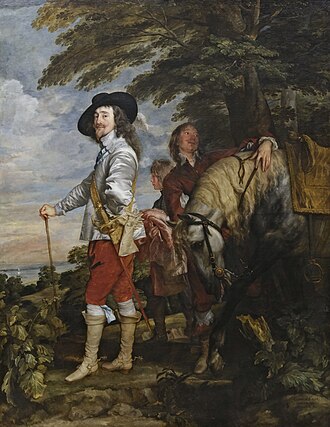 Charles I at the Hunt - Anthony van Dyck (1635)
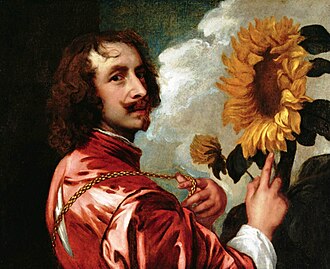 Self-portrait with a Sunflower - Anthony van Dyck (1632)
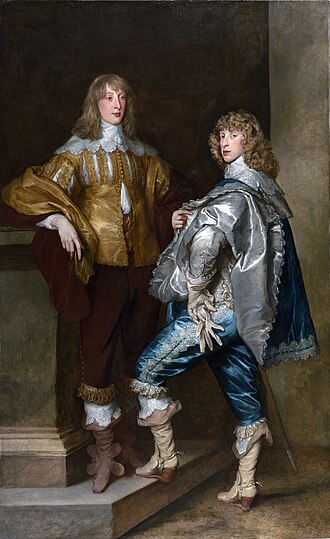 Lord John Stuart and His Brother, Lord Bernard Stuart - Anthony van Dyck (1638)
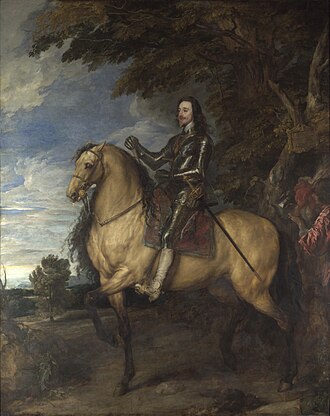 Equestrian Portrait of Charles I - Anthony van Dyck (1637)
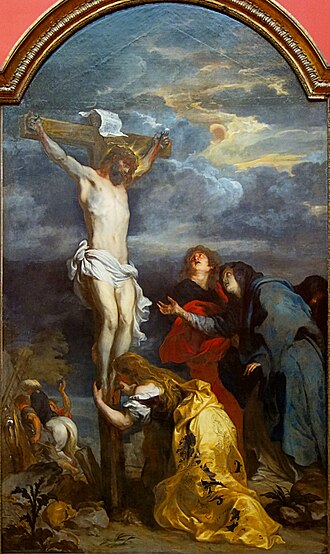 Crucifixion - Anthony van Dyck
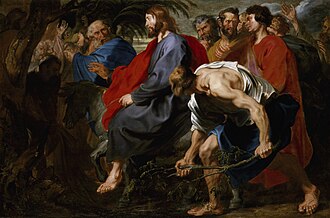 Entry of Christ into Jerusalem - Anthony van Dyck (1617)
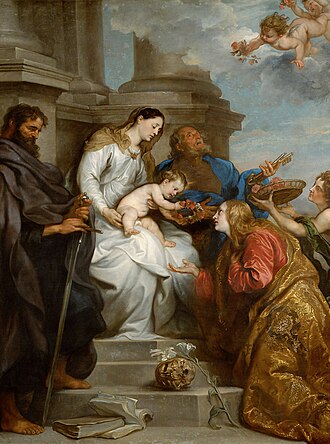 Coronation of Saint Rosalia - Anthony van Dyck (1629)
Paintings by related artists
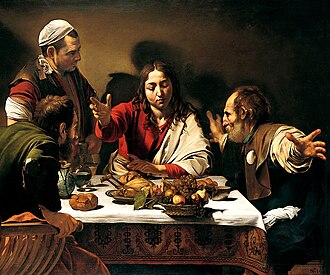 Supper at Emmaus - Caravaggio (1601)
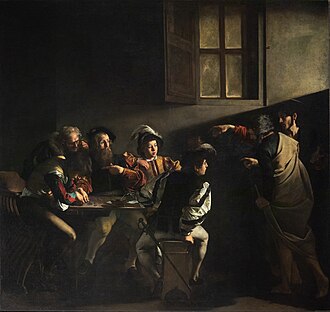 The Calling of Saint Matthew - Caravaggio (1609)
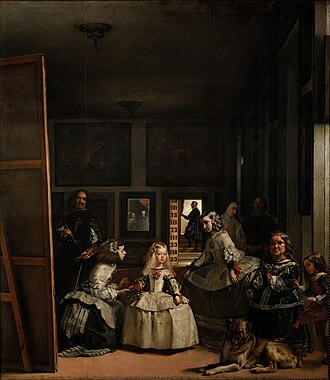 Las Meninas - Diego Velázquez (1656)
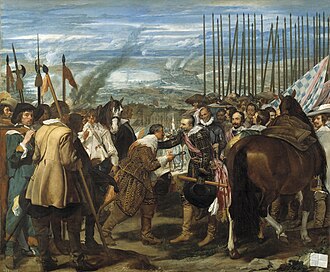 The Surrender of Brea - Diego Velázquez (1635)
.jpg) The Elevation of the Cross - Peter Paul Rubens (1609)
The Elevation of the Cross - Peter Paul Rubens (1609)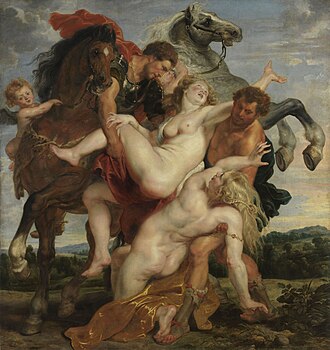 The Rape of the Daughters of Leucippus - Peter Paul Rubens (1618)
 The Night Watch - Rembrandt van Rijn (1642)
 Self-Portrait - Rembrandt van Rijn (1659)
 Girl with a Pearl Earring - Johannes Vermeer (1665)
 The Milkmaid - Johannes Vermeer (c. 1658)