The Triumph of Bacchus
Diego Velázquez · 1628
.jpg)
A pale young god crowns a kneeling man, while weathered drinkers grin straight out at us as if inviting us to the party. Velázquez brought the god of wine down into the streets of seventeenth-century Spain.
The story behind the painting
Velázquez painted The Triumph of Bacchus after moving from Seville to Madrid and just before his voyage to Italy; Wikidata dates it to 1628. It was made for King Philip IV, who paid him 100 ducats. In Madrid, the young painter could study the king's collection of Italian paintings, with their nudes and mythological subjects, including Titian's Bacchus and Ariadne. Earlier triumphs of Bacchus showed the god riding in a chariot drawn by leopards, followed by satyrs and revellers. Velázquez chose something very different and very close to home, so that the grand title becomes almost ironic. Many visitors know the picture by its popular name, Los borrachos, The Drinkers.
What to look for
Divide the canvas in two. On the left sits Bacchus, luminous, relaxed and naked to the waist, his pose recalling Christ in Last Judgement scenes; his pale skin and idealized face, lit by clear light, make him easy to find. He and the figure behind him wear loose classical robes. On the right are the drinkers, men of the streets in the clothes of poor Spaniards, with large, worn faces in darker chiaroscuro. The kneeling man before the god is younger and better dressed, with a sword and tall boots. Look down at the god's feet for a bottle and a pitcher, picked out by his bright body almost like a small still life.
Meaning and intent
The painting presents Bacchus as the god who gives men wine and so frees them, for a while, from their troubles. In Baroque literature he stood for the liberation of people from the slavery of daily life. Velázquez treats a myth with realism, setting an idealized god beside ordinary, unidealized faces, a direction he would pursue in later years. The source links this approach to Caravaggio, who mixed traditionally robed central figures with people in contemporary dress, and to Ribera's naturalistic figures from antiquity. The jars at the god's feet echo the still life elements of the bodegón pictures Velázquez painted in Seville. The drinkers' gaze pulls us into the scene, not just as onlookers but as guests.
Legacy
The Triumph of Bacchus has been called the masterpiece of Velázquez's paintings of the 1620s, and it hangs today in the Museo del Prado in Madrid. In 1778 Francisco de Goya reproduced it as an etching that circulated widely; Édouard Manet is known to have owned a copy, and the Prado's print room keeps impressions and the preparatory drawing. Herman Braun-Vega brought its characters into his 1992 triptych La familia informal alongside people of modest means today. The artist Mark Wallinger argued that it prefigures Las Meninas, observing that the look two figures direct at the viewer cuts across 350 years and makes us complicit in the meaning of the work.
Did you know?
- Painted for Philip IV, who paid Velázquez 100 ducats.
- Popularly known as Los borrachos (The Drinkers).
- Goya made an etching of it in 1778.
- Museo del Prado, Madrid; 165 × 225 cm.
About the artist
Diego Velázquez (1599-1660)
Museo del Prado · mythological painting · Bacchus
More by Diego Velázquez
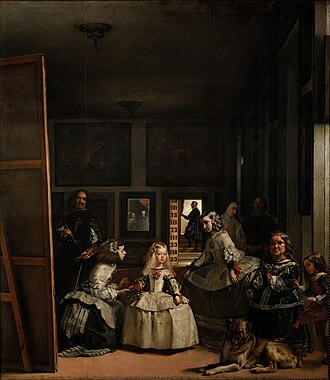 Las Meninas - Diego Velázquez (1656)
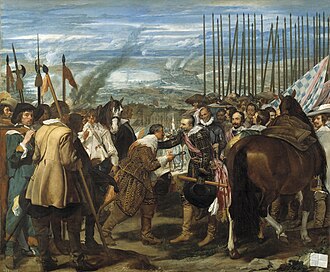 The Surrender of Brea - Diego Velázquez (1635)
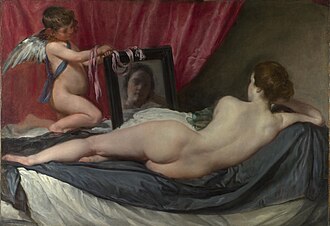 Rokeby Venus - Diego Velázquez (1644)
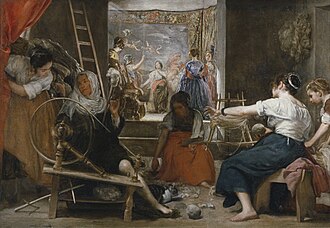 Las Hilanderas - Diego Velázquez
.jpg) Portrait of Innocent X - Diego Velázquez
Portrait of Innocent X - Diego Velázquez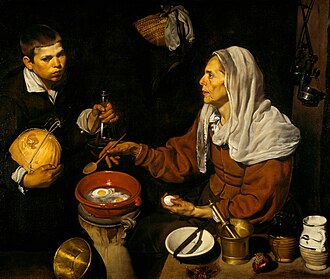 Old Woman Cooking Eggs - Diego Velázquez (1618)
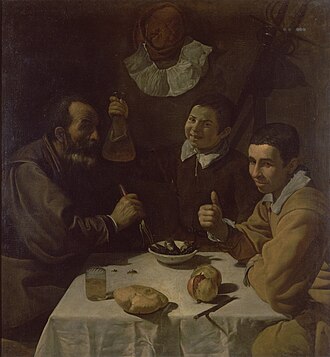 The Lunch - Diego Velázquez (1617)
.jpg) Apollo in the Forge of Vulcan - Diego Velázquez (1630)
Apollo in the Forge of Vulcan - Diego Velázquez (1630)
Paintings by related artists
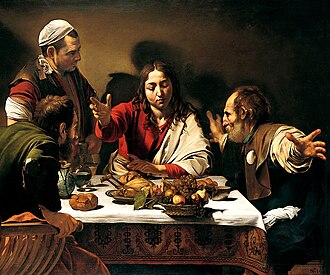 Supper at Emmaus - Caravaggio (1601)
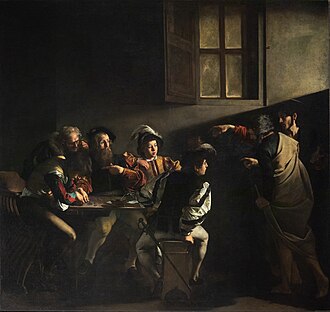 The Calling of Saint Matthew - Caravaggio (1609)
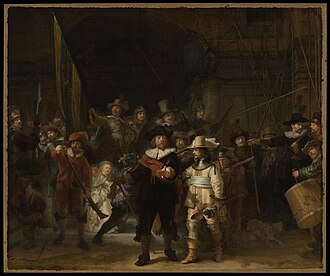 The Night Watch - Rembrandt van Rijn (1642)
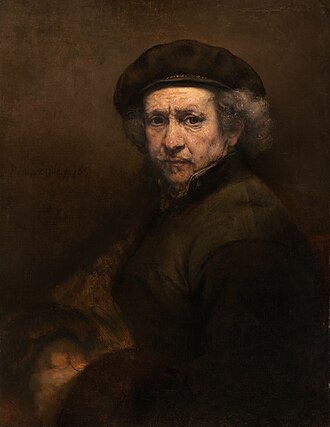 Self-Portrait - Rembrandt van Rijn (1659)
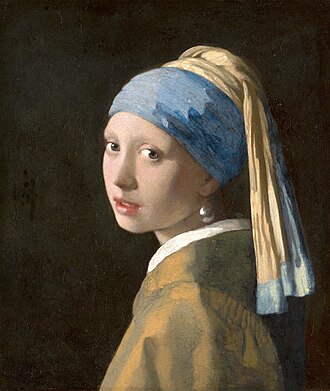 Girl with a Pearl Earring - Johannes Vermeer (1665)
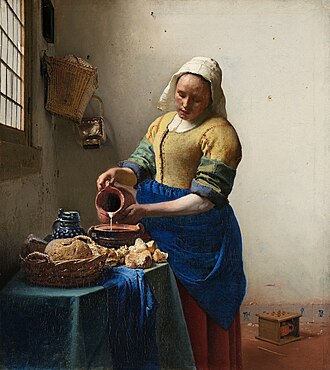 The Milkmaid - Johannes Vermeer (c. 1658)