The Calling of Saint Matthew
Caravaggio · 1609
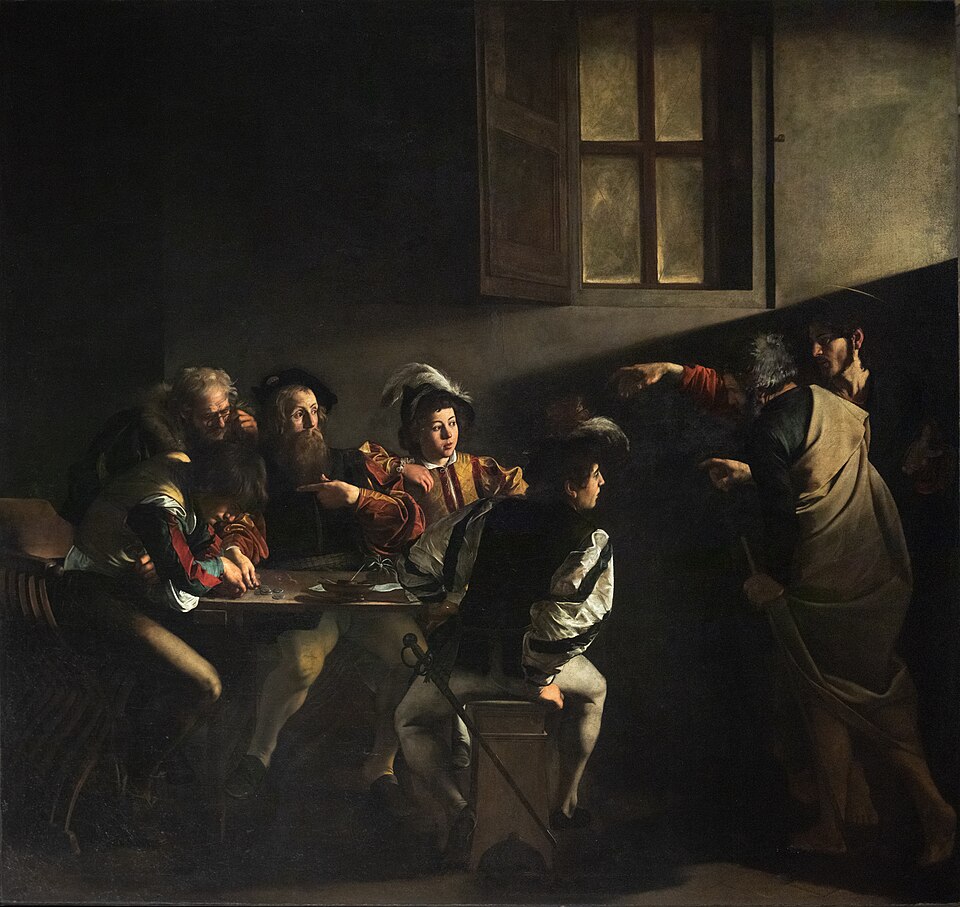
A shaft of light cuts across a dim room, and a hand points at a man counting money. In that instant, Caravaggio captures a life about to change forever.
The story behind the painting
The Calling of Saint Matthew was Caravaggio's first major church commission, and his first painting with more than a handful of figures. More than a decade earlier, Cardinal Matthieu Cointerel had left funds and instructions in his will for decorating a chapel devoted to his namesake, Saint Matthew, in San Luigi dei Francesi, the church of the French congregation in Rome. The dome had been frescoed by Giuseppe Cesari, Caravaggio's former employer, but as Cesari grew busy with royal and papal work, Cardinal Francesco Maria del Monte, Caravaggio's patron, stepped in to secure the job for the young painter. The commission for the two side paintings, this Calling and The Martyrdom of Saint Matthew, is dated July 1599, with final payment in July 1600. The Calling was, by report, the first to be finished.
What to look for
The scene comes from the Gospel of Matthew: Jesus sees Matthew at his seat in the custom house and says, follow me. Caravaggio sets it in a plain room. At a table sit Matthew the tax collector and four other men. From the right, Jesus and Saint Peter have entered, and Jesus stretches out his arm, pointing. Follow the beam of light that enters with them: it slides across the wall and lands on the faces at the table, which turn toward Christ. Look at the bearded man in the centre, generally identified as Matthew, gesturing toward his own chest as if to ask, me? At the far left a young man stays bent over the coins. The stark contrast of light and darkness here, known as tenebrism, is a hallmark of Baroque painting.
Meaning and intent
This is a painting about a moment of spiritual awakening and conversion, a subject that fascinated Baroque artists and Caravaggio above all. Most art historians read the bearded man as Matthew, a reading reinforced by the companion paintings in the chapel, where the same bearded model plays the saint. An alternative view holds that he points instead at the slumped youth counting coins, making the young man Matthew before his awakening; the consensus still favours the bearded figure. Scholars have also noted that Christ's outstretched hand almost mirrors Adam's hand in Michelangelo's Creation of Adam in the Sistine Chapel. Since the New Testament calls Christ the last Adam, the echo is pointed: here it is Christ who bestows new life, calling the tax collector Levi to become Matthew.
Legacy
The painting has never left its home. It still hangs in the Contarelli Chapel of San Luigi dei Francesi, opposite The Martyrdom of Saint Matthew, with The Inspiration of Saint Matthew of 1602 at the altar between them, so visitors can see all three of Caravaggio's Matthew paintings together where they were meant to be. Its clear legibility, so different from many Mannerist paintings, is credited with its enormous popularity, and it has become an iconic example of Baroque naturalism and tenebrism. It has also moved generations of viewers personally. Pope Francis has said that as a young man he often went to San Luigi to contemplate it, and spoke of Matthew's response in words of his own: this is me, a sinner on whom the Lord has turned his gaze.
Did you know?
- The painting was commissioned in July 1599 and final payment was made in July 1600.
- It still hangs in the Contarelli Chapel in Rome, the place it was painted for.
- Christ's pointing hand almost mirrors Adam's hand in Michelangelo's Creation of Adam.
- Pope Francis has said he often visited San Luigi dei Francesi as a young man to contemplate this painting.
About the artist
Caravaggio (1571-1610)
religious art · Matthew the Apostle
More by Caravaggio
 Supper at Emmaus - Caravaggio (1601)
 The Beheading of Saint John the Baptist - Caravaggio (1608)
 Supper at Emmaus - Caravaggio (1601)
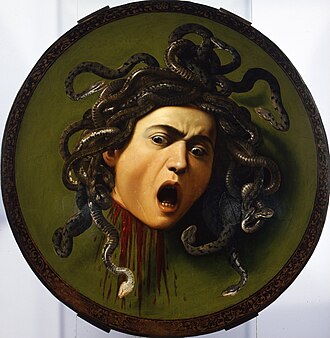 Medusa - Caravaggio (1597)
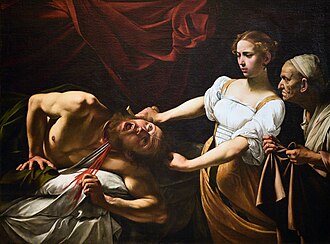 Judith Beheading Holofernes - Caravaggio (1598)
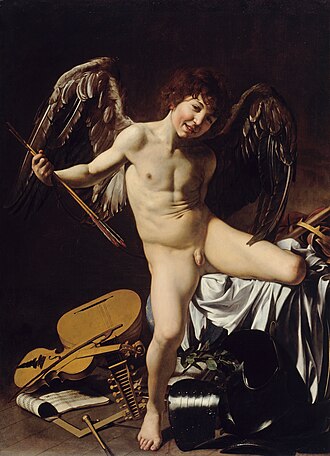 Amor Vincit Omnia - Caravaggio (1600s)
%2C%201595%20circa%2C%20534.jpg) Self-Portrait as Bacchus - Caravaggio (1595)
Self-Portrait as Bacchus - Caravaggio (1595).jpg) Death of the Virgin - Caravaggio (1600s)
Death of the Virgin - Caravaggio (1600s)
Paintings by related artists
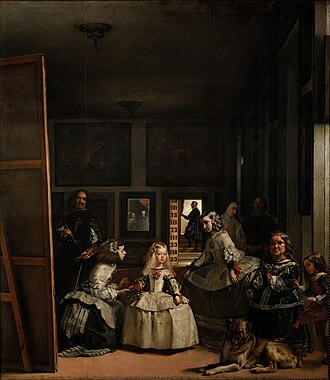 Las Meninas - Diego Velázquez (1656)
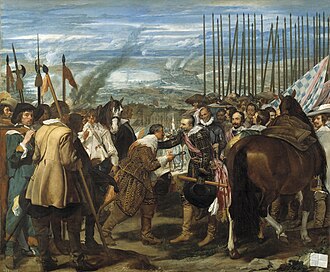 The Surrender of Brea - Diego Velázquez (1635)
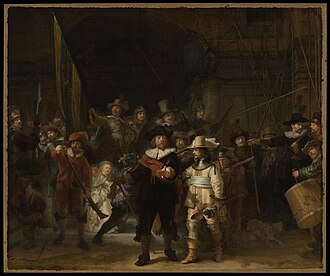 The Night Watch - Rembrandt van Rijn (1642)
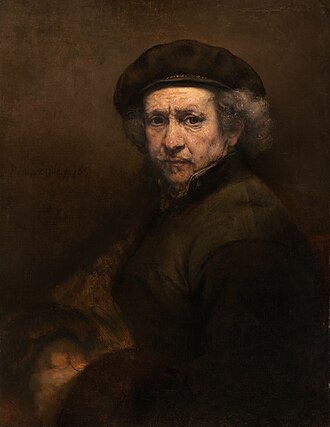 Self-Portrait - Rembrandt van Rijn (1659)
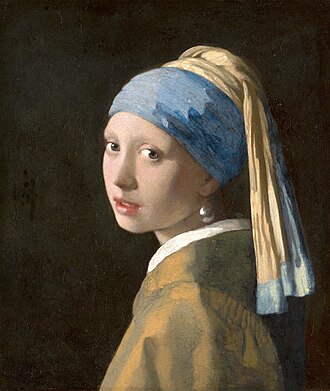 Girl with a Pearl Earring - Johannes Vermeer (1665)
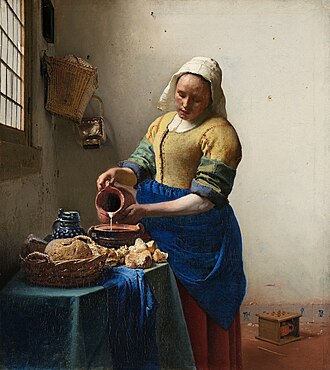 The Milkmaid - Johannes Vermeer (c. 1658)