Klassizismus
Neoclassicism turned away from the playful Rococo and looked back to ancient Greece and Rome.
Jean-Auguste-Dominique Ingres · Jacques-Louis David · Francisco Goya
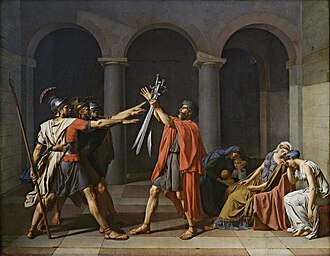 Der Schwur der Horatier - Jacques-Louis David (1784)
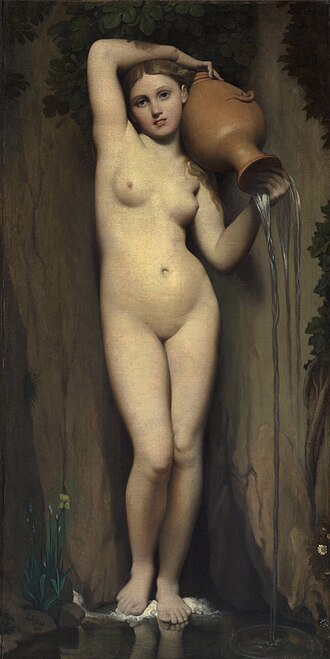 Die Quelle - Jean-Auguste-Dominique Ingres (1856)
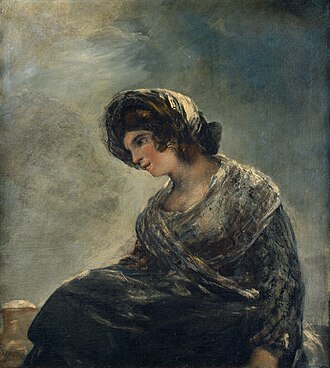 Milchmädchen von Bordeaux - Francisco Goya (1827)
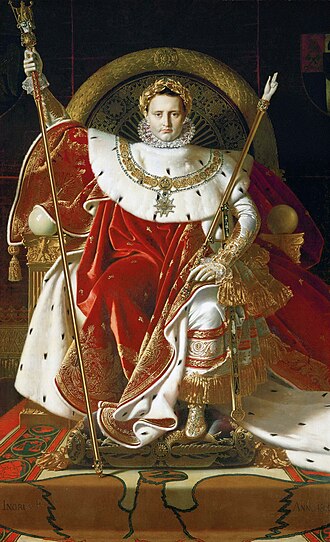 Napoleon I auf seinem kaiserlichen Thron - Jean-Auguste-Dominique Ingres (1806)
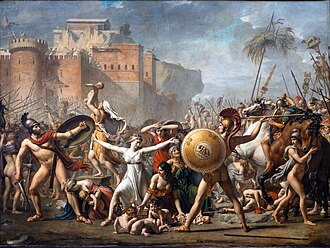 The Intervention of the Sabine Women - Jacques-Louis David (1799)
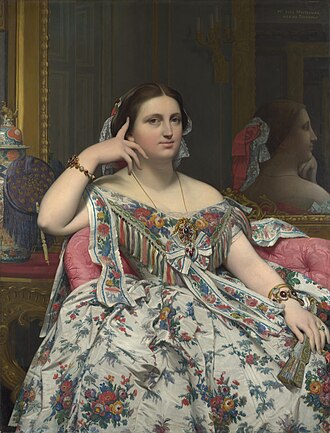 Madame Moitessier - Jean-Auguste-Dominique Ingres (1856)
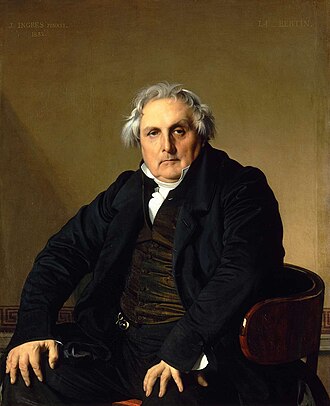 Porträt Monsieur Bertin - Jean-Auguste-Dominique Ingres (1832)
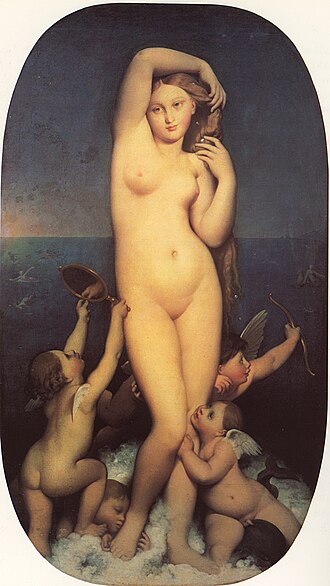 Vénus Anadyomène - Jean-Auguste-Dominique Ingres (1808)
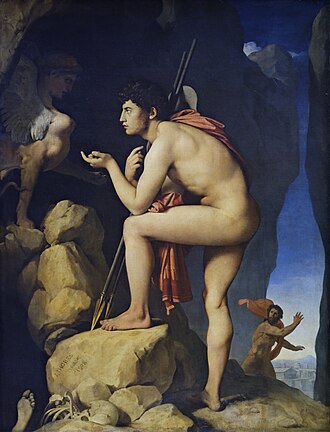 Ödipus und die Sphinx - Jean-Auguste-Dominique Ingres (1808)
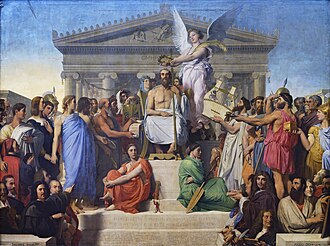 Apotheose Homers - Jean-Auguste-Dominique Ingres (1827)
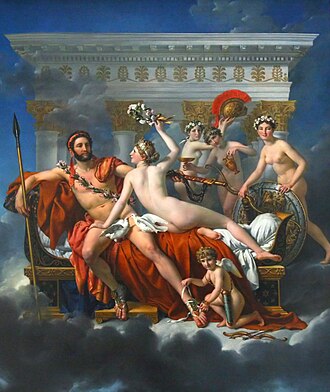 Mars Venus entwaffnet - Jacques-Louis David (1824)
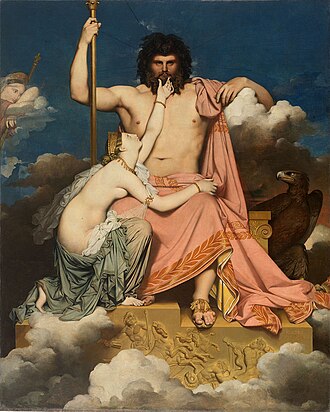 Jupiter und Thetis - Jean-Auguste-Dominique Ingres (1811)
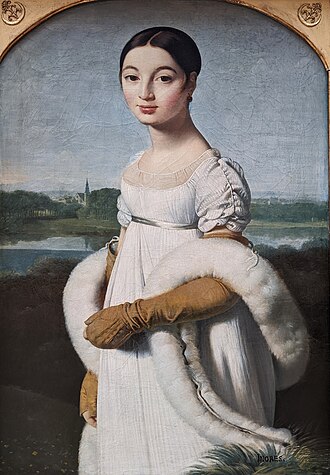 Mademoiselle Caroline Rivière - Jean-Auguste-Dominique Ingres (1806)
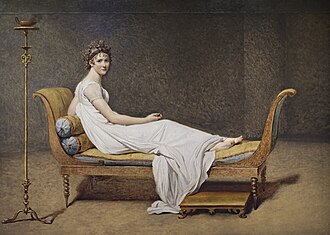 Porträt Madame Récamier - Jacques-Louis David (1800)
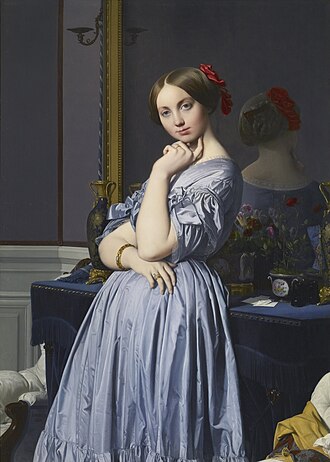 Comtesse d'Haussonville - Jean-Auguste-Dominique Ingres (1845)
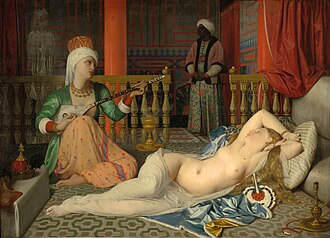 Odalisque à l'esclave - Jean-Auguste-Dominique Ingres (1839)
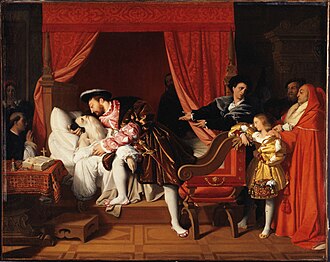 Der Tod des Leonardo da Vinci - Jean-Auguste-Dominique Ingres (1818)
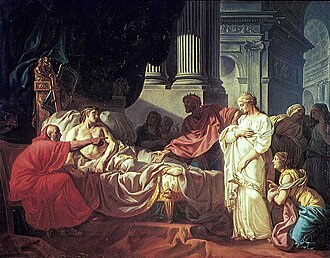 Antiochus und Stratonica - Jacques-Louis David (1774)
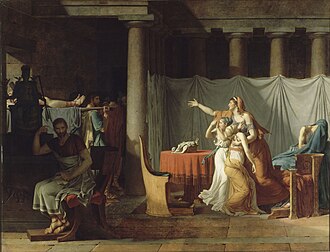 Die Liktoren bringen Brutus die Leichen seiner Söhne - Jacques-Louis David (1789)
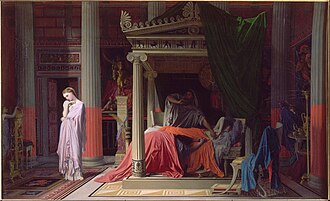 Antiochus und Stratonice - Jean-Auguste-Dominique Ingres (1840)
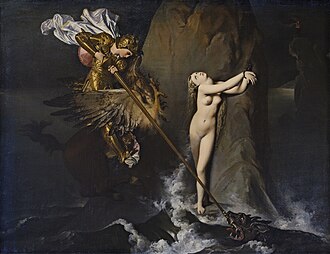 Ruggiero befreit Angelika - Jean-Auguste-Dominique Ingres (1819)
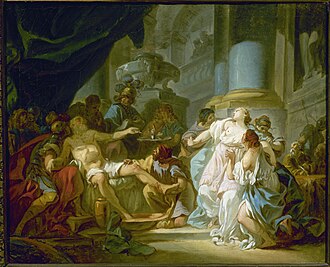 The Death of Seneca - Jacques-Louis David (1773)
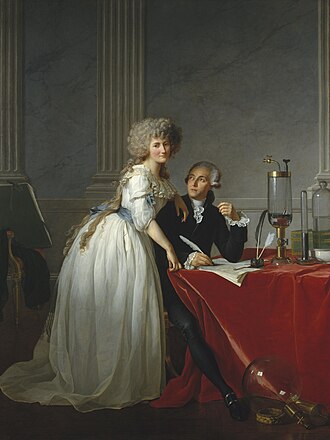 Antoine‑Laurent Lavoisier (1743–1794) und seine Frau - Jacques-Louis David (1788)
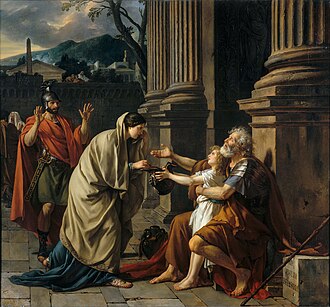 Belisar bittet um Almosen - Jacques-Louis David (1781)
Cupid und Psyche - Jacques-Louis David (1817)
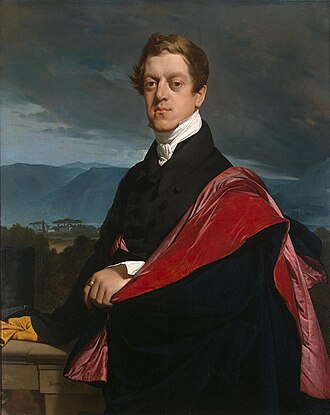 Porträt des Grafen Gurjew - Jean-Auguste-Dominique Ingres (1821)
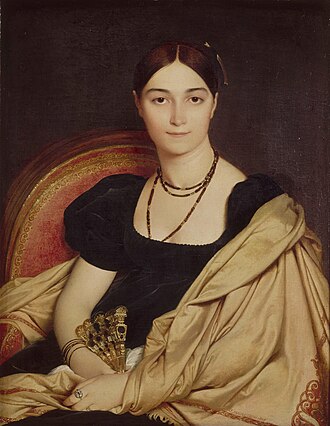 Mme Devaucay - Jean-Auguste-Dominique Ingres (1807)
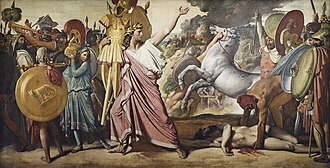 Romulus, der Sieger von Acron, trägt die reiche Beute in den Zeustempel - Jean-Auguste-Dominique Ingres (1812)
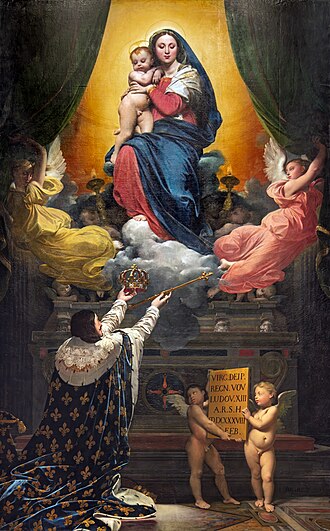 The Vow of Louis XIII - Jean-Auguste-Dominique Ingres (1824)
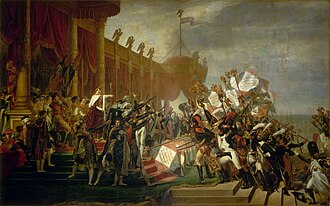 The Distribution of the Eagle Standards - Jacques-Louis David (1810)
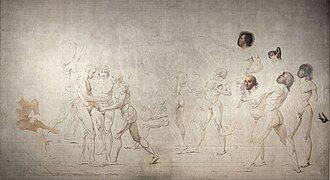 The Tennis Court Oath - Jacques-Louis David (1791)
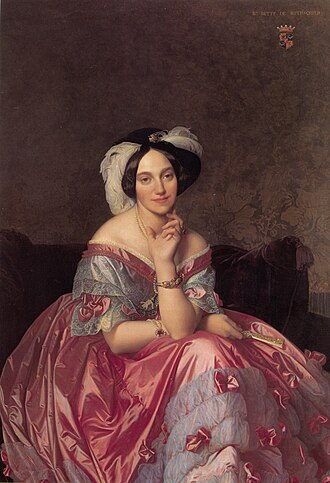 Baronne de Rothschild - Jean-Auguste-Dominique Ingres (1848)
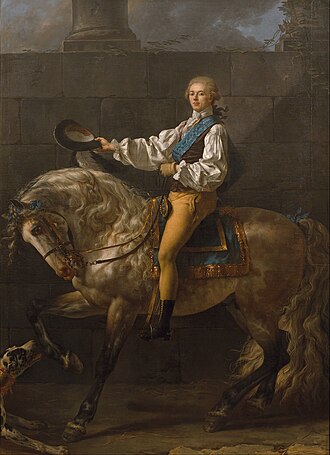 Porträt von Stanisław Kostka Potocki zu Pferde. - Jacques-Louis David (1780)
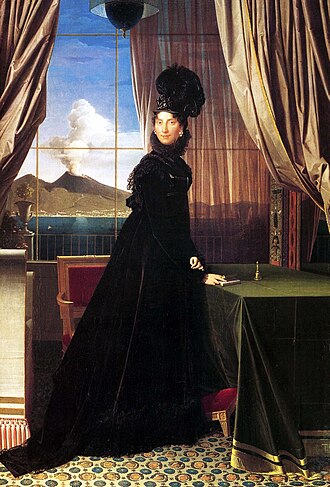 Portrait of Caroline Murat, Queen of Naples - Jean-Auguste-Dominique Ingres (1814)
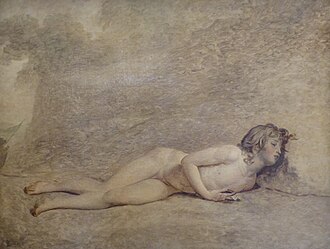 Der Tod des jungen Bara - Jacques-Louis David (1794)
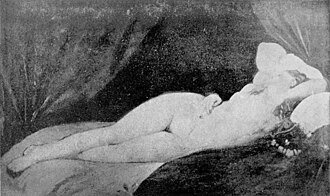 La Dormeuse de Naples - Jean-Auguste-Dominique Ingres (1809)
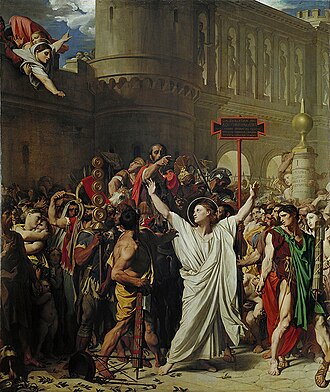 The Martyrdom of Saint Symphorian - Jean-Auguste-Dominique Ingres (1834)
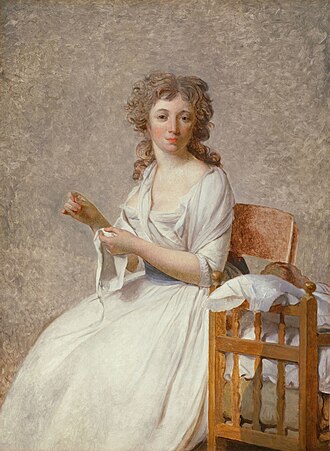 Portrait of Madame Adélaide Pastoret - Jacques-Louis David (1791)
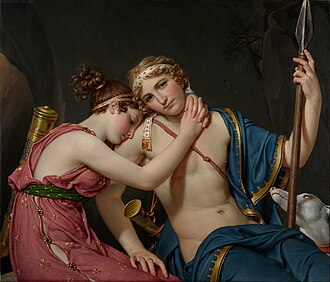 The Farewell of Telemachus and Eucharis - Jacques-Louis David (1818)
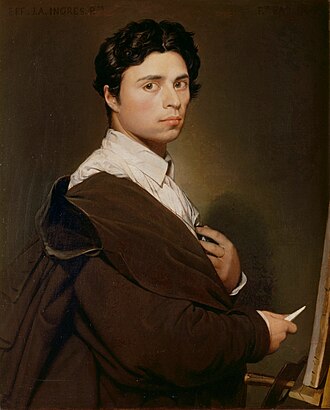 Selbstporträt - Jean-Auguste-Dominique Ingres (1804)
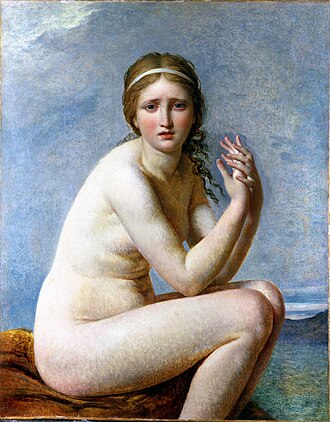 Psyche Abandoned - Jacques-Louis David (1795)
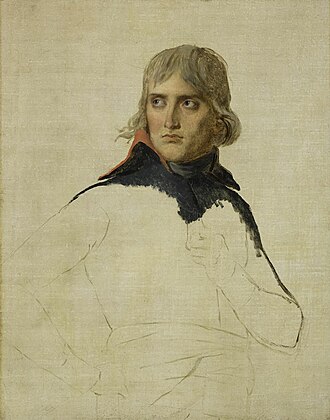 Unfinished Portrait of General Bonaparte - Jacques-Louis David (1790s)
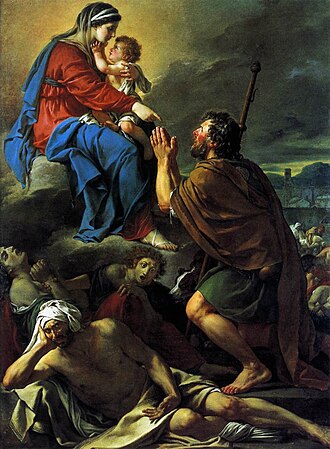 Saint Roch interceding with the Virgin - Jacques-Louis David (1780)
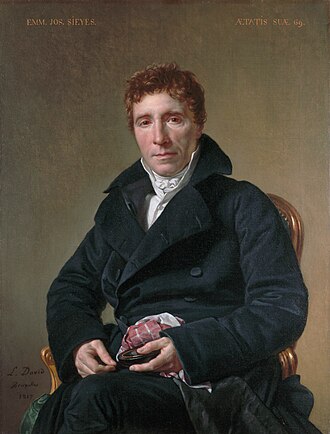 Emmanuel Joseph Sieyès - Jacques-Louis David (1817)
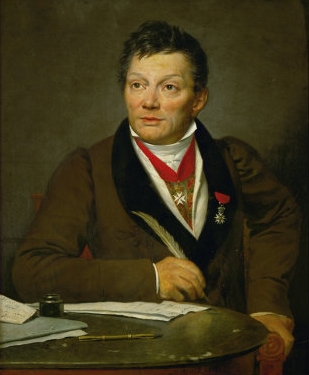 Portrait d'Alexandre Lenoir - Jacques-Louis David (1816)
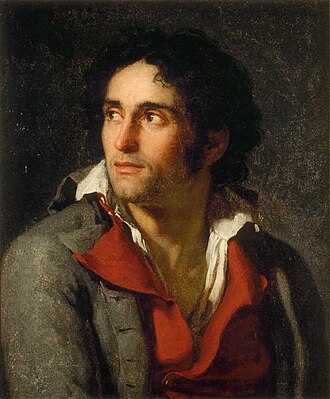 Le Geôlier - Jacques-Louis David (1794)
Neugierig auf Klassizismus?
Neoclassicism turned away from the playful Rococo and looked back to ancient Greece and Rome. Its painters wanted clear outlines, calm figures and serious stories of virtue, and in the hands of Jacques-Louis David and Ingres it produced some of the most famous images of revolutionary and Napoleonic France.
What is Neoclassicism, in simple words?
Neoclassicism is a Western movement in the visual and decorative arts, literature, theatre, music and architecture that drew inspiration from the art and culture of classical antiquity. In the visual arts it began around 1760 as a reaction against the Rococo style, which favoured grace, ornament and asymmetry. Neoclassicism valued simplicity and symmetry instead, qualities seen as virtues of ancient Greek and Roman art.
Where and when did it begin?
It was born in Rome, largely thanks to the writings of Johann Joachim Winckelmann, at the time of the rediscovery of Pompeii and Herculaneum. Young European art students finished their Grand Tour in Italy and carried these Greco-Roman ideals home. The movement grew out of the 18th-century Age of Enlightenment and peaked in the early to mid 19th century, when it came to compete with Romanticism.
Who was Winckelmann?
Johann Joachim Winckelmann was the writer whose books shaped the movement, including Thoughts on the Imitation of Greek Works in Painting and Sculpture (1755) and History of Ancient Art (1764). He was among the first to separate Greek from Roman art clearly. He believed art should aim at "noble simplicity and calm grandeur" and argued that artists could only become great by imitating the ancients.
Why was it hard to paint in a classical way?
Ancient Greek painting was almost entirely lost, so painters had few models. They revived it imaginatively through relief friezes, mosaics and vase painting, through the High Renaissance of Raphael's generation, the wall paintings of Pompeii and Herculaneum, and a renewed admiration for Nicolas Poussin. As a result, much Neoclassical painting is classical mainly in its subject matter. Sculpture and architecture had far more ancient examples to follow.
Which painting made Neoclassicism famous?
Neoclassical painting gained a new sense of direction with the sensational success of Jacques-Louis David's Oath of the Horatii at the Paris Salon of 1785. Although it praised republican virtue, it was a royal commission, which David insisted on painting in Rome. Its heroic figures are lined up like a frieze in front of a dim arcade, with stage-like lighting and the classical colouring of Poussin.
Who was Jacques-Louis David?
David combined an idealist style with drama and force, and quickly became the leader of French art. After the French Revolution he became a politician who controlled much government patronage of the arts. He kept his influence under Napoleon, turning to openly propagandistic works, but had to go into exile in Brussels after the Bourbon Restoration. On this site you can see his Death of Marat, Leonidas at Thermopylae and Cupid and Psyche.
Where does Ingres fit in?
Jean-Auguste-Dominique Ingres was one of David's many students and saw himself as a classicist all his long career. Yet his mature style has an uneasy relationship with mainstream Neoclassicism, and he also turned to Orientalist subjects, as in the Grande Odalisque, that look close to Romantic work. What marks him out is the primacy he always gave to drawing. He showed at the Salon for over 60 years, from 1802.
Is Neoclassicism the opposite of Romanticism?
It is often described that way, but this is a great oversimplification that rarely holds up when you look at specific artists or works. Ingres, the supposed champion of late Neoclassicism, shows this especially well. Some artists, such as Henry Fuseli, built on Neoclassical principles while choosing dramatic, "Gothic" subjects, so their work belongs to the history of both movements.
What about sculpture and architecture?
Neoclassicism was strongest in architecture, sculpture and the decorative arts, where ancient models were plentiful. Antonio Canova and Bertel Thorvaldsen, both based in Rome, made idealised life-size figures, and Jean-Antoine Houdon made lively portrait busts, including figures of the American Revolution. In buildings and furniture, a second, more severe wave, the Empire style, centred on Paris in the Napoleonic era, and the style lasted into the 20th and 21st centuries.
Which works should I see first?
Start on this site with David's The Oath of the Horatii and The Death of Marat, then his Portrait of Madame Recamier, a calm, simple image of a woman in classical dress. Move on to Ingres: Napoleon I on His Imperial Throne, the Grande Odalisque and Oedipus and the Sphinx. Together they show the movement's clear outlines, sculptural figures and serious stories, and how far Ingres stretched them.