Napoleon I auf seinem kaiserlichen Thron
Jean-Auguste-Dominique Ingres · 1806
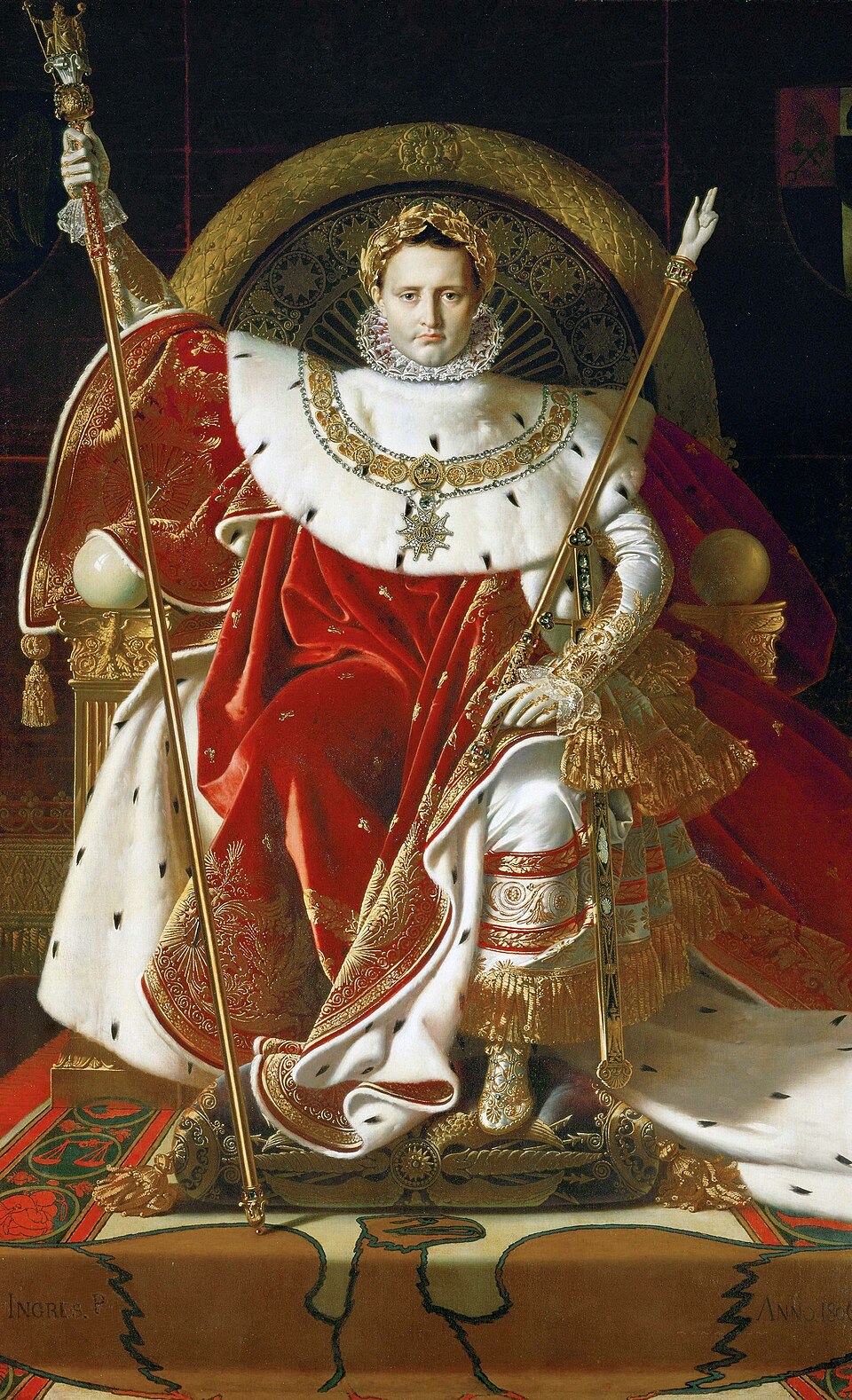
Napoleon stares straight out, frozen on a throne like an icon, buried in ermine, gold bees and velvet. The young Ingres meant to astonish. In 1806 the critics said he had sent art back four centuries.
The story behind the painting
Ingres painted the portrait in 1806, showing Napoleon in the costume of his coronation. It was shown at the Salon of 1806 as number 272, titled His Majesty the Emperor on his throne, and recorded as owned by the Corps législatif. At the top right, cut off halfway, is a shield with the arms of the Papal States, Este, Milan, Venice and Savoy under the crown of Italy. From this, Sébastien Allard suggests it was first commissioned by an Italian body to show Napoleon as king of Italy, and refused for its unusual imagery.
What to look for
Napoleon sits on a round backed throne with ivory balls on the armrests. In his right hand is the sceptre of Charlemagne, in his left the hand of justice. He wears a golden laurel wreath like Julius Caesar's, an ermine hood under the great collar of the Légion d'honneur, and a purple velvet cloak lined with ermine and covered with gold bees. His white, gold embroidered shoes rest on a cushion, and an imperial eagle spreads across the carpet. Among the zodiac medallions on the carpet's left border is a small version of Raphael's Madonna della seggiola.
Meaning and intent
The frontal pose recalls the lost Statue of Zeus at Olympia by Phidias, which Ingres also used for his Jupiter and Thetis. Robert Rosenblum saw another model in God the Father from Jan van Eyck's Ghent Altarpiece, then in the Louvre. The critic Chaussard asked how, with so much talent and so flawless a line, Ingres had managed to paint a bad picture, and accused him of regressing art by four centuries. Ingres answered that he admired Van Eyck but that he was not his painter.
Legacy
At the Salon the painting disturbed the public. David, who was finishing his own Coronation of Napoleon, judged it severely, and critics attacked its strange colours, lack of relief, chilly contours and archaic air. In 1815 it went to the Louvre. In 1832 the comte de Forbin placed it in the Hôtel des Invalides, first in the chapel and from 1860 in the library, and it is now on show in the Musée de l'Armée. It is signed INGRES P xit at lower left and ANNO 1806 at lower right.
Schon gewusst?
- Painted and shown at the Salon in 1806.
- Napoleon holds the sceptre of Charlemagne and the hand of justice.
- Critics called its style Gothic.
- Now displayed in the Musée de l'Armée, Paris.
Über den Künstler
Jean-Auguste-Dominique Ingres (1780-1867)
Porträt · Mann · Gemäldeabteilung des Louvre · Klassizismus · 1795-1820 in westlicher Mode · Schwert · Fußbank
Mehr von Jean-Auguste-Dominique Ingres
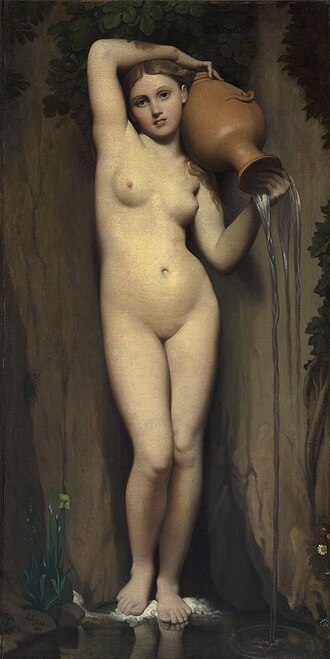 Die Quelle - Jean-Auguste-Dominique Ingres (1856)
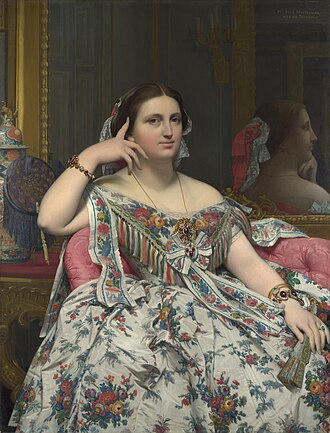 Madame Moitessier - Jean-Auguste-Dominique Ingres (1856)
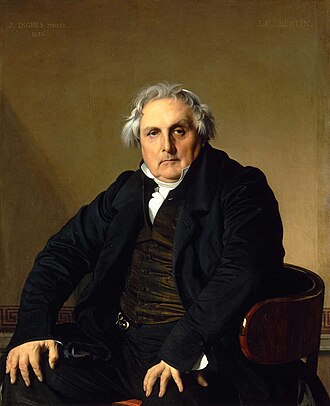 Porträt Monsieur Bertin - Jean-Auguste-Dominique Ingres (1832)
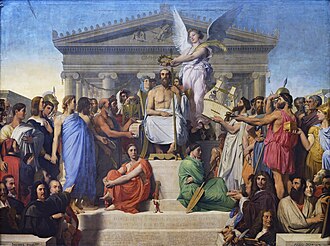 Apotheose Homers - Jean-Auguste-Dominique Ingres (1827)
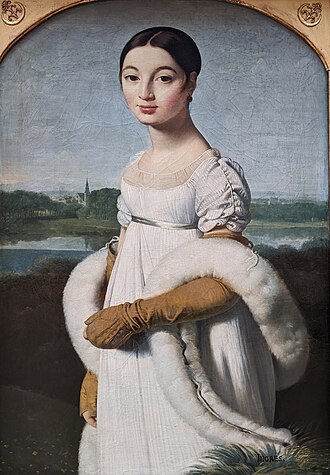 Mademoiselle Caroline Rivière - Jean-Auguste-Dominique Ingres (1806)
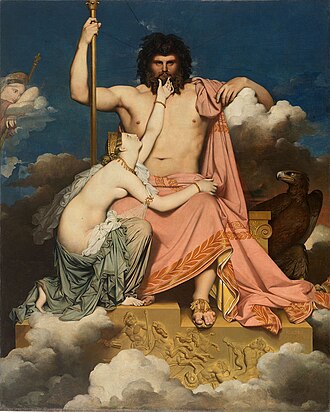 Jupiter und Thetis - Jean-Auguste-Dominique Ingres (1811)
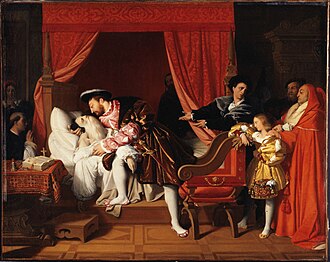 Der Tod des Leonardo da Vinci - Jean-Auguste-Dominique Ingres (1818)
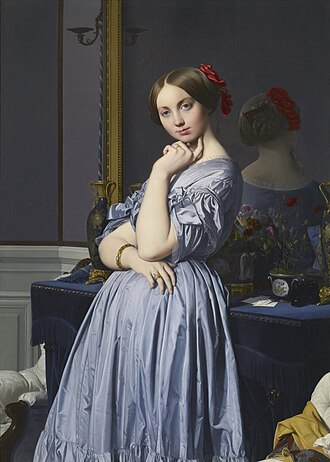 Comtesse d'Haussonville - Jean-Auguste-Dominique Ingres (1845)
Werke verwandter Künstler
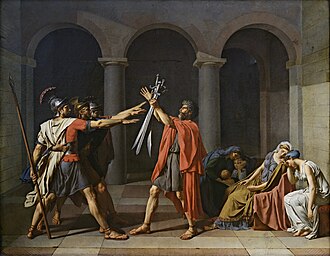 Der Schwur der Horatier - Jacques-Louis David (1784)
.jpg) The Intervention of the Sabine Women - Jacques-Louis David (1799)
The Intervention of the Sabine Women - Jacques-Louis David (1799)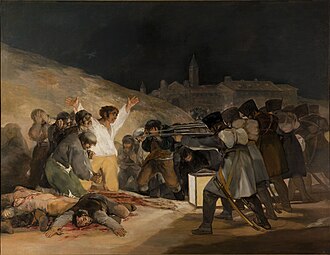 Die Erschießung der Aufständischen - Francisco Goya (1814)
.jpg) Die nackte Maja - Francisco Goya (1800)
Die nackte Maja - Francisco Goya (1800)