Antiochus und Stratonice
Jean-Auguste-Dominique Ingres · 1840
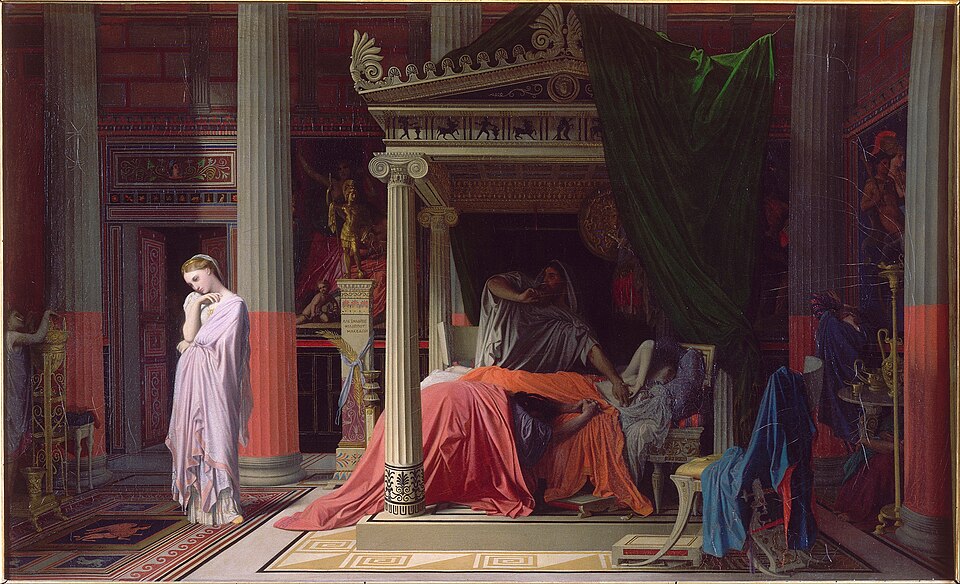
A prince lies dying of a love he cannot confess, and his father has collapsed at the foot of the bed. Ingres worked on this ancient tale for years, and his own wife posed as the doctor.
The story behind the painting
In 1834 Prince Ferdinand Philippe, Duke of Orléans, commissioned a painting from Ingres as a companion to Paul Delaroche's The Assassination of the Duke of Guise. That same year Ingres left for Rome to direct the French Academy, which delayed the work; it began with a sketch of about 1838, now in Cleveland, although the list of versions dates that sketch to 1834. According to Lady Eglé Charlemont, she was the model for Stratonice, Ingres' wife Madeleine Chapelle posed as the doctor, Hippolyte Flandrin for Antiochus' arms and Ingres himself for Seleucus. The picture was finished in Rome in 1840.
What to look for
The story comes from Plutarch and other ancient writers. Antiochus, son of King Seleucus I, fell in love with his father's new wife Stratonice and kept it secret until he fell mortally ill. The doctor Erasistratus noticed that his heart raced whenever she entered the room. So the father lies collapsed at the foot of the bed. Look for the lyre in the foreground. The bed is based on a 4th-century BC funerary monument seen on a vase found at Canosa, and Stratonice is closely modelled on Roman sculpture. Pupils Paul and Raymond Balze painted part of the architecture from Victor Baltard's drawings.
Meaning and intent
Ingres had a long bond with the subject. His teacher Jacques-Louis David won the Prix de Rome in 1774 with his own painting of the scene, and Ingres made drawings after it from 1807. Music may be another source: Ingres had played violin with the Orchestre du Capitole de Toulouse, which staged Méhul's opera Stratonice several times, and the painting shows the moment of the heroine's solo. The Delaroche it was meant to accompany was also based on an opera. The silent drama here is about a hidden feeling discovered by a pulse.
Legacy
The duke was pleased and commissioned a portrait from Ingres. The painting hung at the Palais-Royal and, after the duke's death in 1842, passed to his widow. After the 1848 Revolution it was sold in Paris in 1852 to the Demidoff family, then sold again in 1863 to Édouard Bocher, acting for the Duke of Aumale, then in exile in London. Aumale hung it in the Tribune of his Château de Chantilly, where it remains, in the Musée Condé. Ingres returned to the subject in at least four other versions, including a reversed copy of 1866 in Montpellier.
Schon gewusst?
- Commissioned in 1834 by the Duke of Orléans, finished in Rome in 1840.
- Ingres' wife posed as the doctor Erasistratus.
- Ingres' teacher David had won the Prix de Rome with the same subject.
- Hangs in the Musée Condé, Chantilly.
Über den Künstler
Jean-Auguste-Dominique Ingres (1780-1867)
Frau · Mann · Klassizismus · Historienmalerei · Musée Condé
Mehr von Jean-Auguste-Dominique Ingres
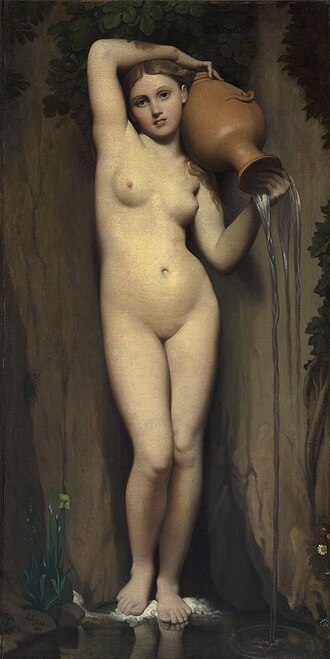 Die Quelle - Jean-Auguste-Dominique Ingres (1856)
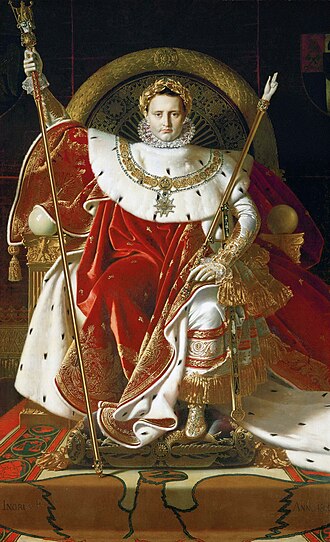 Napoleon I auf seinem kaiserlichen Thron - Jean-Auguste-Dominique Ingres (1806)
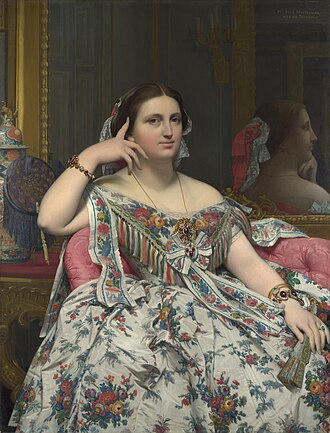 Madame Moitessier - Jean-Auguste-Dominique Ingres (1856)
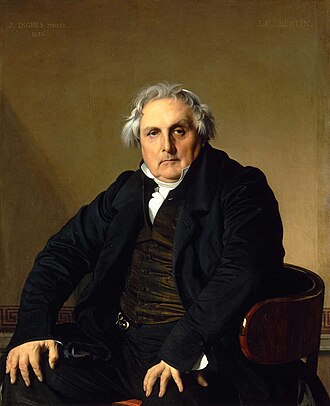 Porträt Monsieur Bertin - Jean-Auguste-Dominique Ingres (1832)
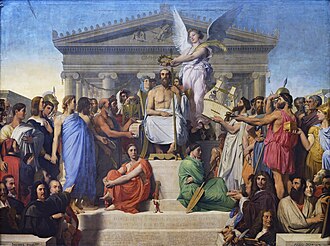 Apotheose Homers - Jean-Auguste-Dominique Ingres (1827)
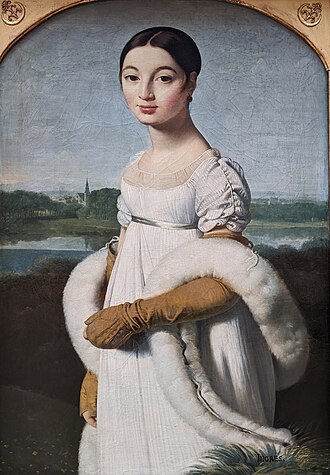 Mademoiselle Caroline Rivière - Jean-Auguste-Dominique Ingres (1806)
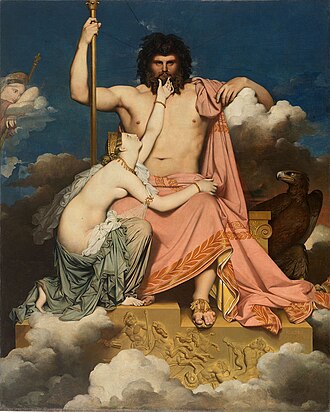 Jupiter und Thetis - Jean-Auguste-Dominique Ingres (1811)
 Der Tod des Leonardo da Vinci - Jean-Auguste-Dominique Ingres (1818)
Werke verwandter Künstler
 Der Schwur der Horatier - Jacques-Louis David (1784)
.jpg) The Intervention of the Sabine Women - Jacques-Louis David (1799)
The Intervention of the Sabine Women - Jacques-Louis David (1799) Die Erschießung der Aufständischen - Francisco Goya (1814)
.jpg) Die nackte Maja - Francisco Goya (1800)
Die nackte Maja - Francisco Goya (1800)