Portrait of Caroline Murat, Queen of Naples
Jean-Auguste-Dominique Ingres · 1814
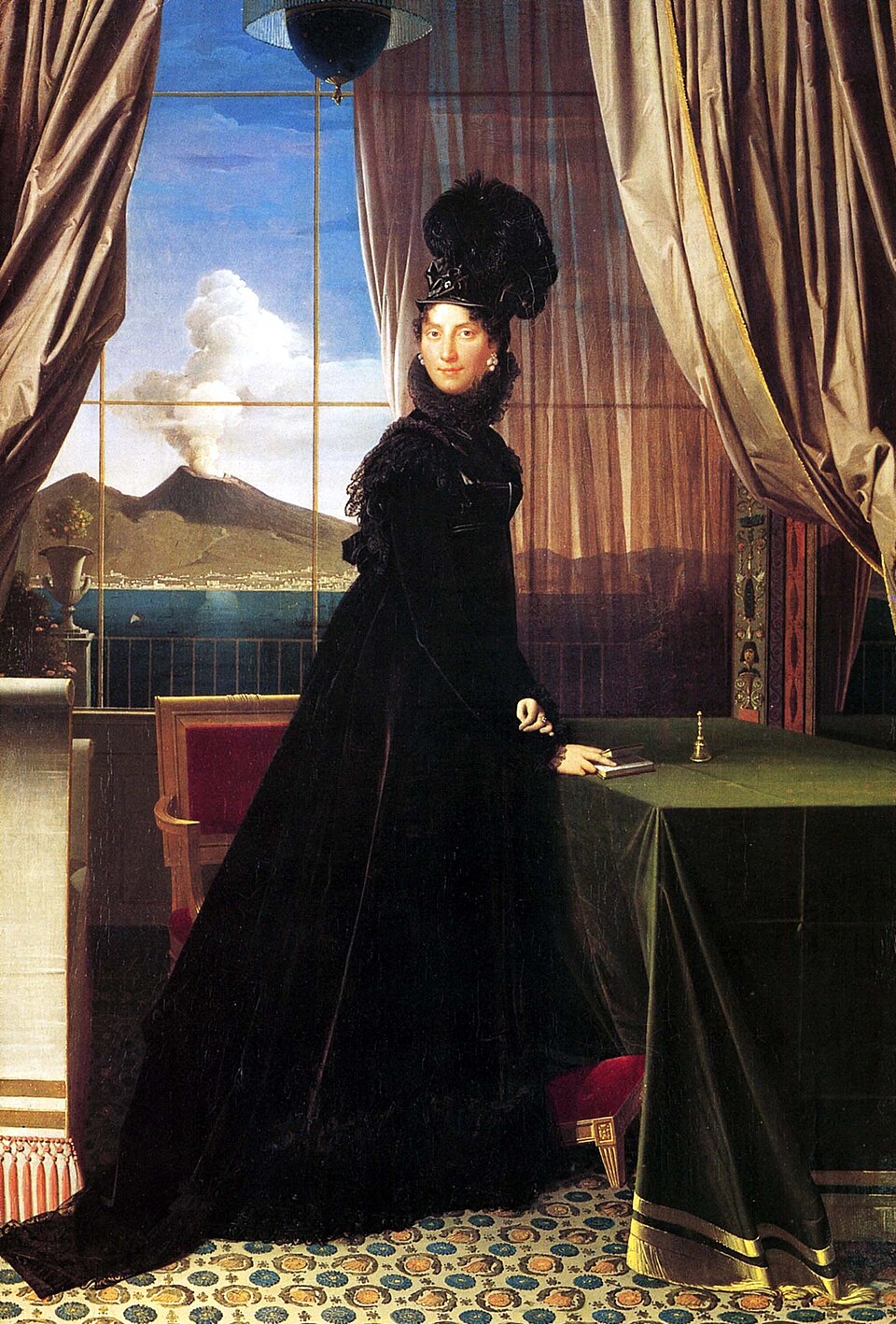
Napoleon's sister, Queen of Naples, stands in black velvet before a window onto Vesuvius. Ingres finished her portrait just as her kingdom fell, and for more than 170 years it was thought lost.
The story behind the painting
Caroline Murat, born Bonaparte, was Napoleon's sister and the wife of Joachim Murat, Marshal of France and later King of Naples. She loved art, and in 1814 she ordered several paintings from Ingres, her favourite artist, among them the Grande Odalisque, its now lost companion La Dormeuse de Naples, and Paolo and Francesca. She commissioned this portrait to show her standing and her worth to reign as queen in an unstable political climate. Ingres began it in Naples and completed it after he moved to Rome in May 1815.
What to look for
The canvas is about 92 by 60 cm. Caroline is shown full length in a long, high-waisted black velvet dress and pelisse, with a black hat trimmed with ostrich feathers. Her expression is pious. She stands in the royal apartment in Naples, before a large bay window that looks out over the bay to Mount Vesuvius. The room is filled with luxurious, prestigious objects meant to please both Italian and French taste, and the source sees a Moorish influence in the heavy velvet and lace. Note how her regal pose echoes Ingres's Bonaparte, First Consul of 1804.
Meaning and intent
This is a political image as much as a likeness. By borrowing the pose of her brother's portrait and placing herself in the palace with Vesuvius behind her, Caroline claims Naples as hers. Ingres worked slowly and precisely, making several preparatory studies, including close views of her face and a full sketch of the family. The work dragged on, and both Caroline and Ingres considered it unfinished. That sense of something incomplete fits the moment, for the regime it was meant to support was about to collapse.
Legacy
The painting was finished shortly before the Naples regime fell in 1815, after Napoleon's defeat at Waterloo. Joachim Murat was executed by firing squad in October that year, while Caroline lived until 1839. As a result, Ingres was not paid for his earlier commissions. After Murat's fall the portrait was long thought lost or destroyed, until the art historian Hans Naef rediscovered it in 1987. It is now in a private collection in New York.
Schon gewusst?
- Painted by Ingres in 1814, completed in Rome after May 1815.
- Caroline was Napoleon's sister and Queen of Naples.
- Thought lost after 1815, rediscovered by Hans Naef in 1987.
- Now in a private collection in New York.
Über den Künstler
Jean-Auguste-Dominique Ingres (1780-1867)
Porträt · Kleid · Klassizismus · Tisch · Fenster · Vorhang
Mehr von Jean-Auguste-Dominique Ingres
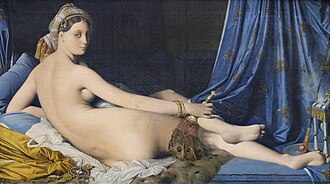 Die große Odaliske - Jean-Auguste-Dominique Ingres (1814)
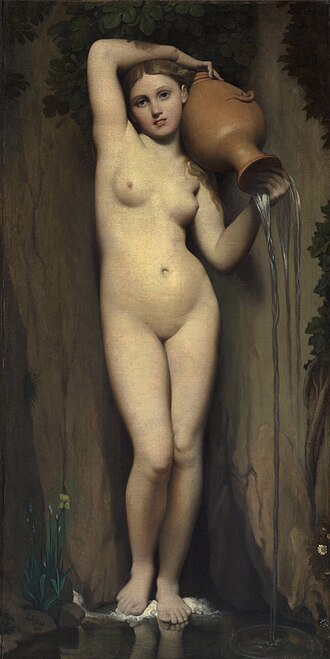 Die Quelle - Jean-Auguste-Dominique Ingres (1856)
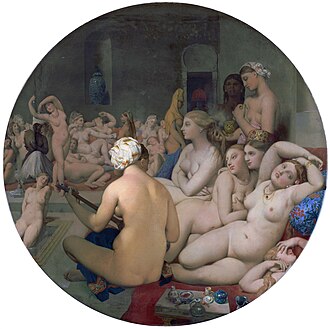 Das türkische Bad - Jean-Auguste-Dominique Ingres (1862)
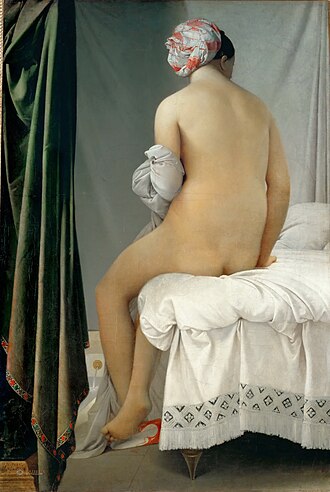 Die Badende von Valpençon - Jean-Auguste-Dominique Ingres (1808)
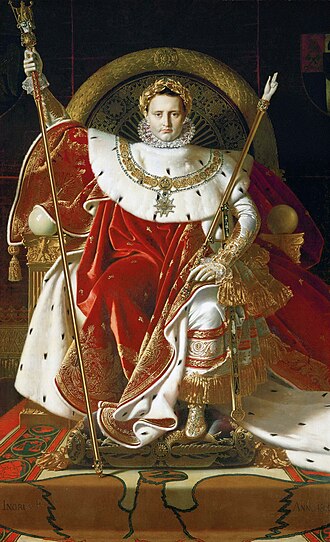 Napoleon I auf seinem kaiserlichen Thron - Jean-Auguste-Dominique Ingres (1806)
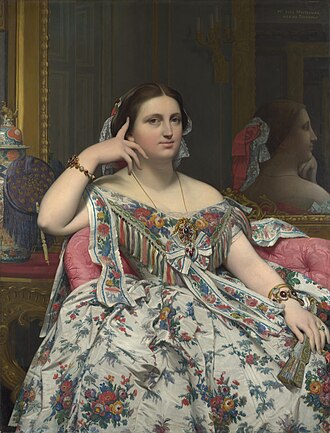 Madame Moitessier - Jean-Auguste-Dominique Ingres (1856)
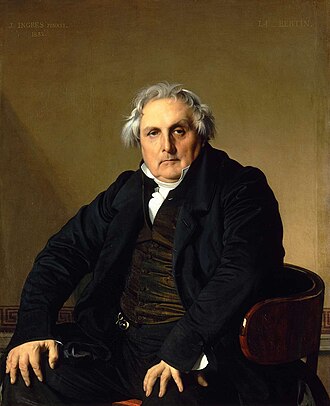 Porträt Monsieur Bertin - Jean-Auguste-Dominique Ingres (1832)
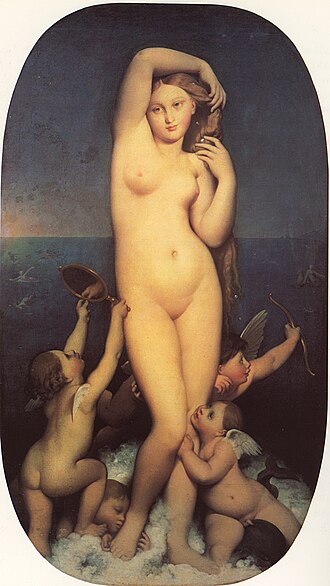 Vénus Anadyomène - Jean-Auguste-Dominique Ingres (1808)
Werke verwandter Künstler
 Der Tod des Sokrates - Jacques-Louis David (1787)
 Der Schwur der Horatier - Jacques-Louis David (1784)
 Die Erschießung der Aufständischen - Francisco Goya (1814)
 Die nackte Maja - Francisco Goya (1800)