Jupiter und Thetis
Jean-Auguste-Dominique Ingres · 1811
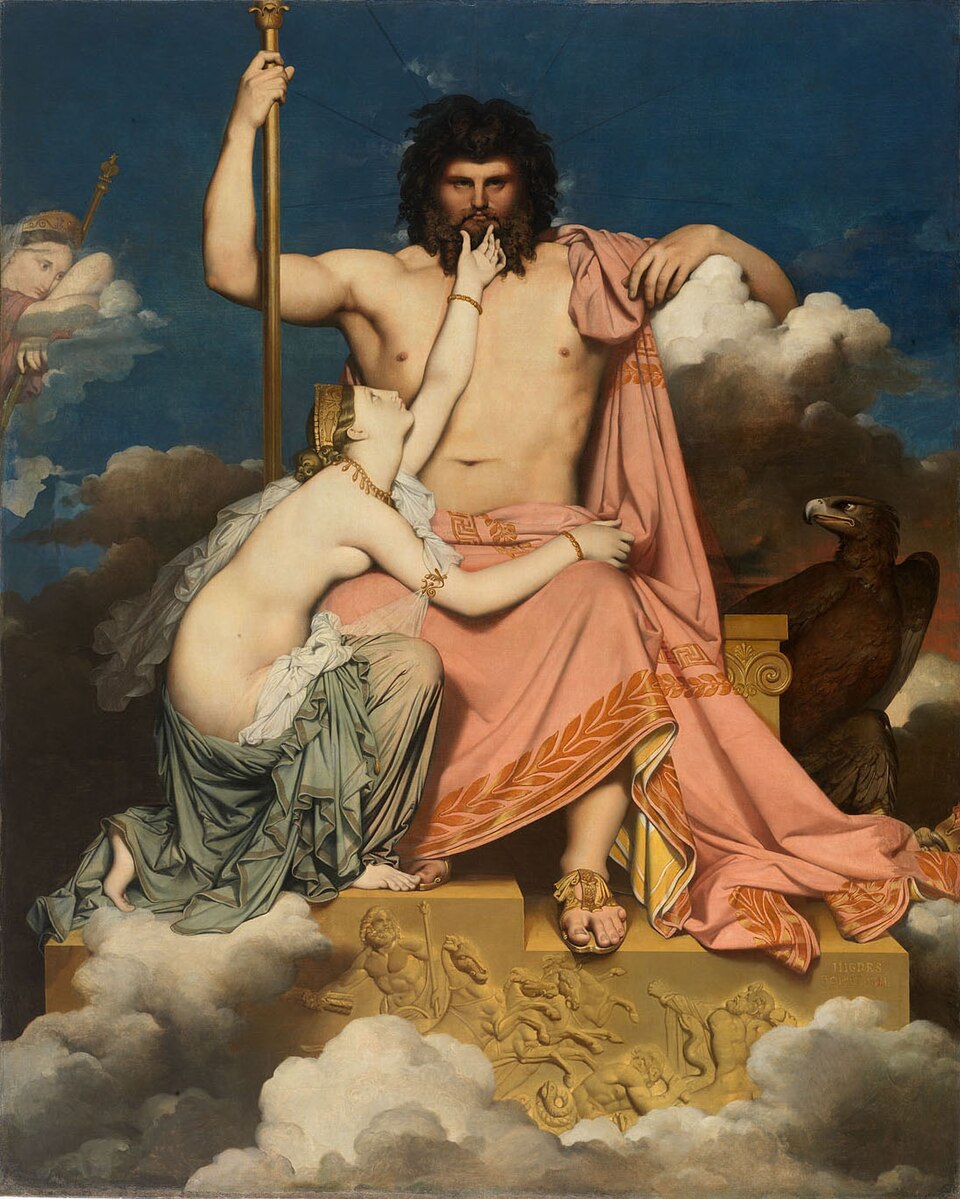
A colossal god sits enthroned in the clouds while a small sea nymph reaches up to touch his beard, begging for her son's life. Ingres painted this meeting of power and pleading before he was 31, and he valued it highly all his life.
The story behind the painting
The subject comes from Homer's Iliad. The sea nymph Thetis begs Jupiter to intervene and guide the fate of her son Achilles, who is caught up in the Trojan War. Ingres painted the work in 1811 to meet his obligations to the French Academy in Rome, when he was not yet 31. It was first shown at the Paris Salon that same year, at a time when his attention to line and his disregard for anatomical reality had not yet won over the critics.
What to look for
The canvas is huge. Wikipedia gives about 347 by 257 cm, while Wikidata lists 327 by 260 cm. Jupiter faces us frontally, arms and legs spread wide, the colour of his robe and skin echoing the marble at his feet. His pose is based on the lost Statue of Zeus at Olympia by Phidias, known from coins and small copies, here reversed. Thetis is all sensuous curves, her dark green dress slipping from her hip. Her right hand rests on his hip, and the focal point is her left hand, raised to stroke the god's beard.
Meaning and intent
The painting sets the grandeur and might of a cloud-borne male god against a small, half nude nymph who is at his mercy, since he holds her son's fate in his hands. Its tone of male power and female submission reflected the patriarchal bias of Napoleon's regime, yet it is generally read as a rejection of such values. In a way it joins the two great motifs of Ingres's career: the voluptuous female figure and the stern authority of the male god. The bare landscape behind them adds a feeling of dread.
Legacy
Ingres thought highly of the painting and kept it in his studio until 1834, when it was bought by the French state. In 1848 he made a single pencil copy of it. Wikipedia places the canvas in the Musée Granet in Aix-en-Provence, and Wikidata also links it to the Centre national des arts plastiques. The pose of the enthroned god returned in his portrait of Napoleon I on his Imperial Throne, painted a few years earlier from the same ancient model.
Schon gewusst?
- Painted in 1811 for the French Academy in Rome.
- The subject comes from Homer's Iliad.
- Jupiter's pose follows the lost Statue of Zeus at Olympia.
- Bought by the French state in 1834.
Über den Künstler
Jean-Auguste-Dominique Ingres (1780-1867)
mythologische Malerei · Sitzen · Akt · Klassizismus · weibliche Brust · Bauchnabel · Bart · schwarzhaarig · Oberkörper frei · Knien · Oberkörper frei
Mehr von Jean-Auguste-Dominique Ingres
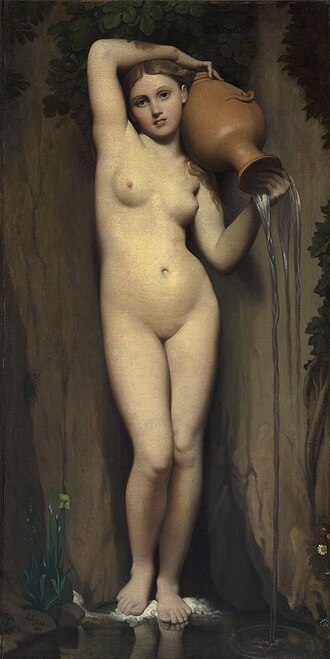 Die Quelle - Jean-Auguste-Dominique Ingres (1856)
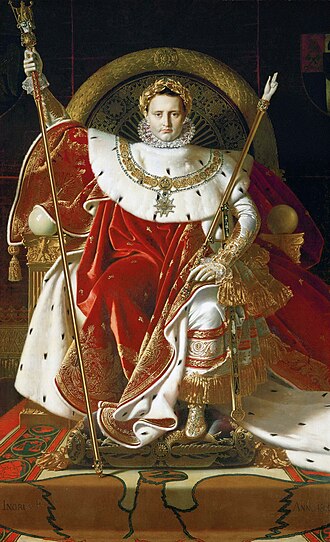 Napoleon I auf seinem kaiserlichen Thron - Jean-Auguste-Dominique Ingres (1806)
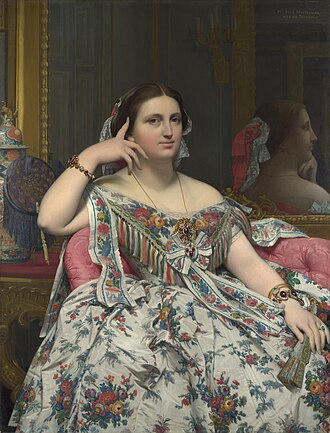 Madame Moitessier - Jean-Auguste-Dominique Ingres (1856)
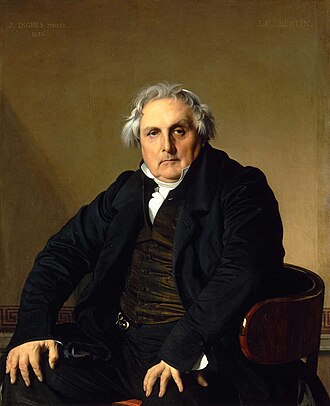 Porträt Monsieur Bertin - Jean-Auguste-Dominique Ingres (1832)
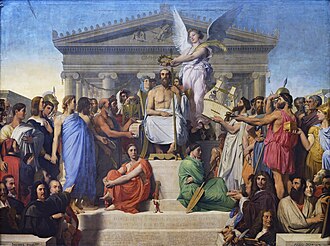 Apotheose Homers - Jean-Auguste-Dominique Ingres (1827)
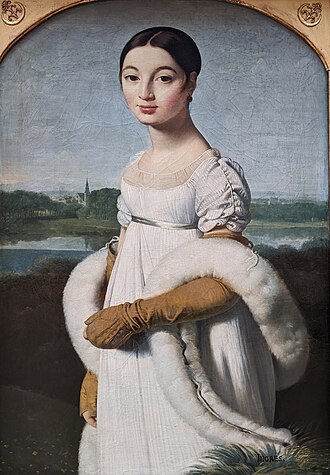 Mademoiselle Caroline Rivière - Jean-Auguste-Dominique Ingres (1806)
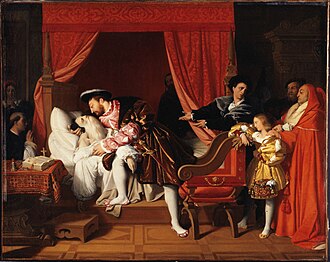 Der Tod des Leonardo da Vinci - Jean-Auguste-Dominique Ingres (1818)
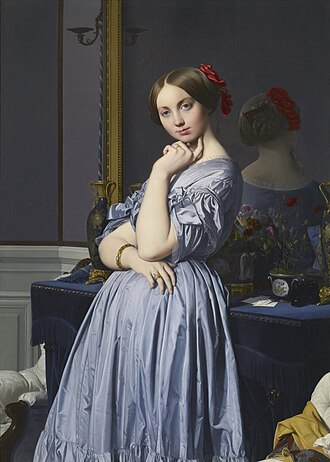 Comtesse d'Haussonville - Jean-Auguste-Dominique Ingres (1845)
Werke verwandter Künstler
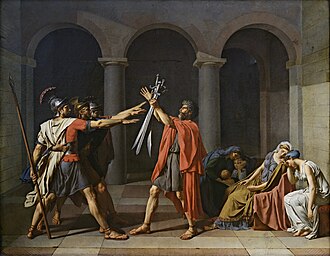 Der Schwur der Horatier - Jacques-Louis David (1784)
.jpg) The Intervention of the Sabine Women - Jacques-Louis David (1799)
The Intervention of the Sabine Women - Jacques-Louis David (1799)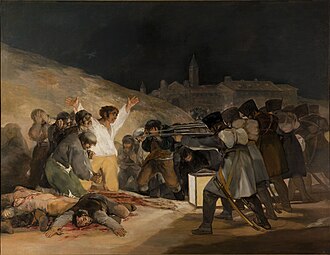 Die Erschießung der Aufständischen - Francisco Goya (1814)
.jpg) Die nackte Maja - Francisco Goya (1800)
Die nackte Maja - Francisco Goya (1800)