Emmanuel Joseph Sieyès
Jacques-Louis David · 1817
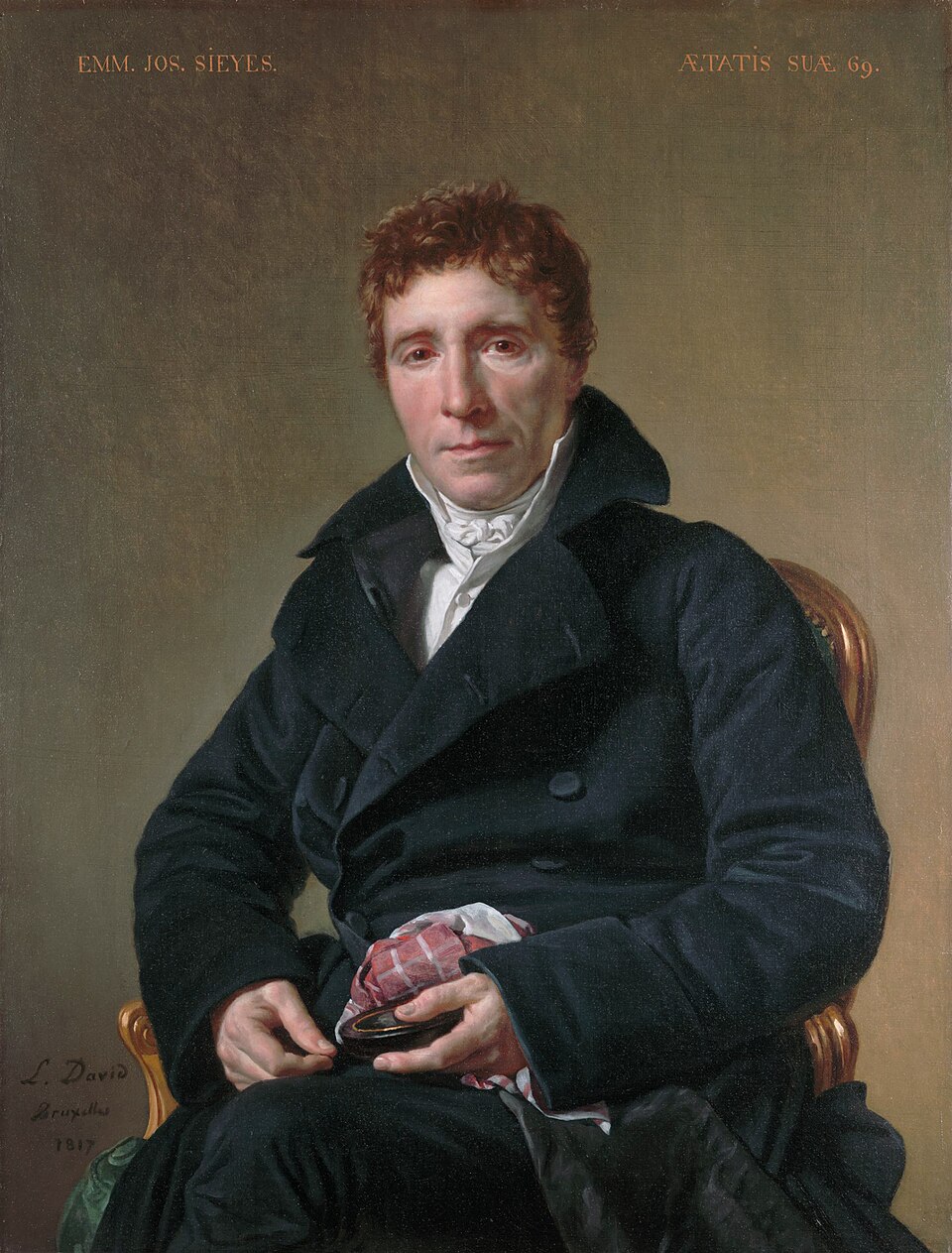
Two old revolutionaries in exile in Brussels: one paints, the other quietly cleans his snuffbox. David gave Sieyès, at 69, a calm and strangely young face.
The story behind the painting
Jacques-Louis David painted this portrait in 1817 in Brussels, where both he and Emmanuel-Joseph Sieyès, a former leader of the Revolution, were living in exile. David had already placed Sieyès, looking older, in his overall sketch for The Tennis Court Oath twenty-six years earlier, seated in a similar pose with a hat on his knees. Sieyès was then 69 years old. The canvas measures about 98 by 74 cm, a modest size for a quiet meeting between two men who had lived through the same upheavals.
What to look for
Sieyès sits in three-quarter view against a plain brown background brushed with vibrant touches. He is cleaning a snuffbox with a checked handkerchief. His dark blue velvet coat, almost black, sets off a white waistcoat and a white neck scarf, and parts of the armchair's back and arms show. At the top David wrote EMM. JOS SIEYES on the left and AETATIS SUAE 69, in his 69th year, on the right. It is signed and dated L. David Bruxelles 1817 at lower left.
Meaning and intent
The face is impassive and looks oddly young for a man of 69. Instead of a grand pose, David shows a small private gesture, the snuffbox and handkerchief, so that the once powerful theorist of the Revolution appears as a quiet companion in exile. The head sits in the upper third of a simple vertical composition, with nothing to distract from the man. The checked handkerchief and the snuffbox are ordinary objects, and that is their force.
Legacy
The portrait stayed with Sieyès and his family until 1856, when it passed to Madame Combes. Viscount Henri de Bérenger acquired it in 1913, and in 1936 Grenville Lindall Winthrop bought it through Martin Birnbaum. Winthrop bequeathed it to the Fogg Art Museum in 1943, today part of the Harvard Art Museums. The museum is in Cambridge, Massachusetts. The Latin inscription still tells every visitor exactly how old the sitter was when David painted him in Brussels.
Schon gewusst?
- Painted in Brussels in 1817, where David and Sieyès were both in exile.
- Inscribed with Sieyès's name and his age, 69.
- Sieyès is shown cleaning a snuffbox.
- Bequeathed to the Fogg Art Museum in 1943.
Über den Künstler
Jacques-Louis David (1748-1825)
Porträt · Mann · Sitzen · Klassizismus · brünett · 1795-1820 in westlicher Mode · Harvard Art Museums · Fogg Art Museum · Fauteuil
Mehr von Jacques-Louis David
 Der Tod des Sokrates - Jacques-Louis David (1787)
 Der Schwur der Horatier - Jacques-Louis David (1784)
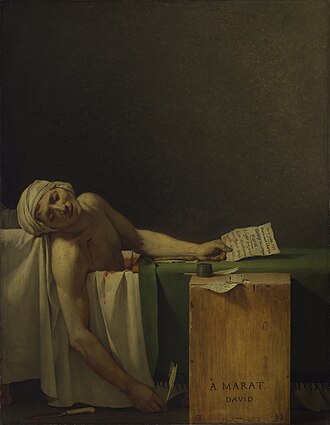 Der Tod des Marat - Jacques-Louis David (1793)
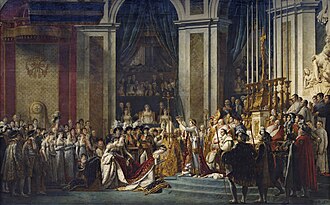 Le Sacre de Napoléon - Jacques-Louis David (1807)
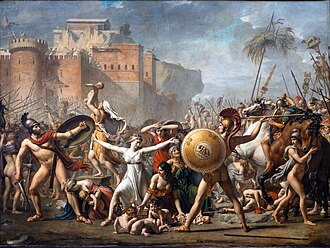 The Intervention of the Sabine Women - Jacques-Louis David (1799)
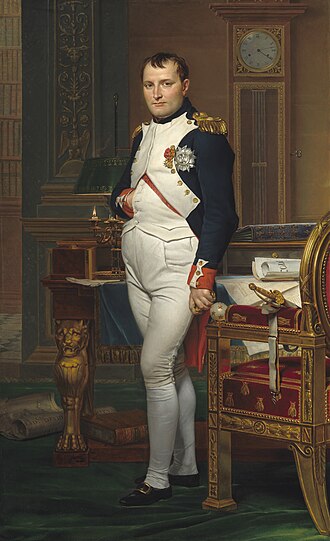 Der Kaiser Napoleon in seinem Arbeitszimmer im Tuilerien-Palast - Jacques-Louis David (1812)
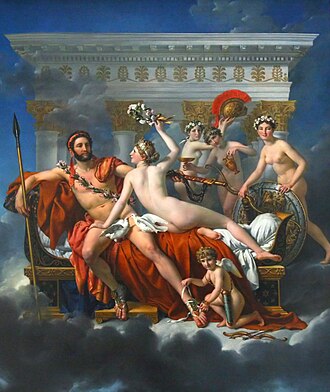 Mars Venus entwaffnet - Jacques-Louis David (1824)
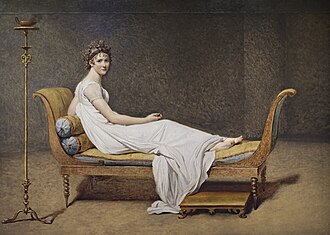 Porträt Madame Récamier - Jacques-Louis David (1800)
Werke verwandter Künstler
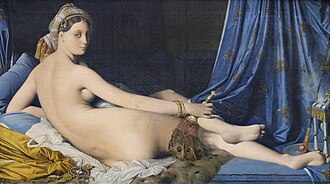 Die große Odaliske - Jean-Auguste-Dominique Ingres (1814)
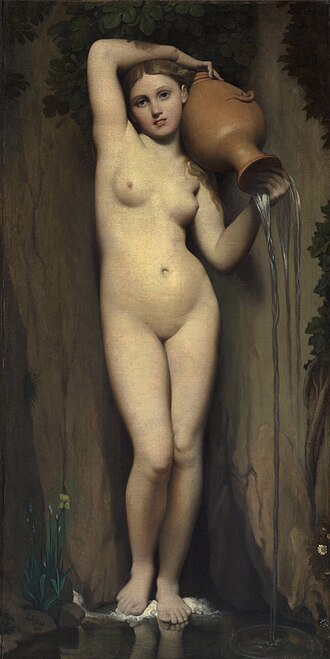 Die Quelle - Jean-Auguste-Dominique Ingres (1856)
 Die Erschießung der Aufständischen - Francisco Goya (1814)
 Die nackte Maja - Francisco Goya (1800)