romantisme
Romanticism was a movement that put feeling, imagination and the power of nature at the heart of art.
Francisco Goya · Caspar David Friedrich · Eugène Delacroix · J. M. W. Turner · Thomas Gainsborough
 Le Dernier Voyage du Téméraire - J. M. W. Turner (1839)
 Tres de Mayo - Francisco Goya (1814)
 La Liberté guidant le peuple - Eugène Delacroix (1830)
 La Maja nue - Francisco Goya (1800)
 Saturne dévorant un de ses enfants - Francisco Goya (1819)
 La Famille de Charles IV - Francisco Goya (1800)
 L'Enfant bleu - Thomas Gainsborough (1770)
 La Mort de Sardanapale - Eugène Delacroix (1827)
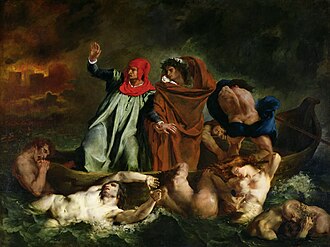 La Barque de Dante - Eugène Delacroix (1822)
 Le Sabbat des sorcières - Francisco Goya (1820s)
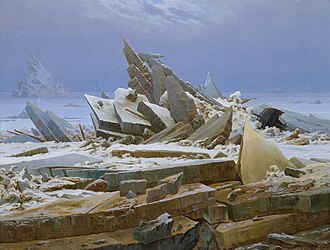 La Mer de glace - Caspar David Friedrich (1820s)
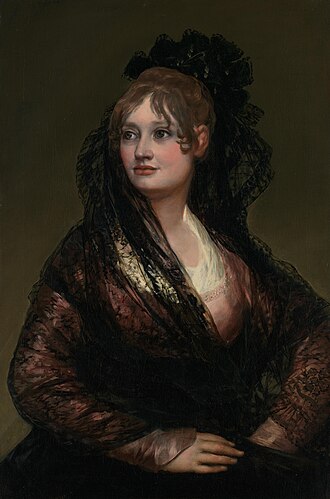 Portrait d'Isabelle Porcel - Francisco Goya (1800s)
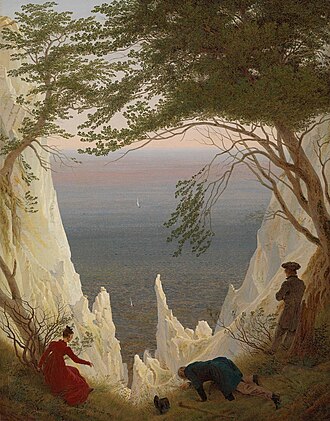 Falaises de craie sur l'île de Rügen - Caspar David Friedrich (1818)
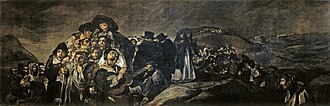 Le Pèlerinage à l’ermitage de San Isidro - Francisco Goya (1820s)
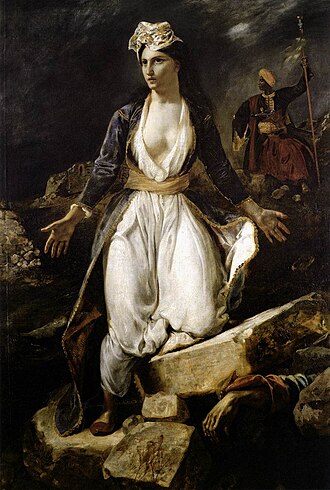 La Grèce sur les ruines de Missolonghi - Eugène Delacroix (1826)
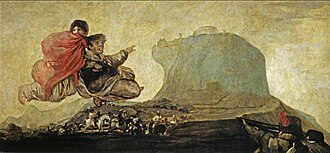 Vision fantastique - Francisco Goya (1819)
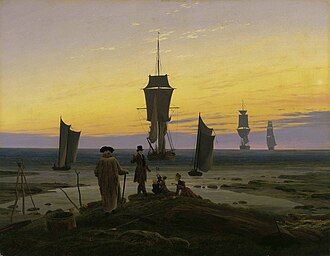 Les Âges de la vie - Caspar David Friedrich (1834)
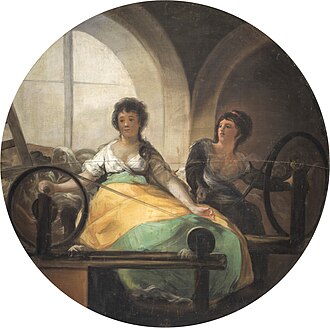 Allégorie de l'Industrie - Francisco Goya (1804)
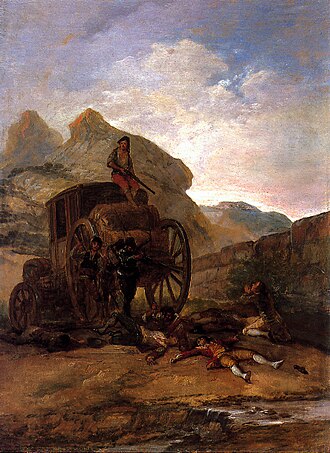 Asalto de ladrones - Francisco Goya (1793)
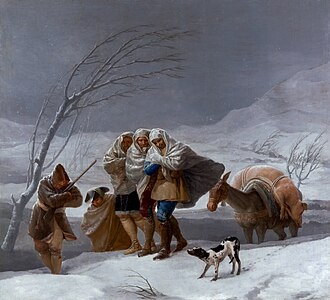 La Neige - Francisco Goya (1787)
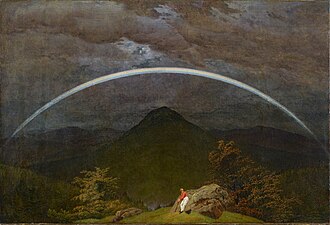 Paysage de montagne avec arc-en-ciel - Caspar David Friedrich (1809)
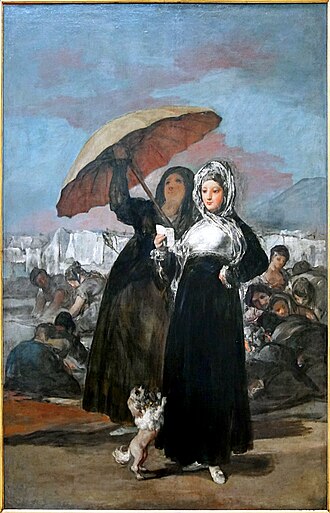 La Lettre - Francisco Goya (1814)
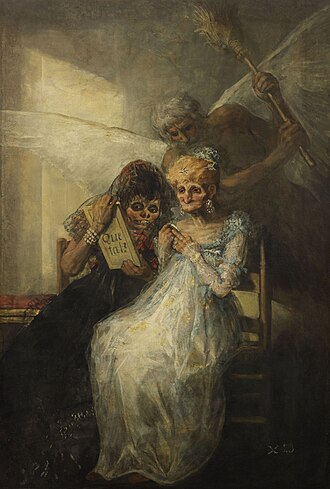 Les vieilles - Francisco Goya (1810s)
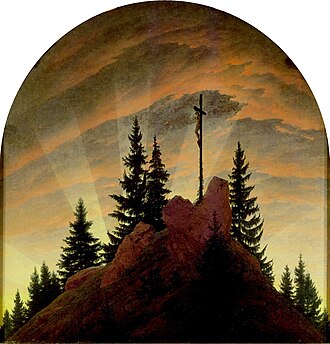 Le Retable de Tetschen - Caspar David Friedrich (1807)
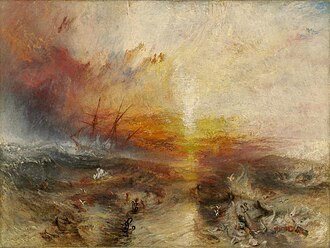 Le Négrier - J. M. W. Turner (1840)
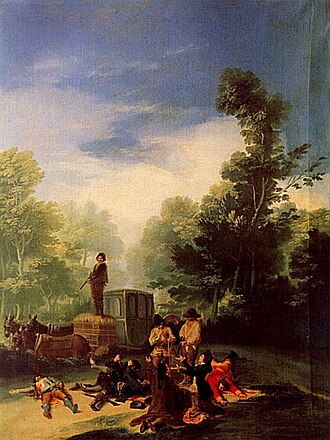 L'Attaque de la diligence - Francisco Goya (1787)
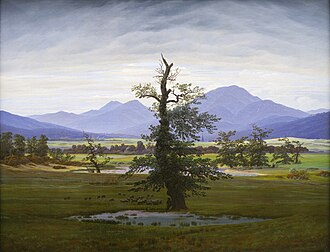 Paysage champêtre, le matin - Caspar David Friedrich (1822)
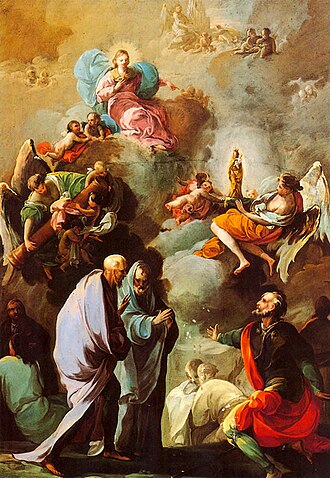 Apparition de la Vierge du Pilar à saint Jacques et à ses disciples de Saragosse - Francisco Goya (1768)
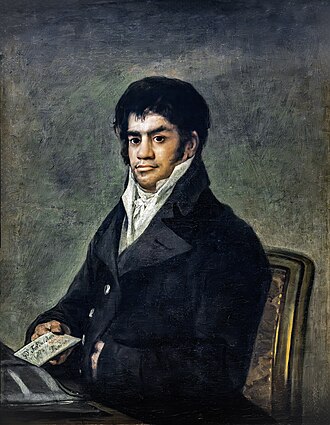 Portrait de Francisco del Mazo - Francisco Goya (1810s)
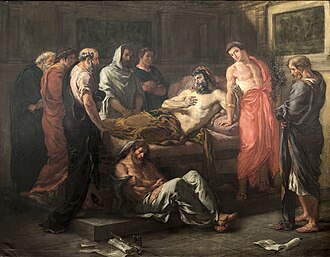 Dernières Paroles de l’empereur Marc Aurèle - Eugène Delacroix (1844)
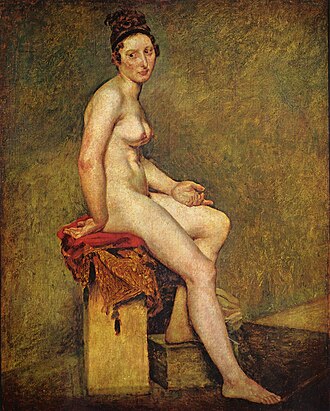 Mademoiselle Rose - Eugène Delacroix (1820s)
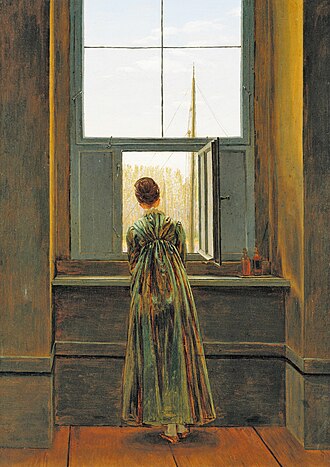 Femme à la fenêtre - Caspar David Friedrich (1822)
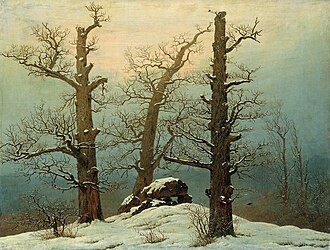 Dolmen sous la neige - Caspar David Friedrich (1807)
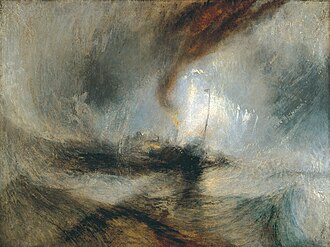 Tempête de neige - Bateau à vapeur au large de l'embouchure d'un port - J. M. W. Turner (1842)
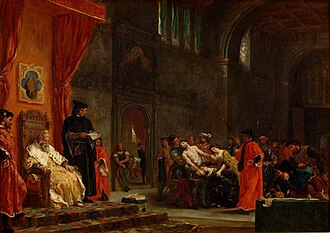 Les Deux Foscari - Eugène Delacroix (1855)
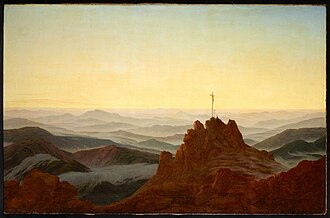 Matin dans les Monts des Géants - Caspar David Friedrich (1810s)
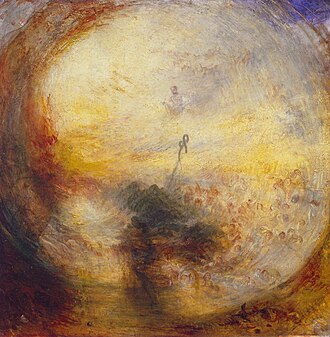 Lumière et Couleur - J. M. W. Turner (1843)
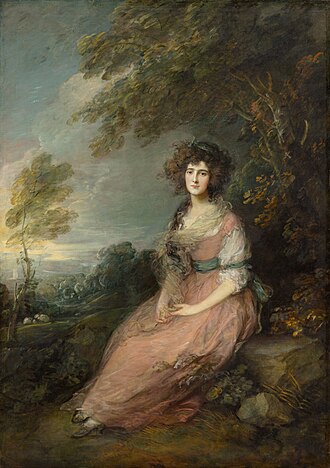 Madame Richard Brinsley Sheridan - Thomas Gainsborough (1785)
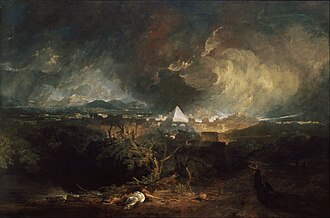 La Cinquième Plaie d'Égypte - J. M. W. Turner (1800)
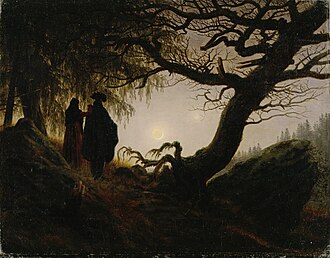 Homme et Femme contemplant la Lune - Caspar David Friedrich (1824)
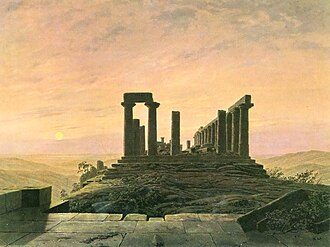 temple de Junon à Agrigente - Caspar David Friedrich (1828)
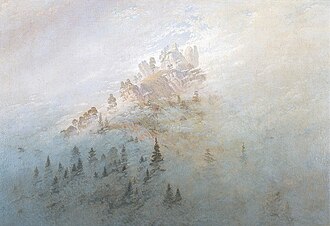 Brume matinale dans les montagnes - Caspar David Friedrich (1808)
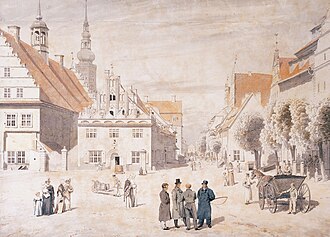 Le Marché de Greifswald - Caspar David Friedrich (1818)
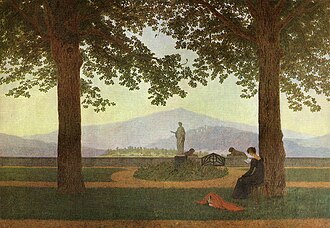 La Terrasse de Jardin - Caspar David Friedrich (1810s)
Envie d'en savoir plus sur romantisme ?
Romanticism was a movement that put feeling, imagination and the power of nature at the heart of art. In painting it gave us stormy seas, lonely figures in vast landscapes and huge, emotional scenes from history, and it still shapes how we picture the sublime today.
What is Romanticism, in simple words?
Romanticism was an artistic and intellectual movement that began in Europe toward the end of the 18th century. It championed subjectivity, imagination and a love of nature, partly as a response to the Age of Enlightenment and the Industrial Revolution. Romantics believed passion and intuition were key to understanding the world, and that beauty should stir a strong emotional response, not just please the eye with correct form.
Why is it called Romanticism?
The word comes from "Roman", which in several European languages meant a novel, a popular story, often a chivalric romance full of adventure and honour. In the 1790s the German critics August Wilhelm and Friedrich Schlegel began to speak of "romantic poetry" as opposed to "classic". The term spread in France through Germaine de Staël's book of 1813, and only from the 1820s did Romanticism clearly know itself by that name.
When and where did it start?
Most agree it peaked from about 1800 to 1850. In the visual arts it first appeared in landscape painting: from as early as the 1760s, British artists began to turn to wilder landscapes, storms and Gothic architecture. Its ideas grew partly from the German Sturm und Drang ("Storm and Stress") movement, and the French Revolution was also a direct influence.
Who were the main painters?
In Germany and England, Caspar David Friedrich and J. M. W. Turner took landscape painting to Romantic extremes, while John Constable stayed closer to the English tradition. William Blake and Samuel Palmer explored mystical feelings. In France the great names are Théodore Géricault and Eugène Delacroix. Francisco Goya in Spain, John Martin in England and the American Hudson River School painters, such as Thomas Cole, Albert Bierstadt and Frederic Edwin Church, are also key.
How can I recognise a Romantic painting?
Look for strong emotion and the power of nature: storms, seas, wild mountains, ruins and Gothic buildings. Friedrich often set a single figure or a cross alone in a huge landscape. Many works show dramatic, even apocalyptic scenes from history or the Bible. The brushwork is often freer, with visible brushstrokes and thick paint, unlike the smooth, self-effacing finish favoured by Neoclassical painters.
How is it different from Neoclassicism?
Neoclassicism held a strong grip on the French academies and delayed Romanticism's arrival there. Neoclassical painting valued classical order and a smooth, hidden brushstroke. Romantic painters favoured emotion, imagination and a looser handling of paint. Some, like Blake and Palmer, largely abandoned classical drawing and proportions. Constable even challenged the old ranking that placed landscape painting low, by painting huge canvases of ordinary countryside.
What did people think of it at the time?
Responses varied. When Girodet painted a Romantic scene from Ossian for Napoleon, his old teacher, the Neoclassical painter David, was puzzled and disappointed and said Girodet was either mad or David no longer understood painting. Géricault's The Raft of the Medusa carried a powerful anti-government message in its day. Delacroix, by contrast, won success at the Paris Salon with several works in the 1820s.
What were the painters trying to do?
They wanted to express feelings and a personal, imaginative world. The movement cherished nature and the supernatural, idealised the past, especially the Middle Ages, and loved the exotic, the mysterious, the heroic and the sublime. Friedrich used lone figures in vast landscapes as images of how short human life is. The Hudson River School painters showed nature as powerful enough to outlast the creations of humans.
Which famous works should I see first?
Start with Géricault's The Raft of the Medusa (1818-19), described as the greatest achievement of Romantic history painting, and Delacroix's Liberty Leading the People (1830). Delacroix's The Massacre at Chios and Death of Sardanapalus are also landmarks. For landscape, look at Friedrich and Turner. In America, try Thomas Cole's series The Voyage of Life and Bierstadt's The Rocky Mountains, Lander's Peak.
Why does Romanticism still matter?
Its influence has lasted to the present day, in art, music, fiction, philosophy, politics and environmentalism. Its love of nature is cited as an influence on today's nature conservation efforts. The huge apocalyptic history paintings of artists like John Martin are often compared with Hollywood special effects. And painters like Friedrich and Blake, forgotten for most of the 19th century, were rediscovered in the 20th.