Tempête de neige - Bateau à vapeur au large de l'embouchure d'un port
J. M. W. Turner · 1842
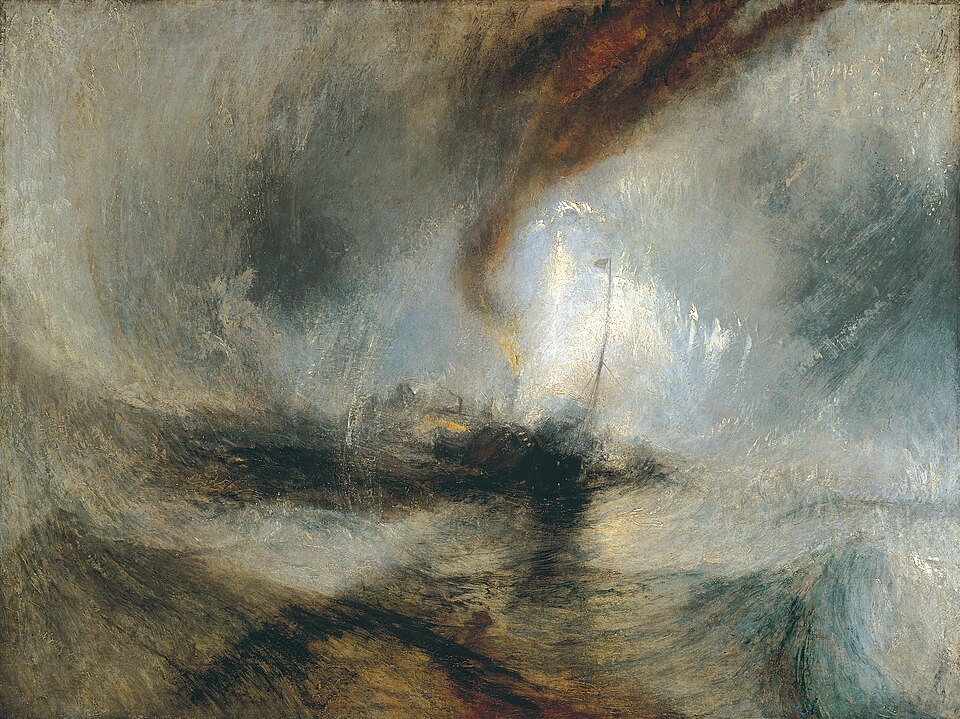
A small paddle steamer fights for its life inside a dark whirl of snow, smoke and sea. Critics called it soapsuds and whitewash. Turner answered that he wished they had been in it.
The story behind the painting
An inscription on the painting says the author was in this storm on the night the Ariel left Harwich. Turner later told a vivid story: he had not painted it to be understood but to show what such a scene was like, and he had got the sailors to lash him to the mast for four hours, not expecting to escape. Modern experts such as Eric Shanes doubt the literal truth of this, partly because no steamer named Ariel leaving Harwich has been found. A paddle steamer once called the Arrow was renamed Ariel by the Admiralty in 1837 and served as the Dover packet. The oil dates from 1842.
What to look for
The boat is almost swallowed by a huge dark vortex of storm. A silvery pale light around the hull is the focal point that pulls you in, while the steamer's smoke spreads across the sky and becomes as abstract as the waves. The palette is nearly monochrome, only a few greys, greens and browns of similar tone, laid in separate layers so the brushstrokes add texture. This is Turner's late style, and it carries techniques he first learned as a watercolourist into oil. Turner reused here the vortex and swirling arcs he had first tried in Hannibal Crossing the Alps thirty years earlier.
Meaning and intent
The painting is considered one of Turner's most accomplished statements of the sublime, the eighteenth century ideal of awe before overwhelming nature. In the previous decade he had painted at least five works about steamboats meeting the elements, and throughout his career he engaged with industry, railways and steam power. Here the new machine is tiny and fragile inside forces no one controls. Turner was unrivalled at showing a natural world unmastered by mankind, and the picture is less about one ship than about how it feels to be inside a storm, with the sea and sky dissolving into one moving mass.
Legacy
Early reviews were largely negative because of the painting's abstract quality, and the soapsuds and whitewash jibe stung Turner, who was heard repeating it. John Ruskin, the leading Victorian critic, defended the work as one of the very grandest statements of sea-motion, mist and light ever put on canvas, and said that if he had to rest Turner's immortality on a single work he would choose this one. Modern historians agree it is a masterpiece; Shanes calls it Turner's finest seascape and possibly the greatest depiction of a storm in all art. It belongs to the Turner collection at Tate Britain in London.
Le saviez-vous ?
- Oil on canvas, 1842, about 91 by 122 cm.
- Turner claimed he was lashed to a mast for four hours to observe the storm.
- Early critics mocked it as soapsuds and whitewash.
- John Ruskin called it among the grandest sea paintings ever made.
À propos de l'artiste
J. M. W. Turner (1775-1851)
romantisme · marine · Tate
Autres œuvres de J. M. W. Turner
 Le Dernier Voyage du Téméraire - J. M. W. Turner (1839)
 Pluie, Vapeur et Vitesse - J. M. W. Turner (1844)
 Le Négrier - J. M. W. Turner (1840)
 Didon construisant Carthage ou l'Ascension de l'Empire carthaginois - J. M. W. Turner (1815)
.jpg) La Bataille de Trafalgar - J. M. W. Turner (1820s)
La Bataille de Trafalgar - J. M. W. Turner (1820s) Pêcheurs en mer - J. M. W. Turner (1796)
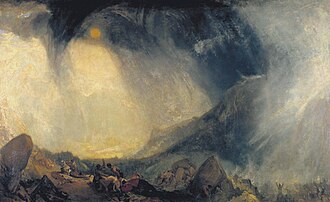 Hannibal traversant les Alpes - J. M. W. Turner (1812)
 Lever de soleil avec monstres marins - J. M. W. Turner (1845)
Œuvres d'artistes liés
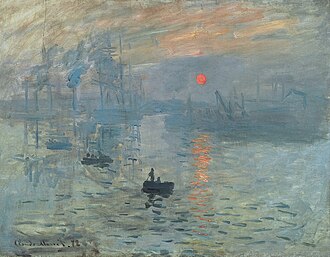 Impression, soleil levant - Claude Monet (1872)
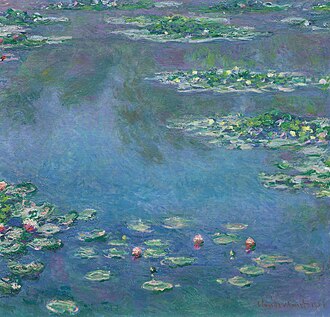 Nymphéas - Claude Monet (1906)
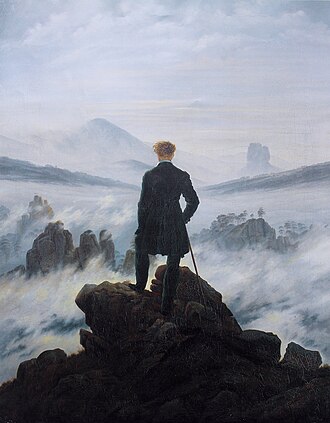 Le Voyageur contemplant une mer de nuages - Caspar David Friedrich (c. 1818)
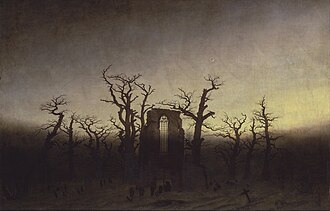 L'Abbaye dans une forêt de chênes - Caspar David Friedrich (1800s)
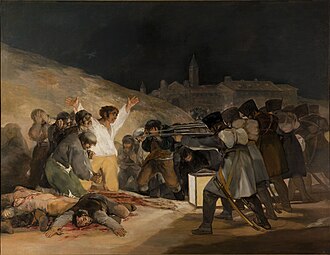 Tres de Mayo - Francisco Goya (1814)
.jpg) La Maja nue - Francisco Goya (1800)
La Maja nue - Francisco Goya (1800)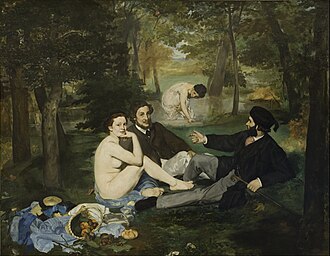 Le Déjeuner sur l'herbe - Édouard Manet (1863)
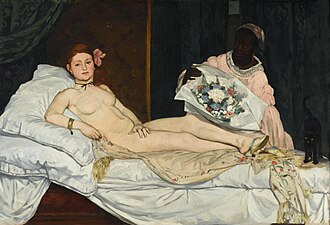 Olympia - Édouard Manet (1863)