La Barque de Dante
Eugène Delacroix · 1822
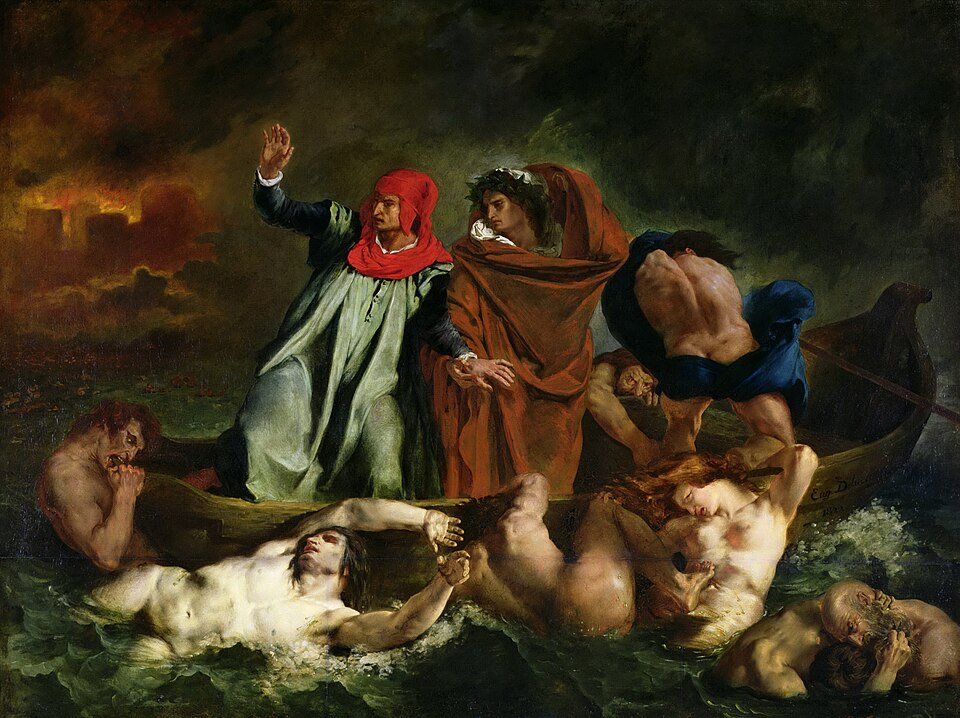
A small boat crosses a burning river while the damned claw at its sides. This was the very first picture Eugène Delacroix ever showed in public, painted in a rush of two and a half months, and it carried him straight into the Louvre's future.
The story behind the painting
Delacroix was short of money in 1821. He earned a little designing machines and drawing political cartoons, and a purchase by the state at the Salon would change everything. He first planned a scene from the Greek War of Independence, a provocative subject, then abandoned it. Dante had long been his passion: he copied lines of Inferno into school notebooks and, during a feverish episode in 1820, drew the very scene he would later paint. By January 16, 1822 he had started the canvas and worked intensively until April 15. His master Guérin thought it should not be exhibited. The Salon accepted it anyway, and because Delacroix could not afford a frame, the painter Antoine-Jean Gros sent it to his own frame maker.
What to look for
The scene comes from Canto VIII of Inferno. Dante and his guide Virgil cross the river Styx in the boat of Phlegyas, and damned souls cling to its sides. Look for the moment Delacroix packed together: bodies surfacing from the water, Dante leaning forward at the screams, and the burning City of Dis beyond. The figures were developed from careful studies, probably of a single model posing in attitudes inspired by Michelangelo and Rubens. Then look closely at the drops of water on the bodies of the damned: they are painted with unmixed, vivid colours set side by side, an innovation that shows Delacroix's early interest in a rational analysis of colour. The canvas is about 189 by 241.5 cm.
Meaning and intent
Delacroix chose a passage that was little known in France, where artists preferred Paolo and Francesca or Ugolino. The literary scholar Karlheinz Stierle observed that he turned the sequential events of the poem into one self-contained moment. At the Salon, reactions split. Gros called it a chastised Rubens, a compliment, and offered to mentor the young painter, who refused to keep an independent path. Adolphe Thiers wrote that the picture stirred a memory of the great masters. Étienne-Jean Delécluze dismissed it as a tartouillade, a picture that sacrificed composition to bold colour. The historian James H. Rubin saw its choices as standing beyond the divide between neoclassicism and Romanticism.
Legacy
The state bought the painting from the Salon and placed it in the Musée du Luxembourg, the museum for living artists, which guaranteed its eventual move to the Louvre, a success that greatly encouraged Delacroix. By 1859 the paint was blistering, and Delacroix insisted on retouching it himself after relining, finishing on February 8, 1861. It entered the Louvre in November 1874, years after his death in 1863, and hangs in the Denon Wing. Later critics still disagreed: Théophile Gautier praised its terror, Maxime Du Camp attacked the pose of Phlegyas, and Charles Baudelaire valued its overall impression above detail. Scholars have also compared its colour with Géricault's The Raft of the Medusa.
Le saviez-vous ?
- Delacroix's first publicly exhibited painting and first Salon entry, 1822.
- Based on Canto VIII of Dante's Inferno.
- Painted in about two and a half months, finished by April 15, 1822.
- In the Louvre since November 1874.
À propos de l'artiste
Eugène Delacroix (1798-1863)
homme · scène de genre · département des peintures du musée du Louvre · nudité · romantisme · barque
Autres œuvres de Eugène Delacroix
 La Liberté guidant le peuple - Eugène Delacroix (1830)
 La Mort de Sardanapale - Eugène Delacroix (1827)
 Scènes des massacres de Scio - Eugène Delacroix (1824)
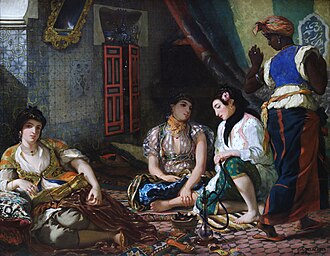 Femmes d'Alger dans leur appartement - Eugène Delacroix (1834)
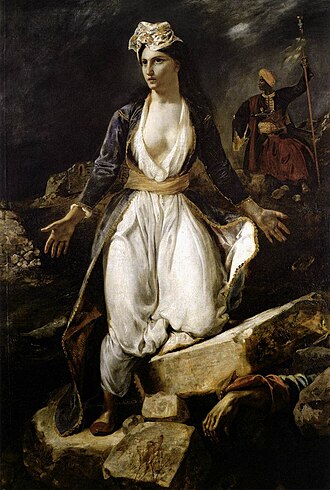 La Grèce sur les ruines de Missolonghi - Eugène Delacroix (1826)
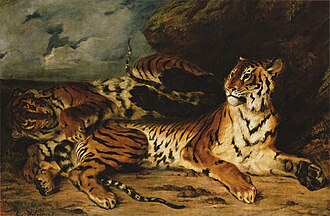 Jeune Tigre jouant avec sa mère - Eugène Delacroix (1830)
.jpg) Dernières Paroles de l’empereur Marc Aurèle - Eugène Delacroix (1844)
Dernières Paroles de l’empereur Marc Aurèle - Eugène Delacroix (1844)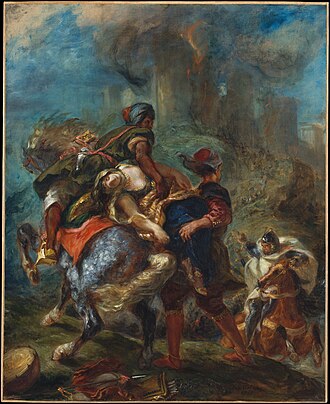 L'Enlèvement de Rebecca - Eugène Delacroix (1846)
Œuvres d'artistes liés
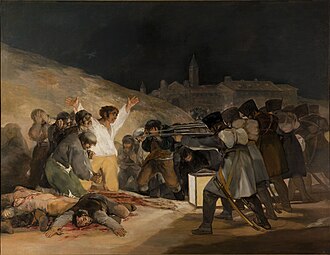 Tres de Mayo - Francisco Goya (1814)
.jpg) La Maja nue - Francisco Goya (1800)
La Maja nue - Francisco Goya (1800)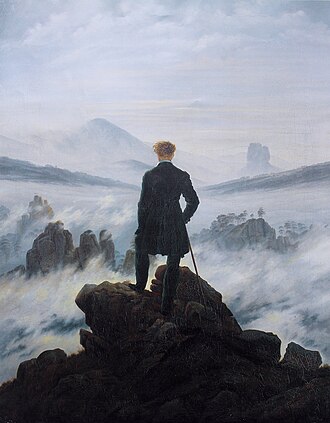 Le Voyageur contemplant une mer de nuages - Caspar David Friedrich (c. 1818)
 L'Abbaye dans une forêt de chênes - Caspar David Friedrich (1800s)
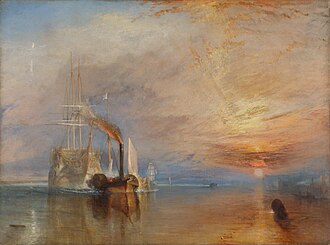 Le Dernier Voyage du Téméraire - J. M. W. Turner (1839)
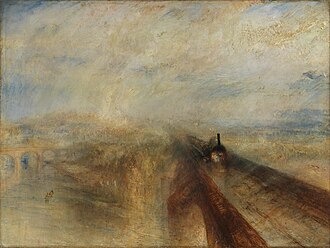 Pluie, Vapeur et Vitesse - J. M. W. Turner (1844)