Hans Holbein the Younger
1497-1543
Hans Holbein the Younger gave us the faces of Erasmus, Thomas More and the court of Henry VIII with a precision that still feels like a held breath. Behind every likeness he hid layers of symbol, wit and paradox.
Origins
Holbein was born in the free imperial city of Augsburg in the winter of 1497-98, son of the painter and draughtsman Hans Holbein the Elder, who ran a large, busy workshop there. He and his older brother Ambrosius followed their father's trade, and the boys even appear beside him in the left panel of his 1504 altarpiece of the Basilica of St. Paul, now in the Staatsgalerie in Augsburg. By 1515 the brothers had moved as journeymen to Basel, a centre of learning and printing, where they were apprenticed to Hans Herbster, the city's leading painter. They found work designing woodcuts and metalcuts for printers. That same year the theologian Oswald Myconius invited them to draw in the margins of a copy of Erasmus's The Praise of Folly, and the sketches already show the young Holbein's wit and humanist leanings.
Life and turning points
In 1517 Holbein and his father painted murals in Lucerne for the merchant Jakob von Hertenstein. Back in Basel in 1519, he joined the painters' guild, became a citizen and married Elsbeth Binsenstock-Schmid, a widow running her late husband's tanning business. He painted murals, altarpieces and portraits, and designed book illustrations for the publisher Johann Froben. His 1523 portraits of Erasmus made him an international name. In 1526, with Erasmus's recommendation, he went to England, where Sir Thomas More welcomed him. He returned to Basel in 1528, but the city was shaken by iconoclasm, and early in 1532 he settled again in England. He worked for Hanseatic merchants at the Steelyard and found favour with Anne Boleyn and Thomas Cromwell. By 1535 he was King's Painter to Henry VIII. He died between October and November 1543.
Style and technique
Holbein worked in a Northern Renaissance style rooted in the Late Gothic tradition of his father, enriched by ideas from Italy, France and the Netherlands and by Renaissance humanism. He probably studied Italian fresco painters such as Andrea Mantegna, whose Triumphs of Caesar he copied in Lucerne. His portraits were famed for their likeness, drawn and painted with rare precision, yet he never stopped at the surface. Objects, inscriptions and details carry hidden meanings, as in his portrait of the merchant Georg Giese, surrounded by exquisitely painted symbols. Woodcut sharpened his sense of space and expression, as in the Dance of Death series. His range was astonishing: monumental murals, stained glass, title pages, twelve decorated alphabets, and designs for jewellery and plate. Art historian Ellis Waterhouse judged his portraiture unsurpassed for sureness, economy, penetration of character and purity of style.
Stories and anecdotes
In Lucerne, city records show that on 10 December 1517 the young Holbein was fined five livres for a street fight with a goldsmith named Caspar, who was fined the same. Sending him to England, Erasmus wrote that the arts were freezing where he lived and the painter was off to pick up some angels. More soon replied that Erasmus's painter was a wonderful artist. In 1527 Holbein and the astronomer Nicholas Kratzer devised a ceiling of planetary signs for Greenwich Palace, which the chronicler Edward Hall likened to a map of the whole Earth. In Basel he painted The Artist's Family, which John Rowlands called one of the most moving portraits in art. Questioned for missing the reformed communion, Holbein replied that he needed to be better informed before approaching the table. Later Erasmus complained that the painter had deceived those he was recommended to.
Legacy
Holbein's art was prized in his own lifetime; the French poet Nicholas Bourbon called him the Apelles of our time. He founded no school, and has been called a great one-off in the history of art. Some of his work was lost after his death, but much was collected, and by the nineteenth century he was ranked among the great masters of portraiture. Recent exhibitions have revealed his versatility, from tiny jewels to monumental frescoes. His influence on book design was significant, and his portraits form a record of the English court in the years when Henry VIII claimed supremacy over the Church. Above all, it is largely through Holbein's eyes that we picture the famous figures of his age, Erasmus and More among them. In Augsburg, the Staatsgalerie still shows the altarpiece in which he appears as a child.
¿Sabías que…?
- He is called the Younger to distinguish him from his father, the Late Gothic painter Hans Holbein the Elder.
- He designed the title page of Martin Luther's Bible.
- Lady with a Squirrel and a Starling was identified only in the early 2000s as a portrait of Anne Lovell.
- In 1531 his last Basel commission was painting two clock faces on a city gate.
Renacimiento nórdico · manierismo · Renacimiento inglés
Artistas relacionados
Pieter Bruegel the Elder · Jerónimo Bosch · Jan van Eyck
Obras de Hans Holbein the Younger
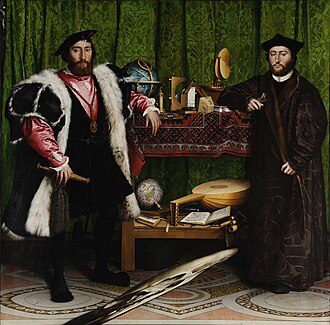 Los embajadores - Hans Holbein the Younger (1533)
 El cuerpo de Cristo en la tumba - Hans Holbein the Younger (1520s)
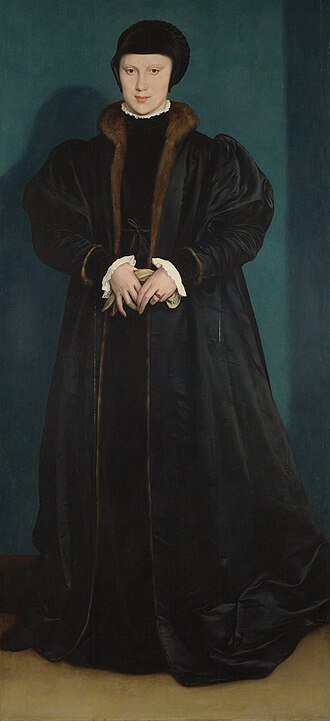 Retrato de Cristina de Dinamarca - Hans Holbein the Younger (1538)
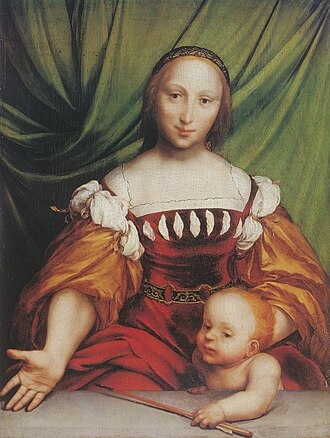 Venus y Cupido - Hans Holbein the Younger (1526)
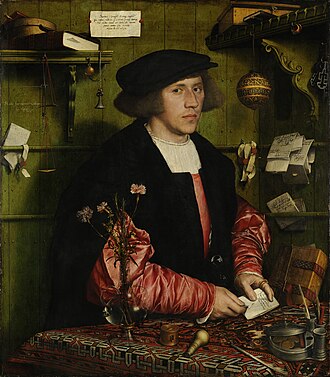 Retrato del mercader Gisze - Hans Holbein the Younger (1532)
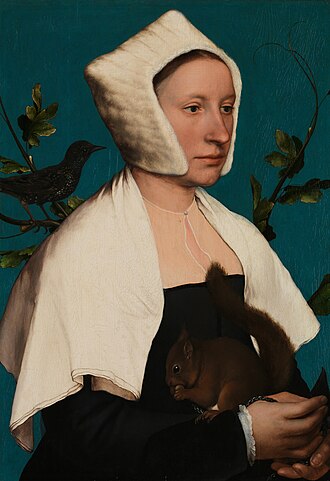 Retrato de una dama con una ardilla y un estornino - Hans Holbein the Younger (1520s)
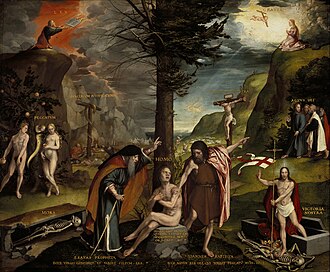 Una alegoría del Antiguo y Nuevo Testamento - Hans Holbein the Younger (1530)
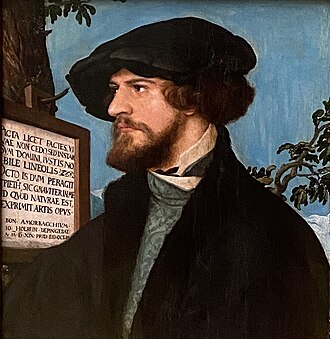 Retrato de Bonifacio Amerbach - Hans Holbein the Younger (1519)
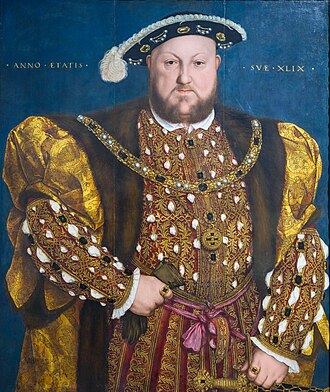 Retrato de Enrique VIII de Inglaterra - Hans Holbein the Younger (1540)
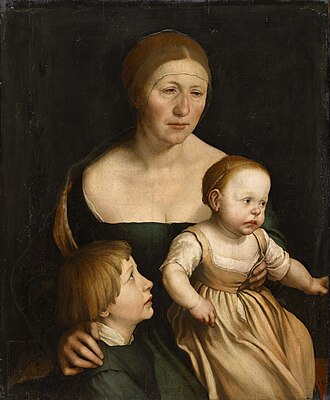 Retrato de la esposa del artista con sus dos hijos - Hans Holbein the Younger (1528)
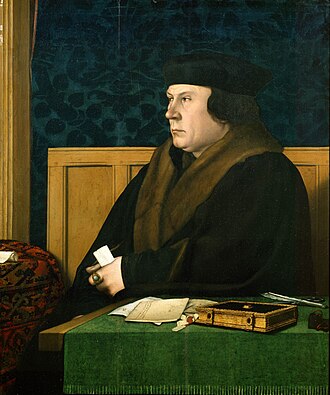 Retrato de Thomas Cromwell - Hans Holbein the Younger (1530s)
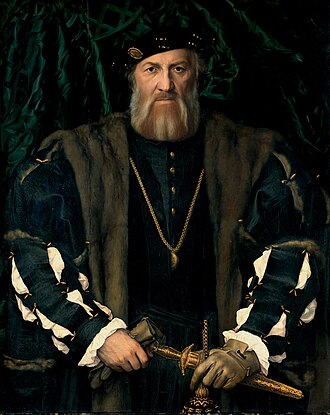 Charles de Solier, conde de Morette - Hans Holbein the Younger (1530s)
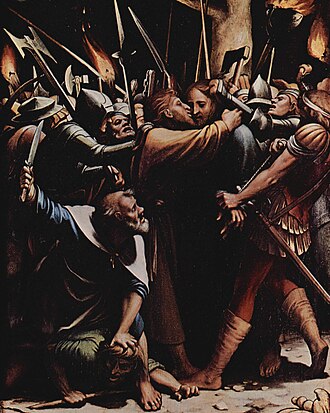 Altar of Passion - Hans Holbein the Younger (1523)
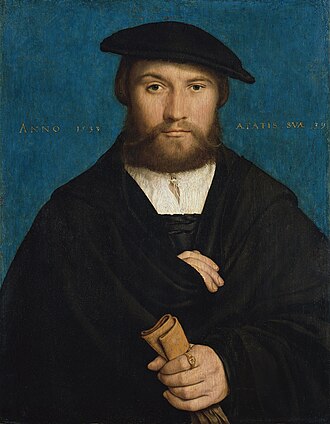 Hermann Hillebrandt de Wedigh - Hans Holbein the Younger (1533)
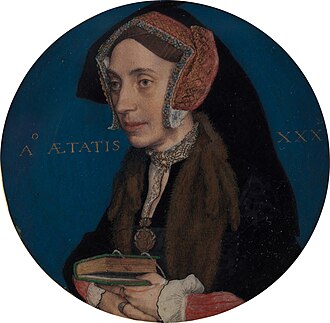 Portrait Miniature of Margaret Roper - Hans Holbein the Younger (1530s)
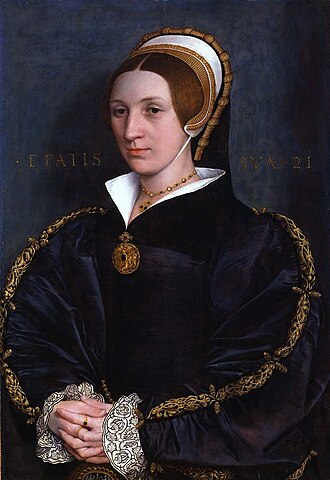 Retrato de una dama, probablemente un miembro de la familia de Cromwell - Hans Holbein the Younger (1540)
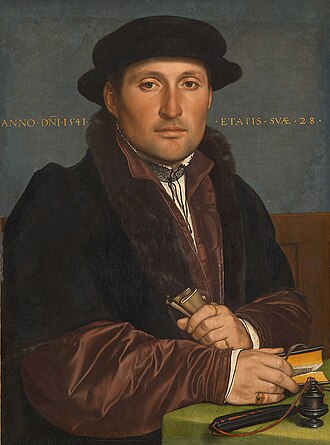 Portrait of a Young Merchant - Hans Holbein the Younger (1541)
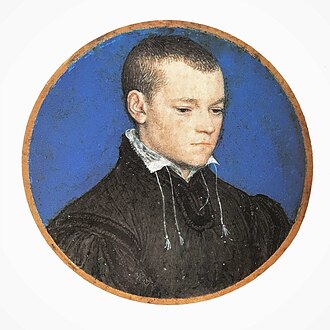 Portrait Miniature of Hans Schwarzwaldt - Hans Holbein the Younger (1540)
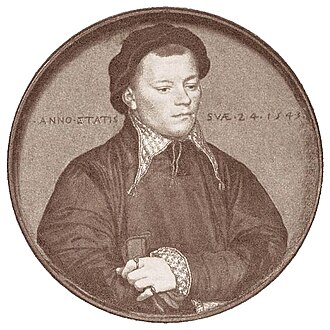 Portrait of Johann von Schwarzwaldt - Hans Holbein the Younger (1543)