Retrato de Bonifacio Amerbach
Hans Holbein the Younger · 1519
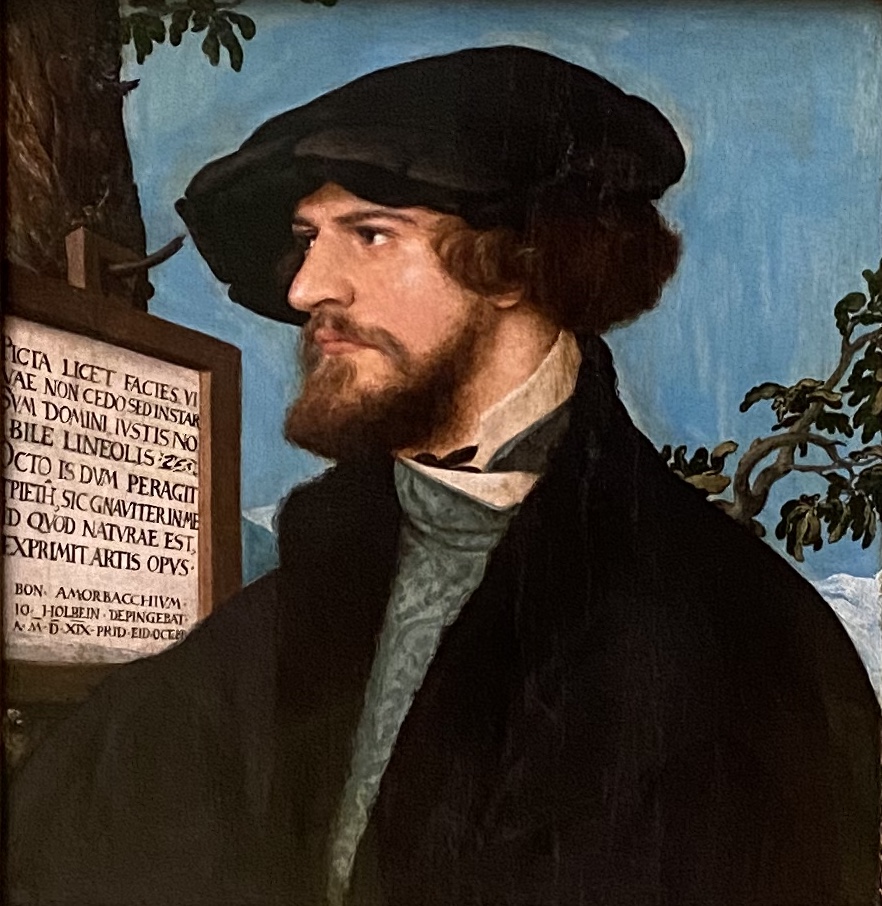
A young scholar in Basel asked Holbein for a small portrait in 1519, in case he did not come home from Avignon. Beside him hangs a Latin verse he wrote himself, drafted again and again until every word was right.
The story behind the painting
In 1519 Bonifacius Amerbach commissioned this portrait so that his family would have a memory of him if he died during his stay in Avignon. Holbein painted him shortly after returning to Basel from Lucerne. The two men worked closely together. Amerbach composed the Latin text on the painting himself, and his drafts survive in the University Library of Basel: the opening words Picta licet appear twenty times on one sheet, and he tried a six-line verse before settling on three phrases. The ink is all one colour, so it is assumed he wrote the drafts in a single day.
What to look for
The panel is small, about 29.9 by 28.3 cm, painted in mixed technique on pine. Amerbach sits close to us, and beside him the inscribed tablet hangs from a tree, which the source describes as a fig tree. Behind him rise snowy mountains. Look closely at the text: the date 14 October 1519 refers to Amerbach's birthday. Infrared reflectography has shown that his draft spoke of COLORIBVS, colours, but the painted text says LINEOLIS, lines, a change that researchers believe Amerbach encouraged Holbein to make. Holbein signed the painting with his full name.
Meaning and intent
This was the first time Holbein included a panegyric text, a verse of praise, in a portrait, and he later combined such texts with an image of a fig tree again. The portrait was meant as a keepsake against the risk of death far from home, and the care Amerbach put into every word shows how much he wanted it to speak for him. A text drafted for a second portrait, without a beard, was also found, but it is not known whether such a painting was ever made.
Legacy
The portrait is one of Holbein's earliest paintings as a member of the painters guild of Basel, which is why he was allowed to sign it with his full name. It became part of the Amerbach Cabinet, the family collection that the city and the University of Basel bought in its entirety in 1666. It was later shown in two places near Basel Minster, and since 1936 it has hung in the new building of the Kunstmuseum Basel at St. Alban Graben, where it remains today.
¿Sabías que…?
- Commissioned by Bonifacius Amerbach in 1519.
- Amerbach wrote the Latin verse on the painting himself.
- Holbein's first portrait with a panegyric text.
- Part of the Amerbach Cabinet, bought by Basel in 1666.
Sobre el artista
Hans Holbein the Younger (1497-1543)
retrato · Museo de Arte de Basilea
Más obras de Hans Holbein the Younger
 Los embajadores - Hans Holbein the Younger (1533)
 El cuerpo de Cristo en la tumba - Hans Holbein the Younger (1520s)
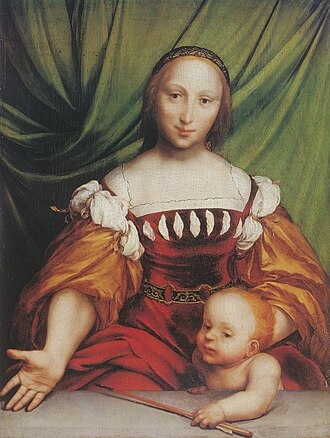 Venus y Cupido - Hans Holbein the Younger (1526)
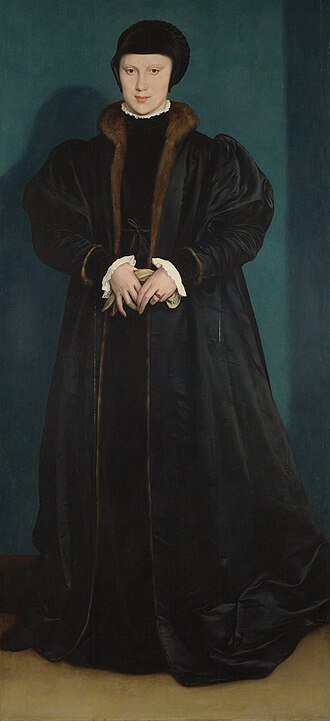 Retrato de Cristina de Dinamarca - Hans Holbein the Younger (1538)
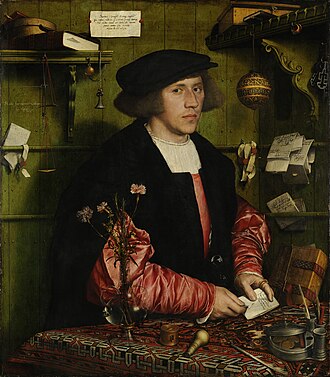 Retrato del mercader Gisze - Hans Holbein the Younger (1532)
 Retrato de una dama con una ardilla y un estornino - Hans Holbein the Younger (1520s)
 Una alegoría del Antiguo y Nuevo Testamento - Hans Holbein the Younger (1530)
 Retrato de Thomas Cromwell - Hans Holbein the Younger (1530s)
Obras de artistas relacionados
 Cazadores en la nieve - Pieter Bruegel the Elder (1565)
 Los proverbios flamencos - Pieter Bruegel the Elder (1551)
 El jardín de las delicias - Hieronymus Bosch
 La nave de los locos - Hieronymus Bosch (1500s)
 Retrato de Arnolfini y su esposa - Jan van Eyck (1434)
 Políptico de Gante - Jan van Eyck (1432)