Hermann Hillebrandt de Wedigh
Hans Holbein the Younger · 1533
%20(1497-98%20-%201543)%20-%20Hermann%20Hillebrandt%20de%20Wedigh%20-%20586B%20-%20Gem%C3%A4ldegalerie.jpg)
A merchant from Cologne looks straight at you, one eyebrow raised, one side of his face sweet and the other sad. Holbein painted every hair of his beard, yet we still do not know his first name for certain.
The story behind the painting
Holbein painted this small portrait in oil and tempera on oak in 1533, during his years in London. The sitter belongs to the Wedigh family of Cologne and is thought to have been a merchant of the Steelyard, the London base of German traders. Several members of this patrician family traded there from 1480. The family is identified by the coat of arms on his signet ring, a chevron with three willow leaves, granted by Maximilian I to Heinrich von Wedigh on 18 July 1503. A gold inscription on the blue background reads ANNO 1533, ÆTATIS SVÆ 39: in the year 1533, aged 39.
What to look for
He faces us directly, left hand holding buff-coloured gloves, right hand half hidden in a heavy dark-brown cloak with a black velvet collar, a gesture Holbein repeated in his later portrait of the Earl of Surrey. His white shirt, partly open, is tied with long strings through a white button. He wears the flat black cap of the Steelyard merchants. Hair and beard are light brown, the separate hairs indicated with almost microscopic care. His blue eyes differ: the right one is larger, its eyebrow raised. The signet ring on his index finger is enamelled red, white, black and green.
Meaning and intent
The portrait has been called one of the finest and most sympathetic ever painted by Holbein. Its quiet drama lies in the face: the right side shows great charm and sweetness, the left appears sadder and more forbidding. A related portrait, Hermann von Wedigh III of 1532 in the Metropolitan Museum, shows the same enlarged right eye, the same raised brow and the same arms on a signet ring. Perhaps, one view holds, Holbein exaggerated the eye in both to invite close comparison, or to stress a family trait.
Legacy
Unlike Holbein's other Steelyard portraits, this one and that of Derich Born carry no letters or merchant's mark naming the sitter. He is traditionally called Hermann Hillebrandt Wedigh, but only his family and age can be established; he may be an undocumented brother or cousin of Hermann III, and the name is by no means certain. The painting belonged to the Counts von Schönborn in Vienna from at least 1746 until 1865, then to the banker Barthold Suermondt in Aachen until 1874. It is now in the Gemäldegalerie, Berlin.
¿Sabías que…?
- Painted in 1533; the sitter was 39.
- A member of the Wedigh family of Cologne, likely a Steelyard merchant.
- His first name, Hermann Hillebrandt, is uncertain.
- In the Gemäldegalerie, Berlin.
Sobre el artista
Hans Holbein the Younger (1497-1543)
retrato · Gemäldegalerie de Berlín
Más obras de Hans Holbein the Younger
 Los embajadores - Hans Holbein the Younger (1533)
 El cuerpo de Cristo en la tumba - Hans Holbein the Younger (1520s)
 Retrato de Cristina de Dinamarca - Hans Holbein the Younger (1538)
 Retrato del mercader Gisze - Hans Holbein the Younger (1532)
 Una alegoría del Antiguo y Nuevo Testamento - Hans Holbein the Younger (1530)
01.jpg) Retrato de Thomas Cromwell - Hans Holbein the Younger (1530s)
Retrato de Thomas Cromwell - Hans Holbein the Younger (1530s)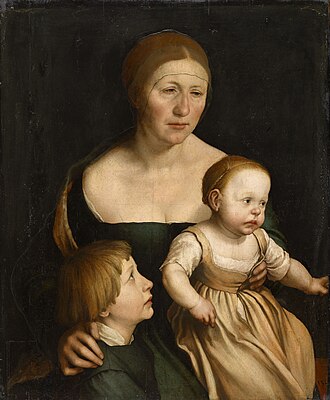 Retrato de la esposa del artista con sus dos hijos - Hans Holbein the Younger (1528)
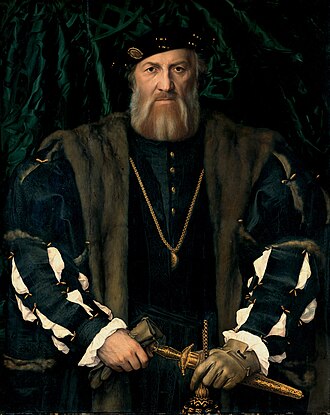 Charles de Solier, conde de Morette - Hans Holbein the Younger (1530s)
Obras de artistas relacionados
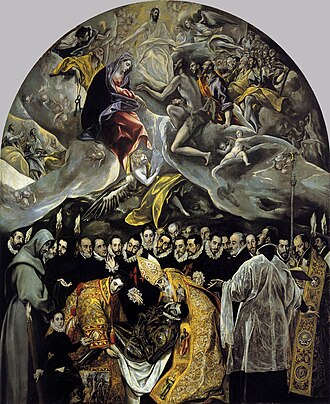 El entierro del Conde de Orgaz - El Greco (1586)
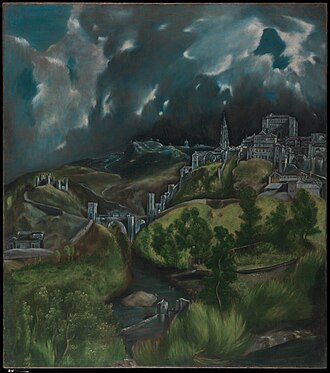 Vista de Toledo - El Greco (1596)
.jpg) Venus de Urbino - Titian (1538)
Venus de Urbino - Titian (1538) La Asunción de la Virgen - Titian (1510s)
 La cena de Emaús - Caravaggio (1601)
 La vocación de San Mateo - Caravaggio (1609)