Portrait of a Young Merchant
Hans Holbein the Younger · 1541
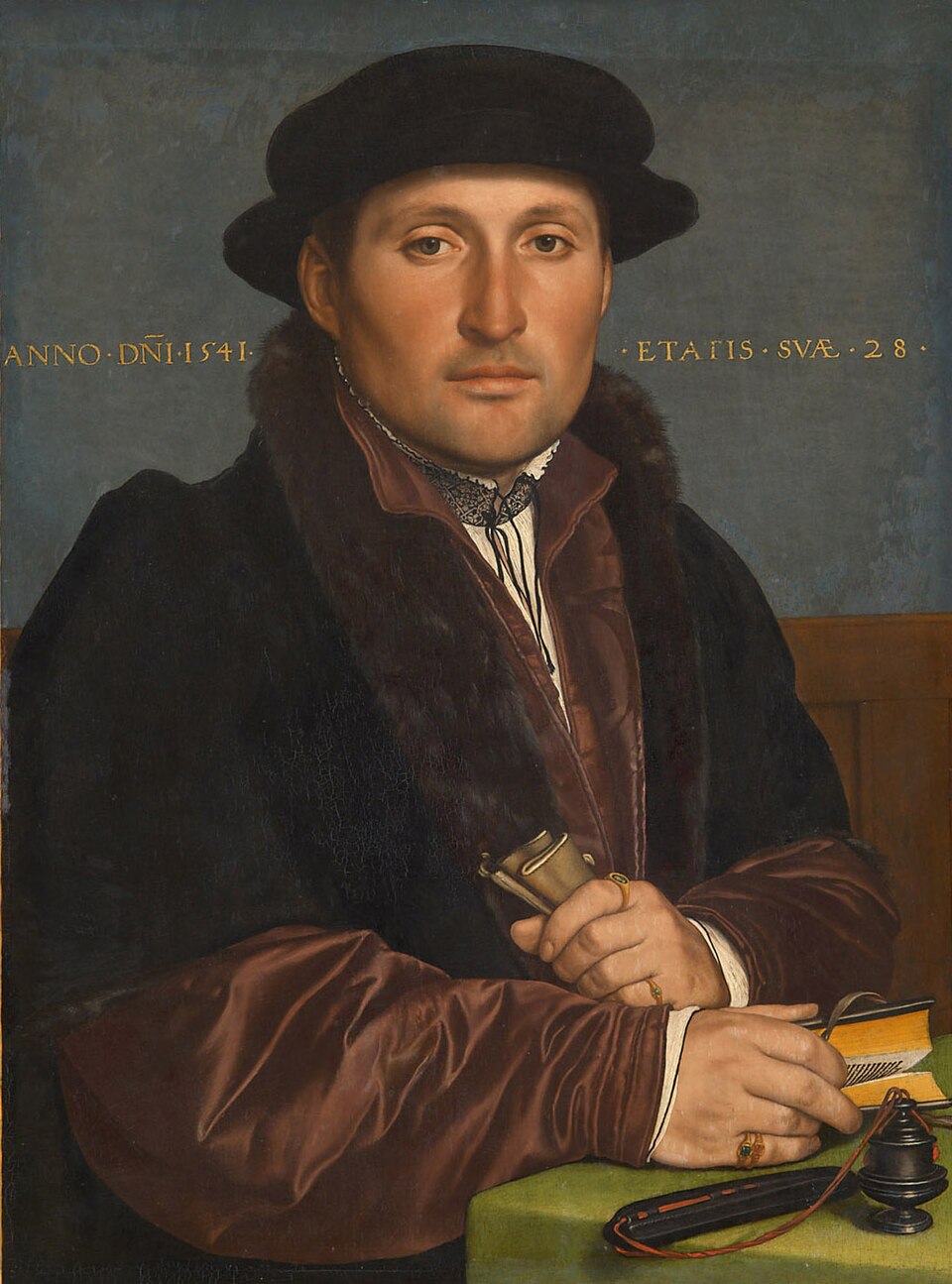
A young man of 28 looks straight at us, one finger slipped into a book as if we interrupted his reading. Holbein painted him in 1541 with grey-blue eyes of extraordinary vividness. Nobody knows who he was.
The story behind the painting
Holbein painted this oil on oak in 1541, late in his career, and it is counted among the finest portraits of those years. A gold inscription at head height, ANNO DNI 1541, ETATIS SVAE 28, gives the year and the sitter's age, 28. His name is not recorded, and there is no coat of arms or merchant's mark to identify him. Paul Ganz assumed he was a German merchant, probably of the Steelyard in London, but John Rowlands and others note he could just as well be English.
What to look for
He is seated at a table, half length and less than life size, body turned right, face toward us. He wears a brown silk doublet, a black cloak with a brown fur collar and lining, and a black cap. His white collar is embroidered with blackwork and tied with black laces. Grey gloves are in his left hand; his right forefinger is tucked inside a gilt edged book on the green tablecloth, beside an inkstand with a red cord. An intaglio ring sits on his left index finger. Behind him are a blue-grey wall and wooden panelling.
Meaning and intent
His grey-blue eyes have been described as having a far seeing, visionary expression, rendered with extraordinary vividness and subtlety. His direct gaze recalls Holbein's portrait of Derek Born of 1533. Holbein reused motifs from earlier works: the panelling, book and green tablecloth from his Thomas Cromwell, a hand like that of Hermann von Wedigh, and the pointed ear, ring and gloves of an Unknown Gentleman. A man with no name thus becomes a summary of how Holbein built a likeness: quiet objects, a calm pose, and a face that seems about to speak.
Legacy
The portrait was in the collection of Archduke Leopold William by 1659 and passed to his nephew Leopold I. It is now in the Kunsthistorisches Museum in Vienna. Its figure was so admired that others borrowed it. An old copy is in Palermo. A pastiche in Philadelphia joins this body to the head of Duke Antony of Lorraine, a portrait by Christoph Amberger in Kraków adds an old bearded head, and another painting, dated 1530, puts a different young face on the same body.
¿Sabías que…?
- Painted in 1541; the sitter was 28.
- The young man is unidentified.
- In the Kunsthistorisches Museum, Vienna.
- Its body was copied onto other heads by later painters.
Sobre el artista
Hans Holbein the Younger (1497-1543)
retrato · varón · Museo de Historia del Arte de Viena
Más obras de Hans Holbein the Younger
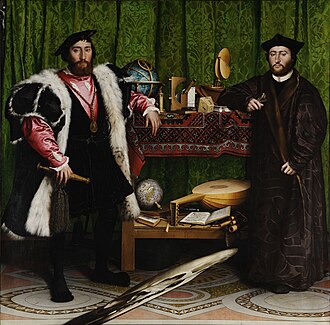 Los embajadores - Hans Holbein the Younger (1533)
 El cuerpo de Cristo en la tumba - Hans Holbein the Younger (1520s)
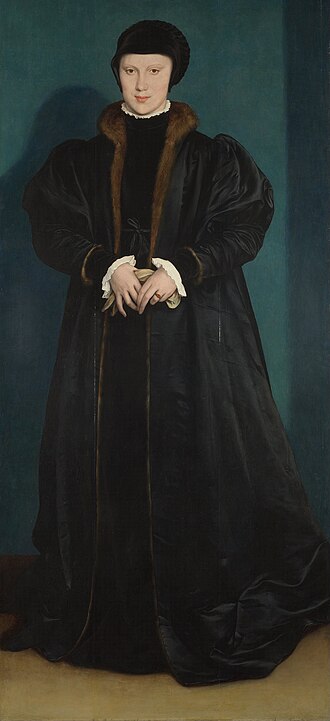 Retrato de Cristina de Dinamarca - Hans Holbein the Younger (1538)
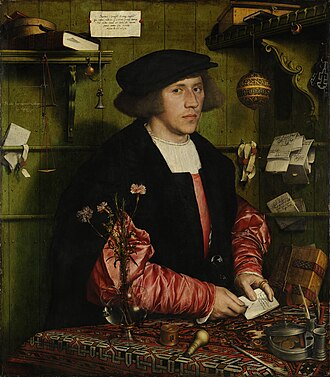 Retrato del mercader Gisze - Hans Holbein the Younger (1532)
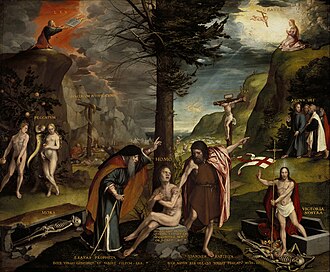 Una alegoría del Antiguo y Nuevo Testamento - Hans Holbein the Younger (1530)
01.jpg) Retrato de Thomas Cromwell - Hans Holbein the Younger (1530s)
Retrato de Thomas Cromwell - Hans Holbein the Younger (1530s)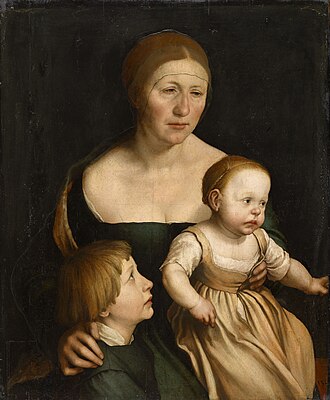 Retrato de la esposa del artista con sus dos hijos - Hans Holbein the Younger (1528)
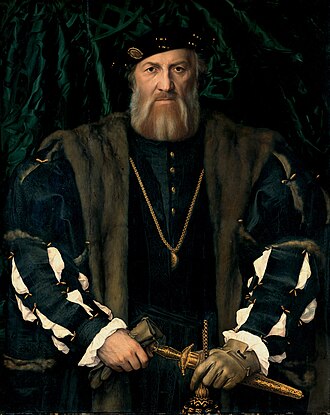 Charles de Solier, conde de Morette - Hans Holbein the Younger (1530s)
Obras de artistas relacionados
 El entierro del Conde de Orgaz - El Greco (1586)
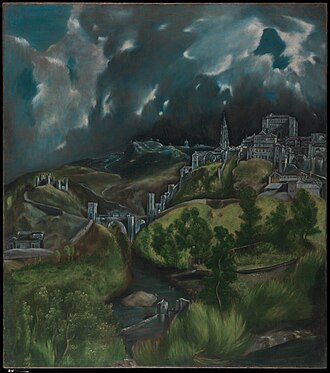 Vista de Toledo - El Greco (1596)
.jpg) Venus de Urbino - Titian (1538)
Venus de Urbino - Titian (1538)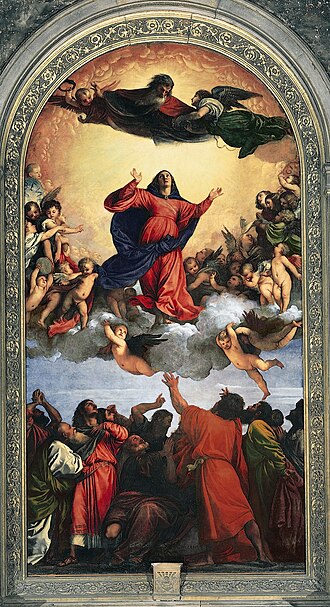 La Asunción de la Virgen - Titian (1510s)
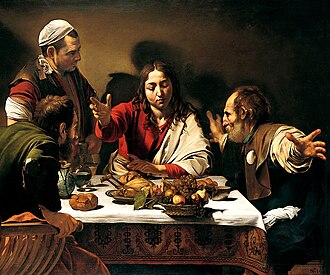 La cena de Emaús - Caravaggio (1601)
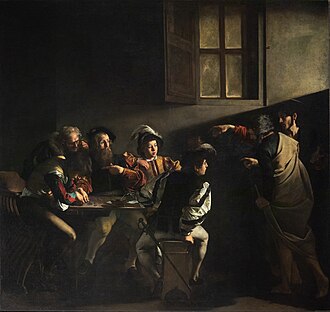 La vocación de San Mateo - Caravaggio (1609)