Retrato de Thomas Cromwell
Hans Holbein the Younger · 1530s
01.jpg)
Henry VIII's chief minister sits behind a green table, gripping a document, his eyes narrow and his mouth set. Holbein's original was lost after Cromwell's fall and execution; this panel in New York is the best of three surviving versions.
The story behind the painting
Thomas Cromwell, a blacksmith's son from Putney, rose through the service of Cardinal Wolsey to become chief minister to Henry VIII from 1532 to 1540. Holbein became a court painter in 1532 under the patronage of Cromwell and Anne Boleyn, and was King's Painter by 1535. Cromwell, alert to the power of images, commissioned this portrait, usually dated 1532 to 1534, when he was about 48 and Master of the Jewel House. Art historians assume he asked to be shown modestly, unlike Holbein's lavish court portraits. When Cromwell fell and was beheaded on 28 July 1540, his belongings were seized, and the original panel was most likely destroyed or sold.
What to look for
Cromwell sits on a bench, placed low and deep in the picture, while the table pushes forward toward us. He wears a black fur-lined coat and black hat, and tightly grips a legal document. On his left hand is a patterned gold ring with a large green stone. The green cloth on the table may refer to the Board of Green Cloth. On it lie a quill, scissors, a leather bag and a devotional book, identified as Cromwell's own Book of Hours; his copy was found at Trinity College, Cambridge in 2023. An inscription naming him Master of the Jewel House was removed from the Frick panel in an early twentieth century restoration.
Meaning and intent
We know nothing of Holbein's own thoughts on the picture. Cromwell is given due respect but looks sour and stiff, his eyes narrowly set. For a long time this was called the least flattering, most mocking of Holbein's English portraits, matching Cromwell's poor reputation until it was revised in the 1960s; today he is seen as a reformer and a supremely able politician. Yet the portrait has also been called a softened version of the man. At the Frick it hangs opposite Holbein's Thomas More, and Henry Clay Frick romantically imagined the saint and the monster, united by Holbein and chance, now facing each other.
Legacy
Three versions survive: the Frick panel in New York, oil on oak, 78.1 by 64.1 cm and considered the best; an early seventeenth century copy in the National Portrait Gallery, London; and one in the Chichester Constable collection in Yorkshire. Whether the Frick panel is by Holbein is contested. Technical study in 1952 and cleaning in 1966 pointed to a less skilled workshop hand, and Roy Strong believes all three are copies. John Rowlands, however, read alterations revealed by X-ray as evidence of Holbein's own hand, and Stephanie Buck agrees. Wikidata dates the work only to the 1530s, and Wikipedia gives c. 1532 to 1533 for the Frick copy.
¿Sabías que…?
- Commissioned by Cromwell, usually dated 1532 to 1534.
- The original was probably destroyed or sold after his execution in 1540.
- Three versions survive; the Frick panel is the best preserved.
- Its attribution to Holbein himself is disputed.
Sobre el artista
Hans Holbein the Younger (1497-1543)
Más obras de Hans Holbein the Younger
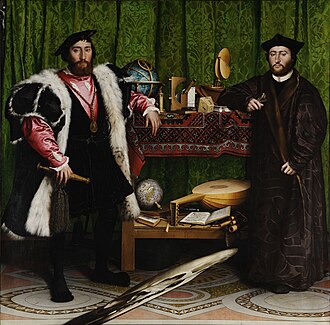 Los embajadores - Hans Holbein the Younger (1533)
 El cuerpo de Cristo en la tumba - Hans Holbein the Younger (1520s)
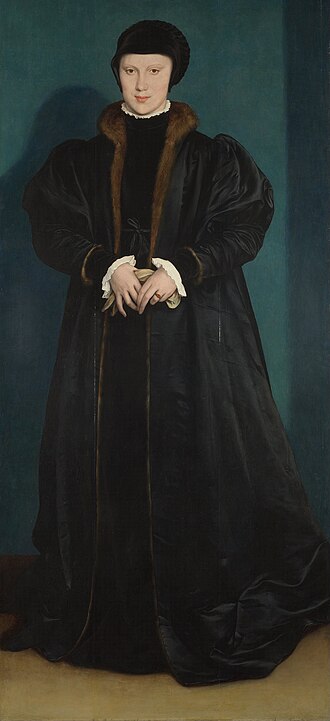 Retrato de Cristina de Dinamarca - Hans Holbein the Younger (1538)
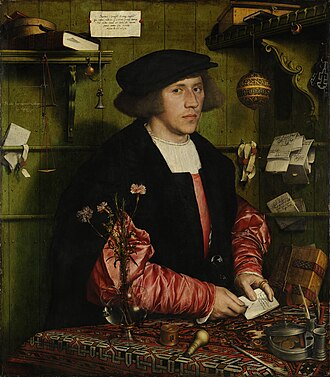 Retrato del mercader Gisze - Hans Holbein the Younger (1532)
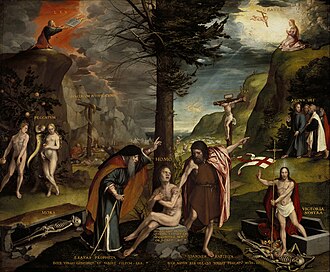 Una alegoría del Antiguo y Nuevo Testamento - Hans Holbein the Younger (1530)
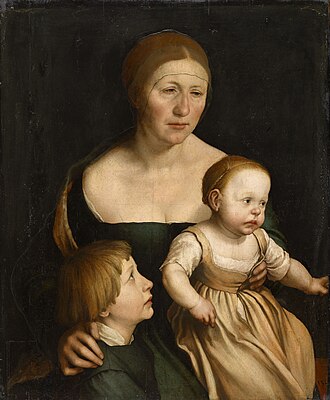 Retrato de la esposa del artista con sus dos hijos - Hans Holbein the Younger (1528)
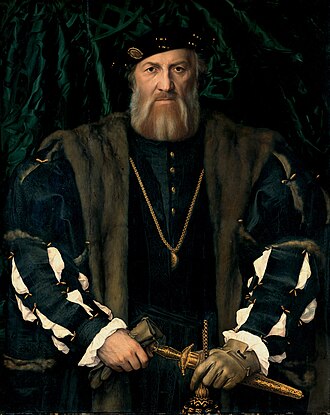 Charles de Solier, conde de Morette - Hans Holbein the Younger (1530s)
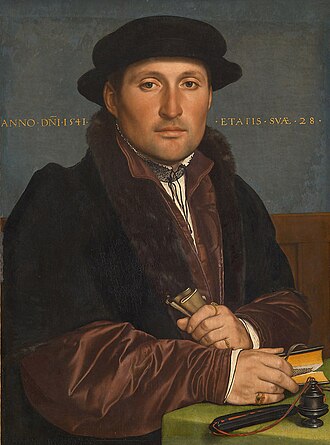 Portrait of a Young Merchant - Hans Holbein the Younger (1541)
Obras de artistas relacionados
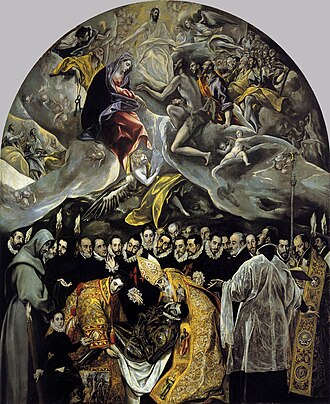 El entierro del Conde de Orgaz - El Greco (1586)
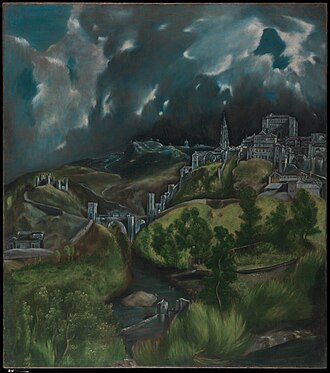 Vista de Toledo - El Greco (1596)
.jpg) Venus de Urbino - Titian (1538)
Venus de Urbino - Titian (1538)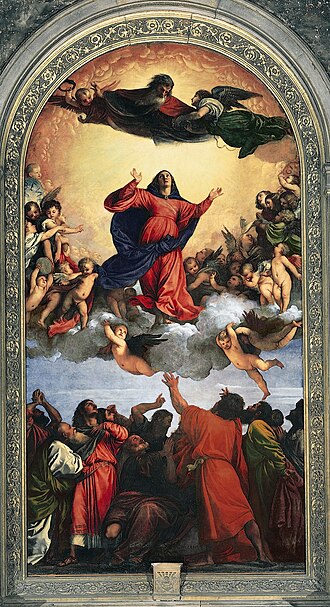 La Asunción de la Virgen - Titian (1510s)
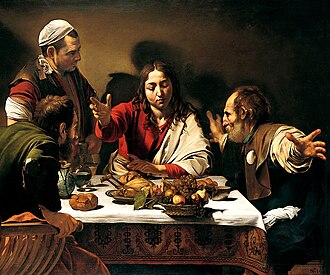 La cena de Emaús - Caravaggio (1601)
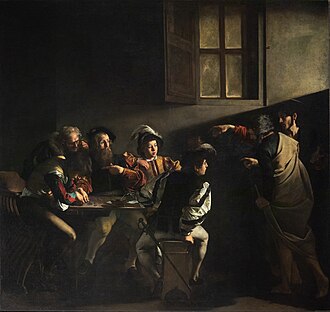 La vocación de San Mateo - Caravaggio (1609)