The Transfiguration
Peter Paul Rubens · 1605
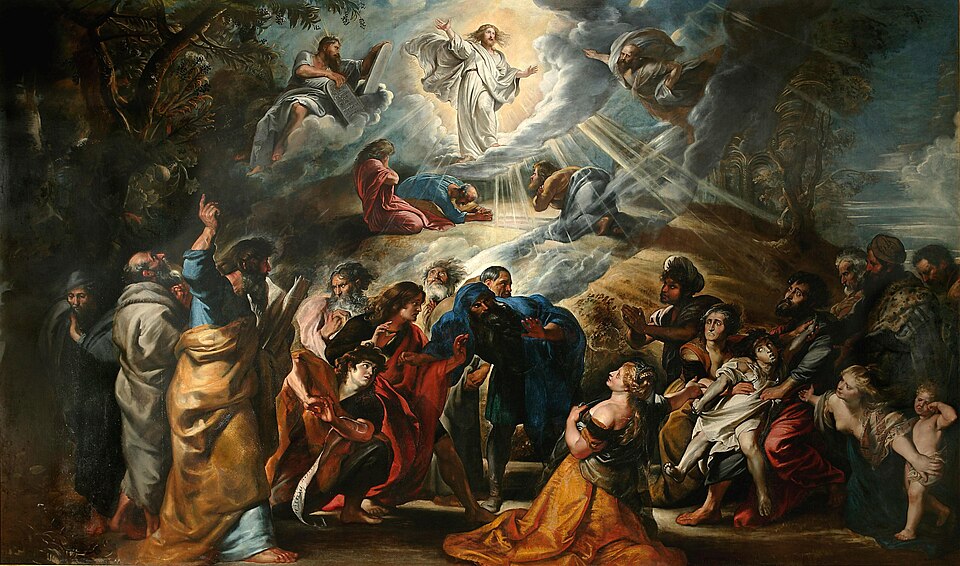
Light seems to burst from Christ on the mountain while below a possessed boy writhes among giant apostles. Rubens painted this huge canvas for a Jesuit church in Mantua, and it is counted as his first masterpiece.
The story behind the painting
At the end of 1604, Vincenzo I Gonzaga, Duke of Mantua, commissioned Rubens to decorate the chapel of the Jesuit church of the Most Holy Trinity in Mantua. The Transfiguration hung to the right of the altar, with The Gonzaga Family Adoring the Trinity above and The Baptism of Christ on the left. Rubens painted it without a preparatory drawing. The church decoration was inaugurated in June 1605 and is considered Rubens's first masterpiece. The French Wikipedia article dates the canvas 1604 to 1605, while Wikidata gives 1605. Today it is in the Museum of Fine Arts of Nancy, and it is enormous, 407 by 670 cm.
What to look for
Follow the light. It seems to spring from Christ, who stands between Moses and Elijah while the apostles John, James and Peter prostrate themselves at his feet, and from there the eye travels down to the possessed child. The colours are strongly contrasted. The scene's theatre comes from the child's exaggerated pose and from the gigantic apostles on the left. Édouard Michel praised the painterly richness, especially the play of light on Mary Magdalene and the shadows of the trees. Restoration in the late 1980s revealed several pentimenti, the painter's changes of mind, yet the execution was quick with few hesitations.
Meaning and intent
Rubens took his idea from Raphael's Transfiguration, notably the choice to show both the Transfiguration and the healing of a possessed child in one work. In his travel book on Italy, Joseph Jérôme Lefrançois de Lalande remarked that Rubens linked the two episodes much better than Raphael did. His innovations were the horizontal format and a Baroque style: powerful figures, sensual women, vehement men, with warm vigorous colour inspired by sixteenth-century Venice, especially Titian, Tintoretto and Veronese. E. Chamonard-Etienne reads the contrast of light and shadow as divine nature, a light so blinding that it becomes darkness, while François Robert suggests Rubens drew on falling meteorites to show the divine breaking into the world.
Legacy
In 1798 Bonaparte's troops entered Mantua and the painting was seized for the Central Museum of the Arts in Paris. The state sent it to Nancy in 1803, and the transfer of ownership was completed only in 2008. During the Second World War it was damaged by being folded. In the late 1980s it was restored for two months: cleaned with distilled water, old repaints scraped away, old fillers and glue removed. Because of its size the work was done in Nancy rather than at the Louvre, funded by the city and the state, and it renewed public attention for this early Rubens.
Did you know?
- Commissioned at the end of 1604 by Vincenzo I Gonzaga for a Jesuit church in Mantua.
- Inspired by Raphael's Transfiguration.
- Seized by French troops in 1798 and sent to Nancy in 1803.
- Restored in Nancy in the late 1980s.
About the artist
Peter Paul Rubens (1577-1640)
More by Peter Paul Rubens
.jpg) The Elevation of the Cross - Peter Paul Rubens (1609)
The Elevation of the Cross - Peter Paul Rubens (1609)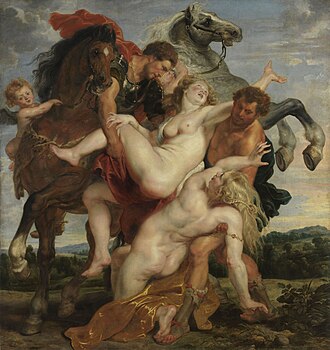 The Rape of the Daughters of Leucippus - Peter Paul Rubens (1618)
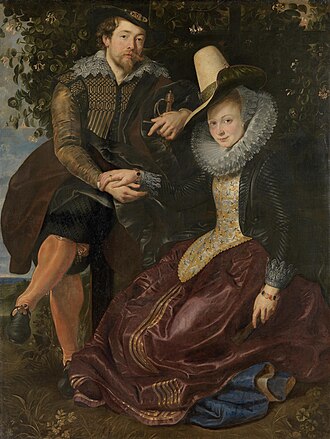 Rubens and Isabella Brant in the honeysuckle bower - Peter Paul Rubens (1600s)
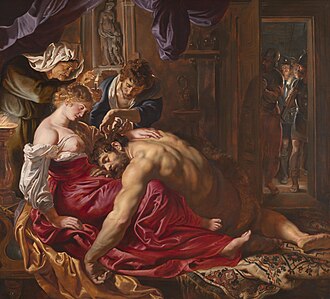 Samson and Delilah - Peter Paul Rubens (1600s)
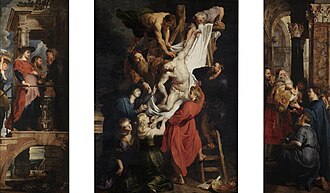 The Descent from the Cross - Peter Paul Rubens (1611)
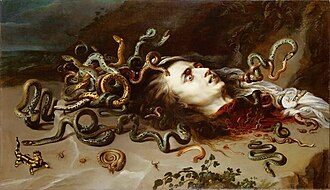 Head of Medusa - Peter Paul Rubens (1618)
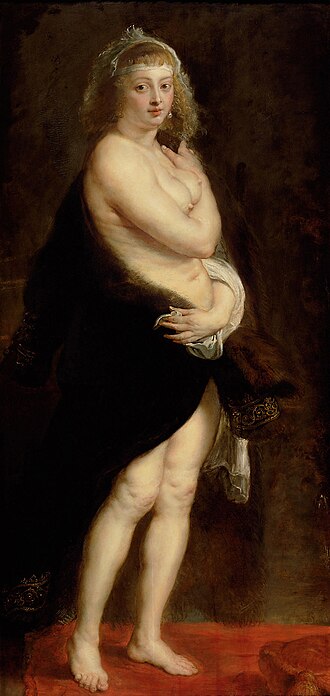 Helena Fourment in a Fur Robe - Peter Paul Rubens (1638)
.jpg) The Garden of Love - Peter Paul Rubens (1632)
The Garden of Love - Peter Paul Rubens (1632)
Paintings by related artists
 The Starry Night - Vincent van Gogh (1889)
.jpg) Café Terrace at Night - Vincent van Gogh (1888)
Café Terrace at Night - Vincent van Gogh (1888)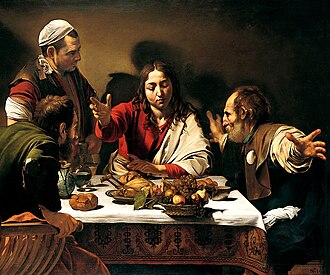 Supper at Emmaus - Caravaggio (1601)
 The Calling of Saint Matthew - Caravaggio (1609)
 Las Meninas - Diego Velázquez (1656)
 The Surrender of Brea - Diego Velázquez (1635)
%20-%20Google%20Art%20Project.jpg) Charles I in Three Positions - Anthony van Dyck (1635)
Charles I in Three Positions - Anthony van Dyck (1635)%20with%20M.%20de%20St%20Antoine%20-%20Google%20Art%20Project.jpg) Charles I (1600-1649) with M. de St Antoine - Anthony van Dyck (1636)
Charles I (1600-1649) with M. de St Antoine - Anthony van Dyck (1636) The Night Watch - Rembrandt van Rijn (1642)
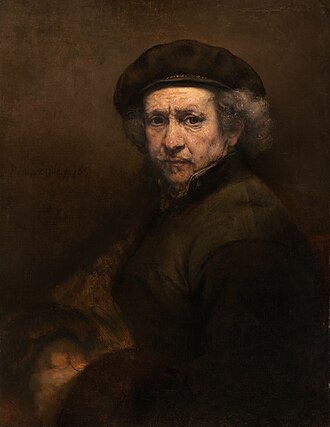 Self-Portrait - Rembrandt van Rijn (1659)
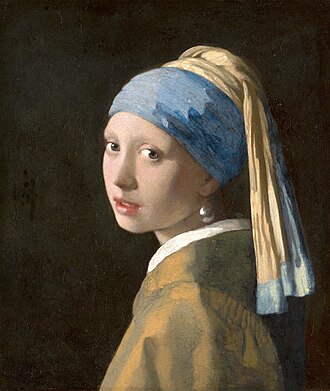 Girl with a Pearl Earring - Johannes Vermeer (1665)
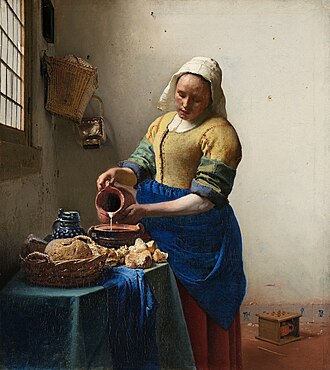 The Milkmaid - Johannes Vermeer (c. 1658)