Head of Medusa
Peter Paul Rubens · 1618
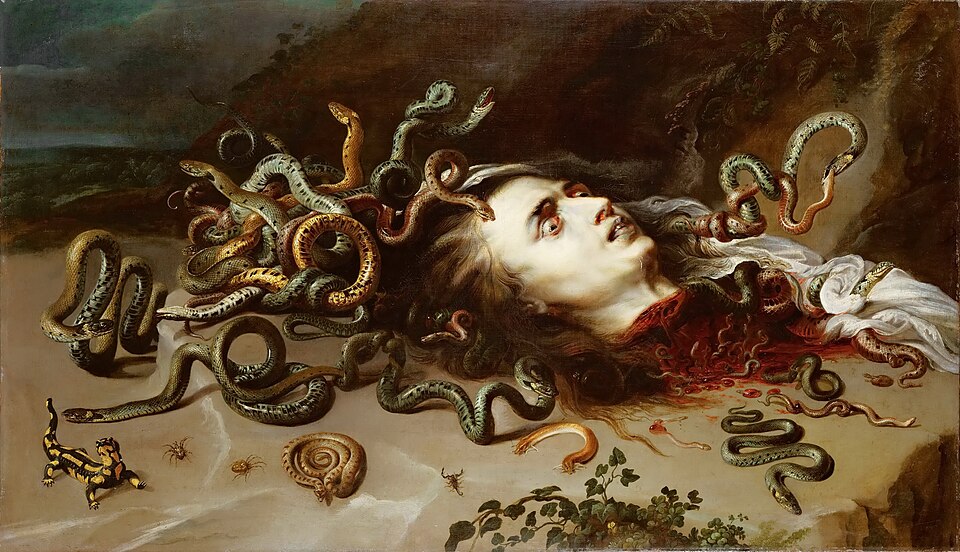
Medusa's freshly severed head lies in a pool of blood, her hair alive with snakes. A visitor in 1619 wrote that it shocked the viewer and moved him with its beauty at the same time.
The story behind the painting
Rubens painted the Head of Medusa around 1618 in oil on canvas, about 68.5 by 118 cm, with help from Frans Snyders, a nature painter who often worked with him and is credited with the snakes, as he painted the eagle in Prometheus Bound. Two versions exist. The one in Brno entered the museum on 26 December 1818 without any artist's name, a gift of Count Joseph von Nimptsch, possibly from his late second wife. The Vienna version in the Kunsthistorisches Museum is thought to be a later version of the Brno original.
What to look for
Medusa has just been slain and lies in a pool of blood, surrounded by snakes and reptiles. Most of the snakes are harmless European grass snakes, but the two on the right of her head are vipers, a medieval symbol of ungratefulness, shown mating, the female with the male's head in her mouth. Near the middle crawls an amphisbaena, a creature with a head at each end, said in Greek myth to be born of Medusa's blood. Notice how the face of a very beautiful woman still keeps its grace amid all this.
Meaning and intent
In the myth Medusa was raped by Neptune in a shrine of Minerva, who turned her hair into snakes. In Rubens's day Medusa was also an apotropaic symbol, one that wards off evil, compared to the modern evil eye, and iconographers such as Cesare Ripa and Lodovico Dolce treated her this way. Rubens's Medusa holds both evil and power. Leonardo and Caravaggio painted Medusa on shields; Rubens laid her head on the ground instead, though, like most images of her across the centuries, she still faces us.
Legacy
Constantijn Huygens saw the picture in 1619 in the house of the merchant Nicolaas Sohier. He wrote that the beautiful woman's face keeps its grace while evoking the horror of death and the hideous snakes, so that the spectator is shocked yet moved by the lifelikeness and beauty of the grim subject. In private collections, unveiling it from behind a curtain added to the shock. In Brno, curator Ernst Rincolini first gave it to Abraham van Diepenbeeck; Rubens was named in 1899 and confirmed in the 1940s during restoration.
Did you know?
- Painted around 1618, with the snakes credited to Frans Snyders.
- The Vienna canvas is thought to be a later version of one in Brno.
- Constantijn Huygens described its shocking effect in 1619.
- Rubens's authorship was confirmed in the 1940s.
About the artist
Peter Paul Rubens (1577-1640)
woman · mythological painting · Kunsthistorisches Museum · human head
More by Peter Paul Rubens
.jpg) The Elevation of the Cross - Peter Paul Rubens (1609)
The Elevation of the Cross - Peter Paul Rubens (1609) The Rape of the Daughters of Leucippus - Peter Paul Rubens (1618)
 Rubens and Isabella Brant in the honeysuckle bower - Peter Paul Rubens (1600s)
 Samson and Delilah - Peter Paul Rubens (1600s)
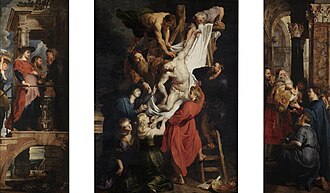 The Descent from the Cross - Peter Paul Rubens (1611)
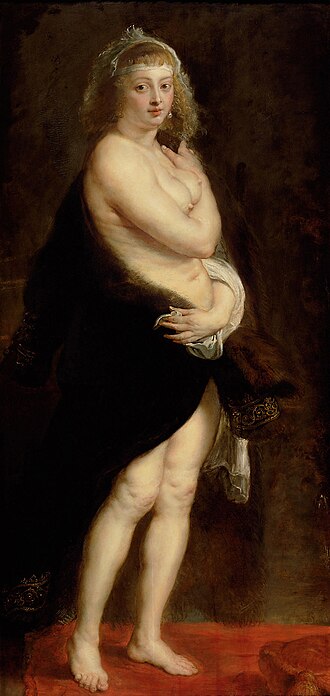 Helena Fourment in a Fur Robe - Peter Paul Rubens (1638)
.jpg) The Garden of Love - Peter Paul Rubens (1632)
The Garden of Love - Peter Paul Rubens (1632)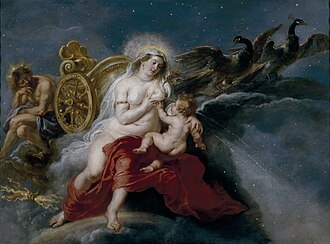 The Origin of the Milky Way - Peter Paul Rubens (1630s)
Paintings by related artists
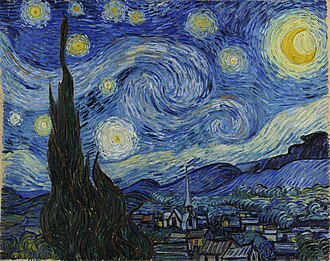 The Starry Night - Vincent van Gogh (1889)
.jpg) Café Terrace at Night - Vincent van Gogh (1888)
Café Terrace at Night - Vincent van Gogh (1888)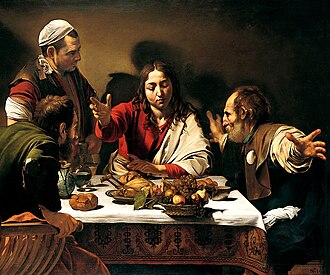 Supper at Emmaus - Caravaggio (1601)
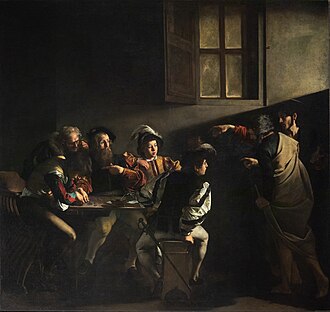 The Calling of Saint Matthew - Caravaggio (1609)
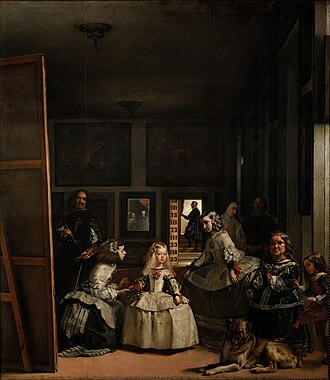 Las Meninas - Diego Velázquez (1656)
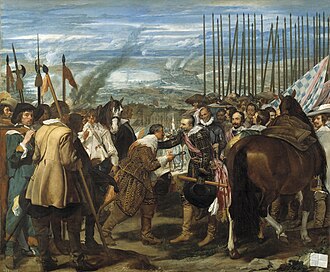 The Surrender of Brea - Diego Velázquez (1635)
%20-%20Google%20Art%20Project.jpg) Charles I in Three Positions - Anthony van Dyck (1635)
Charles I in Three Positions - Anthony van Dyck (1635)%20with%20M.%20de%20St%20Antoine%20-%20Google%20Art%20Project.jpg) Charles I (1600-1649) with M. de St Antoine - Anthony van Dyck (1636)
Charles I (1600-1649) with M. de St Antoine - Anthony van Dyck (1636)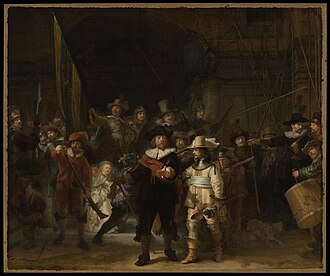 The Night Watch - Rembrandt van Rijn (1642)
 Self-Portrait - Rembrandt van Rijn (1659)
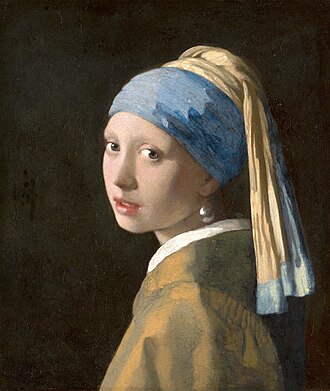 Girl with a Pearl Earring - Johannes Vermeer (1665)
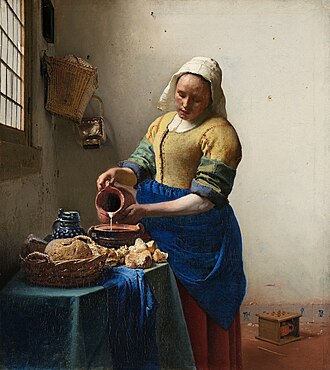 The Milkmaid - Johannes Vermeer (c. 1658)