The Deposition
Peter Paul Rubens · 1602
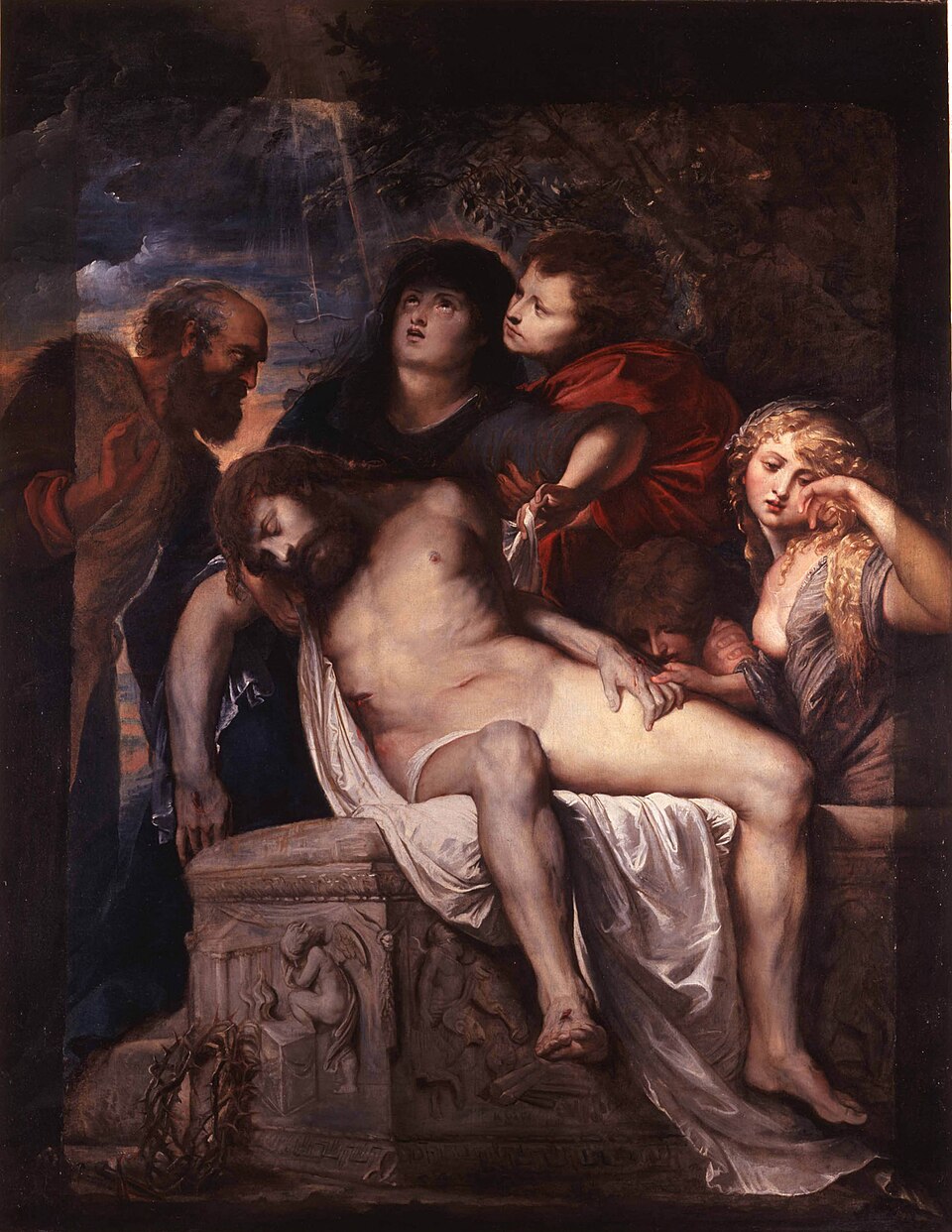
A handful of mourners gather around the dead Christ, his body slumped across a carved stone tomb. For more than a century this quiet scene of grief was credited to Van Dyck, until a scholar gave it back to the young Rubens.
The story behind the painting
The painting, also called the Lamentation over the Dead Christ or the Entombment, belongs to the Galleria Borghese in Rome. It dates to Rubens' first stay in Rome, around 1601 to 1602, when he was still a young painter far from Flanders. How it entered the Borghese Collection is still debated: some suggest a commission from Cardinal Peretti di Montalto to Scipione Borghese, but what is confirmed is that Camillo Borghese bought it in the early 19th century. Recent research links it to a picture owned in the 1690s by the Rome-based British dealer James Durno.
What to look for
Christ's naked body sits diagonally across a stone sarcophagus decorated with classical figures. Behind him the Virgin, in dark clothes, gazes upward with dignified sorrow while his body leans against her. At her side John the Evangelist, dressed in red, holds up both Christ and his mother. On the far right a young woman with long blond hair, probably Mary Magdalene, bows her head and wipes away tears. At her feet another small figure, perhaps a girl or a child, is half buried in drapery against Christ's legs. On the left an older grey-bearded man, possibly Joseph of Arimathea or Nicodemus, looks on soberly.
Meaning and intent
Each figure carries a different kind of grief. The Virgin looks upward as if asking for help to understand what she has just witnessed. John is read as an embodiment of love and sacrifice, holding the others together. The weeping Magdalene and the figure pressed against Christ's legs heighten the sense of shared mourning, while the calm old man on the left stands for the disciples and followers facing a crisis of faith. Even the stone tomb speaks: its classical carvings may stand for the ancient world about to give way to Christ's message, and may also point to the altar and the Eucharist.
Legacy
The work was first recorded in an 1833 Borghese inventory as a Deposition by Vendich, and an 18th or 19th century inscription on the canvas gave it to Anthony van Dyck. In 1916 the art historian Rudolf Oldenbourg returned it to Rubens, dating it around 1605, during his second Roman stay. The Rubens attribution has been generally accepted since, but today scholars place it earlier, around 1601 to 1602, based on the proportions of the figures and the likeness of the Virgin to one in a Rubens altarpiece of those years. Wikidata gives 1602. The Italian state bought the painting in 1902.
Did you know?
- Painted during Rubens' first stay in Rome, around 1601-1602.
- Long attributed to Anthony van Dyck.
- Re-attributed to Rubens by Rudolf Oldenbourg in 1916.
- Bought by the Italian state in 1902; now in the Galleria Borghese.
About the artist
Peter Paul Rubens (1577-1640)
religious art · Mary · Jesus Christ · Galleria Borghese · Borghese Collection · Lamentation of Christ
More by Peter Paul Rubens
.jpg) The Elevation of the Cross - Peter Paul Rubens (1609)
The Elevation of the Cross - Peter Paul Rubens (1609) The Rape of the Daughters of Leucippus - Peter Paul Rubens (1618)
 Rubens and Isabella Brant in the honeysuckle bower - Peter Paul Rubens (1600s)
 Samson and Delilah - Peter Paul Rubens (1600s)
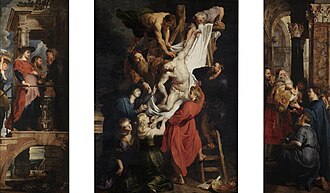 The Descent from the Cross - Peter Paul Rubens (1611)
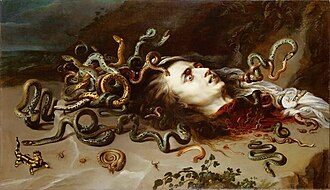 Head of Medusa - Peter Paul Rubens (1618)
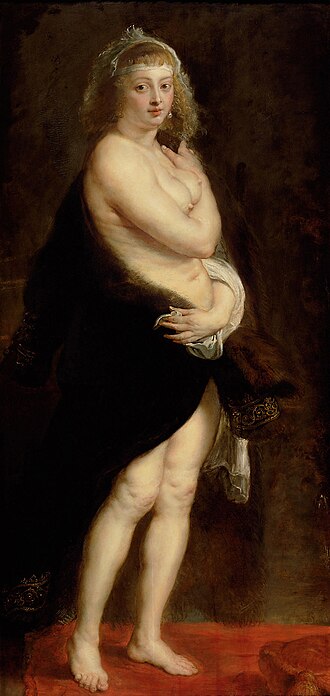 Helena Fourment in a Fur Robe - Peter Paul Rubens (1638)
.jpg) The Garden of Love - Peter Paul Rubens (1632)
The Garden of Love - Peter Paul Rubens (1632)
Paintings by related artists
 The Starry Night - Vincent van Gogh (1889)
.jpg) Café Terrace at Night - Vincent van Gogh (1888)
Café Terrace at Night - Vincent van Gogh (1888)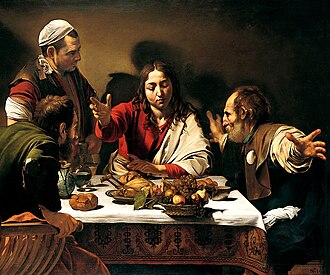 Supper at Emmaus - Caravaggio (1601)
 The Calling of Saint Matthew - Caravaggio (1609)
 Las Meninas - Diego Velázquez (1656)
 The Surrender of Brea - Diego Velázquez (1635)
%20-%20Google%20Art%20Project.jpg) Charles I in Three Positions - Anthony van Dyck (1635)
Charles I in Three Positions - Anthony van Dyck (1635)%20with%20M.%20de%20St%20Antoine%20-%20Google%20Art%20Project.jpg) Charles I (1600-1649) with M. de St Antoine - Anthony van Dyck (1636)
Charles I (1600-1649) with M. de St Antoine - Anthony van Dyck (1636) The Night Watch - Rembrandt van Rijn (1642)
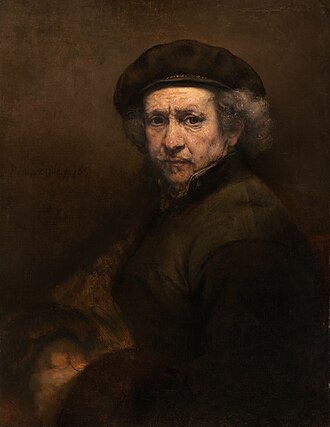 Self-Portrait - Rembrandt van Rijn (1659)
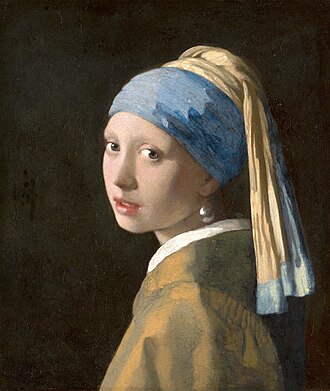 Girl with a Pearl Earring - Johannes Vermeer (1665)
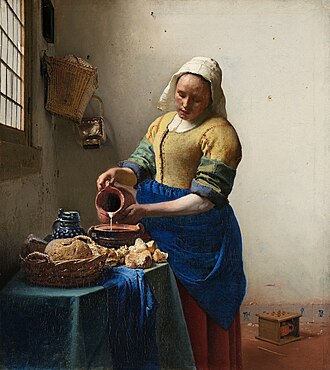 The Milkmaid - Johannes Vermeer (c. 1658)